欢迎访问《日用化学工业(中英文)》,今天是


日用化学工业(中英文) ›› 2026, Vol. 56 ›› Issue (10): 1344-1353.doi: 10.3969/j.issn.2097-2806.2026.10.007
李鑫1,3,段治2,张芷茵3,崔洪昌2,4,*( )
收稿日期:2025-12-22
修回日期:2026-09-11
出版日期:2026-10-22
发布日期:2026-10-30
Xin Li1,3,Zhi Duan2,Zhiyin Zhang3,Hongchang Cui2,4,*()
Received:2025-12-22
Revised:2026-09-11
Online:2026-10-22
Published:2026-10-30
Contact:
E-mail: 摘要:
文章研究目的是评估护肤原料乳酸杆菌发酵溶胞产物VHProbi MixR的皮肤屏障修护功效,并阐明其潜在作用机制。该原料由四种益生菌发酵产物裂解液等比例混合制成。采用LC-MS非靶向代谢组学分析VHProbi MixR的化学成分,通过网络药理学预测其作用靶点及相关通路,构建乳酸诱导的斑马鱼皮肤屏障损伤模型,评价不同浓度原料的修护效果,结合转录组学和RT-qPCR验证核心通路及差异基因表达。结果表明VHProbi MixR含2 176种代谢物,主要包括有机酸及其衍生物、脂质及其类似物等,含烟酰胺等多种活性成分。网络药理学筛选出678个潜在靶点,关键靶点GSK3B与皮肤屏障修复相关通路密切相关。斑马鱼实验显示,VHProbi MixR (50和200 mL/L) 可显著降低受损皮肤的荧光染色面积(P<0.001),且高剂量组效果更优。转录组学及RT-qPCR验证表明,该原料可激活Notch信号通路,上调her4、her12、hey1等下游靶基因表达。研究结论为VHProbi MixR通过作用于GSK3B靶点激活Notch信号通路,促进角质形成细胞分化及紧密连接蛋白调控,从而发挥皮肤屏障修护作用,具有良好的护肤应用潜力。
中图分类号:
李鑫, 段治, 张芷茵, 崔洪昌. 益生菌发酵产物通过Notch信号通路修护皮肤屏障的斑马鱼模型评价及机制研究[J]. 日用化学工业(中英文), 2026, 56(10): 1344-1353.
Xin Li, Zhi Duan, Zhiyin Zhang, Hongchang Cui. Evaluation of skin barrier repair by a probiotic ferment lysate in a zebrafish model and mechanistic exploration via the Notch signaling pathway[J]. China Surfactant Detergent & Cosmetics, 2026, 56(10): 1344-1353.
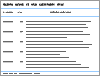
表1
目的基因和管家基因序列表"
| 基因 引物 序列(5' - 3') | |
|---|---|
| her4 | 上游 CTCTCAGAAAAGCAGTGCGG |
| 下游 TTTGCGTGTGTTTCAGTGGT | |
| her12 | 上游 AGCTGAGGAAGCCGATAGTTGAA |
| 下游 GGATCTGCTGCTGTTGCTTGAT | |
| hey1 | 上游 GTTTGCATTTTCACGCCCCT |
| 下游 CGCCCTCTAGTGCTCACATT | |
| GAPDH | 上游 GTGGAGTCTACTGGTGTCTTC |
| 下游 GTGCAGGAGGCATTGCTTACA | |
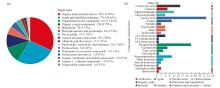
图1
VHProbi MixR非靶向代谢组学注释结果:(a)HMDB注释结果图;(b)KEGG注释结果图"
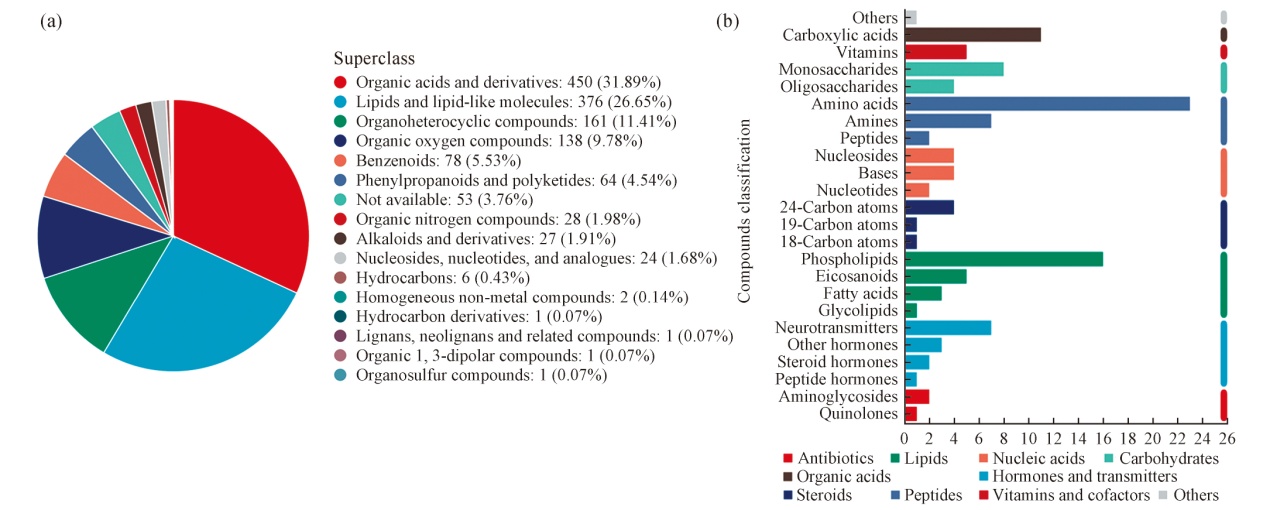

图2
蛋白质相互作用网络"
图3
产物-靶点-通路-功能网络关系"
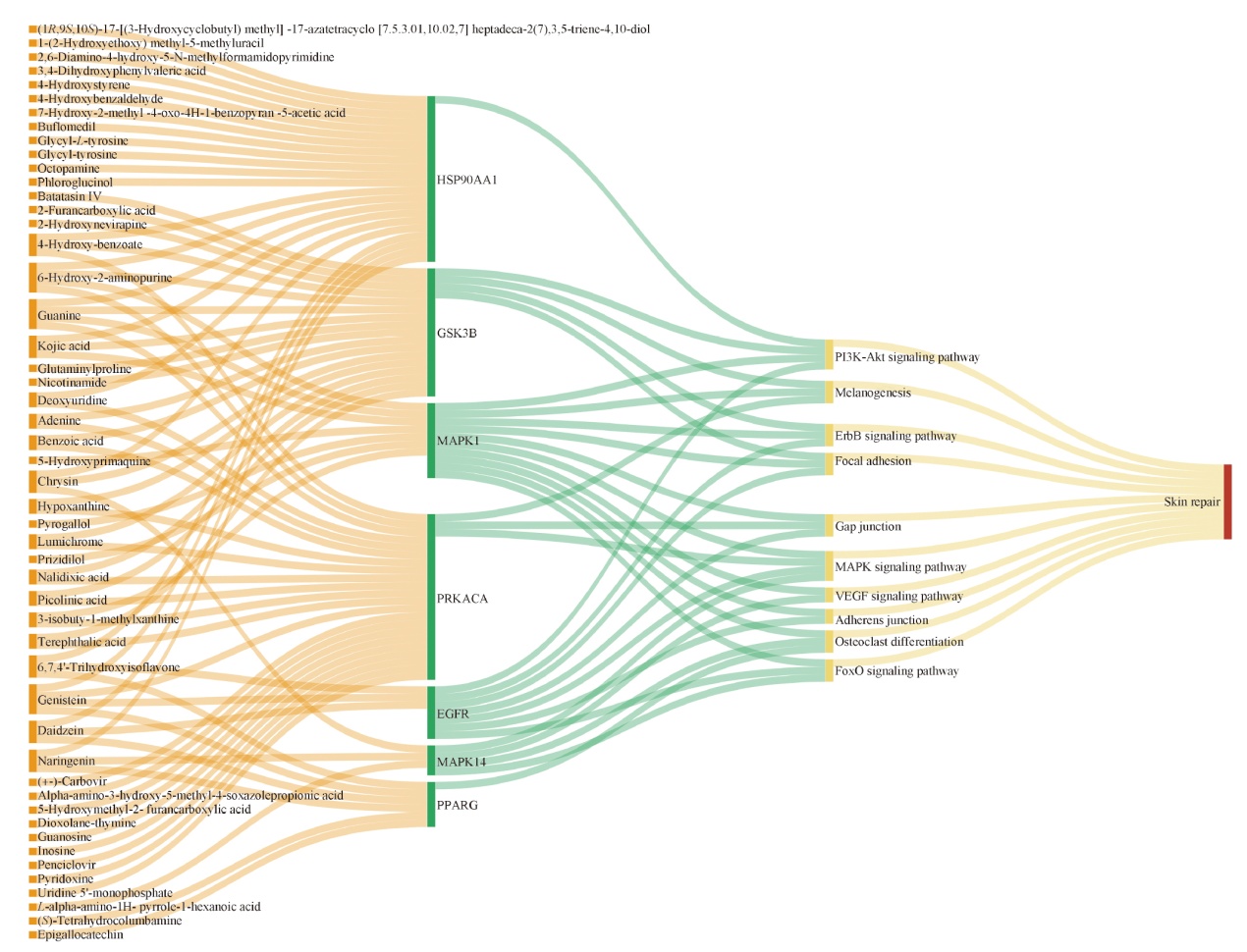
图4
斑马鱼胚胎荧光染色面积代表性图(损伤染色荧光用红色表示)"
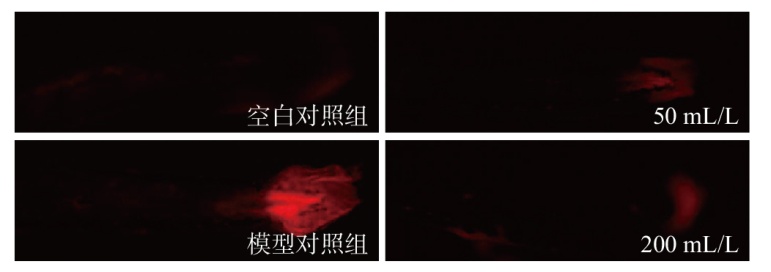
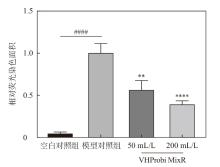
图5
样品不同浓度相对荧光面积效果图 样品与模型组比较:**** (P<0.000 1)有极高显著性差异;** (P<0.01)有极显著性差异。空白与模型组比较:#### (P<0.000 1)有极显著性差异"
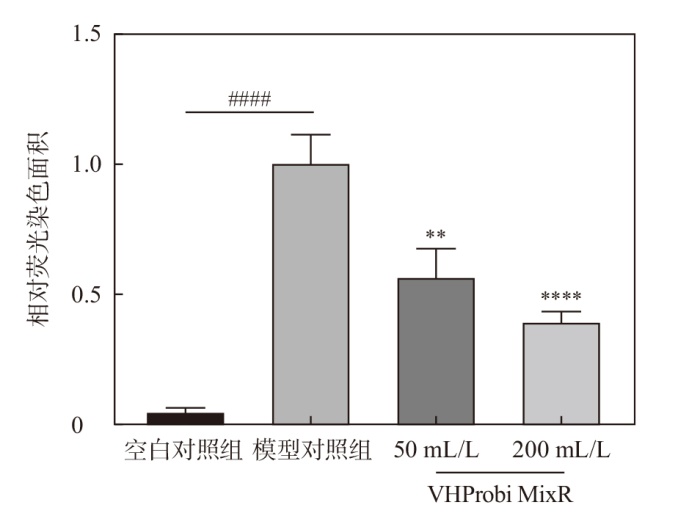
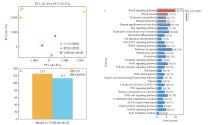
图6
斑马鱼胚胎转录组学分析结果图 a 为空白对照组、模型对照组和VHProbi MixR样品组的PCA图,显示组内和组间样本的比较;b 为模型对照组vs. VHProbi MixR样品组的差异基因分析柱状图;c 为模型对照组vs. VHProbi MixR样品组的KEGG富集条形图"
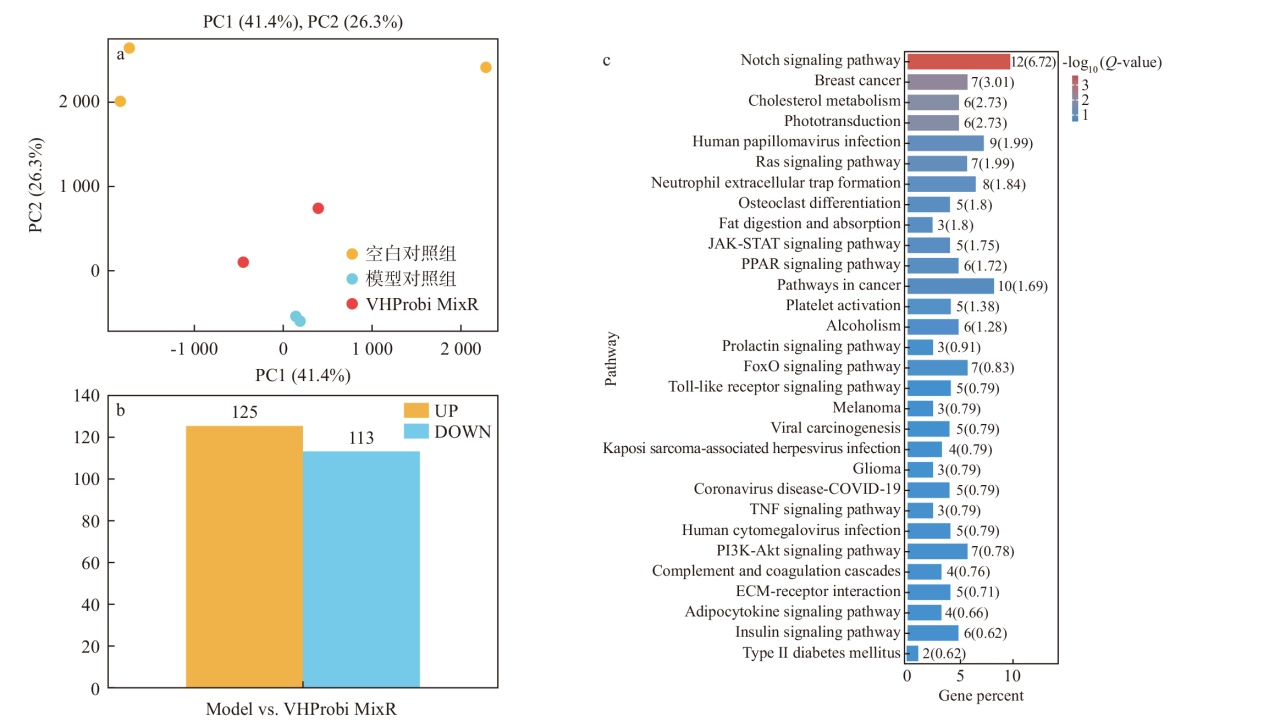
表2
斑马鱼转录组学差异基因相对表达水平表"
| 基因名 (人类同源基因名) | 相对表达水平 (vs. 模型对照组) | 趋势 |
|---|---|---|
| her4.2 (HES5) | 2.83 | 上调 |
| her4.1 (HES5) | 2.37 | |
| her4.3 (HES5) | 2.76 | |
| her4.4 (HES5) | 2.63 | |
| her4.5 (HES5) | 1.97 | |
| hes4-b (HES1) | 2.08 | |
| her12 (HES5) | 2.43 | |
| her15.1 (HES5) | 2.48 | |
| her15.2 (HES5) | 2.02 | |
| her2 (HES5) | 2.81 | |
| her6 (HES1) | 1.83 | |
| hey1 (HEY) | 1.52 |
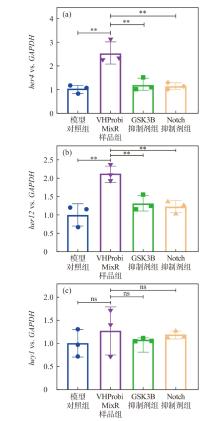
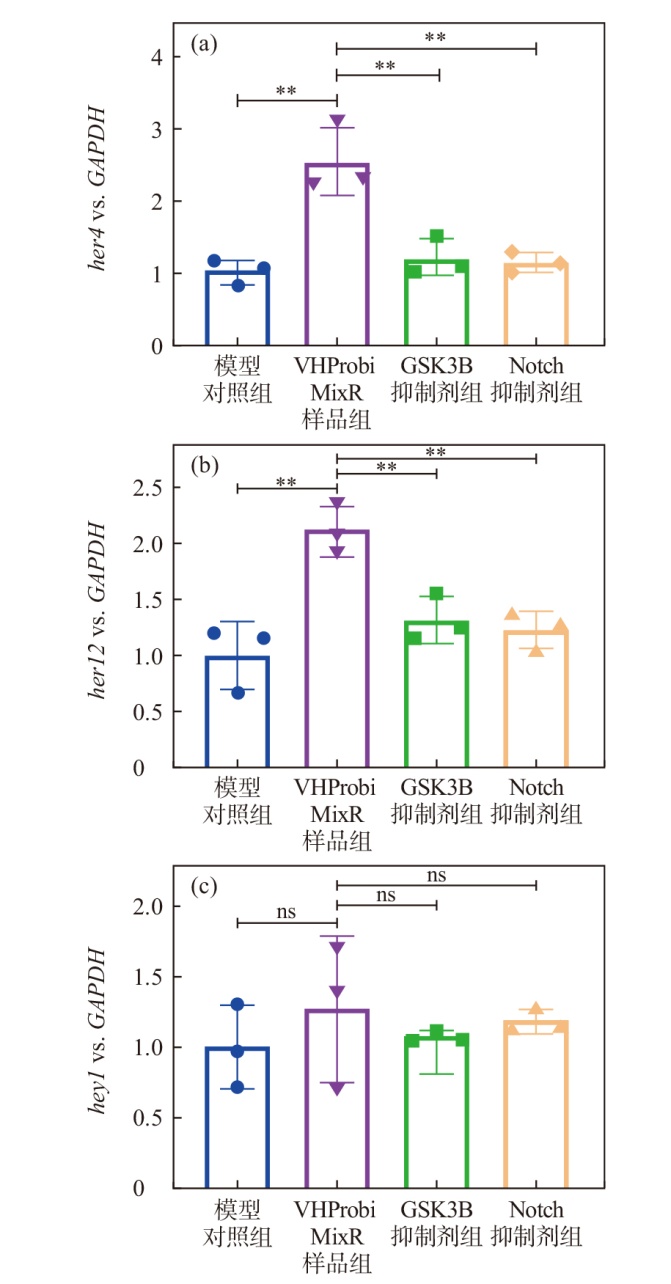
图7
斑马鱼胚胎基因相对表达量对比图 样品与模型组比较:** (P<0.01) 有极显著性差异;ns (P>0.05) 无显著性差异"
| [1] | Baker P, Huang C, Radi R, et al. Skin barrier function: the interplay of physical, chemical, and immunologic properties[J]. Cells, 2023, 12 (23) : 2745. |
| [2] |
Panahi Y, Fazlolahzadeh O, Atkin S L, et al. Evidence of curcumin and curcumin analogue effects in skin diseases: A narrative review[J]. Journal of Cellular Physiology, 2019, 234 (2) : 1165-1178.
doi: 10.1002/jcp.27096 pmid: 30073647 |
| [3] | Kim B E, Leung D Y M. Significance of skin barrier dysfunction in atopic dermatitis[J]. Allergy, Asthma & Immunology Research, 2018, 10 (3) : 207-215. |
| [4] |
Elias P M. Epidermal lipids, barrier function, and desquamation[J]. Journal of Investigative Dermatology, 1983, 80 (1) : S44-S49.
doi: 10.1038/jid.1983.12 |
| [5] | Bylka W, Znajdek-Awiżeń P, Studzińska-Sroka E, et al. Centella asiatica in cosmetology[J]. Advances in Dermatology and Allergology, 2013, 30 (1) : 46-49. |
| [6] |
Sagrafena I, Morin M, Paraskevopoulos G, et al. Structure and function of skin barrier lipids: Effects of hydration and natural moisturizers in vitro[J]. Biophysical Journal, 2024, 123 (22) : 3951-3963.
doi: 10.1016/j.bpj.2024.10.006 pmid: 39390747 |
| [7] |
Lodén M. Role of topical emollients and moisturizers in the treatment of dry skin barrier disorders[J]. American Journal of Clinical Dermatology, 2003, 4 (11) : 771-788.
doi: 10.2165/00128071-200304110-00005 pmid: 14572299 |
| [8] | Lin T K, Zhong L, Santiago J L. Anti-inflammatory and skin barrier repair effects of topical application of some plant oils[J]. International Journal of Molecular Sciences, 2018, 19 (1) : 70. |
| [9] | Zheng X Q, Zhang X H, Gao H Q, et al. Green tea catechins and skin health[J]. Antioxidants, 2024, 13 (12) : 1506. |
| [10] |
Wang X, Sun G, Feng T, et al. Sodium oligomannate therapeutically remodels gut microbiota and suppresses gut bacterial amino acids-shaped neuroinflammation to inhibit Alzheimer’s disease progression[J]. Cell Research, 2019, 29 (10) : 787-803.
doi: 10.1038/s41422-019-0216-x |
| [11] |
Xie M, Chen W, Lai X, et al. Metabolic responses and their correlations with phytochelatins in Amaranthus hypochondriacus under cadmium stress[J]. Environmental Pollution, 2019, 252: 1791-1800.
doi: 10.1016/j.envpol.2019.06.103 |
| [12] | Ren Y, Yu G, Shi C, et al. Majorbio Cloud: A one-stop, comprehensive bioinformatic platform for multiomics analyses[J]. IMeta, 2022, 1 (2) : e12. |
| [13] |
Hopkins A L. Network pharmacology: the next paradigm in drug discovery[J]. Nature Chemical Biology, 2008, 4 (11) : 682-690.
doi: 10.1038/nchembio.118 pmid: 18936753 |
| [14] |
Wang X, Wang Z Y, Zheng J H, et al. TCM network pharmacology: a new trend towards combining computational, experimental and clinical approaches[J]. Chinese Journal of Natural Medicines, 2021, 19 (1) : 1-11.
doi: 10.1016/S1875-5364(21)60001-8 pmid: 33516447 |
| [15] | Kanehisa M, Furumichi M, Tanabe M, et al. KEGG: new perspectives on genomes, pathways, diseases and drugs[J]. Nucleic Acids Research, 2017, 45 (D1) : D353-D361. |
| [16] | Naomi R, Bahari H, Yazid M D, et al. Zebrafish as a model system to study the mechanism of cutaneous wound healing and drug discovery: advantages and challenges[J]. Pharmaceuticals, 2021, 14 (10) : 1058. |
| [17] |
Li Q, Uitto J. Zebrafish as a model system to study skin biology and pathology[J]. Journal of Investigative Dermatology, 2014, 134 (6) : 1-6.
doi: S0022-202X(15)36843-3 pmid: 24825064 |
| [18] |
Morris J L, Cross S J, Lu Y, et al. Live imaging of collagen deposition during skin development and repair in a collagen I-GFP fusion transgenic zebrafish line[J]. Developmental Biology, 2018, 441 (1) : 4-11.
doi: 10.1016/j.ydbio.2018.06.001 |
| [19] |
Richardson R, Slanchev K, Kraus C, et al. Adult zebrafish as a model system for cutaneous wound-healing research[J]. Journal of Investigative Dermatology, 2013, 133 (6) : 1655-1665.
doi: 10.1038/jid.2013.16 pmid: 23325040 |
| [20] | Lawson N D, Li R, Shin M, et al. An improved zebrafish transcriptome annotation for sensitive and comprehensive detection of cell type-specific genes[J]. eLife, 2020, 9: e55792. |
| [21] |
Koehler D, Shah Z A, Williams F E. The GSK3β inhibitor, TDZD-8, rescues cognition in a zebrafish model of okadaic acid-induced Alzheimer’s disease[J]. Neurochemistry International, 2019, 122: 31-37.
doi: S0197-0186(18)30322-X pmid: 30392874 |
| [22] | Özbudak E M, Lewis J. Notch signalling synchronizes the zebrafish segmentation clock but is not needed to create somite boundaries[J]. PLoS Genetics, 2008, 4 (2) : e15. |
| [23] | Mathavan S, Lee S G P, Mak A, et al. Transcriptome analysis of zebrafish embryogenesis using microarrays[J]. PLoS Genetics, 2005, 1 (2) : e29. |
| [24] |
Masoudi-Nejad A, Goto S, Jauregui R, et al. EGENES: transcriptome-based plant database of genes with metabolic pathway information and expressed sequence tag indices in KEGG[J]. Plant Physiology, 2007, 144 (2) : 857-866.
doi: 10.1104/pp.106.095059 pmid: 17468225 |
| [25] |
Sahu A, Devi S, Jui J, et al. Notch signaling via Hey1 and Id2b regulates Müller glia’s regenerative response to retinal injury[J]. Glia, 2021, 69 (12) : 2882-2898.
doi: 10.1002/glia.v69.12 |
| [26] | Tavares B, Jacinto R, Sampaio P, et al. Notch/Her12 signalling modulates, motile/immotile cilia ratio downstream of Foxj1a in zebrafish left-right organizer[J]. eLife, 2017, 6 (e25165) : 14. |
| [27] |
Song K, Lin Z, Cao L, et al. Sox11b regulates the migration and fate determination of Müller glia-derived progenitors during retina regeneration in zebrafish[J]. Neural Regeneration Research, 2023, 18 (2) : 445-450.
doi: 10.4103/1673-5374.346550 pmid: 35900444 |
| [28] | Abràmoff M D, Magalhães P J, Ram S J. Image processing with Image J[J]. Biophotonics International, 2004, 11 (7) : 36-42. |
| [29] |
Visscher M, Robinson M, Wickett R. Stratum corneum free amino acids following barrier perturbation and repair[J]. International Journal of Cosmetic Science, 2011, 33 (1) : 80-89.
doi: 10.1111/j.1468-2494.2010.00592.x pmid: 20572882 |
| [30] |
Surjana D, Halliday G M, Damian D L. Nicotinamide enhances repair of ultraviolet radiation-induced DNA damage in human keratinocytes and ex vivo skin[J]. Carcinogenesis, 2013, 34 (5) : 1144-1149.
doi: 10.1093/carcin/bgt017 |
| [31] | Rembe J D, Fromm-Dornieden C, Stuermer E K. Effects of vitamin B complex and vitamin C on human skin cells: is the perceived effect measurable?[J]. Advances in Skin & Wound Care, 2018, 31 (5) : 225-233. |
| [32] | Kim C, Lee J H, Park S H, et al. The effect of a new hair treatment formulation on the physical and cosmetic properties of human hair[J]. International Journal of Cosmetic Science, 2002, 24 (6) : 363-374. |
| [33] |
Farwick M, Watson R E B, Griffiths C E. Salicyloyl-phytosphingosine: A novel agent for the repair of photoaged skin[J]. International Journal of Cosmetic Science, 2007, 29 (4) : 319-329.
doi: 10.1111/j.1467-2494.2007.00394.x pmid: 18489360 |
| [34] | Charnvanich D, Singpanna K, Panapisal V. Formulation and optimization of nanoemulsions loaded with gamma-aminobutyric acid (GABA) for dermatological application: assessing skin permeation and penetration enhancement[J]. Cosmetics, 2024, 11 (1) : 19. |
| [35] | Honari G, Andersen R M, Maibach H I. Sensitive skin syndrome[M]. SecondEdition. Boca Raton: CRC Press, 2017. |
| [36] |
Duarte I, Silveira J E P S, Hafner M de F S, et al. Sensitive skin: review of an ascending concept[J]. Anais Brasileiros de Dermatologia, 2017, 92 (4) : 521-525.
doi: S0365-05962017000400521 pmid: 28954102 |
| [37] | Silva-García O, Cortés-Vieyra R, Mendoza-Ambrosio F N, et al. GSK3α: an important paralog in neurodegenerative disorders and cancer[J]. Biomolecules, 2020, 10 (12) : 1683. |
| [38] |
Ruvolo P P, Qiu Y, Coombes K R, et al. Phosphorylation of GSK3α/β correlates with activation of AKT and is prognostic for poor overall survival in acute myeloid leukemia patients[J]. BBA Clinical, 2015, 4: 59-68.
doi: 10.1016/j.bbacli.2015.07.001 pmid: 26674329 |
| [39] |
McCubrey J A, Rakus D, Gizak A, et al. Effects of mutations in Wnt/β-catenin, hedgehog, Notch and PI3K pathways on GSK-3 activity-Diverse effects on cell growth, metabolism and cancer[J]. Biochimica Et Biophysica Acta, 2016, 1863 (12) : 2942-2976.
doi: S0167-4889(16)30224-5 pmid: 27612668 |
| [40] |
Zheng L, Conner S D. Glycogen synthase kinase 3β inhibition enhances Notch1 recycling[J]. Molecular Biology of the Cell, 2018, 29 (4) : 389-395.
doi: 10.1091/mbc.E17-07-0474 pmid: 29237816 |
| [41] | Zhang H, Xiao X, Wang L, et al. Human adipose and umbilical cord mesenchymal stem cell-derived extracellular vesicles mitigate photoaging via TIMP1/Notch1[J]. Signal Transduction and Targeted Therapy, 2024, 9 (1) : 294. |
| [42] |
Sieger D, Tautz D, Gajewski M. Her11 is involved in the somitogenesis clock in zebrafish[J]. Development Genes and Evolution, 2004, 214(8) : 393-406.
doi: 10.1007/s00427-004-0427-z pmid: 15309634 |
| [43] |
Sur A, Wang Y, Capar P, et al. Single-cell analysis of shared signatures and transcriptional diversity during zebrafish development[J]. Developmental Cell, 2023, 58 (24) : 3028-3047.
doi: 10.1016/j.devcel.2023.11.001 pmid: 37995681 |
| [44] |
Nudelman G, Frasca A, Kent B, et al. High resolution annotation of zebrafish transcriptome using long-read sequencing[J]. Genome Research, 2018, 28 (9) : 1415-1425.
doi: 10.1101/gr.223586.117 pmid: 30061115 |
| [1] | 方圆圆, 张倩, 高梦雪, 王雨冰, 常晓维. 一种植物复合物缓解日常洗护致头皮敏感的功效及作用机制研究[J]. 日用化学工业(中英文), 2026, 56(8): 1027-1037. |
| [2] | 冯晓月. 干性敏感性皮肤发生机制及护理策略研究[J]. 日用化学工业(中英文), 2026, 56(8): 1103-1110. |
| [3] | 陈漪汶, 郑雅莉, 李鑫, 黄健聪, 邝荣康, 谢小保. 虎乳芝提取物的护肤功效及安全性评价研究[J]. 日用化学工业(中英文), 2026, 56(6): 764-775. |
| [4] | 黎曦, 吴雨闻, 成浩楠, 常晓维. 衣康酸靶向修复受损发丝:基于巯基共价键合的力学增强机制[J]. 日用化学工业(中英文), 2026, 56(6): 783-789. |
| [5] | 张瑞敏, 张磊, 何亚飞, 范丽敏. 基于Nrf2/TLR4信号通路的低聚木糖皮肤防护功效原料开发、功效及机制研究[J]. 日用化学工业(中英文), 2026, 56(5): 603-613. |
| [6] | 高欣雨, 孙娅楠, 李俐霜, 金玉翠, 马淑骅, 王毅. 东阿阿胶对小鼠皮肤屏障损伤的修复作用研究[J]. 日用化学工业(中英文), 2026, 56(2): 236-244. |
| [7] | 李佳明, 邱晓锋, 郭惠珊, 罗建锟, 甘礼社, 徐学涛. 松茸蛋白的制备、结构表征及其保湿功效研究[J]. 日用化学工业(中英文), 2026, 56(1): 98-106. |
| [8] | 刘敏, 叶磊, 蒋玲玲, 郑久炎. 神经酰胺脂质体对光损伤的修护及机械损伤的修复功效研究[J]. 日用化学工业(中英文), 2025, 55(7): 902-908. |
| [9] | 吴凡, 张嘉琪, 秦毅, 王俊, 吴宗翰, 盘瑶. 化妆品活性成分通过细胞自噬发挥护肤功效的研究进展[J]. 日用化学工业(中英文), 2025, 55(6): 803-810. |
| [10] | 杨武成, 谢宇, 魏剑, 范瑞芳, 谭建华, 席绍峰. 共聚焦拉曼光谱在皮肤屏障功能评估和经皮吸收研究中的应用[J]. 日用化学工业(中英文), 2025, 55(4): 508-515. |
| [11] | 赵化冰, 李颖甜, 王熙函, 黄正梅, 路福平. 皮肤微生态与微生态护肤品[J]. 日用化学工业(中英文), 2025, 55(3): 390-398. |
| [12] | 訾玉沙, 刘建伟, 方淑红, 李萌, 黄庆, 彭先武. 基于化学损伤的发用修护功效评价方法研究[J]. 日用化学工业(中英文), 2025, 55(12): 1567-1574. |
| [13] | 李生鹏, 李静, 梁超, 赵冉, 张晓洁, 孙丽丽. 丝素蛋白对皮肤光损伤的保护作用[J]. 日用化学工业(中英文), 2024, 54(9): 1117-1124. |
| [14] | 刘兆亿, 陈鑫宇, 王艳, 李雪, 郭若曦, 张晗. 氧化苦参碱对小鼠皮肤屏障功能障碍的修复作用研究[J]. 日用化学工业(中英文), 2024, 54(7): 777-783. |
| [15] | 许梦然, 赵华. 化妆品晒后修护功效评价方法研究进展[J]. 日用化学工业(中英文), 2024, 54(3): 329-336. |
|
