Welcome to China Surfactant Detergent & Cosmetics, Today is


China Surfactant Detergent & Cosmetics ›› 2025, Vol. 55 ›› Issue (11): 1435-1443.doi: 10.3969/j.issn.2097-2806.2025.11.009
• Basic research • Previous Articles Next Articles
Xianqi Chen1,Timson Chen2,Ling Ma2,Ya Chen2,Zhizhen Li2,Guangli Wang1,Jing Wang1,*( )
)
Received:2024-11-13
Revised:2025-11-02
Online:2025-11-22
Published:2025-12-22
CLC Number:
Xianqi Chen, Timson Chen, Ling Ma, Ya Chen, Zhizhen Li, Guangli Wang, Jing Wang. Study on the polyol extraction process of Platycladus orientalis leaf extract and its effects on human dermal papilla cells[J].China Surfactant Detergent & Cosmetics, 2025, 55(11): 1435-1443.
Tab. 1
Design factors and levels of response surface test"
| 水平 | 因素 | ||
|---|---|---|---|
| A 溶剂质量分数/% | B 提取温度/℃ | C 提取时间/min | |
| -1 | 20 | 50 | 30 |
| 0 | 40 | 60 | 60 |
| 1 | 60 | 70 | 90 |
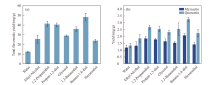
Fig. 1
Effects of different solvents on the yield of flavonoids(a), as well as myricetin and quercetin(b) from Platycladus orientalis leaves"
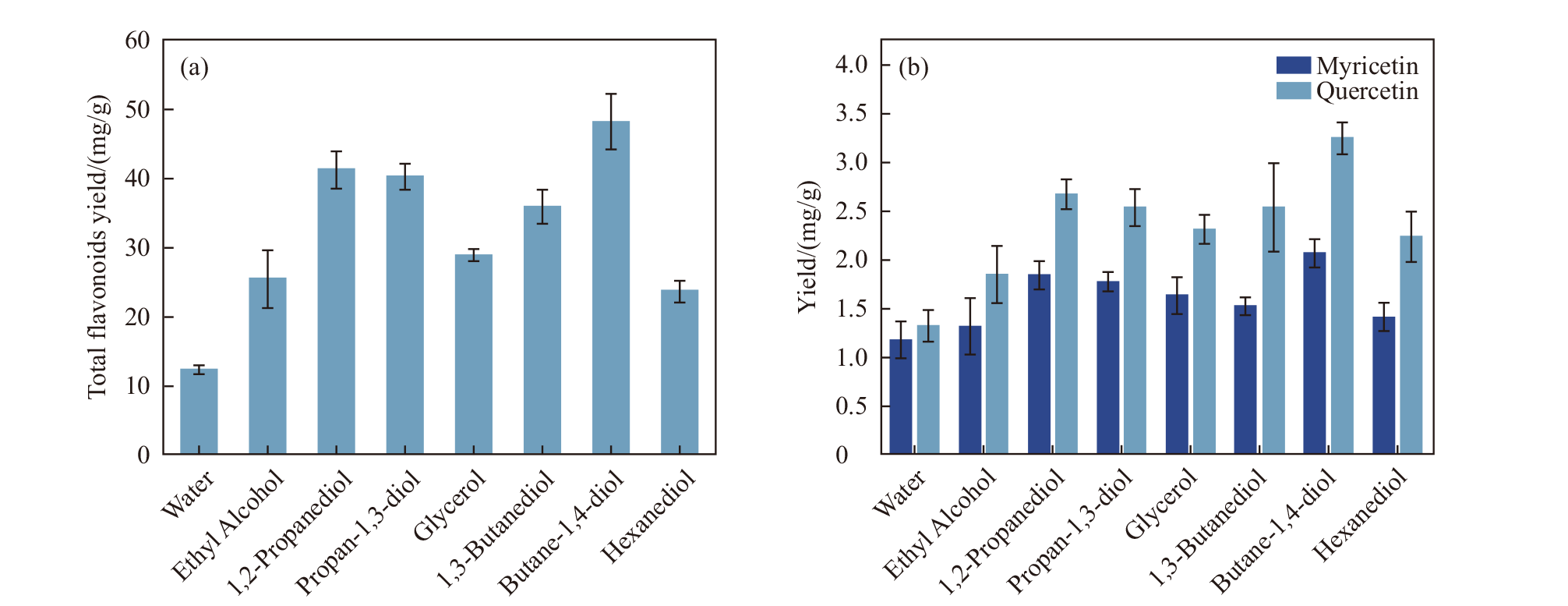

Fig. 2
Effects of different solvent mass fraction (a), extraction temperature (b), extraction time (c) and material ratio (d) on the yield of flavonoids"

Tab. 2
Response surface analysis scheme and test results"
| 序号 | A 1,4-丁二醇质量分数/% | B 提取温度/oC | C 提取时间/min | Y 总黄酮得率/(mg/g) |
|---|---|---|---|---|
| 1 | 20 | 50 | 60 | 37.54 |
| 2 | 60 | 50 | 60 | 42.97 |
| 3 | 20 | 70 | 60 | 44.63 |
| 4 | 60 | 70 | 60 | 47.24 |
| 5 | 20 | 60 | 30 | 34.54 |
| 6 | 60 | 60 | 30 | 40.48 |
| 7 | 20 | 60 | 90 | 38.54 |
| 8 | 60 | 60 | 90 | 45.55 |
| 9 | 40 | 50 | 30 | 36.81 |
| 10 | 40 | 70 | 30 | 38.36 |
| 11 | 40 | 50 | 90 | 39.54 |
| 12 | 40 | 70 | 90 | 42.95 |
| 13 | 40 | 60 | 60 | 49.18 |
| 14 | 40 | 60 | 60 | 54.33 |
| 15 | 40 | 60 | 60 | 49.14 |
| 16 | 40 | 60 | 60 | 49.09 |
| 17 | 40 | 60 | 60 | 51.79 |
Tab. 3
Analysis of variance of the regression model"
| 来源 | 平方和 | 自由度 | 均方 | F值 | P值 | 显著性 |
|---|---|---|---|---|---|---|
| 模型 | 506.98 | 9 | 56.33 | 13.05 | 0.001 3 | ** |
| A | 55.06 | 1 | 55.06 | 12.76 | 0.009 1 | ** |
| B | 33.29 | 1 | 33.29 | 7.71 | 0.027 4 | * |
| C | 33.59 | 1 | 33.59 | 7.78 | 0.026 9 | * |
| AB | 1.99 | 1 | 1.99 | 0.46 | 0.519 1 | — |
| AC | 0.29 | 1 | 0.29 | 0.067 | 0.803 7 | — |
| BC | 0.86 | 1 | 0.86 | 0.20 | 0.667 9 | — |
| A2 | 55.32 | 1 | 55.32 | 12.82 | 0.009 0 | ** |
| B2 | 66.91 | 1 | 66.91 | 15.50 | 0.005 6 | ** |
| C2 | 224.66 | 1 | 224.66 | 52.05 | 0.000 2 | ** |
| 残差 | 30.21 | 7 | 4.32 | |||
| 失拟值 | 8.51 | 3 | 2.84 | 0.52 | 0.689 3 | — |
| 纯误差 | 21.70 | 4 | 5.43 | |||
| 总和 | 537.19 | 16 |
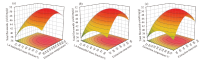
Fig. 3
Effects of interaction of various factors on the yield of flavonoids from Platycladus orientalis leaves"
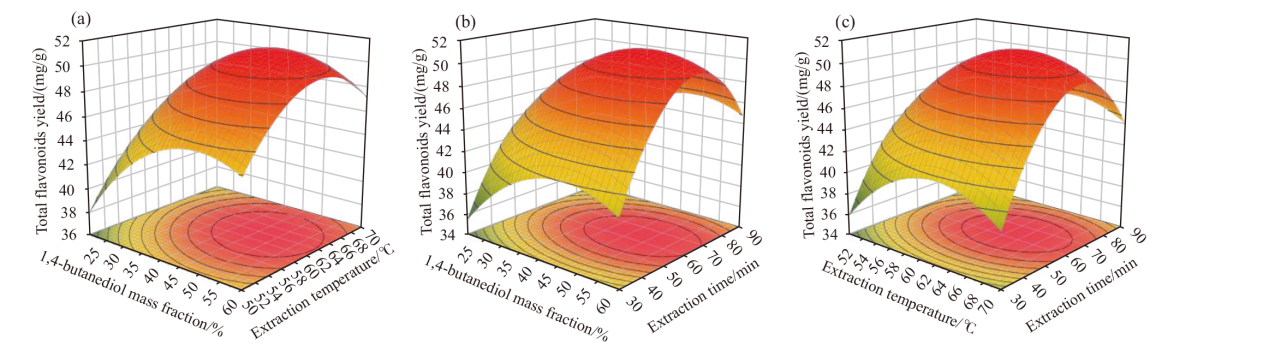
Fig. 4
Stability of the extract from Platycladus orientalis leaves"
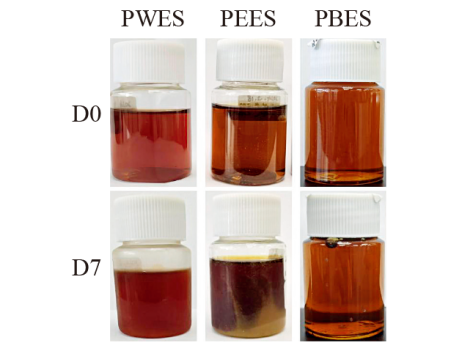
Fig. 5
Effects of PWES, PEES and PBES on the proliferation capacity (a) and ALP activity (b) of HDPCs"
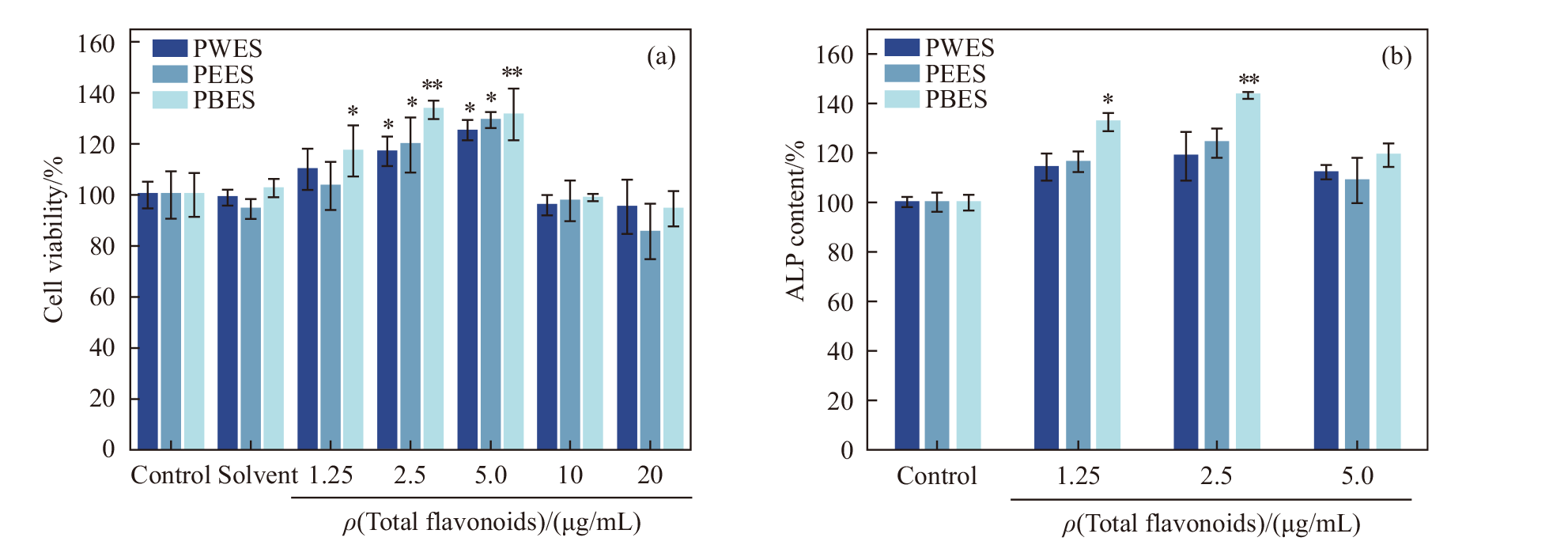
Fig. 6
Effects of PWES, PEES and PBES on VEGF secretion"
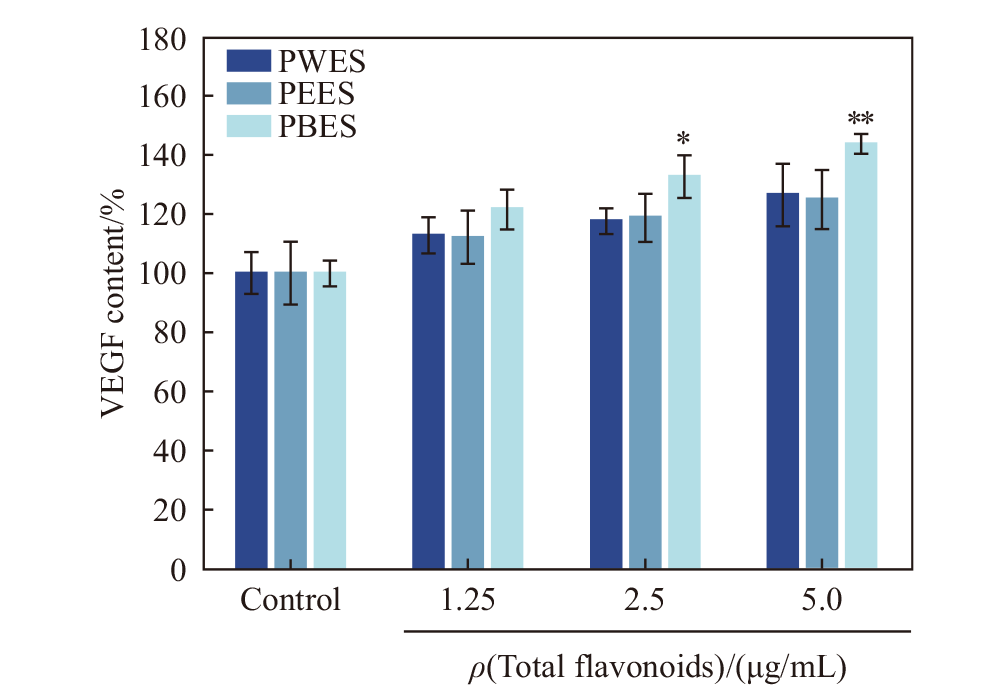
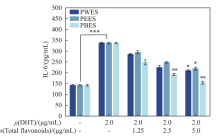
Fig. 7
Effect of PWES, PEES and PBES on the inhibition of IL-6"
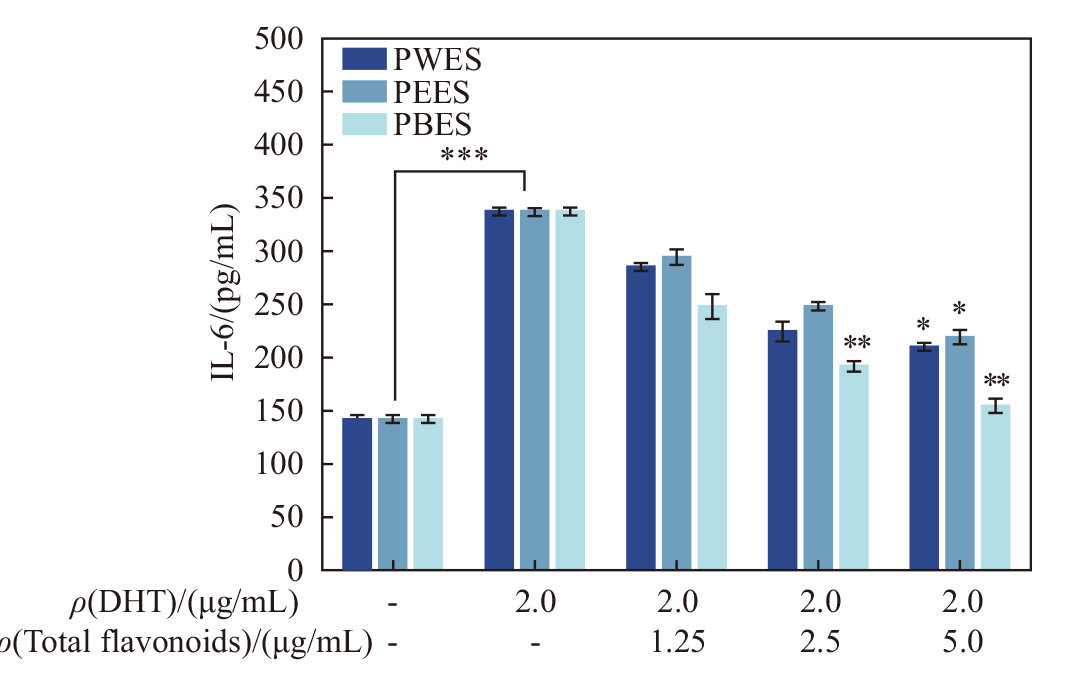
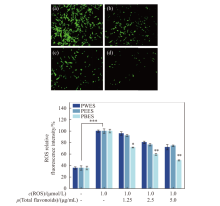
Fig. 8
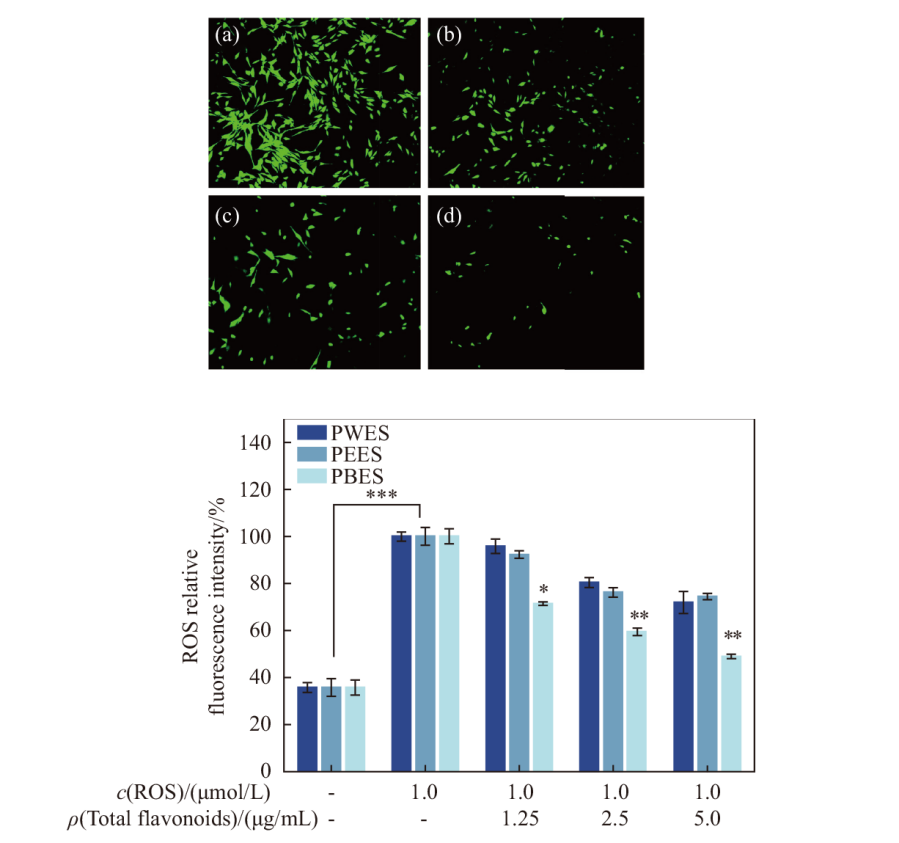
Effects of PWES, PEES and PBES on the inhibitory ability of ROS. (a) Model groups; (b) PWES; (c) PEES; (d) PBES, in which the mass concentration of total flavonoids (b), (c) and (d) was 5.0 μg/mL"
| [1] |
Yang C C, Cotsarelis G. Review of hair follicle dermal cells[J]. Journal of Dermatological Science, 2010, 57: 2-11.
doi: 10.1016/j.jdermsci.2009.11.005 |
| [2] |
Madaan Alka, Verma, et al. Review of hair follicle dermal papilla cells as in vitro screening model for hair growth[J]. International Journal of Cosmetic Science, 2018, 40 (5) : 429-450.
doi: 10.1111/ics.12489 pmid: 30144361 |
| [3] | 刘芳, 苗勇, 胡志奇. 毛乳头细胞生物学特性的研究进展[J]. 中华整形外科杂志, 2021, 37 (5) : 567-570. |
| [4] | 刘官智, 伍津津. 毛乳头细胞生物学特性和功能研究进展[J]. 国际皮肤性病学杂志, 2009, 35 (5) : 324-326. |
| [5] |
Suchonwanit P, Thammarucha S, Leerunyakul K. Minoxidil and its use in hair disorders: a review[J]. Drug Design Development and Therapy, 2019, 13: 2777-2786.
doi: 10.2147/DDDT.S214907 pmid: 31496654 |
| [6] |
Jae Y S, Yun H C, Jaeyoon K, et al. Polygonum multiflorum extract support hair growth by elongating anagen phase and abrogating the effect of androgen in cultured human dermal papilla cells[J]. BMC Complementary Medicine and Therapies, 2020, 20 (1) : 1-12.
doi: 10.1186/s12906-019-2780-5 |
| [7] | Saansoomchai P, Limmongkon A, Surangkul D, et al. Enhanced VEGF expression in hair follicle dermal papilla cells by Centella asiatica Linn[J]. Natural Science, 2018, 17 (1) : 25-37. |
| [8] | 沈胡驰, 陈殿松, 杨井国, 等. 茶麸黄酮促进毛乳头细胞增殖和VEGF分泌的研究[J]. 日用化学工业, 2022, 52 (1) : 44-49. |
| [9] | 张娟, 刘美, 李先宽, 等. 侧柏叶的本草考证[J]. 中国现代中药, 2017, 19 (9) : 1318-1321. |
| [10] |
Fu H, Li W, Weng Z, et al. Water extract of cacumen platycladi promotes hair growth through the Akt/GSK3β/β-catenin signaling pathway[J]. Frontiers in Pharmacology, 2023, 14: 1038039.
doi: 10.3389/fphar.2023.1038039 |
| [11] | 张蓓. 用于脂溢性脱发的中药5α-还原酶抑制剂的筛选及侧柏叶的生发药效评价研究[D]. 广州: 广州中医药大学, 2015. |
| [12] | 霍晓敏. 气相色谱内标法测定化妆品中的甲醇和乙醇含量[J]. 日用化学品科学, 2012, 35 (8) : 27-29. |
| [13] | 赵鑫, 鲍其泠, 王一宇. 多元醇与中药提取物组合物在化妆品中的应用[J]. 广州化工, 2013, 41 (24) : 70-72. |
| [14] | 孟丽娟, 程松, 潘英妮, 等. HPLC法同时测定侧柏叶中杨梅苷等4种黄酮的含量[J]. 沈阳药科大学学报, 2014, 31 (2) : 107-111. |
| [15] | 罗世恒, 李芙蓉, 王西芳, 等. HPLC法测定不同采集期、不同产地侧柏叶中杨梅苷和槲皮苷[J]. 药物分析杂志, 2013, 33 (3) : 399-403. |
| [16] | 郝晴, 吴二敏, 毕永贤, 等. 莲子心总黄酮多元醇提取工艺筛选及其性能研究[J]. 日用化学工业(中英文), 2023, 53 (4) : 398-407. |
| [17] | 王树宁, 宋照军, 黄滢洁, 等. 响应面法优化超声波辅助提取侧柏叶总黄酮工艺[J]. 食品研究与开发, 2022, 41 (9) : 88-93. |
| [18] |
Wang Z D, Feng Y, Sun L, et al. Anti-androgenetic alopecia effect of policosanol from Chinese wax by regulating abnormal hormone levels to suppress premature hair follicle entry into the regression phase[J]. Biomedicine & Pharmacotherapy, 2021, 136: 111241.
doi: 10.1016/j.biopha.2021.111241 |
| [19] |
Min Y J, Mee Y A, Sang-Hyeon L, et al. The effect of Lactobacillus plantarum hydrolysates promoting VEGF production on vascular growth and hair growth of C57BL/6 mice[J]. Journal of Analytical Science and Technology, 2019, 10 (18) : 1-9.
doi: 10.1186/s40543-018-0160-2 |
| [20] |
Booth C, Potten C S. Keratinocyte growth factor increases hair follicle survival following cytotoxic insult[J]. Journal of Investigative Dermatology, 2000, 114 (4) : 667-673.
pmid: 10733671 |
| [21] | Waskiel-Burnat Osinska, Salinska, et al. The role of serum Th1, Th2, and Th17 cytokines in patients with alopecia areata: clinical implications[J]. Cells, 2021, 10 (12) : 3397. |
| [22] |
Deng Y Q, Wang M X, He Y X, et al. Cellular senescence: Ageing and androgenetic alopecia[J]. Dermatology, 239 (4) : 533-541.
doi: 10.1159/000530681 |
| [23] |
Haslam I S, Jadkauskaite L, Szabo I L, et al. Oxidative damage control in a human (mini-) organ: Nrf2 activation protects against oxidative stress-induced hair growth inhibition[J]. The Journal of Investigative Dermatology, 2017, 137 (2) : 295-304.
doi: 10.1016/j.jid.2016.08.035 |
| [24] | Su M W, Manee S, Hla M, et al. Microwave-assisted extraction of phenolic compounds and antioxidants for cosmetic applications using polyol based technology[J]. Journal of Visualized Experiments, 2024, 210: 1-21. |
| [25] |
Mohamad H Z, Maan H, Adeeb H, et al. New horizons in the extraction of bioactive compounds using deep eutectic solvents: A review[J]. Analytica Chimica Acta, 2017, 979: 1-23.
doi: 10.1016/j.aca.2017.05.012 |
| [1] | Xiaoting Jin, Jinsheng Li. Simultaneous determination of 6 flavonoids in grapefruit extract toothpaste by high performance liquid chromatography [J]. China Surfactant Detergent & Cosmetics, 2025, 55(7): 937-942. |
| [2] | Chuanmao Li, Zhi Qiu, Fengliang Wang, Shengjie Lin, Hui Deng, Yingwei Li. Extraction and antioxidant activity of total flavonoids from chamomile [J]. China Surfactant Detergent & Cosmetics, 2024, 54(9): 1039-1049. |
| [3] | Chen Xianqi,Ma Ling,Chen Timson,Chang Kuan,Wang Jing. Scientific foundations of hair and scalp care (Ⅷ)Method for in vitro evaluation of hair growth prevention and research progress of plant anti-stripping raw materials [J]. China Surfactant Detergent & Cosmetics, 2023, 53(8): 873-881. |
| [4] | Hao Qing, Wu Ermin, Bi Yongxian, Liu Jinjun, Kong Decheng, Cheng Zhiwei. Study on screening extraction process of total flavonoids from Nelumbinis Plumula by polyols and its properties [J]. China Surfactant Detergent & Cosmetics, 2023, 53(4): 398-407. |
| [5] | Wang Jiancheng, Xing Yan, Xu Ting, Wang Yue, Li Yongqiang, Zhang Limei. Protective effect and mechanism of Pinus massoniana pine needle extract in human dermal papilla cells [J]. China Surfactant Detergent & Cosmetics, 2023, 53(1): 62-70. |
| [6] | Zhang Yuzhi,Zhao Dan,Wang Dongdong,Zhang Jiachan,Wang Changtao,Li Meng. Study on the activity of flavonoids in the fermentation broth of Chinese wolfberry branches [J]. China Surfactant Detergent & Cosmetics, 2022, 52(4): 390-395. |
| [7] | Liang Haiyun,Ma Zemeng,Sun Ruiliang,Song Liya. Research progress on antibacterial activity of bioactive flavonoids [J]. China Surfactant Detergent & Cosmetics, 2021, 51(8): 775-781. |
| [8] | Zhang Xingqi,He Jingyu,Gong Shengzhao,Liu Linfeng. Study on the differences in the composition and the whitening and anti-allergy activities of different kinds of licorice [J]. China Surfactant Detergent & Cosmetics, 2021, 51(7): 648-654. |
| [9] | LI Heng,JIANG Jia-huan,ZHONG Ying-xin,XU Zhao-hua,ZHENG Xiao-rui. Study on preparation and performance of amino acid soap containing tangerine peel extract [J]. China Surfactant Detergent & Cosmetics, 2020, 50(6): 408-412. |
| [10] | MA Ming-lan, LIU Yang, WANG Yuan, CAI Yi, ZHANG Hai-tao. Optimization of extraction of total flavonoids from Zingiber striolatum Diels assisted by surfactant and microwave [J]. China Surfactant Detergent & Cosmetics, 2017, 47(6): 331-335. |
| [11] | JIANG Yi-yang, WANG Li-cheng. Extraction performance of flavonoids with phenyl bonded silica gel [J]. China Surfactant Detergent & Cosmetics, 2017, 47(10): 578-582. |
| [12] | PENG Ying,QIU Song-shan,MO Zi-jie,ZHOU Ru-jin. Preparation of Exocarpium Citri grandis extract and antioxidation mask [J]. China Surfactant Detergent & Cosmetics, 2016, 46(12): 714-717. |
| [13] | YANG Kai, ZHANG Gui-ju, XU Bao-cai. Process study on surfactant-assisted extraction of total flavonoids from Cistanche deserticola Y.C.Ma [J]. China Surfactant Detergent & Cosmetics, 2015, 45(6): 328-331. |
|
