欢迎访问《日用化学工业(中英文)》,今天是


日用化学工业(中英文) ›› 2026, Vol. 56 ›› Issue (10): 1371-1379.doi: 10.3969/j.issn.2097-2806.2026.10.010
高媛媛1,赵航晴1,底烨2,陈顾慧2,沈子若2,何聪芬1,董坤1,*( )
收稿日期:2025-12-11
修回日期:2026-09-10
出版日期:2026-10-22
发布日期:2026-10-30
Yuanyuan Gao1,Hangqing Zhao1,Ye Di2,Guhui Chen2,Ziruo Shen2,Congfen He1,Kun Dong1,*()
Received:2025-12-11
Revised:2026-09-10
Online:2026-10-22
Published:2026-10-30
Contact:
E-mail: 摘要:
明晰晚期糖基化终产物(Advanced glycation endproducts,AGEs)来源和去路,对抗糖化妆品研发十分必要。文章从AGEs产生影响因素、AGEs合成、细胞应答、降解等汇总发现,内、外源性因素通过影响血糖浓度、AGEs降解效率、炎症等影响AGEs合成,合成途径涉及多元醇、糖酵解等传统途径及美拉德反应、丙酮醇途径、葡萄糖自氧化等非传统途径;AGEs引起胶原纤维机械性改变,或通过与RAGE、AGE-Rs家族、NF-κB通路等刺激细胞应答;AGEs降解通过AGE-Rs家族识别或胞吞,基于细胞代谢酶系统降解后,进入血液循环或经尿液排出体外。为有效控制AGEs在皮肤的累积,并针对性开发抗糖化妆品奠定理论基础。
中图分类号:
高媛媛, 赵航晴, 底烨, 陈顾慧, 沈子若, 何聪芬, 董坤. AGEs合成、细胞应答及降解机制研究进展[J]. 日用化学工业(中英文), 2026, 56(10): 1371-1379.
Yuanyuan Gao, Hangqing Zhao, Ye Di, Guhui Chen, Ziruo Shen, Congfen He, Kun Dong. Research progress on the synthesis, cellular responses, and degradation mechanisms of advanced glycation end products[J]. China Surfactant Detergent & Cosmetics, 2026, 56(10): 1371-1379.
图1
机体血糖浓度对AGEs产生的影响"
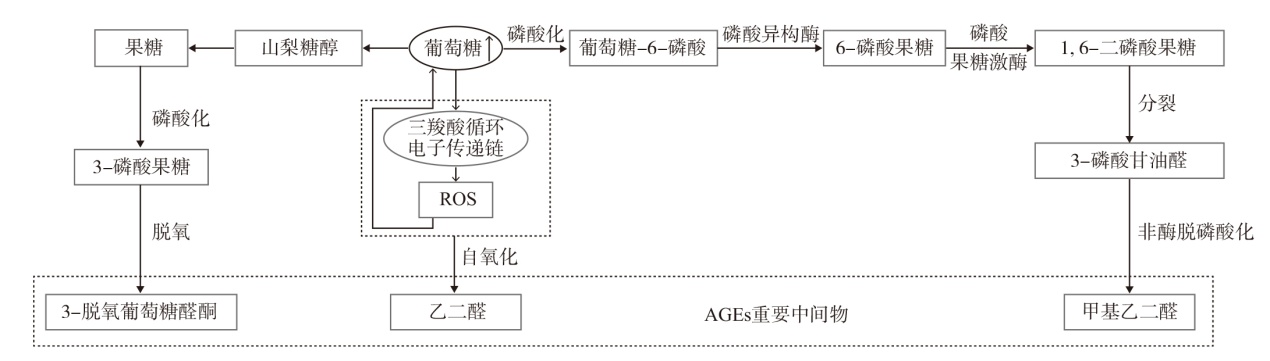
图2
AGEs体内自发形成过程"
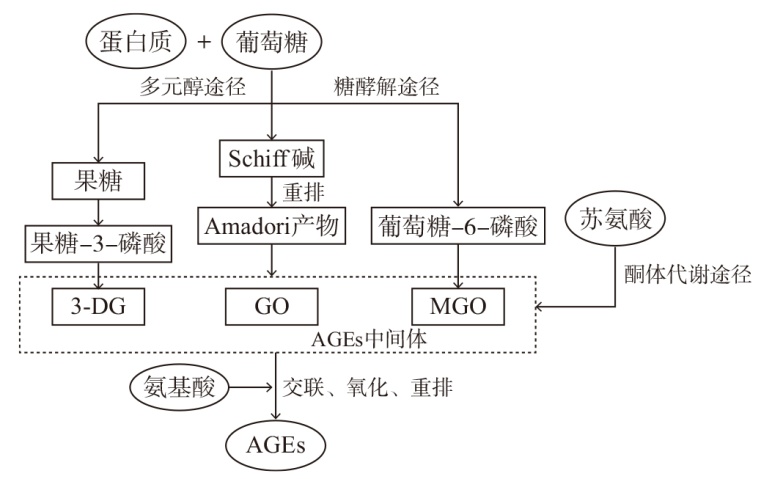
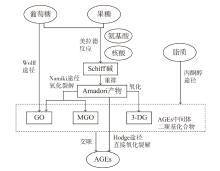
图3
AGEs合成非传统途径"
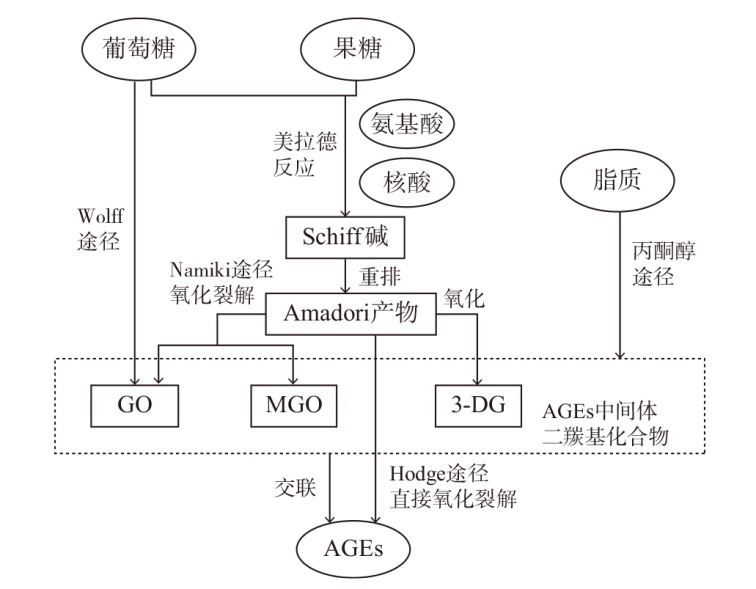
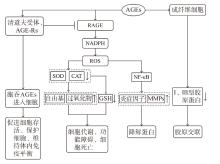
图4
AGEs细胞应答机制"
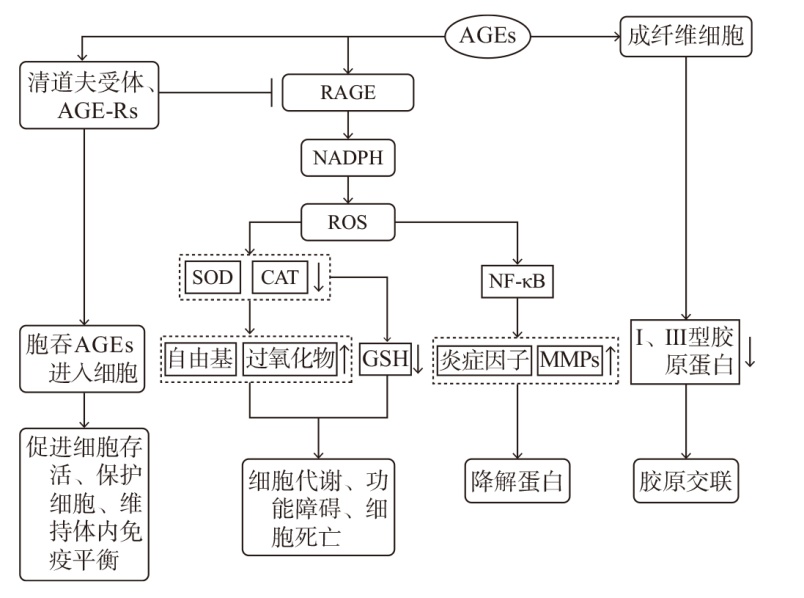
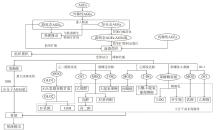
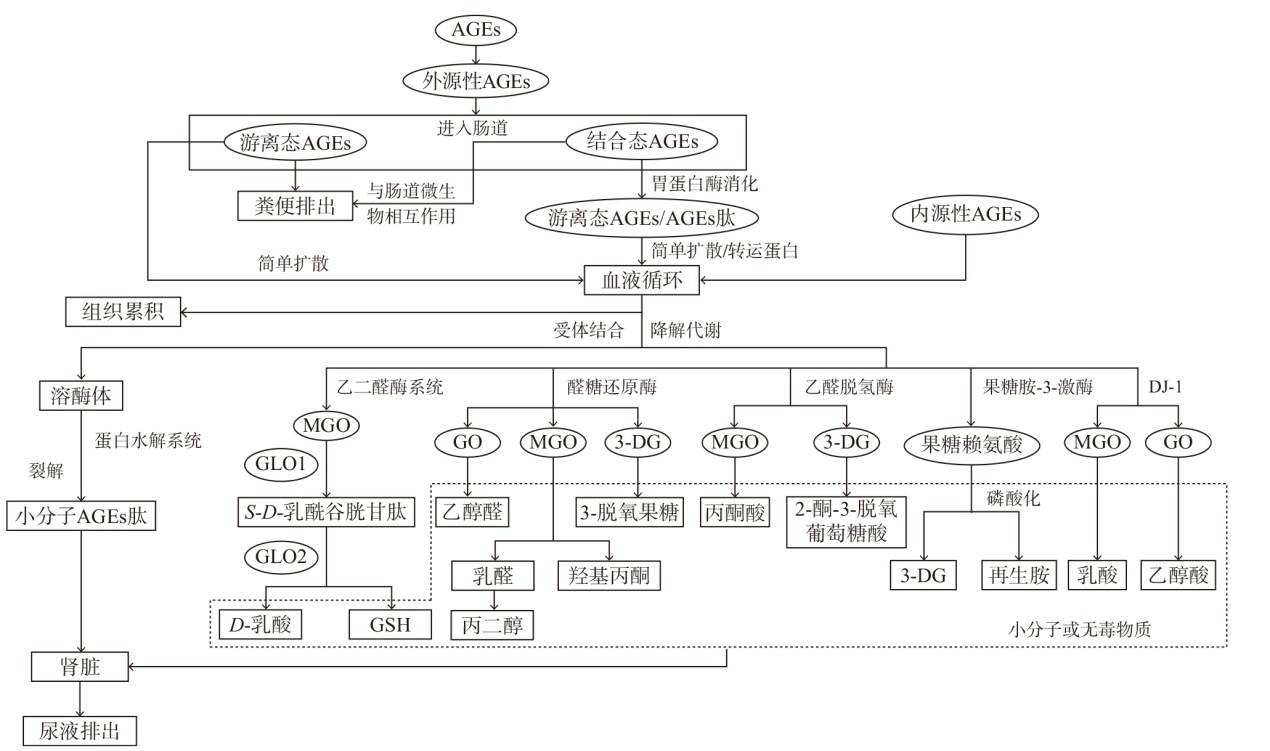
图5
AGEs降解途径"
| [1] | Song Q, Liu J, Dong L, et al. Novel advances in inhibiting advanced glycation end product formation using natural compounds[J]. Biomedicine & Pharmacotherapy, 2021, 140 (12) : 111750. |
| [2] |
Xin C, Wang Y, Liu M, et al. Correlation analysis between advanced glycation end products detected noninvasively and skin aging factors[J]. Journal of Cosmetic Dermatology, 2021, 20 (1) : 243-248.
doi: 10.1111/jocd.v20.1 |
| [3] |
Buszka A. The molecular mechanism of glycation. Harmful effects of advanced glycation end products (AGEs) on the skin[J]. Aesthetic Cosmetology and Medicine, 2023, 12 (1) : 23-27.
doi: 10.52336/acm.2023.002 |
| [4] |
Wagner R, Thorand B, Osterhoff M A, et al. Family history of diabetes is associated with higher risk for prediabetes: a multicentre analysis from the German Center for Diabetes Research[J]. Diabetologia, 2013, 56 (10) : 2176-2180.
doi: 10.1007/s00125-013-3002-1 pmid: 23979484 |
| [5] |
Ao S, Xu W, Ding Q, et al. Regulation of glucose homeostasis in Macrobrachium rosenbergii: effects of glucose load on glucose metabolism and hormonal response[J]. Aquaculture, 2023, 577: 739902.
doi: 10.1016/j.aquaculture.2023.739902 |
| [6] |
Ighodaro O M. Molecular pathways associated with oxidative stress in diabetes mellitus[J]. Biomedicine & Pharmacotherapy, 2018, 108: 656-662.
doi: 10.1016/j.biopha.2018.09.058 |
| [7] |
Giacco F, Brownlee M. Oxidative stress and diabetic complications[J]. Circulation Research, 2010, 107 (9) : 1058-1070.
doi: 10.1161/CIRCRESAHA.110.223545 pmid: 21030723 |
| [8] |
Sebastian B, Thomas F, Marc F, et al. Dicarbonyls and advanced glycation end-products in the development of diabetic complications and targets for intervention[J]. International Journal of Molecular Sciences, 2017, 18 (5) : 984-984.
doi: 10.3390/ijms18050984 |
| [9] | Fang B, Li L, Winget J, et al. Identification of yellow advanced glycation end products in human skin[J]. International Journal of Molecular Sciences, 2024, 25 (11) : 5596. |
| [10] |
Du C, Whiddett R O, Buckle I, et al. Advanced glycation end products and inflammation in type 1 diabetes development[J]. Cells, 2022, 11(21) : 3503-3503.
doi: 10.3390/cells11213503 |
| [11] |
Koschinsky T, He C J, Mitsuhashi T, et al. Orally absorbed reactive glycation products (glycotoxins) : An environmental risk factor in diabetic nephropathy[J]. Proceedings of the National Academy of Sciences, 1997, 94 (12) : 6474-6479.
doi: 10.1073/pnas.94.12.6474 |
| [12] |
Ahmed N. Advanced glycation endproducts--role in pathology of diabetic complications[J]. Diabetes Research and Clinical Practice, 2004, 67 (1) : 3-21.
doi: 10.1016/j.diabres.2004.09.004 |
| [13] |
Lai C H, Chou C C, Chuang H C, et al. Receptor for advanced glycation end products in relation to exposure to metal fumes and polycyclic aromatic hydrocarbon in shipyard welders[J]. Ecotoxicology and Environmental Safety, 2020, 202: 110920.
doi: 10.1016/j.ecoenv.2020.110920 |
| [14] | Sies H, Feinendegen L E. Radiation hormesis: the link to nanomolar hydrogen peroxide[J]. Antioxidants & Redox Signaling, 2017, 27(9) : 596-598. |
| [15] | Perrone A, Giovino A, Benny J, et al. Advanced glycation end products (AGEs) : biochemistry, signaling, analytical methods, and epigenetic effects[J]. Oxidative Medicine and Cellular Longevity, 2020 (3) : 1-18. |
| [16] |
Prasad K, Dhar I, Caspar-Bell G. Role of advanced glycation end products and its receptors in the pathogenesis of cigarette smoke-induced cardiovascular disease[J]. International Journal of Angiology, 2014, 24 (2) : 75-80.
doi: 10.1055/s-00000167 |
| [17] |
Adachi K, Nishijo K, Abo T. Those with the habit of going to sleep early show a higher ratio of lymphocytes while those with the habit of staying up late show a higher ratio of granulocytes[J]. Biomedical Research, 2010, 31 (2) : 143-149.
doi: 10.2220/biomedres.31.143 |
| [18] | Morales-Ghinaglia N, He F, Calhoun S L, et al. Circadian misalignment impacts cardiac autonomic modulation in adolescence[J]. Sleep, 2025, 48 (7) : zsaf015. |
| [19] |
Mcdermott J E, Jacobs J M, Merrill N J, et al. Molecular-level dysregulation of insulin pathways and inflammatory processes in peripheral blood mononuclear cells by circadian misalignment[J]. Journal of Proteome Research, 2024, 23 (5) : 1547-1558.
doi: 10.1021/acs.jproteome.3c00418 pmid: 38619923 |
| [20] | Nishikori S, Yasuda J, Murata K, et al. Resistance training rejuvenates aging skin by reducing circulating inflammatory factors and enhancing dermal extracellular matrices[J]. Scientific Reports, 2023, 13 (1) : 10214. |
| [21] | Poulsen M W, Hedegaard R V, Andersen J M, et al. Advanced glycation endproducts in food and their effects on health[J]. Food & Chemical Toxicology, 2013, 60: 10-37. |
| [22] | Qi Y, Wang W, Yang T, et al. Maillard reaction in flour product processing: mechanism, impact on quality, and mitigation strategies of harmful products[J]. Foods, 2025, 14 (15) : 2721. |
| [23] | Uribarri J, Woodruff S, Goodman S, et al. Advanced glycation end products in foods and a practical guide to their reduction in the diet[J]. Journal of the American Dietetic, 2010, 110 (6) : 911-916. |
| [24] |
Luo Y, Zhang J, Ho C T, et al. Management of maillard reaction-derived reactive carbonyl species and advanced glycation end products by tea and tea polyphenols[J]. Food Science and Human Wellness, 2022, 11 (3) : 557-567.
doi: 10.1016/j.fshw.2021.12.012 |
| [25] |
Zhu J L, Cai Y Q, Long S L, et al. The role of advanced glycation end products in human infertility[J]. Life Sciences, 2020, 255: 117830.
doi: 10.1016/j.lfs.2020.117830 |
| [26] | Dănilă A I, Ghenciu L A, Stoicescu E R, et al. Aldose reductase as a key target in the prevention and treatment of diabetic retinopathy: a comprehensive review[J]. Biomedicines, 2024, 12 (4) : 747. |
| [27] |
Jojima T, Inui M. Engineering the glycolytic pathway: a potential approach for improvement of biocatalyst performance[J]. Bioengineered, 2015, 6 (6) : 328-334.
doi: 10.1080/21655979.2015.1111493 pmid: 26513591 |
| [28] |
Thornalley P J. Glutathione-dependent detoxification of alpha-oxoaldehydes by the glyoxalase system: involvement in disease mechanisms and antiproliferative activity of glyoxalase I inhibitors[J]. Chemico-biological Interactions, 1998, 111-112: 137-151.
pmid: 9679550 |
| [29] | Twarda-Clapa A, Olczak A, Białkowska A M, et al. Advanced glycation end-products (AGEs) : formation, chemistry, classification, receptors, and diseases related to AGEs[J]. Cells, 2022, 11 (8) : 1312. |
| [30] |
Montine T J, Neely M D, Quinn J F, et al. Lipid peroxidation in aging brain and alzheimer's disease[J]. Free Radical Biology & Medicine, 2002, 33 (5) : 620-626.
doi: 10.1016/S0891-5849(02)00807-9 |
| [31] |
Dong H, Zhang Y, Huang Y, et al. Pathophysiology of RAGE in inflammatory diseases[J]. Front Immunol, 2022, 13: 931473.
doi: 10.3389/fimmu.2022.931473 |
| [32] | Ashraf J M, Rabbani G, Ahmad S, et al. Glycation of H1 histone by 3-deoxyglucosone: effects on protein structure and generation of different advanced glycation end products[J]. Plos One, 2015, 10(6) : e0130630. |
| [33] |
Piperi C. Dietary advanced glycation end-products: molecular mechanisms and preventive tools[J]. Current Nutrition Reports, 2017, 6 (1) : 1-8.
doi: 10.1007/s13668-017-0188-8 |
| [34] |
Menon R P, Sudhakaran P R. Enhanced adhesion of human mononuclear cells to nonenzymatically glycosylated collagen I[J]. Molecular and Cellular Biochemistry, 1995, 148 (2) : 115-121.
pmid: 8594415 |
| [35] |
Canty E G, Kadler K E. Procollagen trafficking, processing and fibrillogenesis[J]. Journal of Cell Science, 2005, 118 (7) : 1341-1353.
doi: 10.1242/jcs.01731 |
| [36] | Wang L, Jiang Y, Zhao C. The effects of advanced glycation end-products on skin and potential anti-glycation strategies[J]. Experimental Dermatology, 2024, 33 (4) : e15065. |
| [37] |
Avery N C, Bailey A J. The effects of the maillard reaction on the physical properties and cell interactions of collagen[J]. Pathologie Biologie, 2006, 54 (7) : 387-395.
doi: 10.1016/j.patbio.2006.07.005 pmid: 16962252 |
| [38] | Wautier M P, Chappey O, Corda S, et al. Activation of NADPH oxidase by AGE links oxidant stress to altered gene expression via RAGE[J]. American Journal of Physiology-Endocrinology and Metabolism, 2001, 280 (5) : E685. |
| [39] |
Lohwasser C, Neureiter D, Weigle B, et al. The receptor for advanced glycation end products is highly expressed in the skin and upregulated by advanced glycation end products and tumor necrosis factor-alpha[J]. Journal of Investigative Dermatology, 2006, 126 (2) : 291-299.
doi: 10.1038/sj.jid.5700070 pmid: 16374460 |
| [40] |
Han J, Sun Y, Wu T, et al. Echinacoside-zinc nanomaterial inhibits skin glycation by suppressing the transcriptional activation of the receptor for advanced glycation end-products[J]. ACS Nano, 2023, 17 (14) : 14123-14135.
doi: 10.1021/acsnano.3c04726 pmid: 37403876 |
| [41] |
Yang X, Okamura D M, Lu X, et al. CD36 in chronic kidney disease: novel insights and therapeutic opportunities[J]. Nature Reviews Nephrology, 2017, 13 (12) : 769-781.
doi: 10.1038/nrneph.2017.126 pmid: 28919632 |
| [42] |
Kita T, Kume N, Yokode M, et al. Oxidized-LDL and atherosclerosis. Role of LOX-1[J]. Annals of the New York Academy of Sciences, 2010, 902 (1) : 95-102.
doi: 10.1111/nyas.2000.902.issue-1 |
| [43] |
Uribarri J, Cai W, Ramdas M, et al. Restriction of advanced glycation end products improves insulin resistance in human type 2 diabetes[J]. Diabetes Care, 2011, 34 (7) : 1610-1616.
doi: 10.2337/dc11-0091 pmid: 21709297 |
| [44] | Xie F, Liu B, Qiao W, et al. Smooth muscle NF90 deficiency ameliorates diabetic atherosclerotic calcification in male mice via FBXW7-AGER1-AGEs axis[J]. Nature Communications, 2024, 15(1) : 4985. |
| [45] | Gutierrez-Mariscal F M, Lopez-Moreno A, Torres-Peña J D, et al. Modulation of circulating levels of advanced glycation end products and its impact on intima-media thickness of both common carotid arteries: CORDIOPREV randomised controlled trial[J]. Cardiovascular Diabetology, 2024, 23 (1) : 361. |
| [46] |
Cressey R, Han M T T, Khaodee W, et al. Navigating PRKCSH's impact on cancer: from N-linked glycosylation to death pathway and anti-tumor immunity[J]. Front Oncol, 2024, 14: 1378694.
doi: 10.3389/fonc.2024.1378694 |
| [47] |
Shin G C, Lee H M, Kim N, et al. PRKCSH contributes to TNFSF resistance by extending IGF1R half-life and activation in lung cancer[J]. Experimental and Molecular Medicine, 2024, 56 (1) : 192-209.
doi: 10.1038/s12276-023-01147-1 |
| [48] |
Pugliese G, Iacobini C, Pesce C M, et al. Galectin-3: an emerging all-out player in metabolic disorders and their complications[J]. Glycobiology, 2015, 25 (2) : 136-150.
doi: 10.1093/glycob/cwu111 pmid: 25303959 |
| [49] | Iacobini C, Amadio L, Oddi G, et al. Role of galectin-3 in diabetic nephropathy[J]. Journal of the American Society of Nephrology Jasn, 2003, 14 (8S) : 264-270. |
| [50] |
Richarme G, Mihoub M, Dairou J, et al. Parkinsonism-associated protein DJ-1/Park7 is a major protein deglycase that repairs methylglyoxal- and glyoxal-glycated cysteine, arginine, and lysine residues[J]. The Journal of Biological Chemistry, 2015, 290 (3) : 1885-1897.
doi: 10.1074/jbc.M114.597815 |
| [51] |
Ferri S, Kim S, Tsugawa W, et al. Review of fructosyl amino acid oxidase engineering research: a glimpse into the future of hemoglobin A1c biosensing[J]. Journal of Diabetes Science and Technology, 2009, 3 (3) : 585-592.
doi: 10.1177/193229680900300324 pmid: 20144298 |
| [52] | De Decker I, Notebaert M, Speeckaert M M, et al. Enzymatic deglycation of damaged skin by means of combined treatment of fructosamine-3-kinase and fructosyl-amino acid oxidase[J]. International Journal of Molecular Sciences, 2023, 24 (10) : 8981. |
| [53] | Garg A, On K F, Xiao Y, et al. The molecular basis of human FN3K mediated phosphorylation of glycated substrates[J]. Nature Communications, 2025, 16 (1) : 941. |
| [54] | Shimizu K, Ikegami-Kawai M, Takahashi T. Increased oxidized protein hydrolase activity in serum and urine of diabetic rat models[J]. Biological & Pharmaceutical Bulletin, 2009, 32 (9) : 1632-1635. |
| [55] |
Ponce-Mora A, Bejarano E. Targeting autophagy by polyphenols to prevent glycative stress-toxicity in the brain[J]. Neural Regeneration Research, 2024, 19 (5) : 941-942.
doi: 10.4103/1673-5374.385295 pmid: 37862179 |
| [56] |
Kumar A V, Mills J, Lapierre L R. Selective autophagy receptor p62/SQSTM1, a pivotal player in stress and aging[J]. Frontiers in Cell and Developmental Biology, 2022, 10: 793328.
doi: 10.3389/fcell.2022.793328 |
| [57] | Shin K, Kim Y, Kim S, et al. Anti-glycation and anti-aging efficacy of newly synthesized antioxidant with autophagy stimulating activity[J]. Journal of Cosmetic Dermatology, 2025, 24 (5) : e70240. |
| [58] |
Yuan X, Nie C, Liu H, et al. Comparison of metabolic fate, target organs, and microbiota interactions of free and bound dietary advanced glycation end products[J]. Critical Reviews in Food Science and Nutrition, 2023, 63 (19) : 3612-3633.
doi: 10.1080/10408398.2021.1991265 |
| [59] | Rungratanawanich W, Qu Y, Wang X, et al. Advanced glycation end products (AGEs) and other adducts in aging-related diseases and alcohol-mediated tissue injury[J]. Experimental & Molecular Medicine, 2021, 53 (2) : 168-188. |
| [1] | 冯淑瑶, 李佳宁, 王紫鹃, 姜菲, 高振珅, 张海娟. 鞣花酸纳米银颗粒的绿色合成、表征及抗菌活性研究[J]. 日用化学工业(中英文), 2026, 56(9): 1180-1187. |
| [2] | 陈升, 商顺盈. 聚苯胺/C3N5异质结构建及光催化降解罗丹明B性能研究[J]. 日用化学工业(中英文), 2026, 56(8): 1009-1018. |
| [3] | 韩玉英, 陈莉君, 李长伟, 韩家旋, 任莹辉. 基于分子动力学模拟的PBS-TME/PLA复合材料的制备及性能研究[J]. 日用化学工业(中英文), 2026, 56(7): 853-863. |
| [4] | 姜昕, 刘堃, 姜博, 刘岩峰. 表面活性素的定量检测、高效合成及应用研究进展[J]. 日用化学工业(中英文), 2026, 56(7): 960-967. |
| [5] | 贾彩玲, 张占庭, 闫富伟, 刘福跃, 伍燕妮, 王芬, 谢海娇. 氧空位TiO2/Sn3O4复合材料协同增强可见光催化降解甲基橙[J]. 日用化学工业(中英文), 2026, 56(2): 191-200. |
| [6] | 沈登绪, 楚留声. 粉煤灰漂珠负载聚苯胺/ZnFe2O4复合材料制备及光催化降解性能研究[J]. 日用化学工业(中英文), 2026, 56(10): 1327-1336. |
| [7] | 严羽欢,吕粼,吴美娜,杨睿,蔡国强,何美林. 嗅觉干预助眠的作用机制与研究进展[J]. 日用化学工业(中英文), 2026, 56(10): 1392-1402. |
| [8] | 毛淑佳. PLA生物降解聚酯材料的制备及降解性能的研究[J]. 日用化学工业(中英文), 2026, 56(1): 88-97. |
| [9] | 程玮, 祝盼盼. 可生物降解的聚酯材料的制备及疏水性能研究[J]. 日用化学工业(中英文), 2025, 55(9): 1145-1152. |
| [10] | 霍本龙, 谢昕. 表面活性剂十六烷基三甲基溴化铵改性Bi2WO6对含铬废水的光催化降解研究[J]. 日用化学工业(中英文), 2025, 55(9): 1169-1178. |
| [11] | 陈凤玲, 王亚茹, 叶蓉姿, 梁嘉恩, 谢嘉颖, 谭建华. 经表皮失水率测量影响因素剖析及标准化操作研究[J]. 日用化学工业(中英文), 2025, 55(6): 715-722. |
| [12] | 李鹏鹏, 李武伟. 包装用可生物降解聚酯材料的制备及性能研究[J]. 日用化学工业(中英文), 2025, 55(5): 625-632. |
| [13] | 孟祥吉, 王婧如, 王韵恺, 智丽飞, 王国永, 杨佳茜. 有机硅季铵盐表面活性剂的合成与发展[J]. 日用化学工业(中英文), 2025, 55(5): 640-648. |
| [14] | 程海兵, 张勇, 孙磊, 李唯佳, 陈志, 唐聪明, 常丽. W-SN交联剂的合成及其交联性能研究[J]. 日用化学工业(中英文), 2025, 55(3): 279-285. |
| [15] | 蓝云萍, 谢志洁, 赵楚杰, 刘晓纯, 王诗琼, 何秋星. 国内外合成生物学化妆品原料的研究进展与监管[J]. 日用化学工业(中英文), 2025, 55(3): 367-380. |
|
