Welcome to China Surfactant Detergent & Cosmetics, Today is


China Surfactant Detergent & Cosmetics ›› 2026, Vol. 56 ›› Issue (8): 1019-1026.doi: 10.3969/j.issn.2097-2806.2026.08.006
• Basic research • Previous Articles Next Articles
Lina Wang*( ),Xiaoxue Cai*(),Xiaoqin Tang,Guodong Zhang,Chunying Zheng
Received:2025-10-09
Revised:2026-08-10
Online:2026-08-22
Published:2026-09-02
Contact:
*E-mail: CLC Number:
Lina Wang, Xiaoxue Cai, Xiaoqin Tang, Guodong Zhang, Chunying Zheng. Construction of pH-responsive pseudo-Gemini surfactants: exploring microscopic mechanisms for enhancing hair conditioner performance[J].China Surfactant Detergent & Cosmetics, 2026, 56(8): 1019-1026.
Tab.1
Information of test hair conditioner samples"
| 样品编号 | pH值 | 调节剂 | SPA含量/% | 硬脂醇含量/% | 鲸蜡醇含量/% | 去离子水含量/% |
|---|---|---|---|---|---|---|
| 样品A | 4.5 | SA | 3.0 | 3.5 | 1.5 | 补足至100 |
| 样品B | 4.5 | HCl | 3.0 | 3.5 | 1.5 | 补足至100 |
| 样品C | 4.5 | LA | 3.0 | 3.5 | 1.5 | 补足至100 |
| 样品D | 5.5 | SA | 3.0 | 3.5 | 1.5 | 补足至100 |
| 样品E | 6.5 | SA | 3.0 | 3.5 | 1.5 | 补足至100 |
| 样品F | 4.5 | GA | 3.0 | 3.5 | 1.5 | 补足至100 |
| 样品G | 4.5 | CA | 3.0 | 3.5 | 1.5 | 补足至100 |
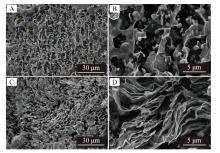
Fig.1
Cryo-scanning electron microscopy images of hair conditioner systems prepared with different acids at pH 4.5. (A) Low-magnification image of the LA system (1 000×). Example 1 layer spacing: 5.374 μm; Example 2 layer spacing: 3.989 μm; Example 3 layer spacing: 3.978 μm; Example 4 layer spacing: 3.990 μm. (B) High-magnification image of the LA system (5 000×). (C) Low-magnification image of the SA system (1 000×). (D) High-magnification image of the SA system (5 000×)"
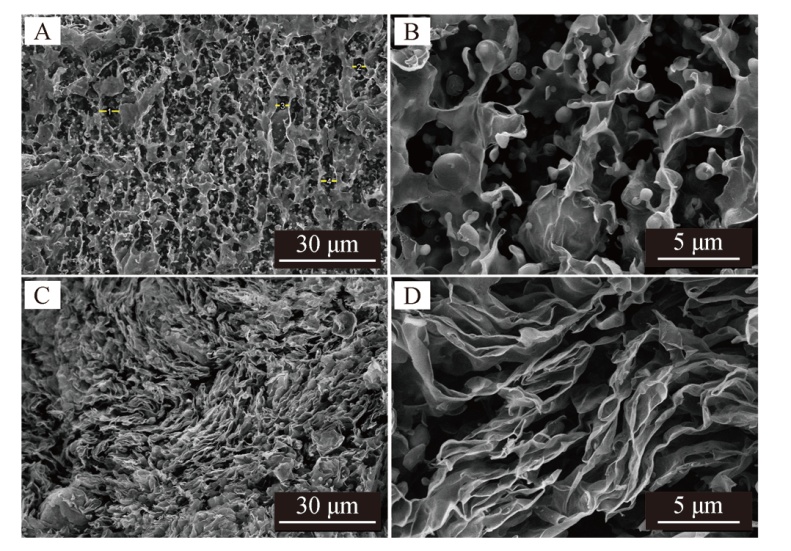
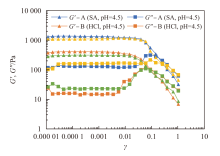
Fig.2
Dynamic strain sweep curves of hair conditioner systems with different acids at pH 4.5"
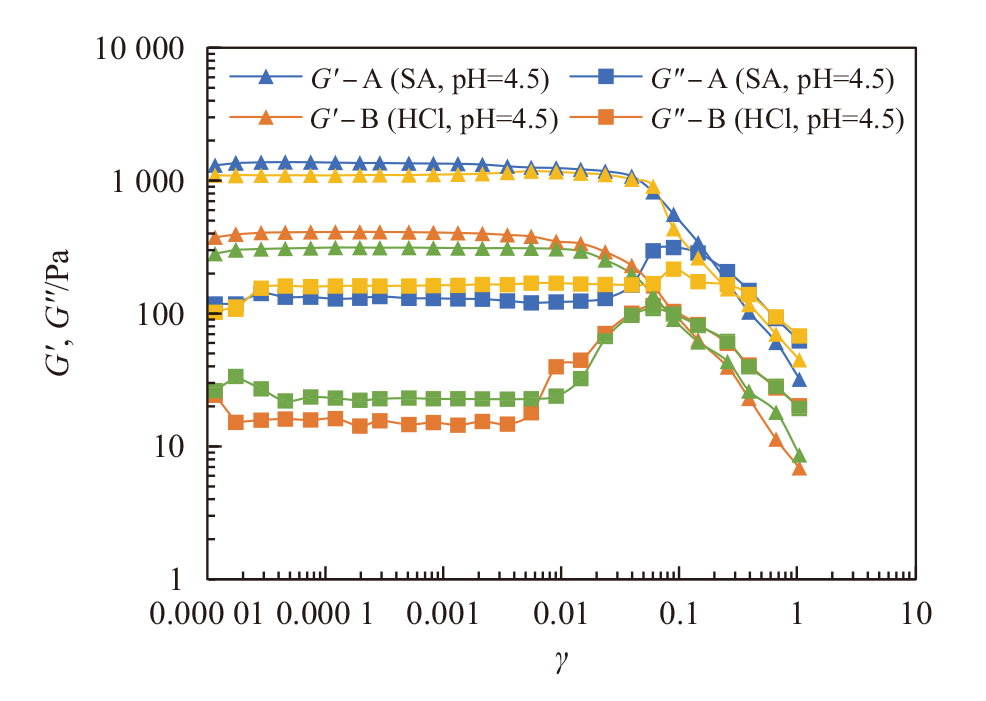
Fig.3
Strain-dependent dynamic viscosity curves of hair conditioner systems with different acids at pH 4.5"
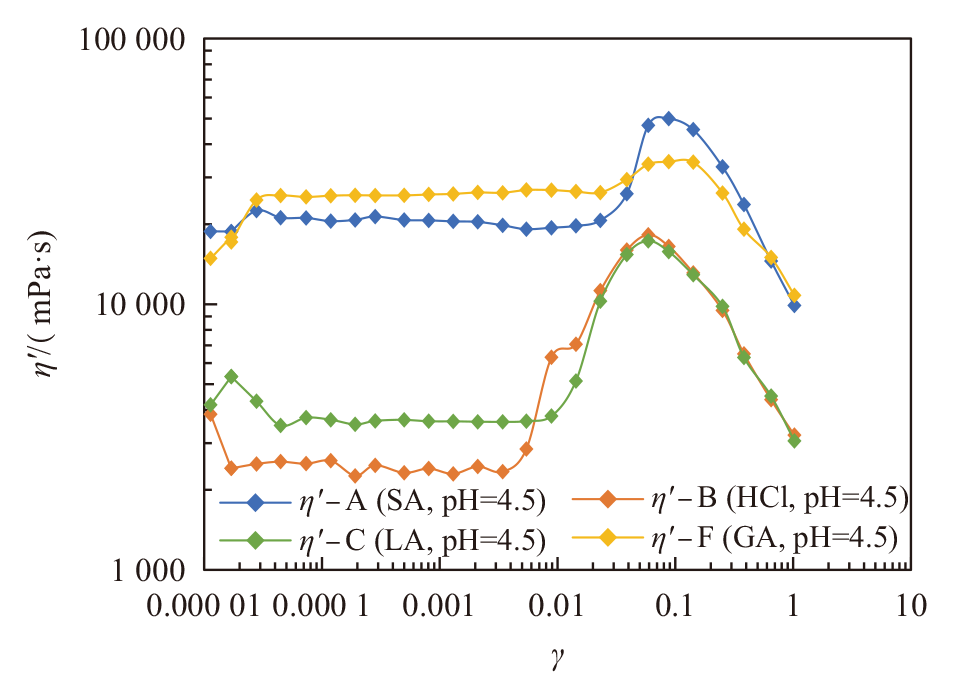
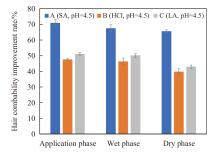
Fig.4
Comparison of wet-combing improvement rates among hair conditioner systems with different acids at pH 4.5"
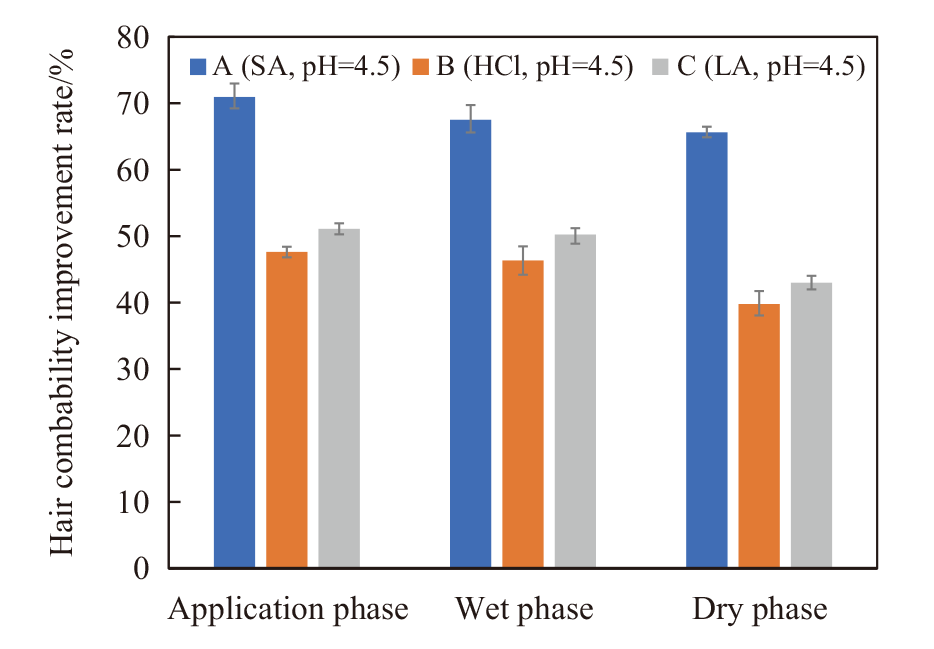
Fig.5
Antistatic performance of hair conditioner systems with different acids at pH 4.5"
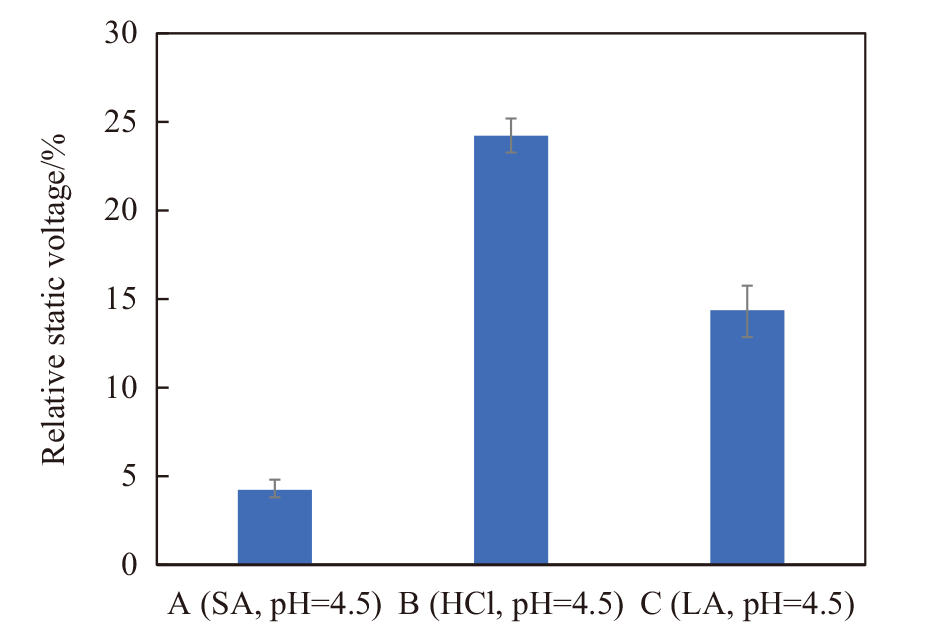
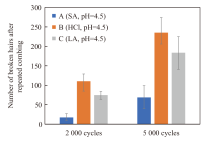
Fig.6
Anti-breakage performance of conditioner systems with different acids at pH 4.5"
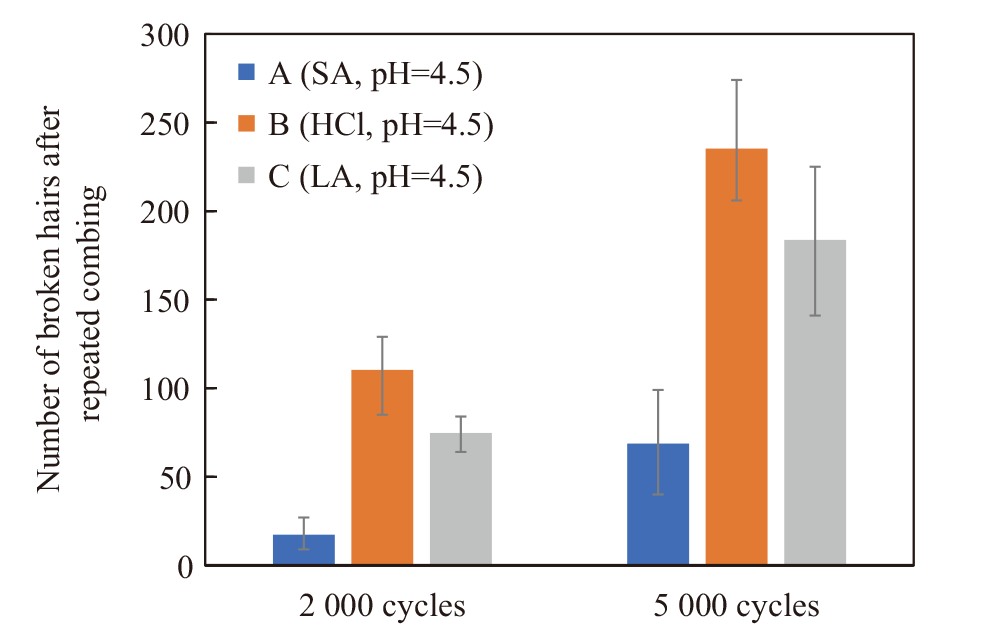
Fig.7
Dynamic strain sweep curves of succinic acid-based hair conditioner systems at different pH values"
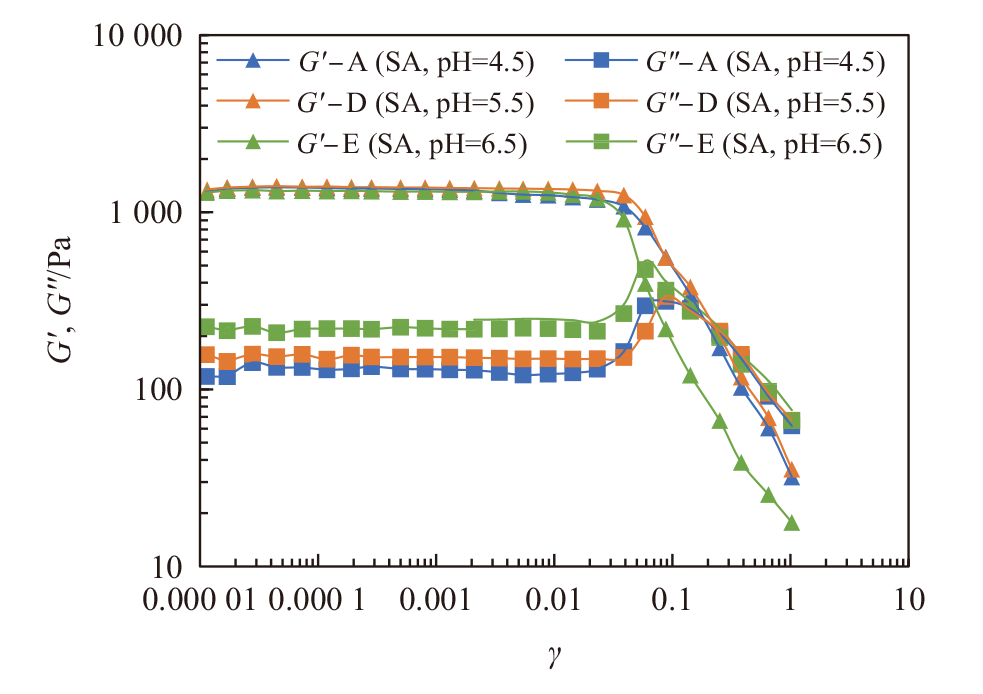
Fig.8
Strain-dependent dynamic viscosity curves of succinic acid-based hair conditioner systems at different pH values"
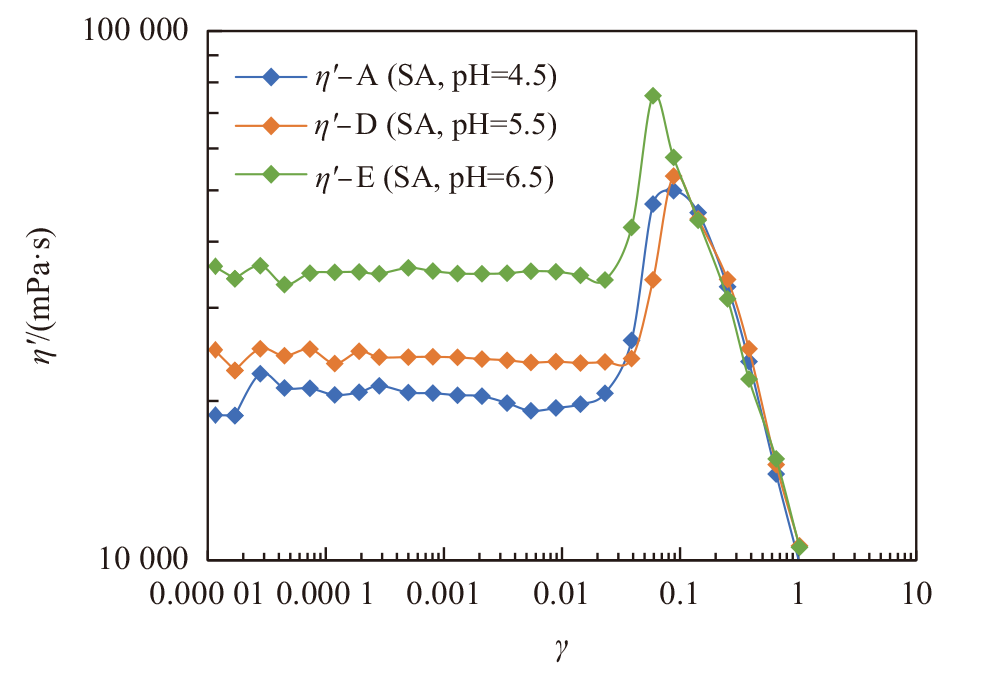
Fig.9
Combing performance of succinic acid-based hair conditioner systems at different pH values"
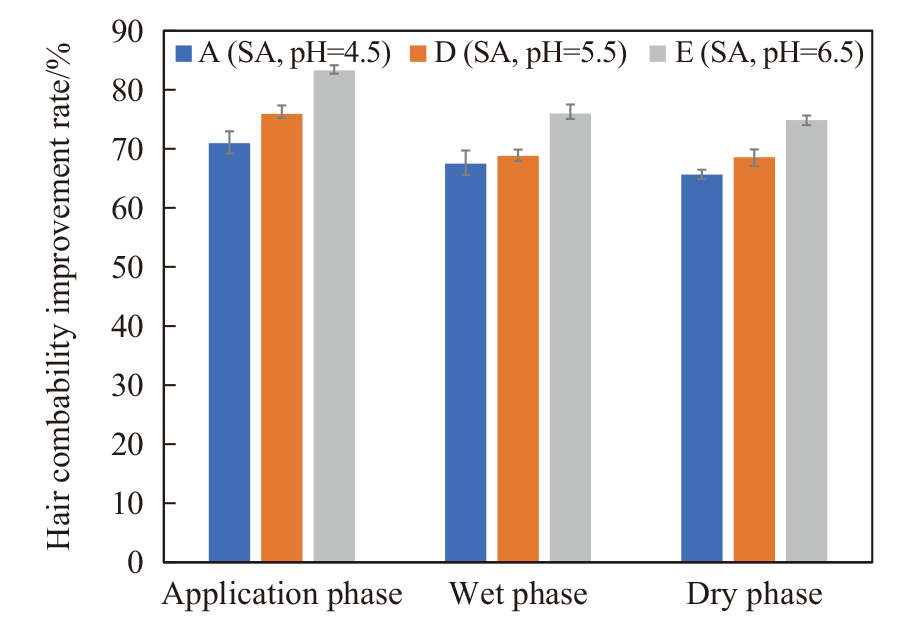
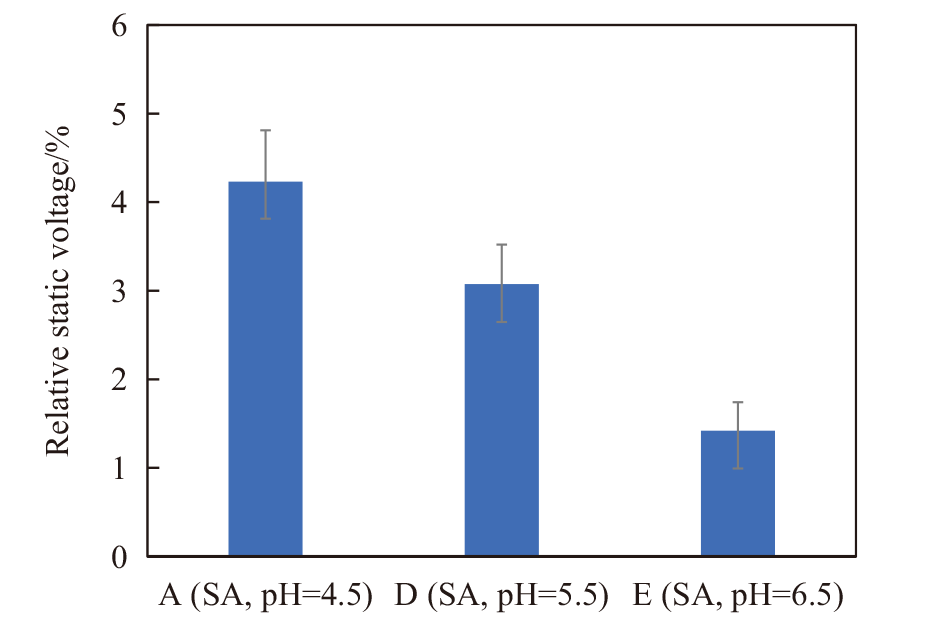
Fig.10
Antistatic performance of succinic acid-based hair conditioner systems at different pH values"
| [1] |
Šindelka K, Kowalski A, Cooke M, et al. Interactions of cationic surfactant-fatty alcohol monolayers with natural human hair surface: insights from dissipative particle dynamics[J]. Journal of Molecular Liquids, 2023, 375: 121385.
doi: 10.1016/j.molliq.2023.121385 |
| [2] |
Sano M, Mayama H, Nonomura Y. Friction dynamics of human hair treated with water or cationic surfactant aqueous solution[J]. Journal of Surfactants and Detergents, 2023, 26(2): 185-193.
doi: 10.1002/jsde.v26.2 |
| [3] |
Lodge R A, Bhushan B. Surface potential measurement of human hair using Kelvin probe microscopy[J]. Journal of Vacuum Science & Technology A: Vacuum, Surfaces, and Films, 2007, 25(4): 893-902.
doi: 10.1116/1.2715965 |
| [4] | Zamani N A N, Heshamuddin N S, Jafri A A, et al. The effects of temperature, pH and moisture exposure on human hair[J]. Lecture Notes in Mechanical Engineering, 2021: 1171-1181. |
| [5] | Fernández-Peña L, Guzmán E. Physicochemical aspects of the performance of hair-conditioning formulations[J]. Cosmetics, 2020, 7(2): 26. |
| [6] | 森冈智纪. 毛发化妆品: CN100444821C[P]. 2008-12-24. |
| [7] | Pan Ting, Wu Junhui, Pei Xiaomei, et al. Temperature and pH responsive behavior of wormlike micelles formed by novel pseudo-Gemini surfactant[J]. China Surfactant Detergent & Cosmetics, 2023, 53(12): 1361-1368. |
| [8] |
Figueirido F, Del Buono G S, Levy R M. Prediction of pKa shifts without truncation of electrostatic interactions: an explicit solvent calculation for succinic acid[J]. The Journal of Physical Chemistry, 1996, 100(16): 6389-6392.
doi: 10.1021/jp9600524 |
| [9] |
Kang Wanli, Hou Xiaoyu, Wang Pengxiang, et al. Study on the effect of the organic acid structure on the rheological behavior and aggregate transformation of a pH-responsive wormlike micelle system[J]. Soft Matter, 2019, 15(15): 3160-3167.
doi: 10.1039/c9sm00088g pmid: 30865762 |
| [10] |
Manoli S, Avranas A. Aqueous solutions of the double chain cationic surfactants didodecyldimethylammonium bromide and ditetradecyldimethylammonium bromide with Pluronic F68: dynamic surface tension measurements[J]. Colloids and Surfaces A: Physicochemical and Engineering Aspects, 2013, 436: 1060-1068.
doi: 10.1016/j.colsurfa.2013.08.049 |
| [11] |
Lv Miao, Shi Jin, Binks B P, et al. Competition between hydrogen bonding and electrostatic repulsion in pH-switchable emulsions[J]. Journal of Molecular Liquids, 2023, 390: 123095.
doi: 10.1016/j.molliq.2023.123095 |
| [12] |
Ritacco H, Langevin D, Diamant H, et al. Dynamic surface tension of aqueous solutions of ionic surfactants: role of electrostatics[J]. Langmuir, 2011, 27(3): 1009-1014.
doi: 10.1021/la103039v pmid: 21204545 |
| [13] | De Oliveira T E, Leonforte F, Nicolas-Morgantini L, et al. Fluid bilayer phase in aqueous mixtures of fatty alcohol and cationic surfactant[J]. Physical Review Research, 2020, 2(1): 013075. |
| [14] |
Akatsuka H, Ohara Y, Otsubo Y. Effects of dioctadecyl dimethyl ammonium chloride on the rheological behavior of behenyl trimethyl ammonium chloride/1-hexadecanol/water ternary system[J]. Journal of Colloid and Interface Science, 2006, 302(1): 341-346.
pmid: 16839564 |
| [15] |
Fameau A L, Veronico L, Le Coeur C, et al. Shear and cooling effects on lamellar gel network structure: insights from Rheo-SANS[J]. Journal of Molecular Liquids, 2024, 414: 126283.
doi: 10.1016/j.molliq.2024.126283 |
| [16] |
Cunningham G E, O’Sullivan J J, Simmons M J H. Exploring formulation, manufacture and characterisation techniques of lamellar gel networks in hair conditioners: a review[J]. Advances in Colloid and Interface Science, 2025, 339: 103419.
doi: 10.1016/j.cis.2025.103419 |
| [17] | Tang Xiaoqin, Wang Lina, Liu Xiaochen, et al. Different lamellar structures constructed by behenyltrimethylammonium chloride/fatty alcohol/water and their responsive behaviors to preparation processes, storage time and shear[G] // International Federation of Societies of Cosmetic Chemists. Proceedings of 2025 IFSCC International Congress. Cannes: International Federation of Societies of Cosmetic Chemists, 2025: 1776. |
| [18] |
Chng Choon‐Peng, Gupta Shikhar, Huang Changjin. Protonation state of a bioactive compound regulates its release from lamellar gel-phase bilayers[J]. The Journal of Physical Chemistry B, 2024, 128(29): 7180-7187.
doi: 10.1021/acs.jpcb.4c02442 |
| [1] | Xiaoqin Tang, Lina Wang, Xiaoxue Cai, Guodong Zhang, Chunying Zheng. Phase structure of hair conditioner formulation models and its impact on performance [J]. China Surfactant Detergent & Cosmetics, 2026, 56(8): 1038-1043. |
| [2] | Wenrui Zhou, Jianbiao He, Qian Jiao, Zidi Wang, Qianqian Su, Yan Jia. Research progress of the correlation between sensory evaluation and instrumental analysis of cosmetics in O/W emulsion system [J]. China Surfactant Detergent & Cosmetics, 2024, 54(3): 344-352. |
| [3] | Pei Liu, Ting Pan, Xiaomei Pei, Binglei Song, Jianzhong Jiang, Zhenggang Cui, Bernard P. Binks. Dual-responsive oil-in-water emulsions co-stabilized by a nonionic-anionic Bola surfactant and silica nanoparticles [J]. China Surfactant Detergent & Cosmetics, 2024, 54(1): 1-15. |
| [4] | Ding Zhengqing, Wu Yingyi, Wang Weiyun, Huang Xujuan, Cai Zhaosheng. Study on Pickering emulsion stabilized by hydroxyethyl cellulose/nanocellulose and its rheological properties [J]. China Surfactant Detergent & Cosmetics, 2023, 53(3): 245-252. |
| [5] | Ting Pan, Junhui Wu, Xiaomei Pei, Zhenggang Cui. Temperature and pH responsive behavior of wormlike micelles formed by novel pseudo-gemini surfactant [J]. China Surfactant Detergent & Cosmetics, 2023, 53(12): 1361-1368. |
| [6] | Gao Yan, Chen Jiewen, Xiao Lei. Study on the rheological properties of toothpastes from different production processes [J]. China Surfactant Detergent & Cosmetics, 2023, 53(11): 1299-1304. |
| [7] | Qin Zhiang,Zhang Yun,Liu Dong,Cao Yuhua. Research on the amphiphilic polymer applied in hair conditioner [J]. China Surfactant Detergent & Cosmetics, 2022, 52(2): 152-158. |
| [8] | Mu Meng,Zhang Xing,Jiang Yan,Li Jianbing,Lu Pingping,Zhang Yongmin. pH-responsive vesicles based on dynamic covalent bond [J]. China Surfactant Detergent & Cosmetics, 2021, 51(11): 1060-1066. |
| [9] | XU Chun-sheng,CHEN Li-na,LIU Dong-hui. Study on the rheological properties of glycerin solution of anhydrous toothpaste thickener [J]. China Surfactant Detergent & Cosmetics, 2020, 50(9): 620-623. |
| [10] | CUI Xiu,FANG Bo,XU Hai-tao. Rheological properties of pH-responsive viscoelastic micellar system of oleylamidopropyl dimethyl amine/potassium hydrogen phthalate [J]. China Surfactant Detergent & Cosmetics, 2020, 50(7): 433-438. |
| [11] | ZHANG Wan-qing,JIANG Jian-zhong,CUI Zheng-gang. Interactions between surfactants and nanoparticles and the construction of smart systems(III)Interactions between oppositely charged nanoparticles and ionic surfactants(ii)Construction of stimuli-responsive Pickering emulsions and Pickering foams by using ordinary commercial surfactants [J]. China Surfactant Detergent & Cosmetics, 2019, 49(9): 561-571. |
| [12] | SUN Xiao-feng,LI Hong-guang. Carbon quantum dot-doped worm-like micelles [J]. China Surfactant Detergent & Cosmetics, 2018, 48(9): 483-488. |
| [13] | ZHANG Meng, QI Li-yun, LONG Yu, WANG Ji-yuan, QI Song-zhu, HUANG Yuan-lin, FANG Xue-jin. Study on rheological behaviors of pH-responsive wormlike micelles formed by an amine oxide surfactant [J]. China Surfactant Detergent & Cosmetics, 2017, 47(6): 301-306. |
| [14] | WANG Hong-di, MA Jian-zhong, LÜ Bin, GAO Jian-jing, XUE Dan. Synthesis and performance of asymmetric Gemini sulfosuccinate surfactant [J]. China Surfactant Detergent & Cosmetics, 2015, 45(12): 685-689. |
| [15] | LI Dong-hu, CAO Guang-qun, DONG Wei. Synthesis and performance of cationic sesbania gum [J]. China Surfactant Detergent & Cosmetics, 2014, 44(7): 390-393. |
|
