Welcome to China Surfactant Detergent & Cosmetics, Today is


China Surfactant Detergent & Cosmetics ›› 2026, Vol. 56 ›› Issue (8): 1027-1037.doi: 10.3969/j.issn.2097-2806.2026.08.007
• Development and application • Previous Articles Next Articles
Yuanyuan Fang,Qian Zhang,Mengxue Gao,Yubing Wang,Xiaowei Chang*( )
)
Received:2025-07-01
Revised:2026-07-23
Online:2026-08-22
Published:2026-09-02
Contact:
*E-mail: CLC Number:
Yuanyuan Fang, Qian Zhang, Mengxue Gao, Yubing Wang, Xiaowei Chang. A plant-derived complex attenuates surfactant-induced scalp sensitivity: efficacy and underlying mechanisms[J].China Surfactant Detergent & Cosmetics, 2026, 56(8): 1027-1037.
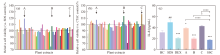
Fig.1
Screening of soothing plant extracts. Cell viability after treatment with plant extracts at a concentration of 1 000 μg/mL; A: Scutellaria alpine extract; B: Lavandula angustifolia extract; C: Epilobium angustifolium extract. (a) against SDS stimulation; (b) against CTAC stimulation. (c) Effects of single plant extracts and SSC on IL-8 release. (##P<0.01 vs. control group; *P<0.05, ***P<0.001, ****P<0.000 1 vs. surfactant stimulation)"
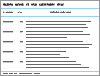
Tab.1
Effect of three plant extracts on keratinocyte viability (1 000 μg/mL)"
| Scutellaria alpine | Lavandula angustifolia | Epilobium angustifolium | |
|---|---|---|---|
| Cell viability (SDS model) /% | 118.93 | 107.24 | 105.09 |
| Cell viability (CTAC model) /% | 107.33 | 113.38 | 116.21 |
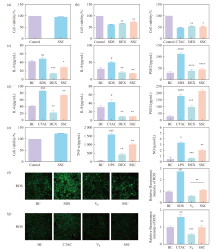
Fig.2
The SSC reduces the production of inflammatory factors and ROS. Cell viability of keratinocytes (a) without or (b) with surfactant stimulation; IL-6, IL-8, and PGE2 release from a keratinocyte model stimulated by (c) SDS or (d) CTAC; (e) Cell viability of macrophages, and release of TNF-α and NO (under LPS stimulation) ; intracellular ROS in keratinocyte model stimulated by (f) SDS or (g) CTAC. DEX and VE were used as positive controls, respectively. (#P<0.05, ##P<0.01, ###P<0.001, ####P<0.000 1 vs. control group; *P<0.05, **P<0.01, ***P<0.001, ****P<0.000 1 vs. surfactant stimulation)"
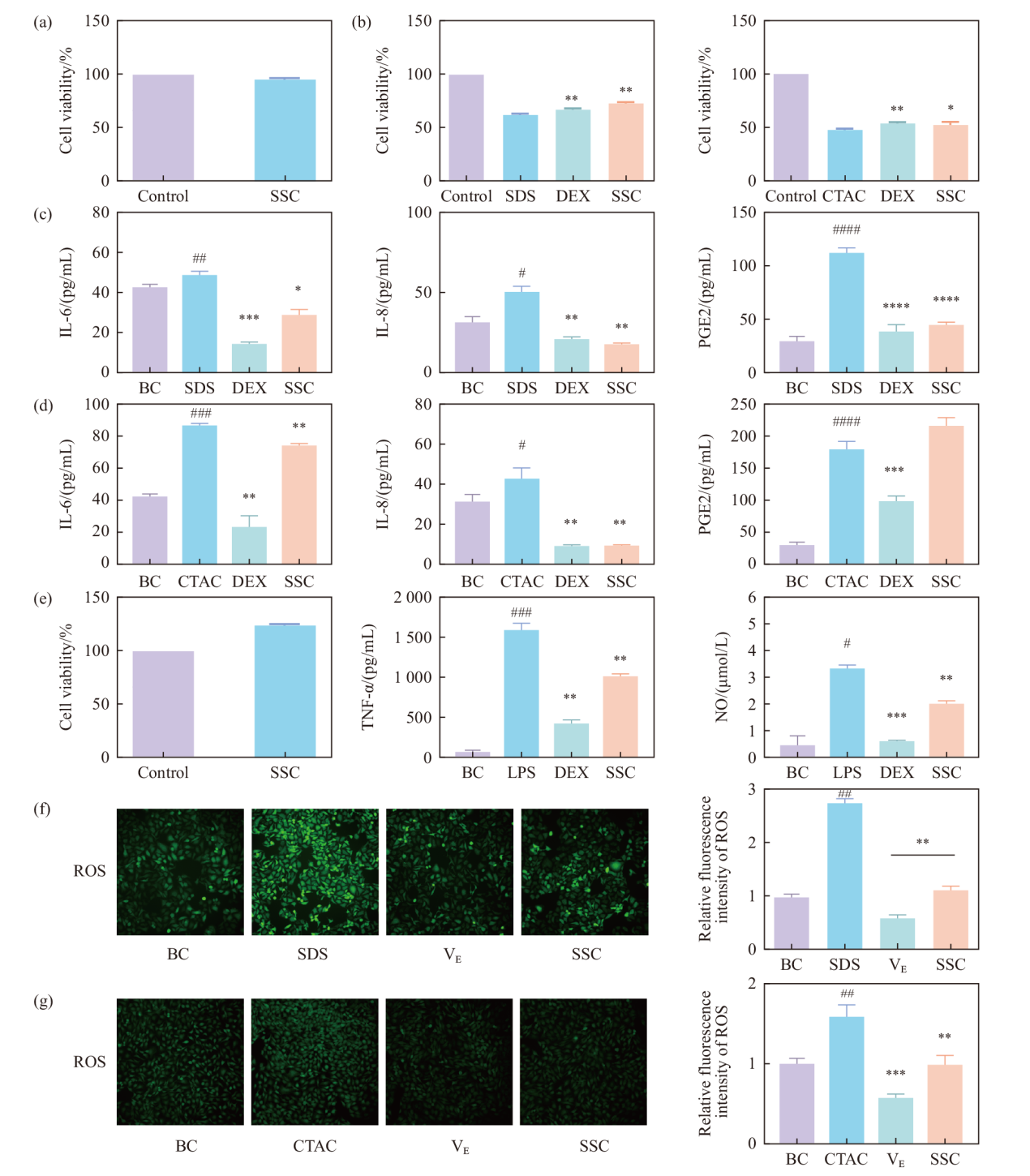
Fig.3
The SSC improves epidermal morphology and reduces surfactant-induced inflammation. (a) Epidermal tissue morphology by H&E staining; (b) Ki67; (c) NF-κB (50 μmol/L WY14643, WY14643 is a potent PPARα agonist and can serve as a positive control for barrier repair studies) ; (d) IL-8, IL-1α, and PGE2. (###P<0.001, ####P<0.000 1 vs. control group; *P<0.05, **P<0.01, ***P<0.001, ****P<0.000 1 vs. SDS stimulated)"
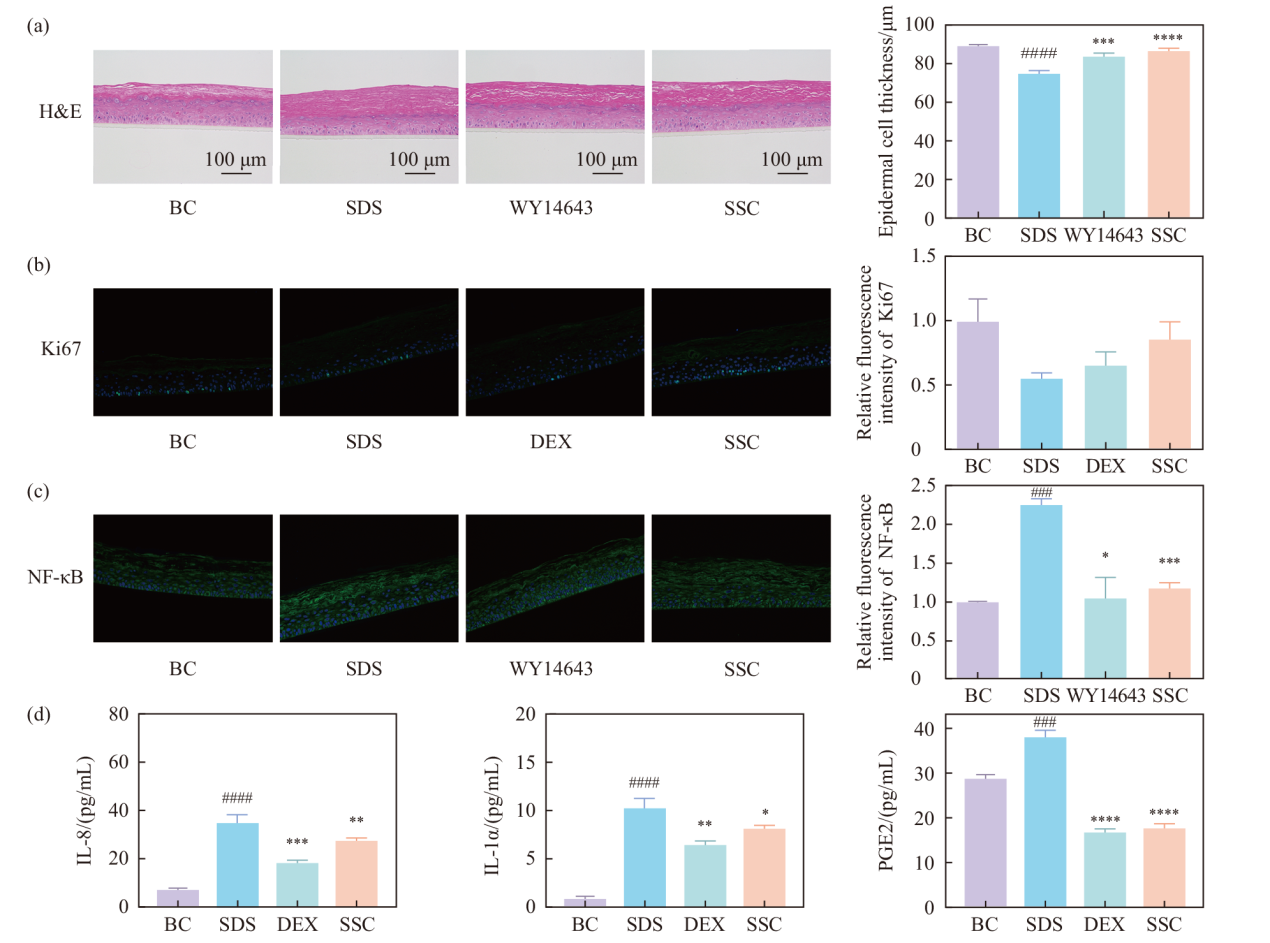
Fig.4
The SSC attenuates multiple markers in epidermis model. (a) FLG; (b) LOR; (c) NRF2. All as determined by fluorescent immunostaining, 50 μmol/L WY14643. (##P<0.01, vs. control; *P<0.05, **P<0.01 vs. surfactant stimulated)"
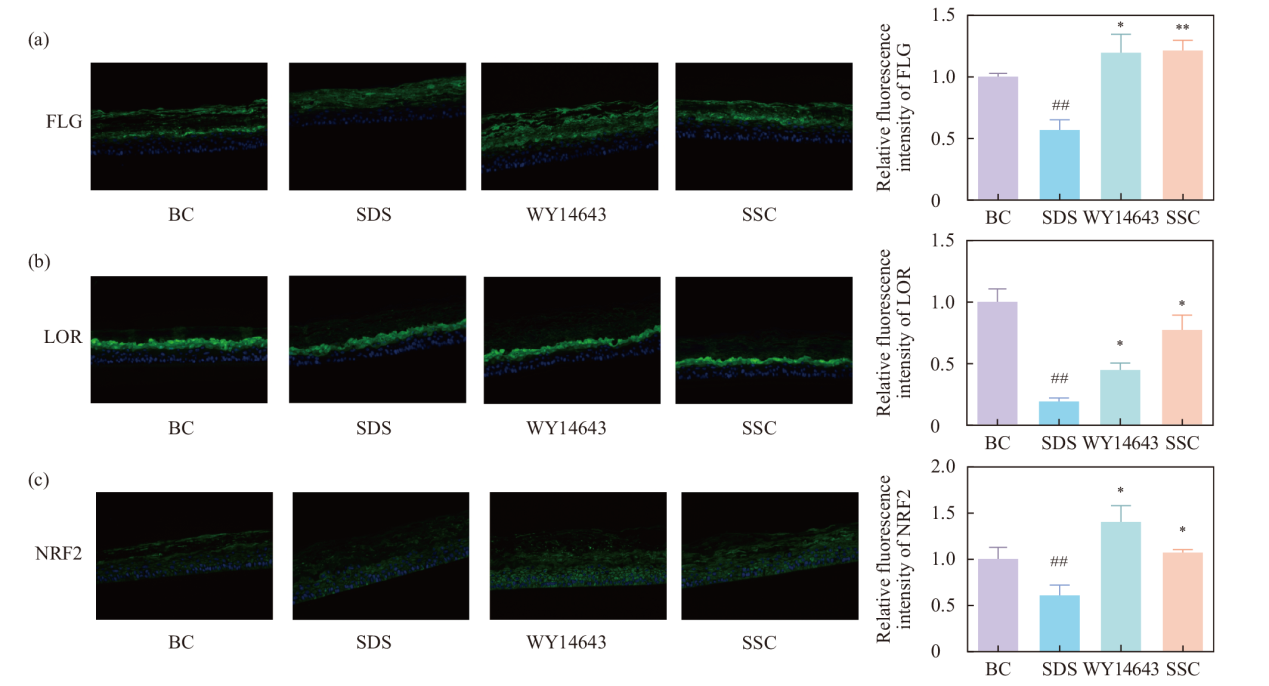
Fig.5
The SSC reduces TRPV1 expression and calcium ion influx. (a) Reduced TRPV1 expression in epidermis model, using 15 μmol/L Capsaicin and 15.6 μg/mL trans-4-tert-butylcyclohexanol; reduced calcium ion influx in keratinocytes stimulated by (b) 15 μmol/L Capsaicin; (c) 65 μg/mL SDS. (#P<0.05, ####P<0.000 1 vs. control; *P<0.05, **P<0.01, ****P<0.000 1 vs. surfactant stimulated)"
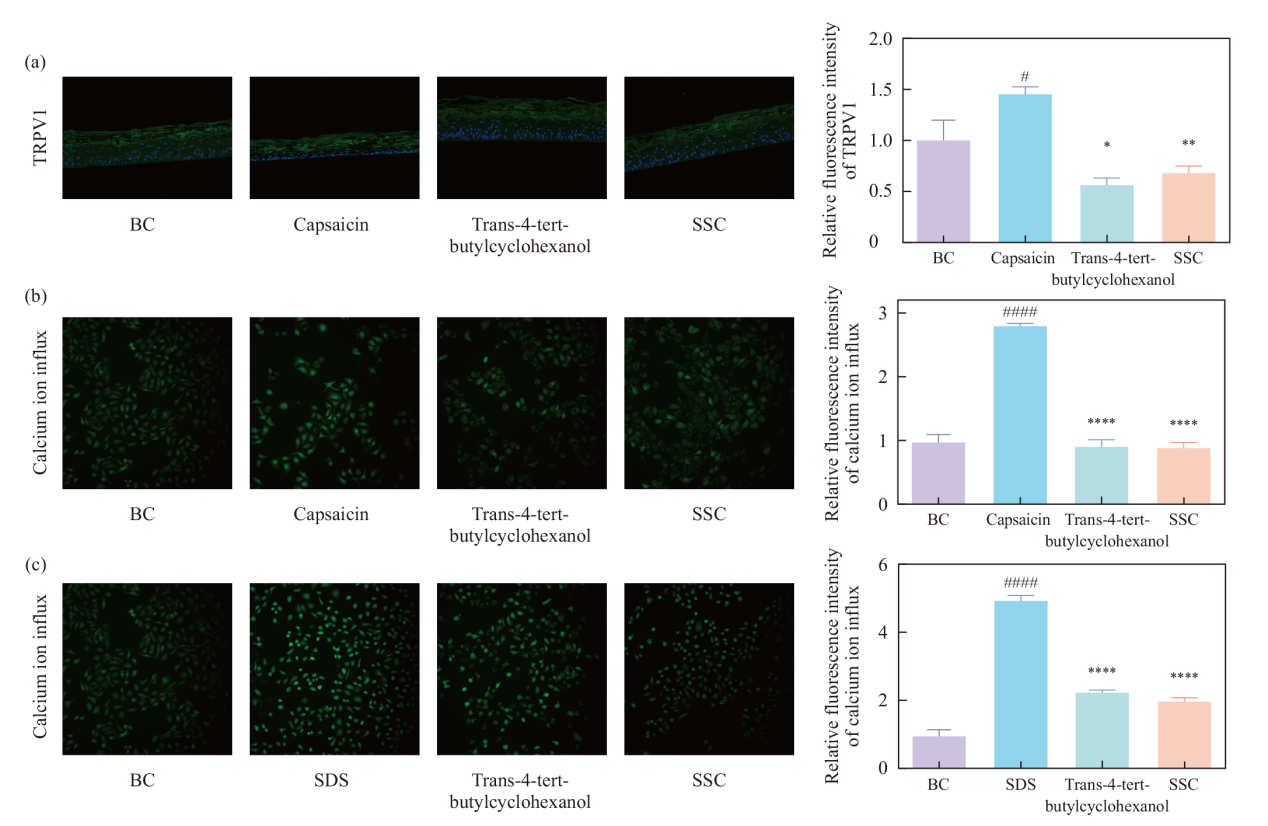
Fig.6
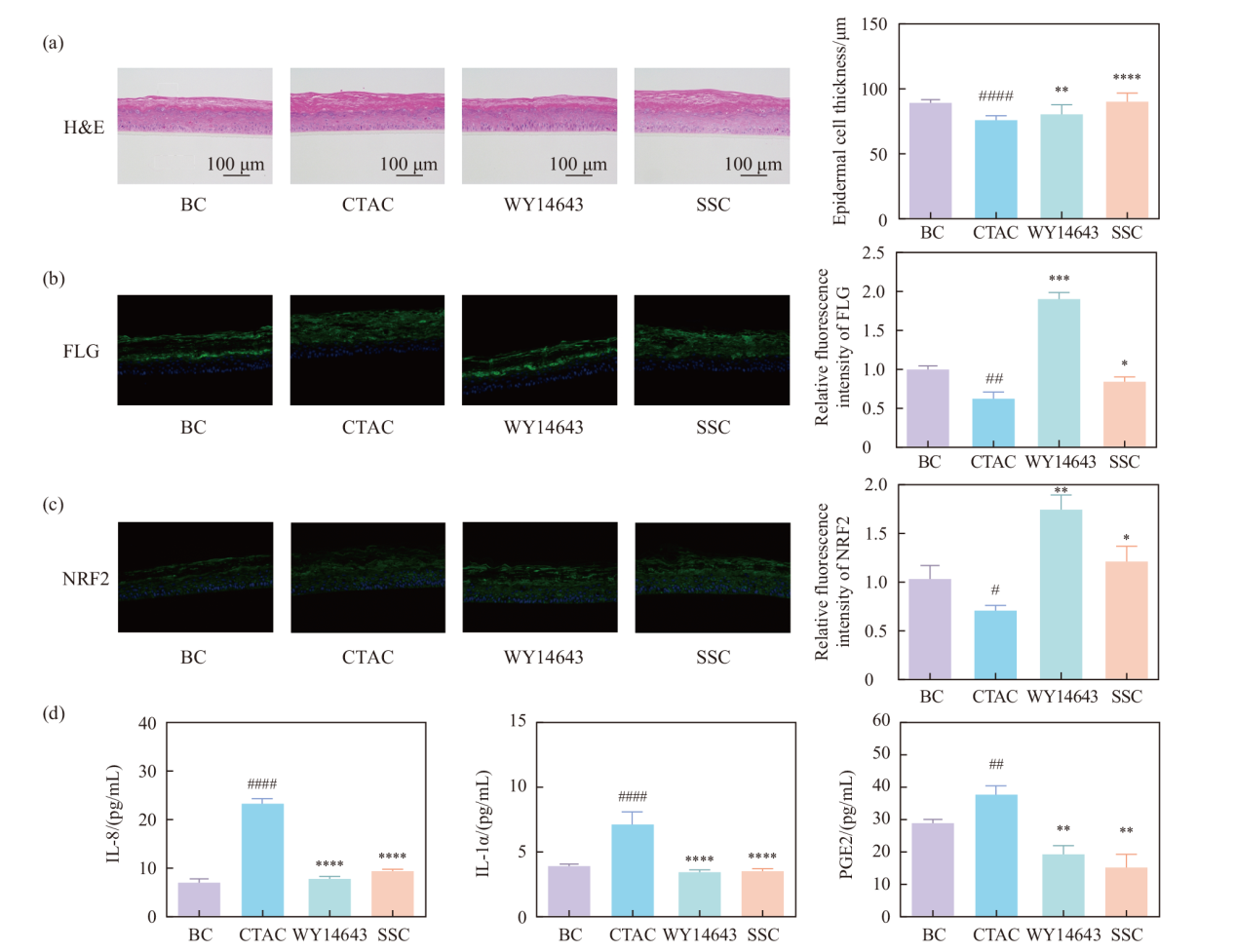
The SSC improves the epidermal barrier and reduces CTAC-induced inflammation. (a) Epidermal tissue morphology by H&E staining. (b) FLG expression by immunofluorescence staining. (c) NRF2 expression by immunofluorescence staining. (d) IL-8, IL-1α, and PGE2. (#P<0.05, ##P<0.01, ####P<0.000 1 vs. control group; *P<0.05, **P<0.01, ****P<0.000 1 vs. CTAC stimulated)"
| [1] |
Misery L, Sibaud V, Ambronati M, et al. Sensitive scalp: does this condition exist? An epidemiological study[J]. Contact Dermatitis, 2008, 58(4): 234-238.
doi: 10.1111/j.1600-0536.2007.01288.x pmid: 18353032 |
| [2] |
Ma L, Guichard A, Cheng Y, et al. Sensitive scalp is associated with excessive sebum and perturbed microbiome[J]. Journal of Cosmetic Dermatology, 2019, 18(3): 922-928.
doi: 10.1111/jocd.12736 pmid: 30084158 |
| [3] |
Misery L, Rahhali N, Ambonati M, et al. Evaluation of sensitive scalp severity and symptomatology by using a new score[J]. Journal of the European Academy of Dermatology and Venereology, 2011, 25(11): 1295-1298.
doi: 10.1111/j.1468-3083.2010.03968.x pmid: 21241375 |
| [4] |
Dias M, Loures A F, Ekelem C. Hair cosmetics for the hair loss patient[J]. Indian Journal of Plastic Surgery, 2021, 54(4): 507-513.
doi: 10.1055/s-0041-1739241 pmid: 34984093 |
| [5] | Rattanakaemakorn P, Suchonwanit P. Scalp pruritus: review of the pathogenesis, diagnosis, and management[J]. BioMed Research International, 2019: 1268430. |
| [6] |
Guerra-Tapia A, Gonzalez-Guerra E. Sensitive scalp: diagnosis and practical management[J]. Actas Dermosifiliogr, 2023, 114(2): 141-146.
doi: 10.1016/j.ad.2022.09.009 |
| [7] | Emmanuelle Lémery S B Y C. Skin toxicity of surfactants: Structure/toxicity relationships[J]. Colloids and Surfaces A: Physicochemical and Engineering Aspects, 2015 (469): 166-179. |
| [8] |
Lemery E, Briancon S, Chevalier Y, et al. Surfactants have multi-fold effects on skin barrier function[J]. European Journal of Dermatology, 2015, 25(5): 424-435.
doi: 10.1684/ejd.2015.2587 |
| [9] |
Salomon G, Giordano-Labadie F. Surfactant irritations and allergies[J]. European Journal of Dermatology, 2022, 32(6): 677-681.
doi: 10.1684/ejd.2022.4290 |
| [10] |
Frankova J, Juranova J, Biedermann D, et al. Influence of silymarin components on keratinocytes and 3D reconstructed epidermis[J]. Toxicol in Vitro, 2021, 74: 105162.
doi: 10.1016/j.tiv.2021.105162 |
| [11] | Kang M, Kang M, Kim T H, et al. Pyromeconic acid-enriched Erigeron annuus water extract as a cosmetic ingredient for itch relief and anti-inflammatory activity[J]. Scientific Reports, 2024, 14(1): 4698. |
| [12] |
Brenaut E, Misery L, Legeas C, et al. Sensitive scalp: a possible association with the use of hair conditioners[J]. Frontiers in Medicine, 2020, 7: 596544.
doi: 10.3389/fmed.2020.596544 |
| [13] | Michalak M. Plant extracts as skin care and therapeutic agents[J]. International Journal of Molecular Sciences, 2023, 24(20): 15444. |
| [14] |
Yilma H G, Fekade B T, Archana B, et al. Anti-inflammatory activity of phytochemicals from medicinal plants and their nanoparticles: A review[J]. Current Research in Biotechnology, 2023, 6: 100152.
doi: 10.1016/j.crbiot.2023.100152 |
| [15] | Feng C, Serre C, Chen W, et al. Synergistic effect of Panax ginseng, Polygonatum cyrtonema, Epiphyllum oxypetalum, Nelumbo nucifera and Osmanthus fragrans extracts on skin aging regulation: From in silico predictions to in vitro outcome[J]. Heliyon, 2024, 10(5): e26131. |
| [16] | Kapini R, Chang D, Munch G, et al. Synergistic combinations of native Australian plants for skin inflammation and wound healing[J]. Biomedicines, 2025, 13(7): 1754. |
| [17] |
Pellevoisin C, Videau C, Briotet D, et al. SkinEthic RHE for in vitro evaluation of skin irritation of medical device extracts[J]. Toxicology in Vitro, 2018, 50: 418-425.
doi: S0887-2333(18)30009-2 pmid: 29339149 |
| [18] |
Cadet J, Douki T, Ravanat J L. Oxidatively generated damage to cellular DNA by UVB and UVA radiation[J]. Photochemistry and Photobiology, 2015, 91(1): 140-155.
doi: 10.1111/php.12368 pmid: 25327445 |
| [19] | Liu D, Zhong Z, Karin M. NF-κB: A double-edged sword controlling inflammation[J]. Biomedicines, 2022, 10(6): 1250. |
| [20] | Ngo V, Duennwald M L. Nrf2 and oxidative stress: A general overview of mechanisms and implications in human disease[J]. Antioxidants (Basel), 2022, 11(12): 2345. |
| [21] |
Kobayashi E H, Suzuki T, Funayama R, et al. Nrf2 suppresses macrophage inflammatory response by blocking proinflammatory cytokine transcription[J]. Nature Communications, 2016, 7: 11624.
doi: 10.1038/ncomms11624 pmid: 27211851 |
| [22] |
Lindl K A, Jordan-Sciutto K L. Examining the endogenous antioxidant response through immunofluorescent analysis of Nrf2 in tissue[J]. Methods in Molecular Biology, 2008, 477: 229-243.
doi: 10.1007/978-1-60327-517-0_18 pmid: 19082951 |
| [23] | Bagood M D, Isseroff R R. TRPV1: Role in skin and skin diseases and potential target for improving wound healing[J]. International Journal of Molecular Sciences, 2021, 22(11): 6135. |
| [24] | Yun J W, Seo J A, Jeong Y S, et al. TRPV1 antagonist can suppress the atopic dermatitis-like symptoms by accelerating skin barrier recovery[J]. Journal of Dermatological Science, 2011, 62(1): 8-15. |
| [25] | Vangeel L V T. Transient receptor potential channels and calcium signaling[J]. Cold Spring Harbor Perspectives in Biology, 2019, 6(11): a035048. |
| [26] | Hu Y Y, Li C S, Tang C. Research progress on chemical constituents and pharmacological effects of Epilobium angustifolium L.[J]. Journal of Anhui Agricultural Sciences, 2023, 51(15): 1-6. |
| [27] |
Santos I, Sousa A, Vale A, et al. Protective effects of flavonoids against silver nanoparticles-induced toxicity[J]. Archives of Toxicology, 2025, 99(8): 3105-3132.
doi: 10.1007/s00204-025-04068-2 |
| [28] | Loncaric M, Strelec I, Moslavac T, et al. Lipoxygenase inhibition by plant extracts[J]. Biomolecules, 2021, 11(2): 1162. |
| [29] | Fang F, Xie Z, Quan J, et al. Baicalin suppresses Propionibacterium acnes-induced skin inflammation by downregulating the NF-κB/MAPK signaling pathway and inhibiting activation of NLRP3 inflammasome[J]. Brazilian Journal of Medical and Biological Research, 2020, 53(12): e9949. |
| [30] | Jang J Y, Im E, Kim N D. Therapeutic potential of bioactive components from Scutellaria baicalensis Georgi in inflammatory bowel disease and colorectal cancer: A review[J]. International Journal of Molecular Sciences, 2023, 24(3): 2417. |
| [31] |
Hashimoto M, Takahashi K, Ohta T. Inhibitory effects of linalool, an essential oil component of lavender, on nociceptive TRPA1 and voltage-gated Ca2+ channels in mouse sensory neurons[J]. Biochemistry and Biophysics Reports, 2023, 34: 101468.
doi: 10.1016/j.bbrep.2023.101468 |
| [32] | El A C, Chemin J, Fechtali T, et al. Modulation of T-type Ca2+channels by lavender and rosemary extracts[J]. PLOS ONE, 2017, 12(10): e186864. |
| [33] |
Sharma P, Vaiwala R, Parthasarathi S, et al. Interactions of surfactants with the bacterial cell wall and inner membrane: Revealing the link between aggregation and antimicrobial activity[J]. Langmuir, 2022, 38(50): 15714-15728.
doi: 10.1021/acs.langmuir.2c02520 pmid: 36472987 |
| [34] |
Moosavi S S, Zolghadr A R. Effect of quaternary ammonium surfactants on biomembranes using molecular dynamics simulation[J]. RSC Advances, 2023, 13(47): 33175-33186.
doi: 10.1039/d3ra05030k pmid: 37954424 |
| [35] |
Timmer N, Droge S T. Sorption of cationic surfactants to artificial cell membranes: Comparing phospholipid bilayers with monolayer coatings and molecular simulations[J]. Environmental Science & Technology, 2017, 51(5): 2890-2898.
doi: 10.1021/acs.est.6b05662 |
| [1] | Zhiming He, Jiawen Huang, Yi Zhan, Desong Wu, Yufeng Zha. Comparative study on the soothing efficacy of different extracts of Panax notoginseng [J]. China Surfactant Detergent & Cosmetics, 2026, 56(8): 1053-1061. |
| [2] | Xiaoyue Feng. Pathophysiology and care strategies for dry sensitive skin [J]. China Surfactant Detergent & Cosmetics, 2026, 56(8): 1103-1110. |
| [3] | Ruimin Zhang, Lei Zhang, Yafei He, Limin Fan. Research on development, efficacy and mechanism of xylooligosaccharides as a skin protective functional ingredient based on the Nrf2/TLR4 signaling pathway [J]. China Surfactant Detergent & Cosmetics, 2026, 56(5): 603-613. |
| [4] | Xinyu Gao, Yanan Sun, Lishuang Li, Yucui Jin, Shuhua Ma, Yi Wang. Study on the repairing effect of Dong’ e Ejiao on skin barrier injury in mice [J]. China Surfactant Detergent & Cosmetics, 2026, 56(2): 236-244. |
| [5] | Ruochen Wu, Zhenbang Xu, Chengjun Pan, Lei Wang. Preparation and performance study of a special low-foaming cleaning surfactant for agricultural film [J]. China Surfactant Detergent & Cosmetics, 2026, 56(2): 226-235. |
| [6] | Jiaming Li, Xiaofeng Qiu, Huishan Guo, Jiankun Luo, Lishe Gan, Xuetao Xu. Preparation, structural characterization and moisturizing efficacy of proteins from Tricholoma matsutake [J]. China Surfactant Detergent & Cosmetics, 2026, 56(1): 98-106. |
| [7] | Siyue Xie, Can Qin, Junmin Lin, Xiaochun Luo. The activity and skin-caring efficacy of amino acids/peptides fermented from meal protein [J]. China Surfactant Detergent & Cosmetics, 2025, 55(9): 1187-1197. |
| [8] | Yifei Zhou, Feiya Luo, Lei Sun, Huiying Yang, Xinrong Pei, Xianfu Wu, Yong Lu. Analysis on the technical guidelines for the application of threshold of toxicological concern (TTC) method [J]. China Surfactant Detergent & Cosmetics, 2025, 55(8): 1042-1048. |
| [9] | Fan Wu, Jiaqi Zhang, Yi Qin, Jun Wang, Zonghan Wu, Yao Pan. Progress of cosmetic active ingredients exerting skincare efficacy through cellular autophagy [J]. China Surfactant Detergent & Cosmetics, 2025, 55(6): 803-810. |
| [10] | Wucheng Yang, Yu Xie, Jian Wei, Ruifang Fan, Jianhua Tan, Shaofeng Xi. Application of confocal Raman spectroscopy in the evaluation of skin barrier function and permeability [J]. China Surfactant Detergent & Cosmetics, 2025, 55(4): 508-515. |
| [11] | Huabing Zhao, Yingtian Li, Xihan Wang, Zhengmei Huang, Fuping Lu. Skin microecology and microecological skincare products [J]. China Surfactant Detergent & Cosmetics, 2025, 55(3): 390-398. |
| [12] | Lei Dong, Huanjin Zou, Xuefeng Liu. Synthesis of pH-switchable nonionic polyether surfactant and its potential application in removing phenanthrene from soil [J]. China Surfactant Detergent & Cosmetics, 2025, 55(11): 1388-1394. |
| [13] | Shengpeng Li, Jing Li, Chao Liang, Ran Zhao, Xiaojie Zhang, Lili Sun. Protective effect of silk fibroin on UVB-induced skin injury [J]. China Surfactant Detergent & Cosmetics, 2024, 54(9): 1117-1124. |
| [14] | Jitao Liu,Yuxi Wang,Xuanlin Yang. Study on the surface activity of Panax notoginseng root extract and the properties of the mixed system [J]. China Surfactant Detergent & Cosmetics, 2024, 54(8): 974-980. |
| [15] | Zhaoyi Liu, Xinyu Chen, Yan Wang, Xue Li, Ruoxi Guo, Han Zhang. Study on the reparative effects of oxymatrine on impaired skin barrier function in mice [J]. China Surfactant Detergent & Cosmetics, 2024, 54(7): 777-783. |
|
