Welcome to China Surfactant Detergent & Cosmetics, Today is


China Surfactant Detergent & Cosmetics ›› 2026, Vol. 56 ›› Issue (8): 1093-1102.doi: 10.3969/j.issn.2097-2806.2026.08.013
• Reviews • Previous Articles Next Articles
Ruiqiang Liang,Suli Liu,Jin Cao*( ),Xiao Ning*()
Received:2025-10-14
Revised:2026-07-29
Online:2026-08-22
Published:2026-09-02
Contact:
*E-mail: CLC Number:
Ruiqiang Liang, Suli Liu, Jin Cao, Xiao Ning. Analysis of the engineering-oriented cosmetic research and development strategy for targeted delivery systems of skin nutrient components[J].China Surfactant Detergent & Cosmetics, 2026, 56(8): 1093-1102.
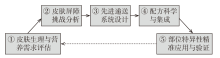
Fig.1
Schematic diagram of the engineering development paradigm for a skin nutrition system"
Tab.1
Key nutrients for maintaining skin homeostasis and their core functions"
| 营养素类别 | 代表成分 | 核心生理功能 | 分子靶点/作用机制 | 缺乏/不足的临床表现 |
|---|---|---|---|---|
| 屏障结构脂质 | 神经酰胺、胆固醇、必需脂肪酸 | 维持角质层屏障完整性,防止水分流失 | 构成细胞间脂质双分子层结构,亚油酸是神经酰胺的前体 | 皮肤干燥、脱屑、TEWL增加、易敏感、湿疹样皮炎 |
| 水溶性抗氧化剂 | 维生素C | 抗氧化,促进胶原合成,抑制黑色素生成 | 清除水相自由基,脯氨酸/赖氨酸羟化酶辅因子,抑制酪氨酸酶活性 | 皮肤暗沉、松弛、皱纹增加、伤口愈合延迟、色素沉着 |
| 脂溶性抗氧化剂 | 维生素E、辅酶Q10[ | 抗氧化,保护细胞膜完 整性 | 清除脂相自由基,中断脂质过氧化链式反应 | 细胞膜易损,光老化加速,皮肤弹性下降 |
| 细胞信号调节剂 | 维生素A | 调节细胞增殖与分化,促进胶原合成,调控皮脂 | 结合并激活核受体RAR/RXR,调控靶基因转录 | 皮肤粗糙、毛囊角化、痤疮、细纹与皱纹 |
| 生长因子类成分 | EGF、FGF | 促进细胞增殖分化,提高代谢率,缩短伤口愈合时间,抗炎 | 结合EGFR/FGFR,促进上皮细胞、成纤维细胞和内皮细胞的增殖和分化,刺激产生胶原蛋白酶,促进新血管的生成 | 皮肤干燥、弹性下降,屏障和修复能力下降,伤口愈合延迟,瘢痕形成风险增加 |
| B族维生素 | 烟酰胺、泛醇[ | 屏障修复,抗炎,控油,保湿 | 促进神经酰胺合成,抑制炎性因子,辅酶前体,促进伤口愈合 | 屏障受损、皮肤泛红、痤疮、干燥脱皮 |
| 微量元素 | 锌、铜 | 酶辅因子,抗炎,伤口 愈合 | 参与胶原蛋白的合成、降解过程 | 伤口愈合延迟、皮炎、脱发、炎症反应加剧 |
Tab.2
Examples of nutritional imbalances supplied to the skin"
| 营养素 | 是否内源合成 | 失衡原因 | 失衡的临床表现 | 外源性补充方式 |
|---|---|---|---|---|
| 维生素D | 是 | 皮肤老化,日照不足 | 皮肤干燥、瘙痒,易受感染,屏障功能下降 | 食物、维生素D补充剂,尚无较好的外用补充方式 |
| 胶原蛋白 | 是 | 年龄因素导致合成能力下降 | 皮肤松弛和皱纹增多 | 口服胶原蛋白补充剂,涂抹含胶原蛋白的护肤品 |
| 维生素C | 否 | 饮食摄入不足并且到达皮肤的含量有限 | 皮肤弹性下降,伤口愈合缓慢 | 食物、补充剂,15%维生素C水溶液外用(实验结果) |
| 维生素E | 是 | 饮食摄入不足 | 皮肤干燥、脱屑、炎症、弹性下降,伤口愈合缓慢 | 食物、补充剂,外用维生素E |
| 激素类 | 是 | 年龄因素导致合成能力下降 | 皮肤干燥、弹性下降 | 激素替代疗法,外用含激素的护肤品 |
| 神经酰胺 | 是 | 年龄因素,疾病影响 | 皮肤屏障功能减弱,出现干燥、脱屑 | 食物,使用含有神经酰胺的护肤品 |
| 脂肪酸酯类 | 是 | 营养摄入不足 | 皮肤屏障受损(如干燥、敏感性皮肤) | 食物(如坚果、橄榄油),外用含脂肪酸酯类(如三亚油酸甘油酯)的乳膏 |
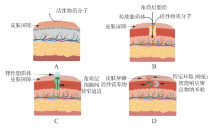
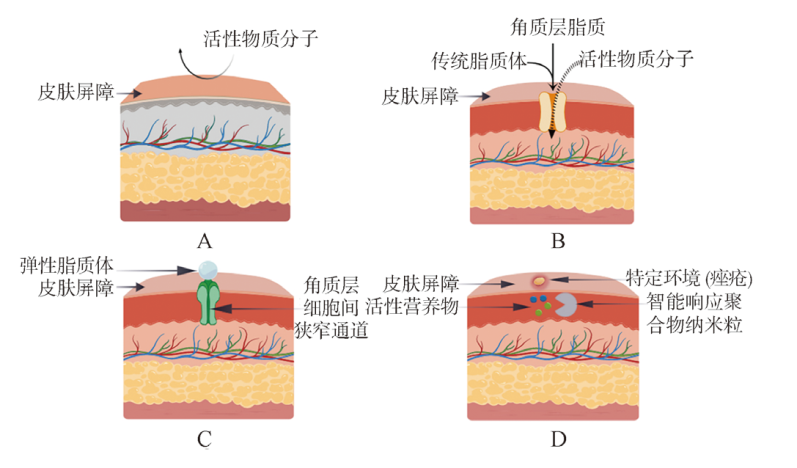
Fig.2
Schematic diagram of the mechanisms by which different delivery systems cross the skin barrier (Created with BioGDP.com[52])"
Tab.3
Comparison of main advanced delivery systems in cosmetics"
| 递送系统类型 | 主要构成材料 | 核心作用机制 | 优势 | 局限性 | 典型承载物 |
|---|---|---|---|---|---|
| 传统脂质体 | 天然或合成磷脂、胆固醇 | 包裹活性物,通过与角质层脂质融合促进渗透 | 生物相容性好,可同时包裹亲水/亲脂物,提高稳定性 | 物理稳定性较差,易泄露,渗透增强能力有限 | 姜黄素[ |
| 弹性脂质体 | 磷脂、胆固醇、边缘活性剂(表面活性剂) | 载体高度可变形,通过挤压穿过角质细胞间隙 | 极强的深层渗透能力,适合递送至表皮深层和真皮 | 工艺复杂,成本较高,边缘活性剂可能有潜在刺激性 | 维生素E、抗炎药、大分子活性物 |
| 醇质体 | 磷脂、高含量乙醇(20%~45%) | 乙醇作为渗透增强剂,协同载体变形促进渗透 | 对亲脂性药物的渗透增强效果显著 | 乙醇可能导致皮肤干燥或刺激,配方挥发 性高 | 辅酶Q10、芦丁[ |
| 聚合物纳米粒 | PLGA、PCL、壳聚糖等生物降解聚合物 | 通过聚合物降解或扩散实现活性物的控释/缓释 | 可精确控制释放速率,提高活性物稳定性,降低刺激性 | 潜在的聚合物蓄积风险,有机溶剂残留问题 | 维生素A |
| 智能响应载体 | pH/酶/温度敏感聚合物 | 在特定生理或病理刺激下发生构象变化,触发释放 | 靶向性强,可实现按需释放,提高功效并降低副作用 | 设计和合成复杂,对微环境变化的响应灵敏度要求高 | 抗炎、修复成分 |
| 外泌体 | 细胞来源的脂质双分子层、蛋白质、RNA | 通过细胞内吞途径进入靶细胞,传递生物活性分子 | 天然靶向性,生物相容性极佳,兼具载体和活性物双重功能 | 来源有限,产量低,分离纯化和质量控制难度大,成本高 | 蛋白质、脂质、代谢物、RNA、DNA、小分子成分 |
| 益生菌 | 基因工程产物 | 通过自身代谢活动产生各类功能产物 | 可以定殖于皮肤 | 存活环境受限,定殖时间问题,产品配方限制,皮肤微生态影响 | 抗菌物质、多酚、脂肪酸、透明质酸 |
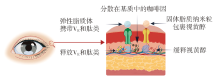
Fig.3
Schematic diagram of a compound nutritional intervention strategy for periorbital skin anti-aging (Created with BioGDP.com[52])"
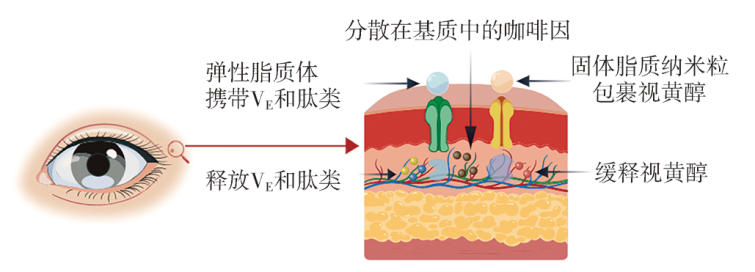
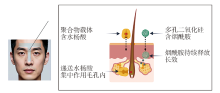
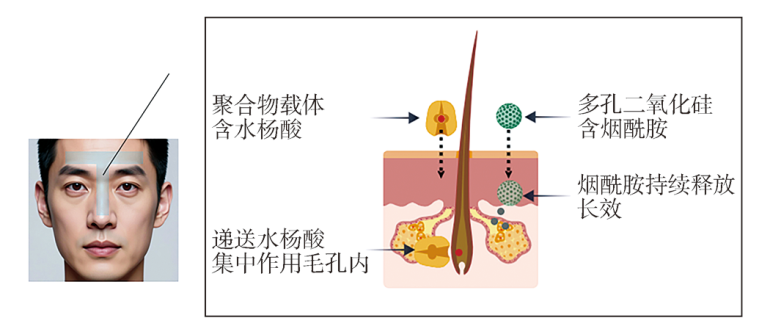
Fig.4
Schematic diagram of synergistic regulation of sebum secretion and barrier function in the facial T-zone (Facial recognition is generated using Baidu AI, schematic diagram is created with BioGDP.com[52])"
| [1] | 张智博. 化妆品注册备案新举措发布鼓励新品在中国首发[N]. 证券时报, 2026-07-31 (A03). |
| [2] | 曹畅, 华薇, 李利. 表皮细胞间脂质、板层小体对皮肤渗透性屏障影响的研究进展[J]. 中国皮肤性病学杂志, 2017, 31(9): 1027-1029, 1043. |
| [3] | Man M, Feingold K R, Elias P M. Exogenous lipids influence permeability barrier recovery in acetone-treated murine skin[J]. Archives of Dermatological Research, 1993, 129(6): 728-738. |
| [4] |
Foster R H, Hardy G, Alany R G. Borage oil in the treatment of atopic dermatitis[J]. Nutrition, 2010, 26(7/8): 708-718.
doi: 10.1016/j.nut.2009.10.014 |
| [5] | Rawlings A V, Harding C R. Moisturization and skin barrier function[J]. Dermatologic Therapy, 2004 (17): 43-48. |
| [6] | 陈丽美, 高耀星, 都日娜. 胶原蛋白肽在皮肤光老化中的研究进展[J]. 内蒙古医学杂志, 2024, 56(12): 1481-1484. |
| [7] | 任雨笙, 黄佐, 潘晓明, 等. 血小板衍生生长因子-BB对血管内皮细胞、平滑肌细胞及成纤维细胞胶原蛋白合成的影响[J]. 第二军医大学学报, 2005, 26(2): 167-169. |
| [8] | 郝淑玲. 肾上腺髓质素对低氧和转化生长因子β1促成纤维细胞增殖、胶原合成的影响及机制[D]. 重庆: 第三军医大学, 2004. |
| [9] | Martel M, Laumonerie P, Girard M, et al. Does vitamin C supplementation improve rotator cuff healing[J]. European Journal of Orthopaedic Surgery & Traumatology, 2022, 32(1): 63-70. |
| [10] | 吴淑军, 王赏初, 张亚伟. 微量元素对母猪肢蹄病的影响[J]. 饲料研究, 2021, 44(16): 108-111. |
| [11] | 朱梦迪, 张曦月, 王强, 等. 基于引导骨再生应用的胶原膜研究进展[J]. 中国实用口腔科杂志, 2025, 18(1): 27-33. |
| [12] |
Rinnerthaler M, Bischof J, Streubel M K, et al. Oxidative stress in aging human skin[J]. Biomolecules, 2015, 5(2): 545-589.
doi: 10.3390/biom5020545 pmid: 25906193 |
| [13] |
Lin J, Selim M A, Shea C R, et al. UV photoprotection by combination topical antioxidants vitamin C and vitamin E[J]. Journal of the American Academy of Dermatology, 2003, 48(6): 866-874.
doi: 10.1067/mjd.2003.425 |
| [14] | VanBuren C A, Everts H B. Vitamin A in skin and hair: an update[J]. Nutrients, 2022, 14(14): 2952. |
| [15] | Kafi R, Kwak H S R, Schumacher W E, et al. Improvement of naturally aged skin with vitamin A (retinol)[J]. Archives of Dermatological Research, 2007, 143(5): 606-612. |
| [16] | 文淑婷. 人表皮生长因子研究进展及应用前景[J]. 生物化工, 2025, 11(2): 222-225. |
| [17] | 黄滟捷, 王雄. DPL联合重组牛碱性成纤维细胞生长因子凝胶治疗红斑毛细血管扩张型玫瑰痤疮的临床研究[J]. 中国中西医结合皮肤性病学杂志, 2025, 24(3): 221-224. |
| [18] | 孙时阳. 美容整形清创缝合术联合重组人表皮生长因子治疗颌面部外伤的疗效分析[J]. 中外医疗, 2021, 40(19): 56-58. |
| [19] | 王月, 王晶, 郭思瑞, 等. 天然维生素E化合物研究进展[J]. 中国药业, 2023, 32(2): 128-135. |
| [20] | 吴鸳鸯, 王任, 张丽媛, 等. 液质联用法同时测定保健食品中维生素E、维生素E乙酸酯和辅酶Q10[J]. 中国卫生检验杂志, 2020, 30(5): 533-536. |
| [21] | 邓莹莹, 丁慰祖. 辅酶Q10对人RPE细胞氧化应激损伤的保护作用及机制研究[J]. 川北医学院学报, 2019, 34(5): 612-614. |
| [22] | 王忠娟, 李紫菡, 张秀娟, 等. 基于红松籽油辅酶Q10纳米乳的制备、表征和药代动力学研究[J]. 食品工业科技, 2022, 43(21): 225-234. |
| [23] | 杨扬, 陈田, 魏泽丰, 等. 适用于敏感皮肤的化妆品及其功效评价方法研究进展[J]. 上海轻工业, 2025 (3): 80-83. |
| [24] | 刘媛, 解宇环, 何丹, 等. 神经酰胺代谢途径对皮肤屏障功能影响研究进展[J]. 中国麻风皮肤病杂志, 2017, 33(10): 619-623. |
| [25] | 訾玉沙, 汤小芹, 陈明华. 头皮屑的发生机制及去屑方法的研究进展[J]. 广东化工, 2020, 47(17): 97-99. |
| [26] | 王洪樑, 陈赛, 廖晓鹏, 等. 烟酰胺的生物学活性及其在反刍动物生产中的应用[J]. 江西畜牧兽医杂志, 2025 (1): 36-40. |
| [27] |
Giustina A, Bouillon R, Dawson-Hughes B, et al. Vitamin D in the older population: a consensus statement[J]. Endocrine, 2023, 79(1): 31-44.
doi: 10.1007/s12020-022-03208-3 |
| [28] |
Pinnel S R. Cutaneous photodamage, oxidative stress, and topical antioxidant protection[J]. Journal of the American Academy of Dermatology, 2003, 48(1): 1-19.
pmid: 12522365 |
| [29] |
Coderch L, López O, de la Maza A, et al. Ceramides and skin function[J]. American Journal of Clinical Dermatology, 2003, 4(2): 107-129.
pmid: 12553851 |
| [30] | 方德林. 面部化妆品接触性皮炎患者皮肤生理检测指标与疾病程度及预后的相关性研究[D]. 广西: 桂林医学院, 2023. |
| [31] | 程淋燕, 王怡, 卫颖漪, 等. 三亚油酸甘油酯对皮肤屏障的保护作用研究[J]. 皮肤科学通报, 2024, 41(3): 299-304. |
| [32] | Elias P M. Epidermal lipids, barrier function, and desquamation[J]. Journal of Investigative Dermatology, 1983(80S): 44s-49s. |
| [33] | 廖倩, 于春水, 汪瀚文. 皮肤屏障中分化蛋白的研究进展[J]. 实用皮肤病学杂志, 2017, 10(6): 354-356. |
| [34] | 周惠惠, 王琦, 梅兴国, 等. 经皮给药系统研究进展[J]. 湖北科技学院学报 (医学版), 2020, 34(1): 87-89. |
| [35] | 化璟琳, 谢莹莹, 徐鹤然, 等. 胶原蛋白肽分析方法及透皮吸收特征[J]. 中国组织工程研究, 2021, 25(34): 5544-5551. |
| [36] | 岑月眉, 闻萍, 李久盛, 等. 体外实验用人工皮肤模型的研究简介[J]. 药物分析杂志, 2020, 40(9): 1543-1549. |
| [37] |
Bos J D, Meinardi M M H M. The 500 Dalton rule for the skin penetration of chemical compounds and drugs[J]. Experimental Dermatology, 2000, 9(3): 165-169.
pmid: 10839713 |
| [38] |
Hadgraft J. Skin deep[J]. European Journal of Pharmaceutics and Biopharmaceutics, 2004, 58(2): 291-299.
pmid: 15296956 |
| [39] |
Stamford N P J. Stability, transdermal penetration, and cutaneous effects of ascorbic acid and its derivatives[J]. Journal of Cosmetic Dermatology, 2012, 11(4): 310-317.
doi: 10.1111/jocd.12006 pmid: 23174055 |
| [40] |
Mukherjee S, Date A, Patravale V, et al. Retinoids in the treatment of skin aging: an overview of clinical efficacy and safety[J]. Clinical Interventions in Aging, 2006, 1(4): 327-348.
doi: 10.2147/ciia.2006.1.4.327 pmid: 18046911 |
| [41] | 张雅琪, 梁蓉, 杨成. 化妆品乳液及乳化新技术(Ⅴ)--脂质体包载技术在经皮输送中的应用[J]. 日用化学工业, 2021, 51(10): 939-948. |
| [42] |
Verma D D, Verma S, Blume G, et al. Particle size of liposomes influences dermal delivery of substances into skin[J]. International Journal of Pharmaceutics, 2003, 258(1/2): 141-151.
doi: 10.1016/S0378-5173(03)00183-2 |
| [43] |
Touitou E, Dayan N, Bergelson L, et al. Ethosomes-novel vesicular carriers for enhanced delivery: characterization and skin penetration properties[J]. Journal of Controlled Release, 2000, 65(3): 403-418.
doi: 10.1016/s0168-3659(99)00222-9 pmid: 10699298 |
| [44] | 陈丽彬. 基于相分离法制备的载药高聚物纳米微球及其应用[D]. 江苏: 南京师范大学, 2014. |
| [45] | 车鸿泽. PLGA涂层处理的nHA-Mg多孔复合材料对兔颌骨缺损的修复作用[D]. 吉林: 吉林大学, 2017. |
| [46] |
Baghirova L, Tilki E K, Öztürk A A. Evaluation of cell proliferation and wound healing effects of vitamin A palmitate-loaded PLGA[J]. ACS Omega, 2023, 8(2): 2658-2668.
doi: 10.1021/acsomega.2c07232 |
| [47] | 谢贤莉. pH响应型聚合物的合成与生物应用[D]. 安徽: 合肥工业大学, 2020. |
| [48] | 郑舒丹, 张臻, 杨屈杨, 等. 外泌体疗法在毛发再生中的研究进展[J]. 临床皮肤科杂志, 2025, 54(9): 567-572. |
| [49] | Ha D H, Kim H, Lee J, et al. Mesenchymal stem/Stromal cell-derived exosomes for immunomodulatory therapeutics and skin regeneration[J]. Cells, 2020, 9(5): 1157. |
| [50] | 袁海峰, 张岩, 赵晓宇. 益生菌及其代谢产物在护肤领域的研究进展[J]. 黑龙江科学, 2025, 16(12): 26-31. |
| [51] | 颜雪娇, 蒲云月, 张云, 等. 一款含益生菌和益生元面霜的功效评价[J]. 日用化学品科学, 2025, 48(7): 35-38. |
| [52] | Jiang S, Li H, Zhang L, et al. Generic diagramming platform (GDP) a comprehensive database of high-quality biomedical graphics[J]. Nucleic Acids Research, 2025, 53(D1): D1670-D1676. |
| [53] |
谭慧玲, 吕华, 文思, 等. 眼周口周抗皱功效评价方法的研究进展[J]. 皮肤性病诊疗学杂志, 2025, 32(7): 539-546.
doi: 10.3969/j.issn.1674-8468.2025.07.012 |
| [54] | 庹明富, 郭光烨, 宋健, 等. A 型肉毒毒素联合眼袋整形术对眼周皮肤松弛的效果分析[J]. 现代医学与健康研究电子杂志, 2023, 7(21): 44-46. |
| [55] |
Gorouhi F, Maibach H I. Role of topical peptides in preventing or treating aged skin[J]. International Journal of Cosmetic Science, 2009, 31(5): 327-345.
doi: 10.1111/j.1468-2494.2009.00490.x pmid: 19570099 |
| [56] | Ahmadraji F, Shatalebi M A. Evaluation of the clinical efficacy and safety of an eye counter pad containing caffeine and vitamin K in emulsified Emu oil base[J]. Advanced Biomedical Research, 2015(4): 10. |
| [57] | 许勇, 韩晶, 潘晨, 等. 高效液相色谱法测定化妆品中L-肌肽、乙酰基四肽-5、谷胱甘肽和乙酰基六肽-8的含量[J]. 上海预防医学, 2021, 33(8): 745-749. |
| [58] |
Okoro E O, Bulus N G, Zouboulis C C. Study of facial sebum levels and follicular red fluorescence in patients with acne vulgaris in nigeria[J]. Dermatology, 2016, 232(2): 156-161.
doi: 10.1159/000439378 |
| [59] | 肖青, 李利. 油性皮肤的科学护理[J]. 中国化妆品, 2021 (8): 26-27. |
| [60] |
Bissett D L, Oblong J E, Berge C A. Niacinamide: A B Vitamin that improves aging facial skin appearance[J]. Dermatologic Surgery, 2005, 31(7 Pt 2) : 860-865.
doi: 10.1111/j.1524-4725.2005.31732 |
| [61] | 林琳, 陆静婷, 徐思伟, 等. 长效控油组合物的临床功效评价[J]. 上海轻工业, 2025 (3): 86-89. |
| [62] | 罗霞. 观察痤疮中Th17/Treg细胞及相关炎症因子的表达以及探讨不同浓度超分子水杨酸治疗兔耳痤疮模型的效应机制[D]. 四川: 西南医科大学, 2020. |
| [63] | 李舒婷, 何晓峰, 张中兴, 等. 含乙醇酸、水杨酸、辛酰水杨酸和烟酰胺的外用配方改善轻、中度痤疮症状的临床观察[J]. 临床皮肤科杂志, 2022, 51(3): 175-179. |
| [64] | 鞠强, 郑志忠, 温海, 等. 皮肤微生态与皮肤健康专家共识(第3部分:皮肤微生态与科学护肤)[J]. 临床皮肤科杂志, 2024, 53(2): 114-117. |
| [65] | 于国友, 王天琦, 吴海歌, 等. 海洋糖类物质的性质及其在化妆品中的应用[J]. 时珍国医国药, 2013, 24(12): 2981-2982. |
| [66] | 孙绪, 邱红燕. 植物提取物在化妆品中的使用情况分析[J]. 广州化工, 2025, 53(10): 34-37. |
| [1] | Lina Wang, Xiaoxue Cai, Xiaoqin Tang, Guodong Zhang, Chunying Zheng. Construction of pH-responsive pseudo-Gemini surfactants: exploring microscopic mechanisms for enhancing hair conditioner performance [J]. China Surfactant Detergent & Cosmetics, 2026, 56(8): 1019-1026. |
| [2] | Yuanyuan Fang, Qian Zhang, Mengxue Gao, Yubing Wang, Xiaowei Chang. A plant-derived complex attenuates surfactant-induced scalp sensitivity: efficacy and underlying mechanisms [J]. China Surfactant Detergent & Cosmetics, 2026, 56(8): 1027-1037. |
| [3] | Xiaoqin Tang, Lina Wang, Xiaoxue Cai, Guodong Zhang, Chunying Zheng. Phase structure of hair conditioner formulation models and its impact on performance [J]. China Surfactant Detergent & Cosmetics, 2026, 56(8): 1038-1043. |
| [4] | Fei Zhou, Zongyan Liu, Mingying Yu, Lichuan Zhang, Jingyi Guo, Yina Lu. Study on the anti-aging and firming efficacy of Saururus chinensis extract [J]. China Surfactant Detergent & Cosmetics, 2026, 56(8): 1044-1052. |
| [5] | Zhiming He, Jiawen Huang, Yi Zhan, Desong Wu, Yufeng Zha. Comparative study on the soothing efficacy of different extracts of Panax notoginseng [J]. China Surfactant Detergent & Cosmetics, 2026, 56(8): 1053-1061. |
| [6] | Siying Li, Han Wu, Chang Xu, Xiaojing Pei. Applications and research advances of nucleic acids and their derivatives in the beauty and health sector [J]. China Surfactant Detergent & Cosmetics, 2026, 56(8): 1083-1092. |
| [7] | Xiaoyue Feng. Pathophysiology and care strategies for dry sensitive skin [J]. China Surfactant Detergent & Cosmetics, 2026, 56(8): 1103-1110. |
| [8] | Limin Li, Zhongxia Hua, Yufan Xue, Xinfeng Dong. Simultaneous determination of 52 elements in shampoo by inductively coupled plasma mass spectrometry [J]. China Surfactant Detergent & Cosmetics, 2026, 56(8): 1118-1124. |
| [9] | Hongyan Li, Xiangying Wu, Huanyu Zhao, Chenchen Gao, Xiaoye Qi, Huabing Zhao, Xuan Meng. Construction and characterization of a 3D skin microbiome model based on microencapsulated commensal bacteria [J]. China Surfactant Detergent & Cosmetics, 2026, 56(8): 991-998. |
| [10] | Lingli Li, Yu Wang, Chuanxun Yuan, Risheng Jin. Preparation and stability study of high internal phase Pickering emulsions based on quinoa protein/low-acyl gellan gum [J]. China Surfactant Detergent & Cosmetics, 2026, 56(8): 999-1008. |
| [11] | Jiabao Liu, Xiaolan Chen, Wenyuan Chen, Zhanzhi Wang. Development and evaluation of a ROS-responsive baicalin-hyaluronic acid “defense-repair” synergistic hydrogel dressing for photoaging-preventing [J]. China Surfactant Detergent & Cosmetics, 2026, 56(7): 893-901. |
| [12] | Bei Su, Yapei Jiao, Qian Wang, Hui Liu, Hui Zhang, Fei Liu. Preparation and performance study of 10-HDA supramolecular microcapsules [J]. China Surfactant Detergent & Cosmetics, 2026, 56(7): 902-909. |
| [13] | Lei Pan, Meiling He, Ran Liu, Jingdi Lv. Sequential four-enzyme hydrolysis of Cordyceps militaris polypeptides: Antioxidant protection via Nrf2/Keap1 pathway in UVB-Irradiated HaCaT cells [J]. China Surfactant Detergent & Cosmetics, 2026, 56(7): 910-918. |
| [14] | Bo Yu, Jinling Wang, Yajuan Lv, Yanhong Li. Study on enzymatic hydrolysis-ethanol assisted extraction of flavonoids from Hippophae rhamnoides Linn. pomace and their photodamage repair activity [J]. China Surfactant Detergent & Cosmetics, 2026, 56(7): 935-942. |
| [15] | Yarui Yang, Yongpan Li, Shengnan Ren, Lin Wang, Dandan Li, Lili Luo. Determination of six arsenic species in cosmetics by high-performance liquid chromatography-inductively coupled plasma mass spectrometry [J]. China Surfactant Detergent & Cosmetics, 2026, 56(7): 968-976. |
|
