Welcome to China Surfactant Detergent & Cosmetics, Today is


China Surfactant Detergent & Cosmetics ›› 2026, Vol. 56 ›› Issue (8): 1083-1092.doi: 10.3969/j.issn.2097-2806.2026.08.012
• Reviews • Previous Articles Next Articles
Siying Li,Han Wu,Chang Xu,Xiaojing Pei*( )
)
Received:2025-11-01
Revised:2026-07-28
Online:2026-08-22
Published:2026-09-02
Contact:
*E-mail: CLC Number:
Siying Li, Han Wu, Chang Xu, Xiaojing Pei. Applications and research advances of nucleic acids and their derivatives in the beauty and health sector[J].China Surfactant Detergent & Cosmetics, 2026, 56(8): 1083-1092.
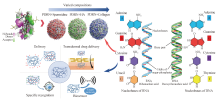
Fig.1
Nucleic acids and nucleic acid-based materials with distinct structures"
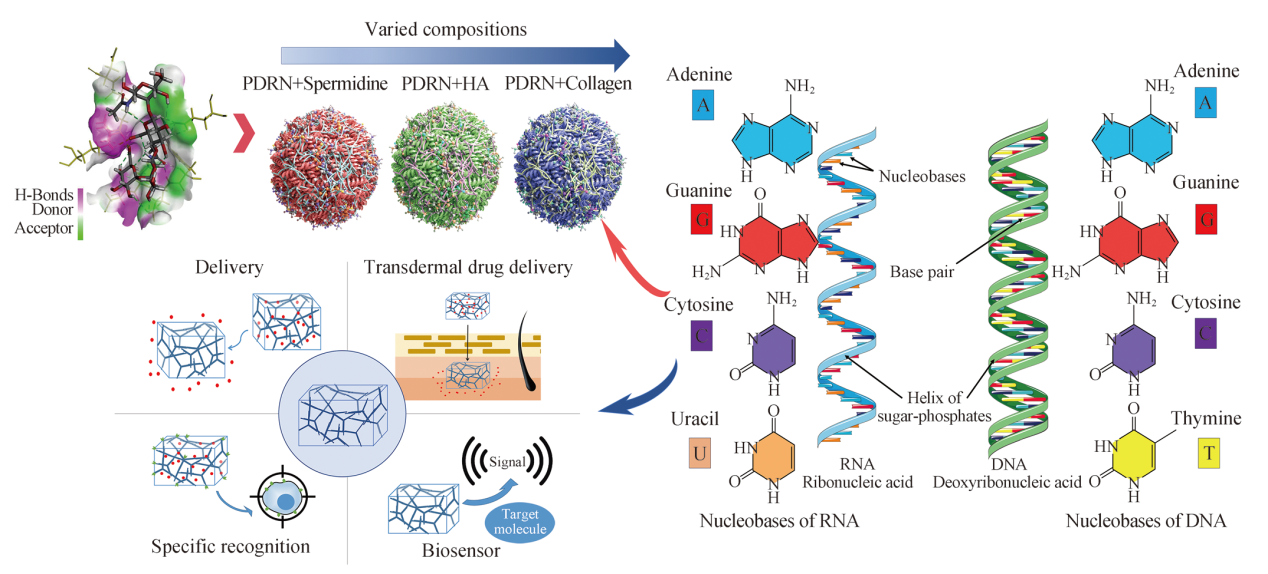
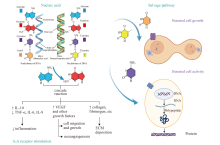
Fig.2
Schematic illustration of PDRN-mediated tissue repair through adenosine A2A receptor signaling and the nucleotide salvage pathway"
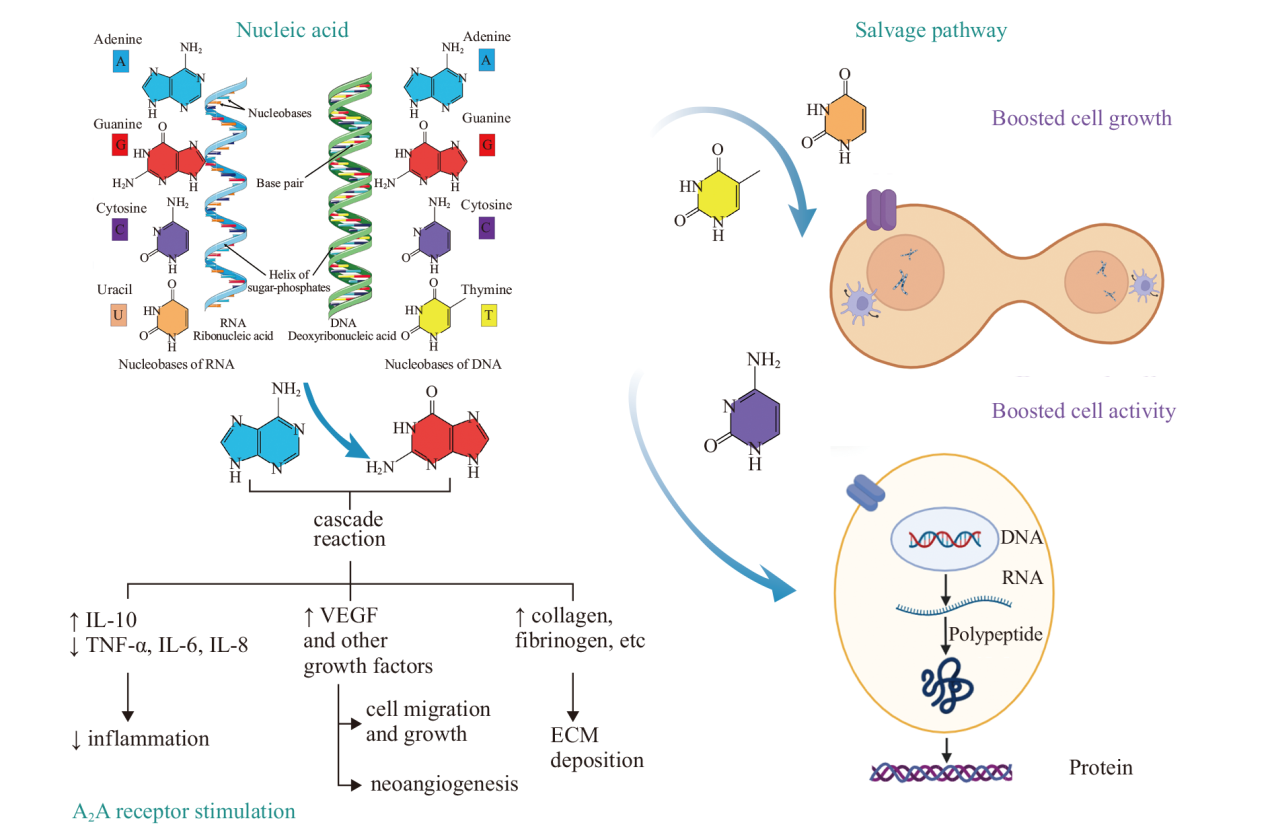
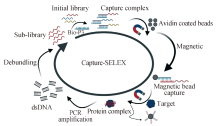
Fig.3
Screening of MC1R-targeted whitening nucleic acid aptamers via the Capture-SELEX process[38]"
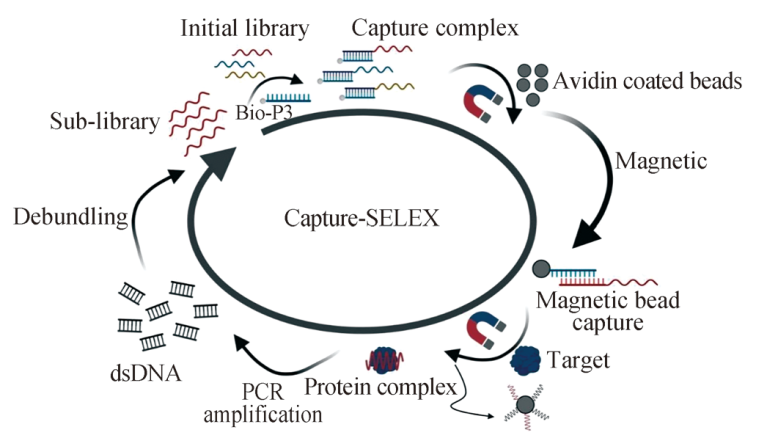
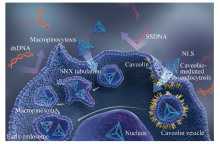
Fig.4
Endocytosis of tFNAs (Exposed single- or double-stranded DNA molecules cannot autonomously cross cell membranes, whereas tFNAs can enter cells; tFNAs functionalized with nuclear localization sequences [NLSs] can further penetrate the nucleus)[44]"
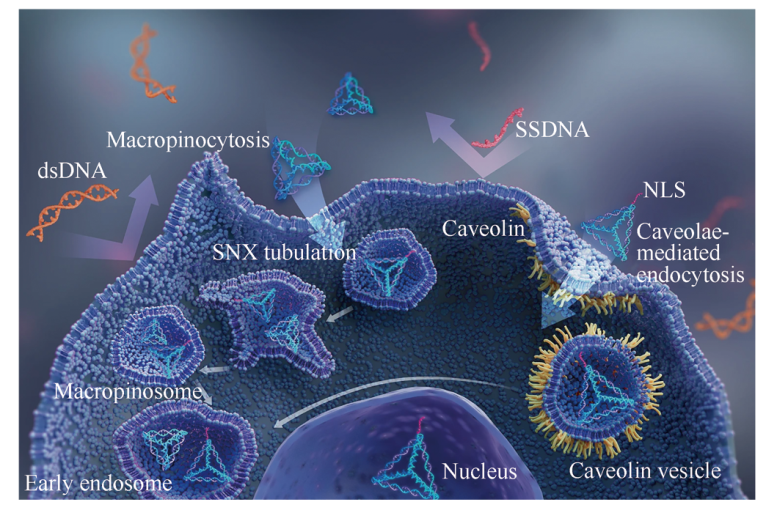
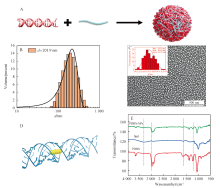
Fig.5
Preparation and characterization of PDRN-spermidine nanoparticles (A: Schematic mechanism; B: Particle size distribution of PDRN-NPs; C: Electron microscope image of PDRN-NPs; D: Molecular docking simulation; E: FT-IR spectra)[49]"
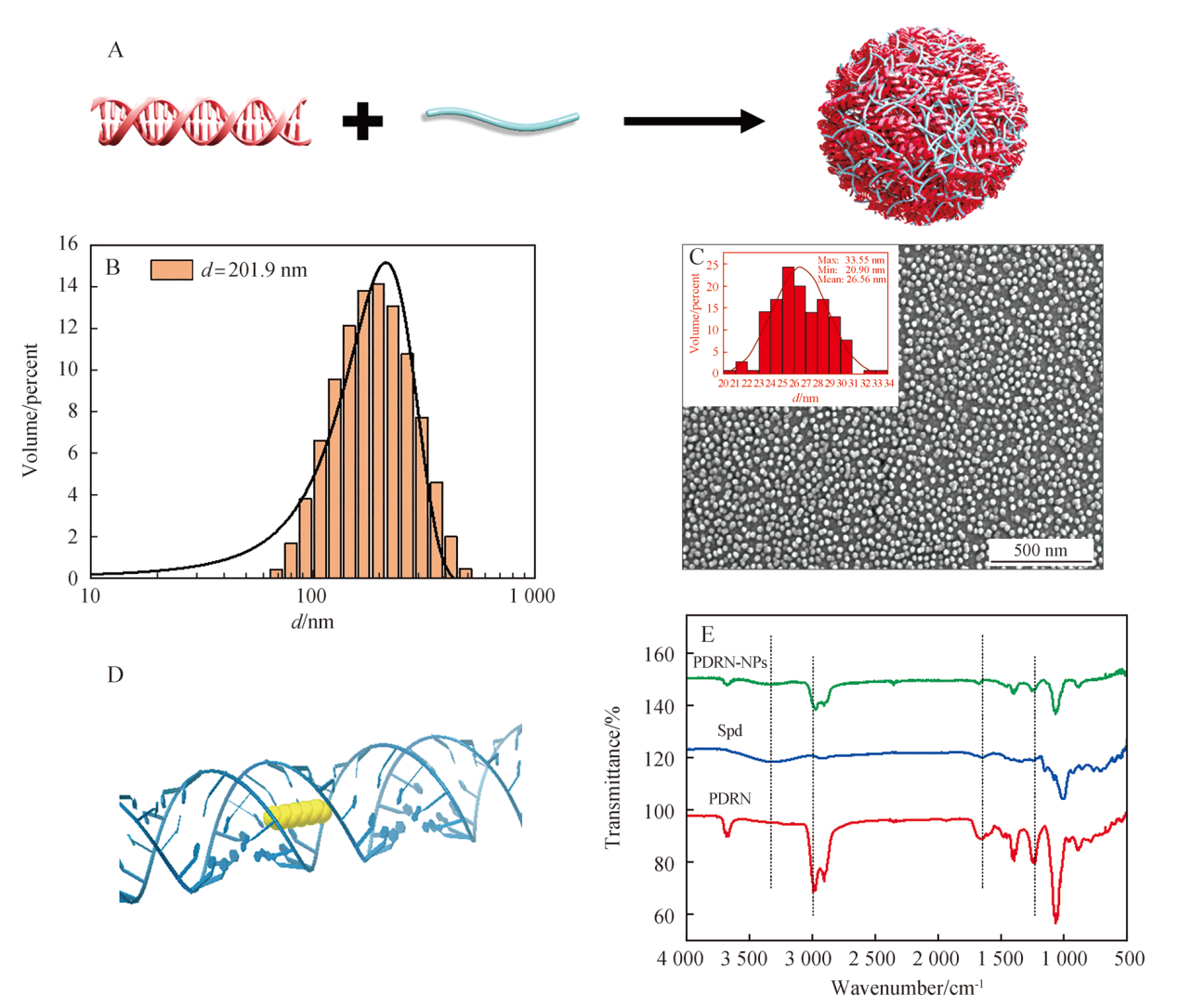
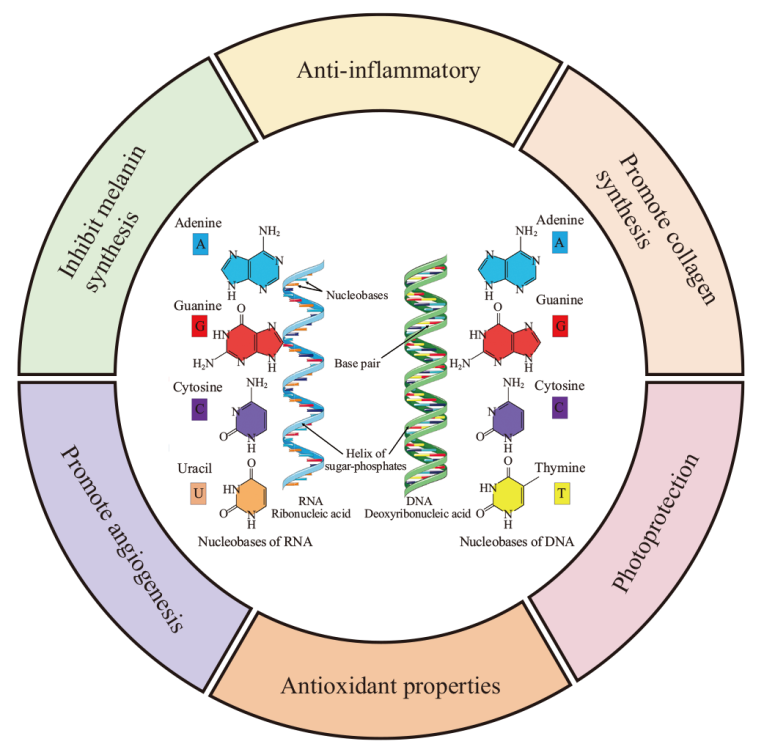
Fig.6
Nucleic acid structures and their therapeutic implications"
| [1] |
Travers A, Muskhelishvili G. DNA structure and function[J]. The FEBS Journal, 2015, 282(12): 2279-2295.
doi: 10.1111/febs.2015.282.issue-12 |
| [2] |
Cech T R, Steitz J A. The noncoding RNA revolution-trashing old rules to forge new ones[J]. Cell, 2014, 157(1): 77-94.
doi: 10.1016/j.cell.2014.03.008 pmid: 24679528 |
| [3] | Sun X, Setrerrahmane S, Li C, et al. Nucleic acid drugs: recent progress and future perspectives[J]. Signal Transduction and Targeted Therapy, 2024, 9(1): 316. |
| [4] | Galeano M, Pallio G, Irrera N, et al. Polydeoxyribonucleotide: A promising biological platform to accelerate impaired skin wound healing[J]. Pharmaceuticals, 2021, 14(11): 1103. |
| [5] |
Nguyen T H, Wang S L. Recent advances on polydeoxyribonucleotide extraction and its novel application in cosmeceuticals[J]. International Journal of Biological Macromolecules, 2024, 282: 137051.
doi: 10.1016/j.ijbiomac.2024.137051 |
| [6] |
Thellung S, Florio T, Maragliano A, et al. Polydeoxyribonucleotides enhance the proliferation of human skin fibroblasts: involvement of A2 purinergic receptor subtypes[J]. Life Sciences, 1999, 64(18): 1661-1674.
pmid: 10328526 |
| [7] | Kim S T. Comparison of polynucleotide and polydeoxyribonucleotide in dermatology: Molecular mechanisms and clinical perspectives[J]. Pharmaceutics, 2025, 17(8): 1024. |
| [8] |
Jurek J M, Neymann V. The role of the ImmunatuRNA® complex in promoting skin immunity and its regenerative abilities: Implications for antiaging skincare[J]. Journal of Cosmetic Dermatology, 2024, 23(4): 1429-1445.
doi: 10.1111/jocd.v23.4 |
| [9] | Kim T H, Heo S Y, Oh G W, et al. Applications of marine organism-derived polydeoxyribonucleotide: its potential in biomedical engineering[J]. Marine Drugs, 2021, 19(6): 296. |
| [10] | 吴莉莉. 低浊度核糖核酸生产工艺技术[J]. 广西轻工业, 2000(2): 18-20. |
| [11] |
Yoshino J, Baur J A, Imai S I. NAD+ intermediates: the biology and therapeutic potential of NMN and NR[J]. Cell metabolism, 2018, 27(3): 513-528.
doi: S1550-4131(17)30670-8 pmid: 29249689 |
| [12] |
Cheng F, Li K X, Wu S S, et al. Biosynthesis of nicotinamide mononucleotide: synthesis method, enzyme, and biocatalytic system[J]. Journal of Agricultural and Food Chemistry, 2024, 72(7): 3302-3313.
doi: 10.1021/acs.jafc.3c09217 pmid: 38330904 |
| [13] |
Beaucage S L, Caruthers M H. Deoxynucleoside phosphoramidites-a new class of key intermediates for deoxypolynucleotide synthesis[J]. Tetrahedron Letters, 1981, 22(20): 1859-1862.
doi: 10.1016/S0040-4039(01)90461-7 |
| [14] |
Caruthers M H. The chemical synthesis of DNA/RNA: our gift to science[J]. Journal of Biological Chemistry, 2013, 288(2): 1420-1427.
doi: 10.1074/jbc.X112.442855 pmid: 23223445 |
| [15] |
Galeano M, Bitto A, Altavilla D, et al. Polydeoxyribonucleotide stimulates angiogenesis and wound healing in the genetically diabetic mouse[J]. Wound Repair and Regeneration, 2008, 16(2): 208-217.
doi: 10.1111/j.1524-475X.2008.00361.x pmid: 18318806 |
| [16] |
Fredholm B B, IJzerman A P, Jacobson K A, et al. International Union of Basic and Clinical Pharmacology. LXXXI. Nomenclature and classification of adenosine receptors-an update[J]. Pharmacological Reviews, 2011, 63(1): 1-34.
doi: 10.1124/pr.110.003285 pmid: 21303899 |
| [17] |
Haskó G, Linden J, Cronstein B, et al. Adenosine receptors: therapeutic aspects for inflammatory and immune diseases[J]. Nature Reviews Drug Discovery, 2008, 7(9): 759-770.
doi: 10.1038/nrd2638 pmid: 18758473 |
| [18] |
Sharma A K, Laubach V E, Ramos S I, et al. Adenosine A2A receptor activation on CD4 + T lymphocytes and neutrophils attenuates lung ischemia-reperfusion injury[J]. The Journal of Thoracic and Cardiovascular Surgery, 2010, 139(2): 474-482.
doi: 10.1016/j.jtcvs.2009.08.033 |
| [19] |
Minutoli L, Arena S, Bonvissuto G, et al. Activation of adenosine A2A receptors by polydeoxyribonucleotide increases vascular endothelial growth factor and protects against testicular damage induced by experimental varicocele in rats[J]. Fertility and Sterility, 2011, 95(4): 1510-1513.
doi: 10.1016/j.fertnstert.2010.07.1047 pmid: 20797711 |
| [20] | Han J H, Jung J, Hwang L, et al. Anti-inflammatory effect of polydeoxyribonucleotide on zoledronic acid-pretreated and lipopolysaccharide-stimulated RAW 264.7 cells[J]. Experimental and Therapeutic Medicine, 2018, 16(1): 400-405. |
| [21] |
Sini P, Denti A, Cattarini G, et al. Effect of polydeoxyribonucleotides on human fibroblasts in primary culture[J]. Cell Biochemistry and Function, 1999, 17(2): 107-114.
pmid: 10377956 |
| [22] | Shin S M, Baek E J, Kim K H, et al. Polydeoxyribonucleotide exerts opposing effects on ERK activity in human skin keratinocytes and fibroblasts[J]. Molecular Medicine Reports, 2023, 28(2): 148. |
| [23] |
Brenneisen P, Sies H, Scharffetter‐Kochanek K. Ultraviolet‐B irradiation and matrix metalloproteinases: from induction via signaling to initial events[J]. Annals of the New York Academy of Sciences, 2002, 973(1): 31-43.
doi: 10.1111/nyas.2002.973.issue-1 |
| [24] | Noh T K, Chung B Y, Kim S Y, et al. Novel anti-melanogenesis properties of polydeoxyribonucleotide, a popular wound healing booster[J]. International Journal of Molecular Sciences, 2016, 17(9): 1448. |
| [25] | Zhu J, Zhang M, Gao Y, et al. Tetrahedral framework nucleic acids promote scarless healing of cutaneous wounds via the AKT-signaling pathway[J]. Signal Transduction and Targeted Therapy, 2020, 5(1): 120. |
| [26] | Zou W, Lu J, Zhang L, et al. Tetrahedral framework nucleic acids for improving wound healing[J]. Journal of Nanobiotechnology, 2024, 22(1): 113. |
| [27] | Park H J, Ko H L, Won D H, et al. Comprehensive analysis of the safety profile of a single-stranded RNA nano-structure adjuvant[J]. Pharmaceutics, 2019, 11(9): 464. |
| [28] |
Glanzer J G, Endres J L, Byrne B M, et al. Identification of inhibitors for single-stranded DNA-binding proteins in eubacteria[J]. Journal of Antimicrobial Chemotherapy, 2016, 71(12): 3432-3440.
doi: 10.1093/jac/dkw340 |
| [29] |
Watson J D, Crick F H. Molecular structure of nucleic acids: a structure for deoxyribose nucleic acid[J]. Nature, 1953, 171(4356): 737-738.
doi: 10.1038/171737a0 |
| [30] |
Georgakopoulos-Soares I, Parada G E, Hemberg M. Secondary structures in RNA synthesis, splicing and translation[J]. Computational and Structural Biotechnology Journal, 2022, 20: 2871-2884.
doi: 10.1016/j.csbj.2022.05.041 pmid: 35765654 |
| [31] |
Rothemund P W. Folding DNA to create nanoscale shapes and patterns[J]. Nature, 2006, 440(7082): 297-302.
doi: 10.1038/nature04586 |
| [32] |
Seeman N C. Nucleic acid junctions and lattices[J]. Journal of Theoretical Biology, 1982, 99(2): 237-247.
pmid: 6188926 |
| [33] | Obara P, Wolski P, Pańczyk T. Insights into the molecular structure, stability, and biological significance of non-canonical DNA forms, with a focus on G-quadruplexes and i-motifs[J]. Molecules, 2024, 29(19): 4683. |
| [34] |
Ellington A D, Szostak J W. In vitro selection of RNA molecules that bind specific ligands[J]. Nature, 1990, 346(6287): 818-822.
doi: 10.1038/346818a0 |
| [35] |
Tuerk C, Gold L. Systematic evolution of ligands by exponential enrichment: RNA ligands to bacteriophage T4 DNA polymerase[J]. Science, 1990, 249(4968): 505-510.
doi: 10.1126/science.2200121 pmid: 2200121 |
| [36] |
Keefe A D, Pai S, Ellington A. Aptamers as therapeutics[J]. Nature Reviews Drug Discovery, 2010, 9(7): 537-550.
doi: 10.1038/nrd3141 pmid: 20592747 |
| [37] | Mataix M, Illera N, Hidalgo I, et al. Targeting olfactory receptor OR2AT4: An innovative aptamer-based treatment for hair growth promotion[J]. Molecular Therapy Nucleic Acids, 2025, 36(3): 102608. |
| [38] |
He Y, Shang Z, Pei X, et al. Capture-SELEX screening for a new nanomolar affinity aptamers for label-free detection of human MC1-R and applications potential in cosmetics[J]. Microchemical Journal, 2025, 219: 115931.
doi: 10.1016/j.microc.2025.115931 |
| [39] |
Um S H, Lee J B, Park N, et al. Enzyme-catalysed assembly of DNA hydrogel[J]. Nature Materials, 2006, 5(10): 797-801.
pmid: 16998469 |
| [40] | 简雪婷, 冯晓祎, 熊菀伶, 等. DNA水凝胶的设计与构建[J]. 高分子材料科学与工程, 2021, 37(5): 102-108. |
| [41] |
Dananjaya S, Madushani K, Dilrukshi J, et al. Development and characterization of polydeoxyribonucleotide (PDRN) loaded chitosan polyplex: In vitro and in vivo evaluation of wound healing activity[J]. International Journal of Biological Macromolecules, 2023, 253: 126729.
doi: 10.1016/j.ijbiomac.2023.126729 |
| [42] |
Dananjaya S, Bandara N, Molagoda I M N, et al. Multifunctional alginate/polydeoxyribonucleotide hydrogels for promoting diabetic wound healing[J]. International Journal of Biological Macromolecules, 2024, 257: 128367.
doi: 10.1016/j.ijbiomac.2023.128367 |
| [43] |
Goodman R P, Schaap I A, Tardin C F, et al. Rapid chiral assembly of rigid DNA building blocks for molecular nanofabrication[J]. Science, 2005, 310(5754): 1661-1665.
pmid: 16339440 |
| [44] | Lin Y, Li Q, Wang L, et al. Advances in regenerative medicine applications of tetrahedral framework nucleic acid-based nanomaterials: an expert consensus recommendation[J]. International Journal of Oral Science, 2022, 14(1): 51. |
| [45] |
Gao L, Liu L, Tian Y, et al. Probing the formation kinetics and thermodynamics with rationally designed analytical tools enables one-pot synthesis and purification of a tetrahedral DNA nanostructure[J]. Analytical Chemistry, 2021, 93(18): 7045-7053.
doi: 10.1021/acs.analchem.1c00363 pmid: 33886303 |
| [46] |
Shu D, Moll W D, Deng Z, et al. Bottom-up assembly of RNA arrays and superstructures as potential parts in nanotechnology[J]. Nano Letters, 2004, 4(9): 1717-1723.
doi: 10.1021/nl0494497 pmid: 21171616 |
| [47] |
Bartel D P. MicroRNAs: genomics, biogenesis, mechanism, and function[J]. Cell, 2004, 116(2): 281-297.
doi: 10.1016/s0092-8674(04)00045-5 pmid: 14744438 |
| [48] | Chen J S, Wu D T S. Application of intronic microRNA agents in cosmetics[M] //Ying S Y. MicroRNA Protocols. New York: Springer, 2013: 325-341. |
| [49] | Liu Y, Hu W, Pei X, et al. Polydeoxyribonucleotide-spermidine nanoparticles: Preparation, characterization, and verification of skin anti-aging efficacy[J]. International Journal of Biological Macromolecules, 2025, 322(3): 146984. |
| [50] | Squadrito F, Bitto A, Altavilla D, et al. The effect of PDRN, an adenosine receptor A2A agonist, on the healing of chronic diabetic foot ulcers: results of a clinical trial[J]. Journal of Clinical Endocrinology & Metabolism, 2014, 99(5): E746-E753. |
| [51] |
Guizzardi S, Galli C, Govoni P, et al. Polydeoxyribonucleotide (PDRN) promotes human osteoblast proliferation: a new proposal for bone tissue repair[J]. Life Sciences, 2003, 73(15): 1973-1983.
doi: 10.1016/s0024-3205(03)00547-2 pmid: 12899922 |
| [52] |
Lazzarotto M, Tomasello E, Caporossi A. Clinical evaluation of corneal epithelialization after photorefractive keratectomy in patients treated with polydeoxyribonucleotide (PDRN) eye drops: a randomized, double-blind, placebo-controlled trial[J]. European Journal of Ophthalmology, 2004, 14(4): 284-289.
pmid: 15309972 |
| [53] |
Li M, Ding H, Lin M, et al. DNA framework-programmed cell capture via topology-engineered receptor-ligand interactions[J]. Journal of the American Chemical Society, 2019, 141(47): 18910-18915.
doi: 10.1021/jacs.9b11015 pmid: 31691568 |
| [54] |
Liu Q, Ge Z, Mao X, et al. Valency-controlled framework nucleic acid signal amplifiers[J]. Angewandte Chemie, 2018, 130(24): 7249-7253.
doi: 10.1002/ange.v130.24 |
| [55] | Wiraja C, Zhu Y, Lio D C S, et al. Framework nucleic acids as programmable carrier for transdermal drug delivery[J]. Nature Communications, 2019, 10(1): 1147. |
| [56] |
Park K Y, Seok J, Rho N K, et al. Long‐chain polynucleotide filler for skin rejuvenation: efficacy and complications in five patients[J]. Dermatologic Therapy, 2016, 29(1): 37-40.
doi: 10.1111/dth.2016.29.issue-1 |
| [57] |
Rho N K, Han K H, Cho M, et al. A survey on the cosmetic use of injectable polynucleotide: The pattern of practice among Korean dermatologists[J]. Journal of Cosmetic Dermatology, 2024, 23(4): 1243-1252.
doi: 10.1111/jocd.v23.4 |
| [58] |
Lim T S, Liew S, Tee X J, et al. Polynucleotides HPT for Asian skin regeneration and rejuvenation[J]. Clinical, Cosmetic and Investigational Dermatology, 2024, 17: 417-431.
doi: 10.2147/CCID.S437942 pmid: 38371328 |
| [59] | Li Y, Gao S, Shi S, et al. Tetrahedral framework nucleic acid-based delivery of resveratrol alleviates insulin resistance: from innate to adaptive immunity[J]. Nano-micro Letters, 2021, 13(1): 86. |
| [60] | Kim J, Chun S, Ohk S O, et al. Amelioration of alcohol-induced gastric mucosa damage by oral administration of food-polydeoxyribonucleotides[J]. Molecular Medicine Reports, 2021, 24(5): 790. |
| [1] | Siyue Xie, Can Qin, Junmin Lin, Xiaochun Luo. The activity and skin-caring efficacy of amino acids/peptides fermented from meal protein [J]. China Surfactant Detergent & Cosmetics, 2025, 55(9): 1187-1197. |
| [2] | Kuankuan Gao, Suzhen Yang, Tingting Han, Yan Li, Chunying Yuan, Xinyu Mao. Research progress of royal jelly acid and its skin care efficacy [J]. China Surfactant Detergent & Cosmetics, 2024, 54(2): 209-215. |
| [3] | Fan Gaoning. Research progress in cosmetics applications and properties of mycosporine-like amino acids [J]. China Surfactant Detergent & Cosmetics, 2022, 52(12): 1366-1372. |
| [4] | YANG Yan-yin,YANG Zhi-guo,HU Shi-guo,LI Yan,XUE Qiang,SUN Hua-fu. The efficacy of silymarin in dermatology and its application in cosmetics [J]. China Surfactant Detergent & Cosmetics, 2019, 49(4): 259-263. |
|
