Welcome to China Surfactant Detergent & Cosmetics, Today is


China Surfactant Detergent & Cosmetics ›› 2026, Vol. 56 ›› Issue (8): 1009-1018.doi: 10.3969/j.issn.2097-2806.2026.08.005
• Basic research • Previous Articles Next Articles
Sheng Chen1,*( ),Shunying Shang2,3
Received:2025-10-30
Revised:2026-07-27
Online:2026-08-22
Published:2026-09-02
Contact:
*E-mail: CLC Number:
Sheng Chen, Shunying Shang. Construction of polyaniline/C3N5 heterojunction and its performance in photocatalytic degradation of rhodamine B[J].China Surfactant Detergent & Cosmetics, 2026, 56(8): 1009-1018.
Fig.1
XRD patterns (a) and FT-IR spectra (b) of PANI, C3N5 and PANI/C3N5 heterojunction"
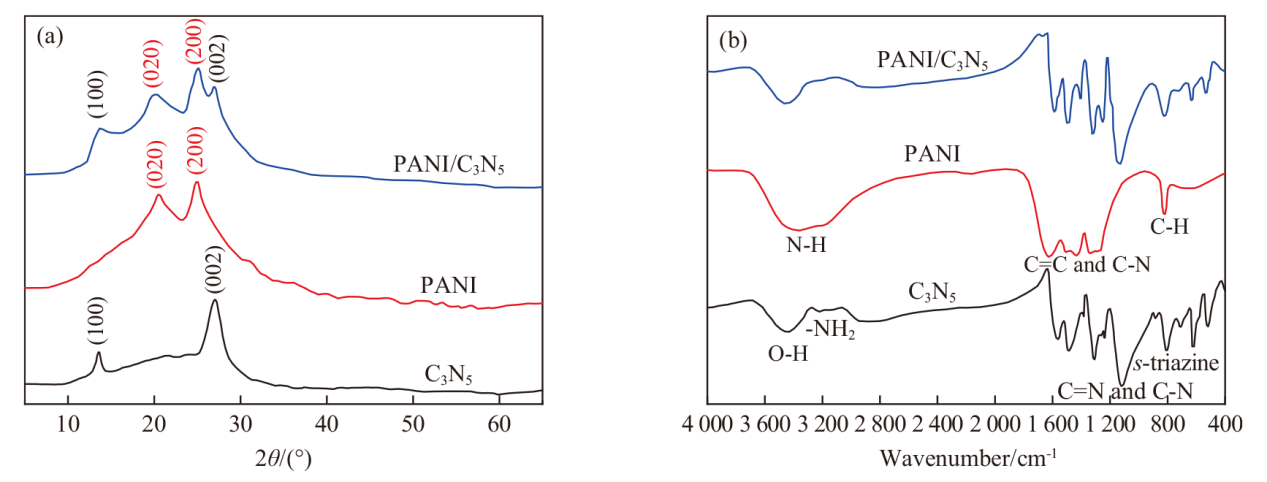
Fig.2
Nitrogen adsorption-desorption isotherms (a) and pore-size distribution (b) of PANI, C3N5 and PANI/C3N5 heterojunction"
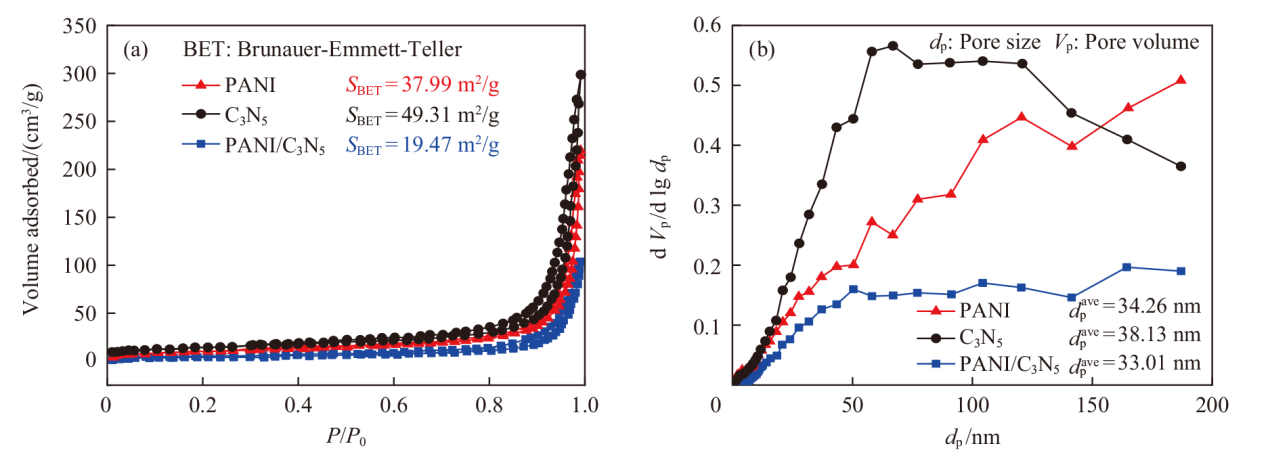
Fig.3
UV-vis DRS spectra (a) and band gap (b) of PANI, C3N5 and PANI/C3N5 heterojunction"
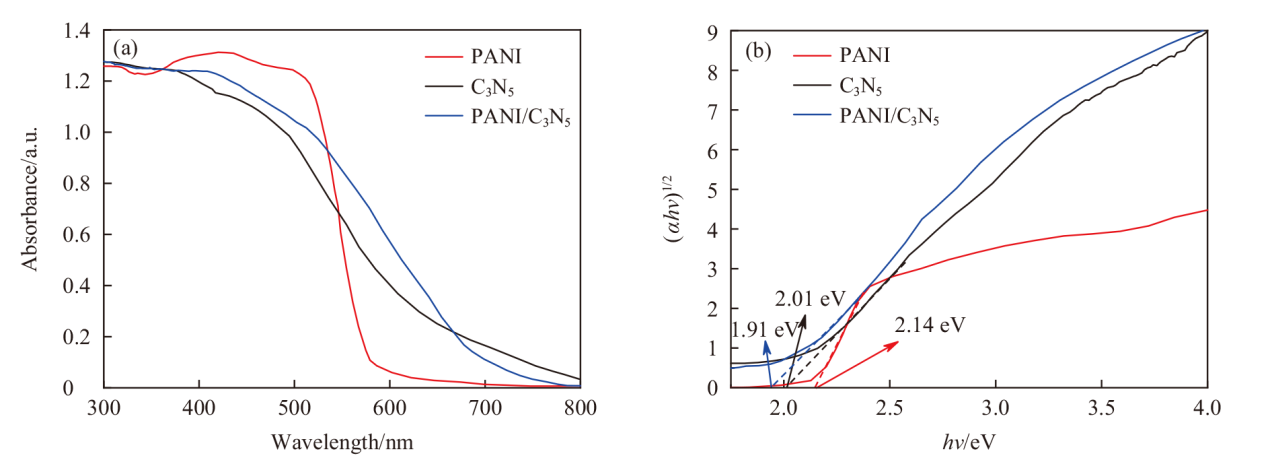
Fig.4
PL (a) and TR-PL (b) spectra of C3N5 and PANI/C3N5 heterojunction"
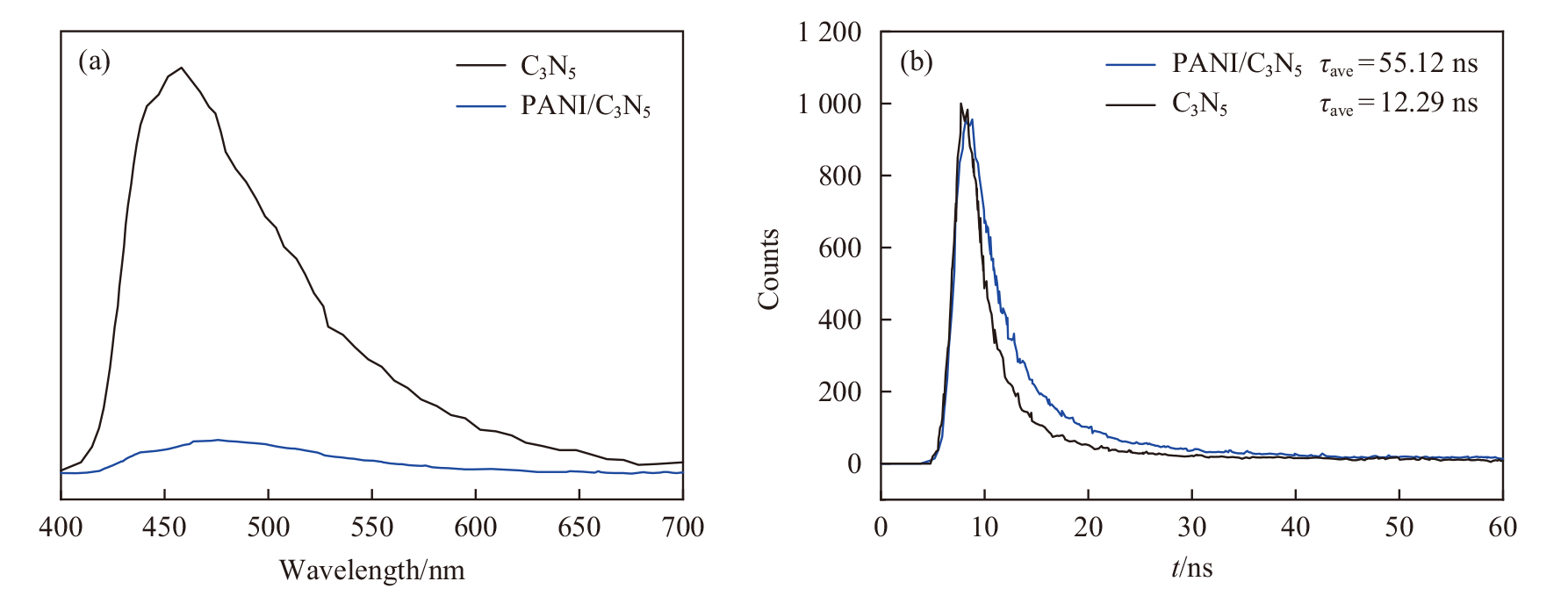
Fig.5
Periodic transient photocurrent (a) and EIS spectra (b) of C3N5 and PANI/C3N5 heterojunction"
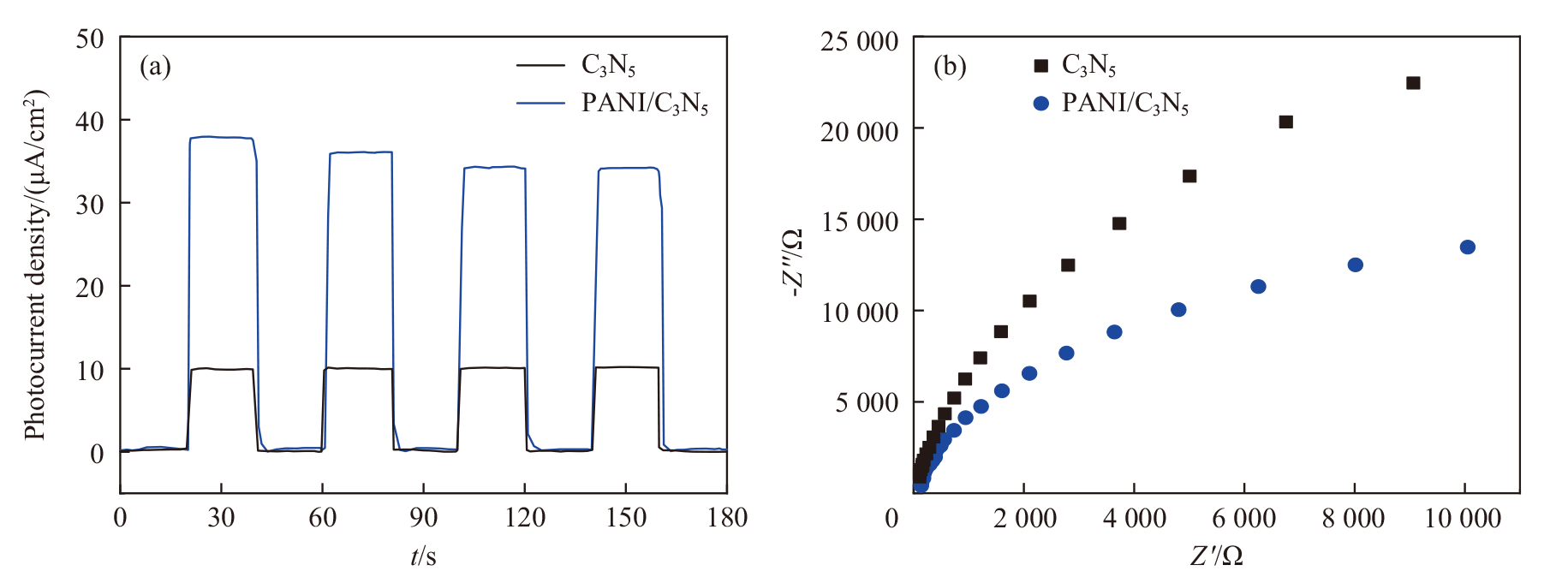
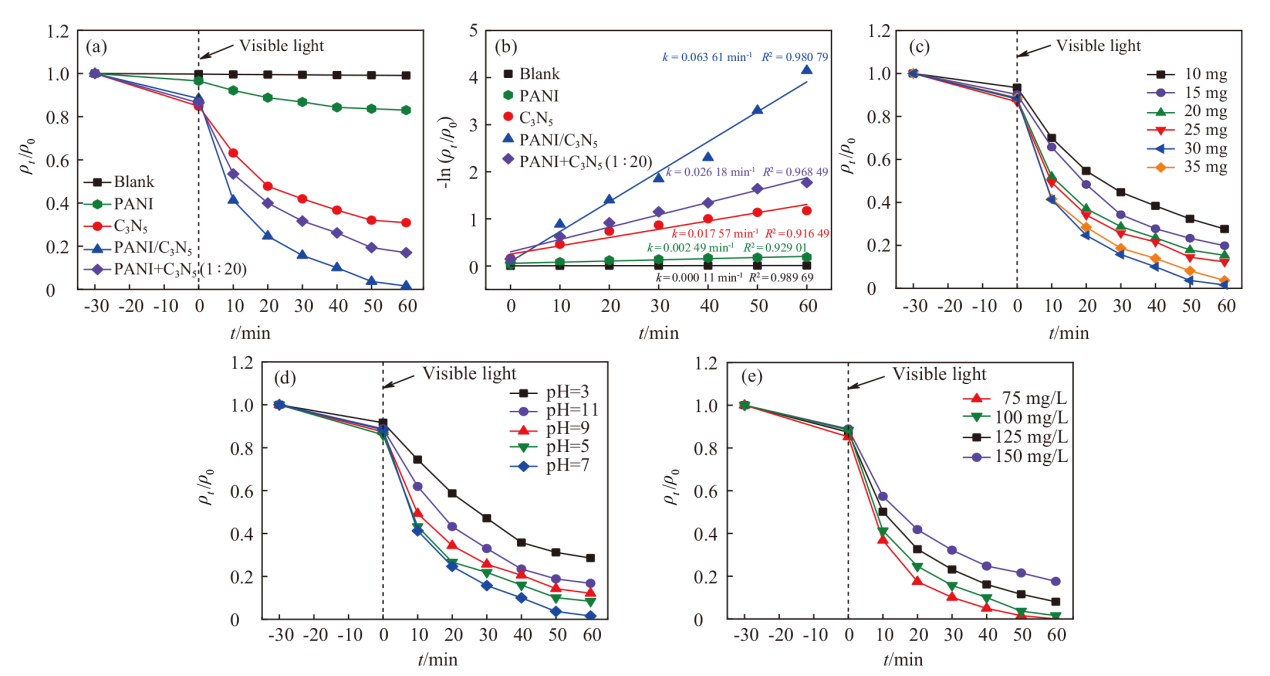
Fig.6
Performance (a) and kinetics (b) in photocatalytic degradation of RhB by PANI, C3N5 and PANI/C3N5 heterojunctions; effects of catalyst dosage (c), initial pH (d) and initial concentration of RhB (e) on the photocatalytic performance"
Tab.1
Comparison of different photocatalysts for degradation of RhB"
| 材料 | 污染物 | 光源 | 初始质量浓度/ (mg/L) | 光照时间/min | 催化剂用量/mg | 降解率/ % | 表观速率常数/min-1 | 来源 |
|---|---|---|---|---|---|---|---|---|
| SnO2/Cu/PANI | 罗丹明B | 250 W紫外灯 | 10 | 60 | 20 | 98.80 | — | [ |
| BiOCl/PANI | 罗丹明B | 300 W Xe, λ>400 nm | 50 | 150 | 15 | 98.80 | 0.031 00 | [ |
| GeO2/C3N5 | 罗丹明B | 300 W Xe, λ>420 nm | 10 | 150 | 100 | 82.00 | — | [ |
| AgCl/C3N5 | 罗丹明B | 300 W Xe, λ>420 nm | 10 | 30 | 50 | 96.00 | — | [ |
| AC/TiO2/C3N5 | 罗丹明B | 500 W Xe, λ>420 nm | 25 | 90 | 20 | 95.27 | 0.024 25 | [ |
| PANI/C3N5 | 罗丹明B | 300 W Xe, λ>420 nm | 100 | 60 | 30 | 98.42 | 0.063 61 | 本研究 |
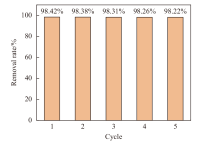
Fig.7
Stability of PANI/C3N5 heterojunction for photocatalytic degradation of RhB"
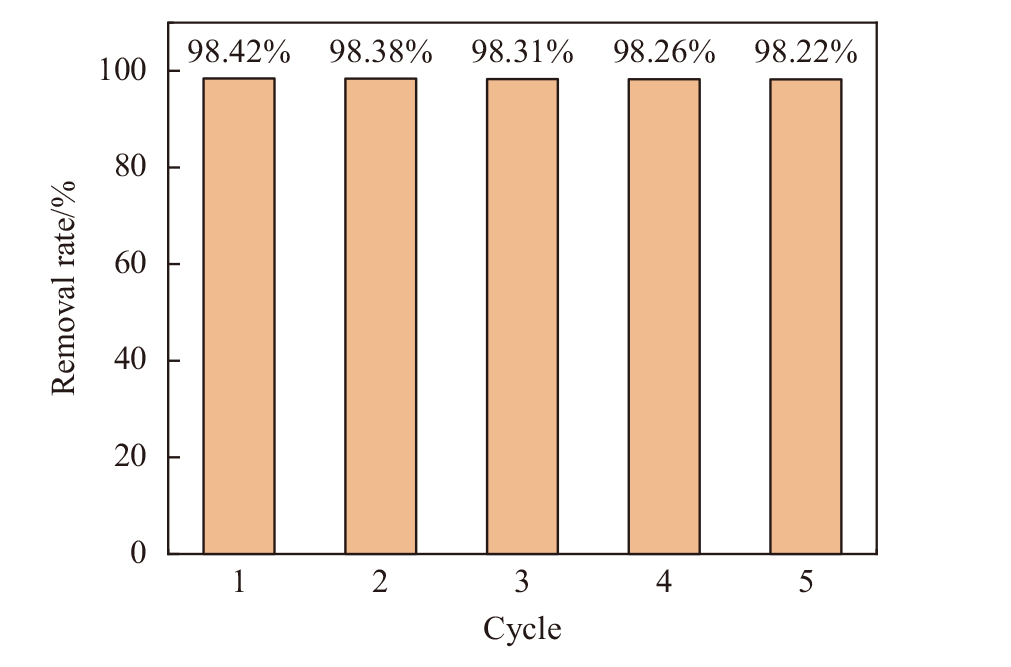
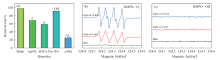
Fig.8
Active species quenching results (a) and ESR spectra of DMPO-·O2- (b) and DMPO-·OH (c)"
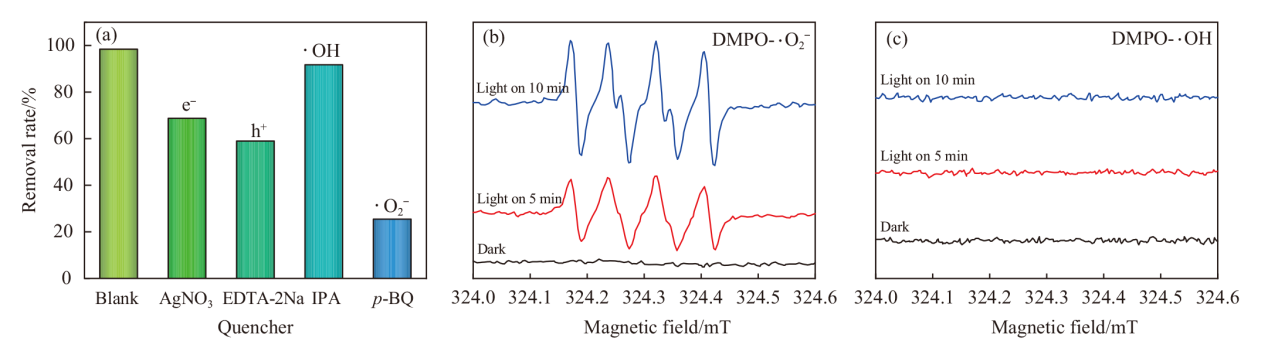
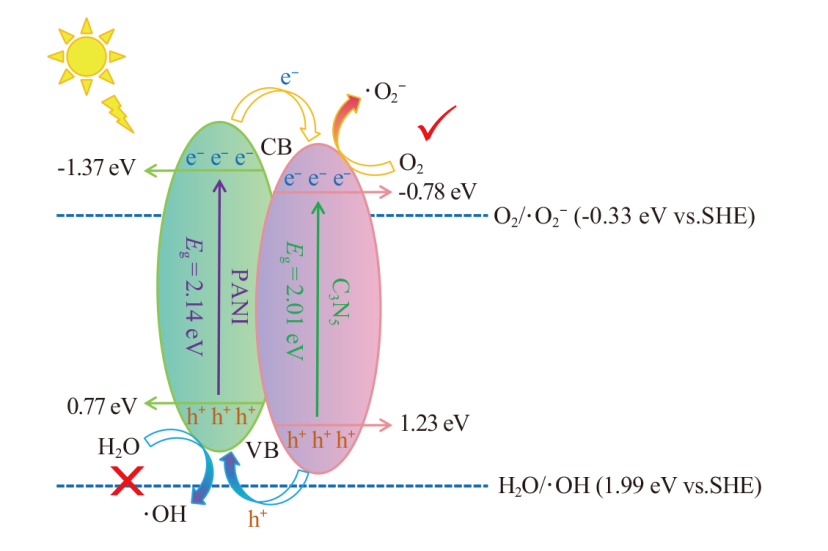
Fig.9
Type-II charge transfer mechanism of PANI/C3N5 heterojunction"
| [1] |
Mao J E, Chen H Y, Xu X Y, et al. Assessing greenhouse gas emissions from the printing and dyeing wastewater treatment and reuse system: Potential pathways towards carbon neutrality[J]. The Science of the Total Environment, 2024, 927: 172301.
doi: 10.1016/j.scitotenv.2024.172301 |
| [2] |
Zhao Z Y, Zhang S Z, Xu H L, et al. Modification of g-C3N4/BiOBr composite by carbon quantum dots for highly efficient photocatalytic degradation toward rhodamine B[J]. Ceramics International, 2025, 51: 52043-52055.
doi: 10.1016/j.ceramint.2025.08.412 |
| [3] | Chen Z X, Meng F L, Zhu D C, et al. Chitosan/g-C3N4/graphene oxide aerogel for efficient removal of rhodamine B and bisphenol A[J]. Materials Science & Engineering B, 2025, 323: 118882. |
| [4] | Zhang S X, Rong X S, Sun T, et al. Construct vacancy nitrogen controllable Z-scheme 3D porous g-C3N4/CoFe2O4 composite material for high-efficient photofixation nitrogen[J]. Diamond & Related Materials, 2023, 138: 110167. |
| [5] |
Deng Y C, Li L, Zeng H, et al. Unveiling the origin of high-efficiency charge transport effect of C3N5/C3N4 homojunction for activating peroxymonosulfate to degrade atrazine under visible light[J]. Chemical Engineering Journal, 2023, 457: 141261.
doi: 10.1016/j.cej.2022.141261 |
| [6] |
Yin H F, Yuan C Y, Lu H J, et al. The interface design of (0D/2D/1D) AgI/BiOI/C3N5 dual Z-scheme heterostructures with efficient visible-light-driven photocatalytic activity[J]. Separation and Purification Technology, 2023, 308: 122815.
doi: 10.1016/j.seppur.2022.122815 |
| [7] |
Masunga N, Mamba B B, Vallabhapurapu V S. Spinel ferrite functionalised C3N5 nanocomposite for hydrogen evolution and photodegradation of organic pollutants in water: Progress made and way forward: Review[J]. Inorganic Chemistry Communications, 2025, 181: 115122.
doi: 10.1016/j.inoche.2025.115122 |
| [8] |
Bi K J, Wang M, Li H Y. Synthesis of S scheme 2D/2D g-C3N5/g-C3N4 heterojunction for photocatalytic degradation tetracycline[J]. Surfaces and Interfaces, 2024, 50: 104487.
doi: 10.1016/j.surfin.2024.104487 |
| [9] |
Zhang J L, Yu G J, Yang C Y, et al. Recent progress on S-scheme heterojunction strategy enabling polymer carbon nitrides C3N4 and C3N5 enhanced photocatalysis in energy conversion and environmental remediation[J]. Current Opinion in Chemical Engineering, 2024, 45: 101040.
doi: 10.1016/j.coche.2024.101040 |
| [10] |
Liu S L, Bu Y F, Cheng S, et al. Synthesis of TiO2/g-C3N5 heterojunction for photocatalytic degradation of methylene blue wastewater under visible light irradiation: Mechanism analysis[J]. Diamond and Related Materials, 2023, 136: 110062.
doi: 10.1016/j.diamond.2023.110062 |
| [11] |
Su H M, Li J L, Chu M N, et al. Precision vacancy engineering and element refilling in S-scheme C3N5/Bi2MoO6 heterojunction for efficient photo-Fenton degradation of tetracycline[J]. Carbon, 2025, 245: 120860.
doi: 10.1016/j.carbon.2025.120860 |
| [12] |
Liao W N, Yang Z Q, Wang Y, et al. Novel Z-scheme Nb2O5/C3N5 photocatalyst for boosted degradation of tetracycline antibiotics by visible light-assisted activation of persulfate system[J]. Chemical Engineering Journal, 2023, 478: 147346.
doi: 10.1016/j.cej.2023.147346 |
| [13] |
Hazarika B, Bhattacharjee B, Ahmaruzzaman M. Enhanced photocatalytic degradation of brilliant green using g-C3N5/WO3 nanocomposite: A Z-scheme charge transfer approach under visible light irradiation[J]. Inorganic Chemistry Communications, 2024, 168: 112960.
doi: 10.1016/j.inoche.2024.112960 |
| [14] | 沈萌萌. g-C3N4/聚苯胺复合材料的制备及其在光催化还原CO2中的应用研究[J]. 无机盐工业, 2025, 57(8): 123-130. |
| [15] | 赵世涵, 姜珂, 习雯, 等. SnO2/Cu/聚苯胺纳米复合材料的制备及光催化降解罗丹明B[J]. 化工科技, 2024, 32(5): 48-54. |
| [16] |
Xin X Y, Liu M, Zhu P F, et al. High-visible light response AgNbO3/Bi2MoO6/PANI double Z-scheme heterojunction photocatalytic degradation of antibiotics[J]. Langmuir, 2024, 40(40):19751-19765.
doi: 10.1021/acs.langmuir.4c02487 |
| [17] |
Li Y Q, Dai Y M, Cai L, et al. Efficient adsorption and photocatalytic degradation of organic dyes by novel chitosan/polyaniline/MnFe2O4 composites[J]. Journal of Molecular Liquids, 2025, 424: 126995.
doi: 10.1016/j.molliq.2025.126995 |
| [18] |
Qurtulen Q, Mohammad M, Omar A A, et al. Synthesis of biomass-derived carbon quantum dots/polyaniline nanocomposite for photocatalytic degradation of brilliant green dye and bioimaging applications[J]. Nano Express, 2025, 6: 015014.
doi: 10.1088/2632-959X/ada6e8 |
| [19] | 张霞, 白羽石, 常熙, 等. BiOCl/聚苯胺的制备及其光催化降解罗丹明B性能[J]. 无机化学学报, 2025, 41(5): 913-922. |
| [20] |
Sharma K P, Shin M, Awasthi G P, et al. Pani/MoS2 composite for an efficient catalyst for photocatalytic reduction and adsorption of chromium Cr (VI)[J]. Inorganic Chemistry Communications, 2025, 178: 114618.
doi: 10.1016/j.inoche.2025.114618 |
| [21] |
AlFawaz A, Alsalme A, Soltan A, et al. Polyaniline/g-C3N4 hybrid nanoparticles: Fabrication, characterization and boosting bisphenol destruction and hydrogen gas evolution through direct S-scheme aspects[J]. Journal of Physics and Chemistry of Solids, 2022, 168: 110773.
doi: 10.1016/j.jpcs.2022.110773 |
| [22] |
Low W L, Liew C W, Juan J C, et al. Development of polyaniline-tin oxide (PAni-SnO2) as binary photocatalyst for toxic pollutant removal[J]. Polymer Bulletin, 2024, 82: 1-22.
doi: 10.1007/s00289-024-05525-1 |
| [23] |
Aroui L, Madani S, Bousnoubra I, et al. Enhanced degradation of crystal violet using PANI-ZnO nanocomposites: Electro-oxidation and photocatalysis studies[J]. Journal of Molecular Liquids, 2024, 412: 125818.
doi: 10.1016/j.molliq.2024.125818 |
| [24] |
Saraee H, Tanzifi M, Mansouri M, et al. Fabrication of a novel Z-scheme 2D/1D g-C3N4/polyaniline decorated on activated carbon with effective visible-light photocatalytic activity[J]. Environmental Research, 2025, 267: 120658.
doi: 10.1016/j.envres.2024.120658 |
| [25] |
Yang J, Long J Q, Huang H Z, et al. Synthesis of visible-light driven CeO2/g-C3N5 heterojunction with enhanced photocatalytic performance for organic dyes[J]. Colloids and Surfaces A: Physicochemical and Engineering Aspects, 2023, 660: 130846.
doi: 10.1016/j.colsurfa.2022.130846 |
| [26] |
Huang G Z, Liu S L, Tian C, et al. Construction of S scheme ZnO/g-C3N4 heterojunction for the removal of pyridine from coal chemical wastewater[J]. Optical Materials, 2024, 150: 115288.
doi: 10.1016/j.optmat.2024.115288 |
| [27] |
Vadivel S, Hariganesh S, Paul B, et al. Synthesis of novel AgCl loaded g-C3N5 with ultrahigh activity as visible light photocatalyst for pollutants degradation[J]. Chemical Physics Letters, 2020, 738: 136862.
doi: 10.1016/j.cplett.2019.136862 |
| [28] |
Hulugirgesh D W, Tesfa M, Neway B, et al. Enhanced photocatalytic degradation of methylene blue dye using fascily synthesized g-C3N4/CoFe2O4 composite under sun light irradiation[J]. Results in Chemistry, 2024, 7: 101306.
doi: 10.1016/j.rechem.2024.101306 |
| [29] | 白春英. 活性炭/TiO2/C3N5复合材料的制备及对罗丹明B的光催化降解[J]. 印染, 2024, 50(12): 1-5. |
| [30] |
Ramya B S, Krishnamurthy G. Fabrication of BaO-CeO2/TiO2 ternary nanocomposite: an efficient photocatalyst for removal of indigo carmine and rhodamine B[J]. Sustainable Chemistry One World, 2025, 7: 100088.
doi: 10.1016/j.scowo.2025.100088 |
| [31] | 朱炳生. AgBr/C3N5复合材料可见光去除无机废水中氨氮[J]. 日用化学工业 (中英文), 2024, 54(12): 1473-1480. |
| [32] |
Lu B W, Wang L, Zhu X Y, et al. Coral like g-C3N4/Br-Bi2O2CO3 type-II heterojunction with efficient photocatalytic performance and mechanism for degradation of tetracycline[J]. Solid State Sciences, 2025, 160: 107765.
doi: 10.1016/j.solidstatesciences.2024.107765 |
|
