Loading...
Welcome to China Surfactant Detergent & Cosmetics, Today is

Table of Content

    22 October 2026, Volume 56 Issue 10 Previous Issue   
    Invited paper
    Application of surfactants in metalworking fluids
    Xuzhao Yang,Yingying Zhang,Zhuangzhuang Pei,Huibao Wang,Yakun Li,Jianqiang Zhang,Cong Liu,Ruixue Zhang,Ying Li,Shilong Jiang,Jiaxiang Zhang
    2026, 56 (10):  1287-1296.  doi: 10.3969/j.issn.2097-2806.2026.10.001
    Abstract ( 41 )   HTML ( 7 )   PDF (14443KB) ( 34 )  

    Metalworking fluids are key ancillary materials and consumables in the metalworking industry, and surfactants determine their stability, wetting and cooling performance, cleaning and chip evacuation, lubrication and rust prevention, and service life. The paper reviews the application of surfactants in the field of metalworking fluids. By introducing the concepts of metalworking fluids and surfactants, it focuses on analyzing the types of surfactants and their mechanisms of action in metalworking fluids. It further explores the roles of surfactants in the formulation, machining, and application of metalworking fluids. It also examines their action patterns and compatibility strategies in processes such as emulsification stability, workpiece wetting, surface cleaning, temporary rust prevention, microbial control, and extreme-pressure lubrication. In addition, the paper also addresses frontier technological advances in the field of surfactants, including the development of new green surfactants and nano-assisted compounding technologies, and systematically discusses their safety evaluation systems, environmental management requirements, and future development directions. The paper aims to provide a theoretical basis and practical reference for the optimal formulation design of metalworking fluids and the scientific application of surfactants.

    Figures and Tables | References | Related Articles | Metrics
    Lecture of science and technology
    Viscoelastic surfactants (X) Applications in oil and gas production
    Yongli Lv,Yujun Feng
    2026, 56 (10):  1297-1309.  doi: 10.3969/j.issn.2097-2806.2026.10.002
    Abstract ( 26 )   HTML ( 4 )   PDF (24242KB) ( 18 )  

    Viscoelastic surfactants (VES) combine viscosity enhancement, unique viscoelasticity, reversible shearing and hydrocarbon-sensitivity, and have thus become key components of oil and gas working fluids. This review summarizes the mechanism, formulation and practical applications or potentials of VES in upstream oil industry. In clean fracturing fluids, entangled micellar networks suspend proppants while leaving minimal residue; nanoparticle modification further improves thermal and salt tolerance and fluid-loss control. Self-diverting acids exploit acid-rock reaction to thicken in situ, temporarily plugging high-permeability zones and diverting subsequent acid to low-permeability layers. Gravel packing and coiled-tubing operations benefit from low friction, laminar-flow sand transport and reversible shear recovery. In chemical flooding and CO2 flooding, VES provides both mobility control and interfacial activity, and CO2-responsive systems can gel in situ to mitigate gas channeling and enhance saline-aquifer sequestration. VES shows clear advantages in residue-sensitive reservoirs such as low-pressure low-permeability and coalbed methane formations, yet temperature and salinity limits, the emulsification tendency of cationic species and reagent cost still constrain large-scale substitution of polymers. Future work should enhance performance through nanocomposites, multiple non-covalent interactions and salt-induced assembly, while advancing green and low-cost preparation.

    Figures and Tables | References | Related Articles | Metrics
    Basic research
    Preparation of a novel multi-quaternary ammonium surfactant and its potential for application in clean fracturing fluids
    Jing Cao,Jiajie Chai,Didong Wang,Ximei Liang,Weiwei Han,Sanbao Dong
    2026, 56 (10):  1310-1317.  doi: 10.3969/j.issn.2097-2806.2026.10.003
    Abstract ( 32 )   HTML ( 4 )   PDF (10787KB) ( 18 )  

    Multi-quaternary ammonium surfactants exhibit favorable viscoelasticity and shear resistance, making them excellent thickeners for preparing clean fracturing fluids. In this work, a novel multi-quaternary ammonium surfactant (CTAN) was synthesized by using 3-methylamino-1, 2- propanediol, epichlorohydrin and octadecyldimethylamine as raw materials. Its surface activity was measured, and the effects of concentration, temperature and counterions on the viscosity of CTAN solutions were investigated. After optimization, a mixed system suitable as the main agent for clean fracturing fluids was obtained, consisting of 3% CTAN and 0.66% sodium salicylate (NaSal). The results showed that the critical micelle concentration of CTAN at room temperature was 0.5 mmol/L, with corresponding equilibrium surface tension of 27.2 mN/m. The viscosity of CTAN solutions increased monotonically with concentration before reaching a plateau. When the CTAN concentration reached 6%, the viscosity was raised to 4 740.1 mPa·s. As for the effect of temperature, the viscosity of the solution of 3% CTAN first increased and then decreased with the rising temperature, reaching a maximum of 1 873.2 mPa·s at 40 ℃, indicative of good thickening performance. Compared with KCl, NaSal exhibited a much more significant viscosity-enhancing effect on the 3% CTAN solution. At 40 ℃ and the shear rate of 20 s-1, the presence of 0.66% NaSal could increase the viscosity of the 3% CTAN solution from 1 873.2 mPa·s to 5 827.3 mPa·s. Furthermore, the 3% CTAN solution with 0.66% NaSal also showed favorable viscoelasticity, rheological properties, and sand-suspension performance. At room temperature, the settling rate of proppant particles (sand-fluid ratio of 1.5 : 8.5) in this CTAN/NaSal mixed system was 0.015 cm/min. The addition of NaSal had promoted the transformation of molecular self-assembled structures of CTAN from spherical to worm-like morphologies, which was consistent with the microscopic morphological analysis by scanning electron microscopy on the freeze-dried solution.

    Figures and Tables | References | Related Articles | Metrics
    Preparation and properties of the nanoemulsions stabilized by ternary surfactant mixtures of a POSS-based giant surfactant and two small-molecule surfactants
    Rong Zhang,Lijun Zheng,Yan Wang,Jun Wang,Jiarui Hu,Xu Yang,Ping Zhao,Bin Lv
    2026, 56 (10):  1318-1326.  doi: 10.3969/j.issn.2097-2806.2026.10.004
    Abstract ( 28 )   HTML ( 4 )   PDF (5769KB) ( 23 )  

    The performance of nanoemulsions is highly dependent on the molecular structure and interfacial behavior of the surfactants. Their large specific surface area, excellent stability, and high permeability offer key advantages for colloidal systems, making them widely applicable in the fields of targeted drug delivery, enhanced oil recovery, and functional coatings. In this work, a sulfonic acid-functionalized cage-like silsesquioxane giant surfactant (7Tau-POSS-C8) was synthesized, and then it was blended with fatty alcohol polyoxyethylene ether (JFC) and isotridecyl alcohol polyoxyethylene ether (TO-4070) to form ternary surfactant mixtures with different mass ratios. These ternary surfactant mixtures were used to prepare nanoemulsions in which methanol was employed as the co-surfactant and limonene as the oil phase. The influences of the type and proportion of the surfactant mixtures on the nanoemulsion formation were systematically studied by constructing and optimizing pseudo-ternary phase diagrams. The experimental results showed that the area of nanoemulsion region reached the maximum (28.03%) when the mass ratio of 7Tau-POSS-C8 to JFC to TO-4070 was 1:2:2. The nanoemulsion thus obtained exhibited small droplet size (< 200 nm), good monodispersity, and low interfacial tension (0.07 mN/m). Rheological experiments demonstrated that the presence of 7Tau-POSS-C8 effectively suppressed the viscosity rise during high-rate shearing, thereby enhancing the shear stability of the system. The oil-sand washing experiments showed that the nanoemulsion achieved high oil removal efficiency of 90.48%, which was significantly superior to those systems stabilized by single small-molecule surfactants. According to the results of microscopic morphology, surface tension, and interfacial behavior, this work elucidated the key synergistic roles of 7Tau-POSS-C8 with small-molecule surfactants in improving the emulsifying ability, interfacial activity, and application performance of nanoemulsions. This work could provide theoretical insights and practical guidance for the design of high-performance nanoemulsions based on giant surfactants.

    Figures and Tables | References | Related Articles | Metrics
    Preparation and photocatalytic degradation performance of polyaniline/ZnFe2O4 composites loaded on fly-ash cenospheres
    Dengxu Shen,Liusheng Chu
    2026, 56 (10):  1327-1336.  doi: 10.3969/j.issn.2097-2806.2026.10.005
    Abstract ( 29 )   HTML ( 5 )   PDF (10872KB) ( 19 )  

    To solve the problem of water pollution caused by sulfonamide antibiotics, in this study, the composites of polyaniline@zinc ferrite loaded on fly-ash cenospheres (PANI@ZnFe2O4/FAC) were prepared by in-situ polymerization. The crystal structure, microstructure and photoelectrochemical properties of the composites were characterized by XRD, SEM, FT-IR, UV-vis DRS, PL and EIS. Sulfamethazine (SMZ) was used as the target pollutant in wastewater for degradation. The photocatalytic performance, durability and substrate universality of the composite were evaluated, and the photocatalytic mechanism was analyzed and proposed. The preparation conditions were optimized by L9 (34) orthogonal experiment. The results showed that the composite material prepared under the condition of the mass ratio of aniline:ZnFe2O4/FAC of 1:1, the molar ratio of aniline: ammonium persulfate of 1:2, the concentration of hydrochloric acid of 0.5 mol/L and the reaction time of 8 h showed excellent photocatalytic performance. The highest degradation percentage of SMZ reached 98.90% under simulated visible light irradiation for 60 min. The enhanced photocatalytic activity could be ascribed to the construction of type-II heterojunction between PANI and ZnFe2O4/FAC, which had realized the efficient separation of photogenerated carriers and reduced the electrochemical impedance. The active species quenching results showed that ·O2- and h+ played key roles in the photocatalytic process.

    Figures and Tables | References | Related Articles | Metrics
    Synthesis of hydroxypropyl-trimethylammonium hydrolyzed keratin and its application performance in hair care
    Jie Chang,Hujun Xu,Haiyan Gao
    2026, 56 (10):  1337-1343.  doi: 10.3969/j.issn.2097-2806.2026.10.006
    Abstract ( 29 )   HTML ( 6 )   PDF (6746KB) ( 21 )  

    To solve the problems of low adsorption efficiency and limited repair effects of natural hydrolyzed proteins on hair, which is often caused by the electrostatic repulsion from hair surface, in this work, hydrolyzed keratin was modified by using 2, 3- epoxypropyltrimethylammonium chloride (EPTAC) and thus the hydroxypropyl-trimethylammonium hydrolyzed keratin (HPT-Ker) was successfully produced. The physicochemical properties of HPT-Ker were systematically studied when mixed with an anionic surfactant (AES) and an zwitterionic surfactant (CAB). Its efficacy in clear shampoo formulations were also studied. The results showed that HPT-Ker exhibited significant synergistic effect with AES, reducing the surface tension and critical micelle concentration of the system, and meanwhile, the irritation of the system was also remarkably reduced. In hair care applications, HPT-Ker was confirmed to achieve the dual functions of “film formation on hair surface” and “intrinsic repair”, which were attributed to its cationic nature and structural similarity to hair keratin. It not only surpassed the traditional cationic conditioner JR-400 in hair combability, but also exhibited repair capabilities, including significantly enhancing hair tensile strength and smoothing the damaged hair cuticle. This work might provide theoretical foundation and practical reference for development of highly effective, mild, and multifunctional bio-based hair conditioning agents.

    Figures and Tables | References | Related Articles | Metrics
    Evaluation of skin barrier repair by a probiotic ferment lysate in a zebrafish model and mechanistic exploration via the Notch signaling pathway
    Xin Li,Zhi Duan,Zhiyin Zhang,Hongchang Cui
    2026, 56 (10):  1344-1353.  doi: 10.3969/j.issn.2097-2806.2026.10.007
    Abstract ( 51 )   HTML ( 6 )   PDF (21579KB) ( 47 )  

    This study aims to evaluate the skin barrier repair efficacy of the skincare ingredient Lactobacillus fermentation lysate VHProbi MixR and clarify its potential mechanism of action. This material is an equal-ratio mixture of lysates derived from four probiotic ferments. LC-MS-based untargeted metabolomics was used to analyze the chemical components of VHProbi MixR. Network pharmacology was employed to predict its potential targets and related pathways. A lactic acid-induced zebrafish skin barrier injury model was established to assess the repair effect of VHProbi MixR at different concentrations. Transcriptomics and RT-qPCR were combined to verify the core pathways and differential gene expression. VHProbi MixR contains 2 176 metabolites, mainly including organic acids and their derivatives, lipids and lipid-like molecules, with various active components such as nicotinamide. Network pharmacology identifie 678 potential targets, among which the key target GSK3B is closely associated with skin barrier repair-related pathways. Zebrafish experiments show that VHProbi MixR (50 and 200 mL/L) significantly reduces the fluorescent staining area of damaged skin (P<0.001), with a more pronounced effect in the high-dose group. Transcriptomic and qPCR verification indicate that VHProbi MixR activates the Notch signaling pathway and upregulates the expression of downstream target genes, including her4, her12, and hey1. Collectively, VHProbi MixR exerts skin barrier repair effects by acting on the GSK3B target to activate the Notch signaling pathway, thereby promoting keratinocyte differentiation and regulating tight junction proteins. These findings demonstrate its promising potential for application in skincare products.

    Figures and Tables | References | Related Articles | Metrics
    Study on the inhibitory effect and mechanism of Terminalia chebula Retz extract on tyrosinase activity
    Guoping Wu,Bin Li,Shan Huang
    2026, 56 (10):  1354-1361.  doi: 10.3969/j.issn.2097-2806.2026.10.008
    Abstract ( 43 )   HTML ( 5 )   PDF (7437KB) ( 24 )  

    This study aimed to explore the inhibitory effect and underlying mechanism of Terminalia chebula Retz extract (TCE) on tyrosinase activity. High-performance liquid chromatography (HPLC) was employed to analyze the main components of TCE. Enzyme kinetics, fluorescence spectroscopy, and molecular docking techniques were utilized to investigate the inhibitory effects and mechanisms. TCE demonstrates potent inhibitory activity against both tyrosinase monophenolase and diphenolase, with IC50 values of (30.6±0.6) mg/L and (28.3±0.2) mg/L, respectively. Kinetic analysis suggests a mixed-type inhibition mechanism, with inhibition constants KI = 232.26 mg/L and KIS = 927.27 mg/L. Fluorescence spectroscopic analysis shows that the intrinsic fluorescence intensity of tyrosinase decreases in a concentration-dependent manner with increasing concentrations of Terminalia chebula extract. Concurrently, the maximum emission wavelength undergoes a red shift from 332 nm to 341 nm. Further molecular docking simulations indicate that gallic acid, chebulagic acid, and corilagin, the key constituents of the extract, can stably dock into the active site of tyrosinase. Through the formation of hydrogen bonds and ionic bonds with critical amino acid residues, these compounds competitively impede substrate binding. TCE significantly suppresses tyrosinase activity by binding to the enzyme’s active site and modifying its molecular conformation, offering a theoretical foundation for its application in the prevention and treatment of hyperpigmentation disorders.

    Figures and Tables | References | Related Articles | Metrics
    Development and application
    A β-glucan from Schizophyllum commune attenuates Fusobacterium nucleatum-induced inflammatory responses in oral epithelial cells via TLR2 signaling
    Yucheng Lin,Fei Zhou,Qing Liu,Yina Lu
    2026, 56 (10):  1362-1370.  doi: 10.3969/j.issn.2097-2806.2026.10.009
    Abstract ( 36 )   HTML ( 5 )   PDF (20373KB) ( 18 )  

    Schizophyllum commune β-glucan (Gioactive SPG-PF) is a natural microbial polysaccharide characterized by a β- (1→3) -glucan backbone with β- (1→6) -glucose side chains, known for its antioxidant and anti-inflammatory activities. However, its mechanism of action within the oral microenvironment remains unclear. This study aimed to investigate whether Gioactive SPG-PF can regulate inflammatory responses in oral epithelial cells via the TLR2 pathway, thereby providing a theoretical basis for its development as a novel oral soothing ingredient. An inflammatory model was established using TR146 cells stimulated with inactivated Fusobacterium nucleatum, and the anti-inflammatory effects of Gioactive SPG-PF was evaluated. The results show that Gioactive SPG-PF exhibits significant dose-dependent inhibition of IL-6 and IL-8 protein secretion, and downregulates the transcriptional expression of TLR2, IL6, and IL8 genes. Further molecular docking analysis indicates that the monosaccharide (n=1) and disaccharide (n=2) repeating units of Gioactive SPG-PF can bind with high affinity to the active site of the TLR2 protein, exhibiting a binding mode similar to that of the classical TLR2 inhibitor CU-CPT22. In conclusion, Gioactive SPG-PF effectively suppresses inflammatory responses in oral epithelial cells, potentially through the modulation of the TLR2 signaling pathway, providing experimental and theoretical support for its development as a new oral soothing ingredient.

    Figures and Tables | References | Related Articles | Metrics
    Reviews
    Research progress on the synthesis, cellular responses, and degradation mechanisms of advanced glycation end products
    Yuanyuan Gao,Hangqing Zhao,Ye Di,Guhui Chen,Ziruo Shen,Congfen He,Kun Dong
    2026, 56 (10):  1371-1379.  doi: 10.3969/j.issn.2097-2806.2026.10.010
    Abstract ( 33 )   HTML ( 5 )   PDF (2245KB) ( 24 )  

    Clarifying the sources and elimination pathways of advanced glycation end products (AGEs) is of great necessity for the development of anti-glycation cosmetics. This paper summarizes findings from studies on influencing factors of AGE formation, AGE synthesis, cellular responses, and degradation. It reveals that both endogenous and exogenous factors affect AGE synthesis by modulating blood glucose levels, AGE degradation efficiency, and inflammatory responses. The synthetic pathways involve traditional routes such as the polyol and glycolytic pathways, as well as non-traditional mechanisms including the Maillard reaction, acetol pathway, and glucose autoxidation. AGEs induce mechanical alterations in collagen fibers or stimulate cellular responses through interactions with receptors like RAGE, members of the AGE-R family, and the NF-κB signaling pathway. AGE degradation occurs via recognition by AGE-R or endocytosis, followed by breakdown mediated by cellular metabolic enzyme systems, with subsequent elimination through blood circulation or urinary excretion. Consequently, strategies aimed at suppressing AGE accumulation in the skin provide a theoretical foundation for the targeted development of anti-glycation cosmetics.

    Figures and Tables | References | Related Articles | Metrics
    Research on domestic and foreign regulatory systems for freckle-removing and skin-whitening cosmetics from the perspective of regulatory science
    Mengxin Feng,Cong Wang,Lingli Wang,Fenglan Zhang,Dandan Liu,Zhenxi Yu,Qingli Wang
    2026, 56 (10):  1380-1391.  doi: 10.3969/j.issn.2097-2806.2026.10.011
    Abstract ( 36 )   HTML ( 5 )   PDF (1106KB) ( 20 )  

    Amid the continuous expansion of the market for freckle-removing and skin-whitening cosmetics, coupled with growing consumer concern regarding product safety and efficacy, conducting a comparative analysis of domestic and international regulatory landscapes in this field not only helps to foster a deeper understanding of the regulatory characteristics and advantages of different countries and regions, but also provides valuable references for the standardized development of China’s freckle-removing and skin-whitening cosmetics industry. This paper selected countries or regions with advanced cosmetic manufacturing capacity and mature regulatory systems, such as the European Union, the United States, and Japan, as research objects. Using a systematic comparative research approach, this paper deeply analyzed the similarities and differences across key dimensions, such as regulatory frameworks, efficacy evaluation standards, and ingredient restriction/usage standards. At the same time, based on the current status and challenges of cosmetic and cosmetic-ingredient management in China, this paper analyzed challenges of regulatory linkage and technical barriers from multiple dimensions. Through comparative analysis, the findings indicate that there are significant differences in the regulation of freckle-removing and skin-whitening cosmetics among different countries and regions. Based on global regulatory trends and the practical realities of China’s industry, targeted suggestions are put forward to improve the system of raw material management, issue relevant guidance, and strengthen research into mechanisms of action, thereby facilitating the standardized development and quality improvement of the industry.

    Figures and Tables | References | Related Articles | Metrics
    Mechanisms and research advances in olfactory intervention for sleep promotion
    Yuhuan Yan,Lin Lv,Meina Wu,Rui Yang,Guoqiang Cai,Meilin He
    2026, 56 (10):  1392-1402.  doi: 10.3969/j.issn.2097-2806.2026.10.012
    Abstract ( 38 )   HTML ( 6 )   PDF (17032KB) ( 18 )  

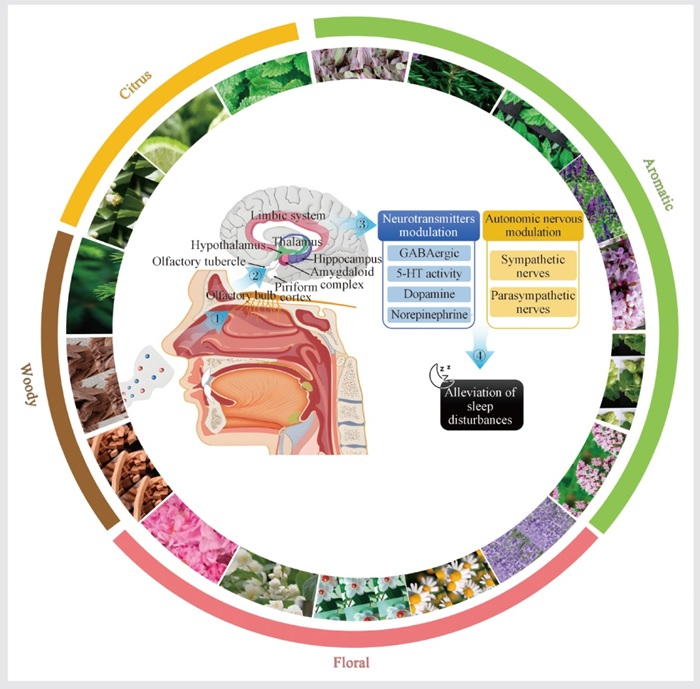
    Insomnia has become a prominent issue in contemporary society, posing a significant public health challenge to human physical and mental health. Olfactory inhalation, as a convenient, efficient, and safe non-pharmacological intervention strategy, exhibits broad application prospects in improving sleep health. Systematically reviewing research on olfactory inhalation for sleep promotion is of great importance for the development of effective, stable, and safe somnogenic products. This review comprehensively summarizes the research progress from three dimensions: mechanisms of action, evaluation methods, and bioactive ingredients. Through an analysis of fragrance characteristics and sedative properties, a “Sleep-aid Fragrance Wheel” encompassing floral, woody, aromatic, and citrus notes is constructed, providing a scientific classification framework for the fragrance selection and formulation design of personalized sleep-promoting products. Furthermore, the sedative profiles and action targets of single natural essential oils are explained, the synergistic advantages of compound essential oils with the characteristics of “multi-component, multi-target and multi-pathway” are analyzed, and the technical advantages of developing standardized synthetic fragrances based on natural essential oils are discussed. By synthesizing this multidimensional evidence with the proposed fragrance classification system, this review provides a theoretical foundation for the design of efficient, stable, and personalized somnogenic products, thereby promoting the scientific application of olfactory regulation in sleep health management.
    Figures and Tables | References | Related Articles | Metrics
    Analytical methods and testing
    Establishment and inter-laboratory validation of the kDPRA method for skin sensitization assessment
    Xue Geng,Ping Liu,Kaiji Wang,Ning Chen,Yanqin Song,Qingfen Zhu
    2026, 56 (10):  1403-1412.  doi: 10.3969/j.issn.2097-2806.2026.10.013
    Abstract ( 30 )   HTML ( 4 )   PDF (2168KB) ( 16 )  

    This study systematically investigates the applicability of the kinetic direct peptide reactivity assay (kDPRA), an alternative method for skin sensitization assessment adopted by the Organisation for Economic Cooperation and Development (OECD) in 2022, in domestic laboratories. By examining the influence of key experimental factors such as reagents, the research combines internal laboratory validation with a ring test involving four external laboratories. The results show that different brands of monobromobimane reagent have no significant impact on the assay results, and commercially available versus laboratory-prepared neutral phosphate buffers yield consistent results under identical formulations. Inter-laboratory validation achieves 100% accuracy in the sensitization potency classification of 10 reference substances, fully aligning with OECD TG 442C requirements. For the 10 blind-coded samples, the predictive accuracy across the five participating laboratories ranges between 80% and 100%, meeting the validation acceptance criteria. Furthermore, kDPRA demonstrates reliable performance when applied within a defined approach for evaluating the sensitization potential of the yellow-colored compound berberine. These findings indicate that the kDPRA method exhibits good reproducibility and reliability in Chinese laboratories. It is suitable for domestic implementation and adoption, and can serve as a component of an Adverse Outcome Pathway (AOP) -based integrated testing strategy for skin sensitization assessment. This work provides scientific evidence and practical support for establishing national kDPRA standards, promoting the method, and improving China’s alternative testing system for animal experimentation.

    Figures and Tables | References | Related Articles | Metrics
    Simultaneous determination of seven hemostatic drugs in toothpaste by high performance liquid chromatography-tandem mass spectrometry
    Liyuan Zhang,Qiaoyuan Cheng,Ziyi Chen,Shuailin Chen,Lvye Qi,Liuqian Huang
    2026, 56 (10):  1413-1418.  doi: 10.3969/j.issn.2097-2806.2026.10.014
    Abstract ( 39 )   HTML ( 4 )   PDF (1227KB) ( 18 )  

    A method for the simultaneous determination of seven hemostatic drugs in toothpaste was developed using high-performance liquid chromatography-tandem mass spectrometry (HPLC-MS/MS). The samples were extracted ultrasonically with 5% methanol-0.02 mmol/L disodium ethylenediaminetetraacetate solution. The analytes were separated on an Agilent Poroshell 120 Aq-C18 column (2.1 mm×150 mm, 2.7 μm) column via gradient elution with 0.1% formic acid-methanol as mobile phase. Quantitative analysis was performed by electronic spray ionization under a positive ion and negative ion mode with multiple reaction monitoring (MRM). The results indicate that the seven hemostatic drugs show good linearity within their respective concentration ranges, with correlation coefficients (R2) greater than 0.998. The limits of detection are 0.05~3.73 μg/g, and the limits of quantitation are 0.17~12.30 μg/g. The average spiked recoveries of the seven hemostatic drugs in two toothpaste matrices are all in the range of 87.5%~111.9%, with RSDs of 0.6%~4.4% (n=6). The method is simple, sensitive and accurate, making it suitable for the routine determination of these hemostatic drugs in toothpaste.

    Figures and Tables | References | Related Articles | Metrics
    Determination of retinoids in cosmetics by high-performance liquid chromatography and product risk assessment
    Huijin Liu,Haiyan Wang,Keran Feng,Yu Xing,Weiqing Zhang
    2026, 56 (10):  1419-1425.  doi: 10.3969/j.issn.2097-2806.2026.10.015
    Abstract ( 36 )   HTML ( 6 )   PDF (1200KB) ( 17 )  

    A high-performance liquid chromatography (HPLC) method was established for the determination of 9 retinoids in cosmetics. The sample pretreatment and chromatographic conditions were optimized, and this method was used to assess quality and safety risks of 56 batches of cosmetics containing retinoids. The samples were dissolved in tetrahydrofuran (THF) and ultrasonically extracted with acetonitrile. The nine retinoids were separated on a C18 chromatographic column, and eluted with a gradient of acetonitrile-aqueous ammonium acetate solution (5 mmol/L) -THF. The results show that the nine retinoids exhibit good linearity with the correlation coefficients exceeding 0.998. Five cosmetic matrices are selected for spiked recovery tests, yielding average recoveries ranging from 86.96% to 109.63%, with RSDs between 0.30% and 8.55%. The detection results of the 56 batches of samples show that retinoids in 29 batches of samples do not conform to their labels. Among them, eight batches that claim specific retinoid ingredients on their registration contain no detectable levels, indicating false efficacy claims. Additionally, three batches contain prohibited ingredients, specifically retinoic acid and isotretinoin, posing substantial safety risks. Therefore, regulatory authorities should continuously monitor the safety of retinoid ingredients and related cosmetics, urge enterprises to standardize production. Furthermore, comprehensive supervision of cosmetic labeling and efficacy claims remains imperative.

    Figures and Tables | References | Related Articles | Metrics
    Determination of monochloroacetate ion and chloride ion in alcohol ether carboxylic acids by ion chromatography
    Jianwei Wang,Xin Tian,Tianzhuang Wang,Guojin Li,Jun Zhang
    2026, 56 (10):  1426-1432.  doi: 10.3969/j.issn.2097-2806.2026.10.016
    Abstract ( 31 )   HTML ( 5 )   PDF (8976KB) ( 16 )  

    The iterative upgrading process of alcohol ether carboxylic acid (AEC) products has significantly accelerated in recent years, with new products continuously emerging. Existing analytical methods are increasingly inadequate to meet the testing demands for all categories of AEC products. Therefore, in this study, a method of ion chromatography was established for determining the monochloroacetate ion and chloride ion in AEC. In the experiment, a Qingdao Shenghan SH-AP-1 anion-exchange column (5.5 μm, 4.0 mm×250 mm) was employed for target ion separation. Isocratic elution was operated by using potassium hydroxide solution as the mobile phase. Coupled with a suppressed conductivity detector, quantitative analysis was performed by external standard method. The optimized conditions of ion chromatography were determined as follows: The 5 mmol/L KOH solution was used as mobile phase at a flow rate of 0.8 mL/min. Under this condition, the target ions achieved efficient baseline separation. Methodology validation demonstrated that both target anions exhibited good linearity in the concentration range of 1-50 μg/mL, with correlation coefficients (r) exceeding 0.999. The spiked recoveries at three concentration levels ranged from 93.0% to 98.4%, with relative standard deviations (RSD) between 0.4% and 3.4%. All performance metrics met the technical requirements for real-sample analysis. This method was simple to operate and had excellent separation effect, indicative of good precision, accuracy, and repeatability. It was effective for precise quantitative detection of monochloroacetate ion and chloride ion in various types of AEC products. Furthermore, it enabled accurate screening of AEC products with low chloride type and low monochloroacetic acid type, as well as oxidation-processed products, providing reliable technical support for quality control of AEC products.

    Figures and Tables | References | Related Articles | Metrics