Welcome to China Surfactant Detergent & Cosmetics, Today is
China Surfactant Detergent & Cosmetics ›› 2026, Vol. 56 ›› Issue (10): 1310-1317.doi: 10.3969/j.issn.2097-2806.2026.10.003
• Basic research • Previous Articles Next Articles
Jing Cao1,Jiajie Chai2,Didong Wang1,Ximei Liang3,Weiwei Han2,Sanbao Dong2,*( )
Received:2025-12-12
Revised:2026-09-07
Online:2026-10-22
Published:2026-10-30
Contact:
E-mail: CLC Number:
Jing Cao, Jiajie Chai, Didong Wang, Ximei Liang, Weiwei Han, Sanbao Dong. Preparation of a novel multi-quaternary ammonium surfactant and its potential for application in clean fracturing fluids[J].China Surfactant Detergent & Cosmetics, 2026, 56(10): 1310-1317.
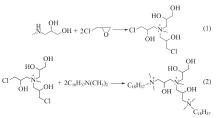
Fig. 1
Synthetic route of CTAN"
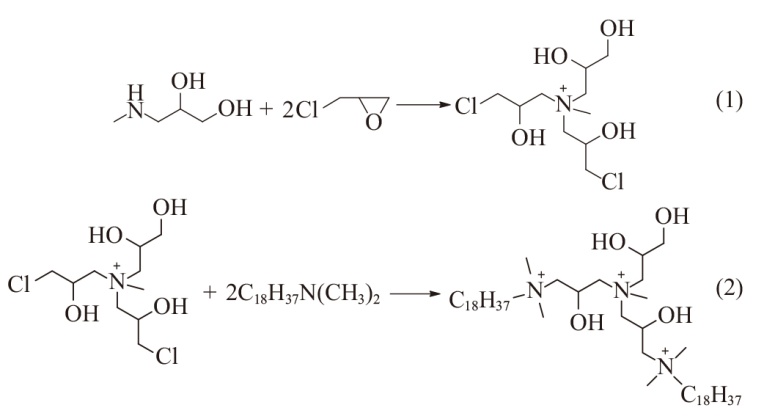
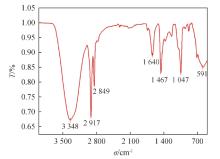
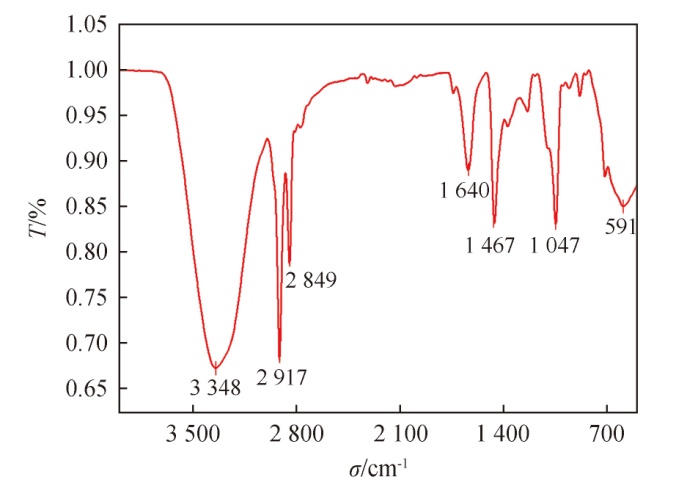
Fig. 2
Infrared spectrum of CTAN"
Tab. 1
Results of elemental analysis of CTAN"
| N/% | C/% | H/% | O/% | |
|---|---|---|---|---|
| 理论值 | 4.57 | 65.29 | 11.75 | 6.96 |
| 实测值 | 4.43 | 65.09 | 11.68 | 7.15 |
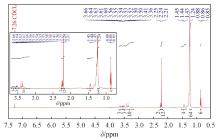
Fig. 3
1H NMR spectrum of CTAN"
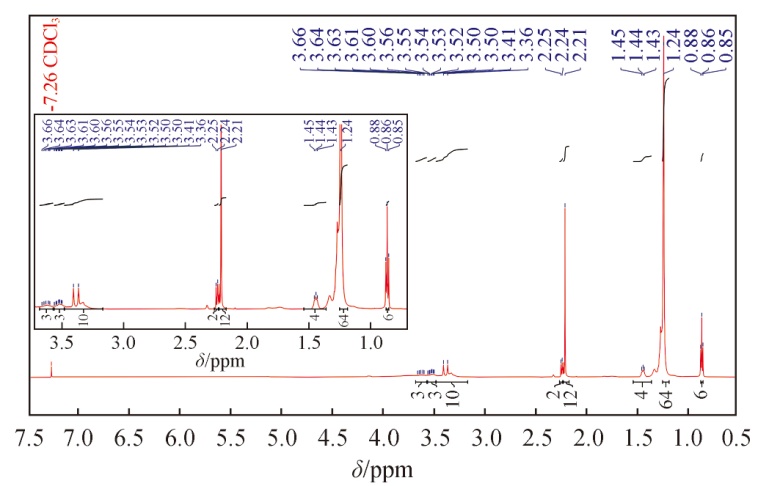
Fig.4
Surface tension curve of CTAN in water"
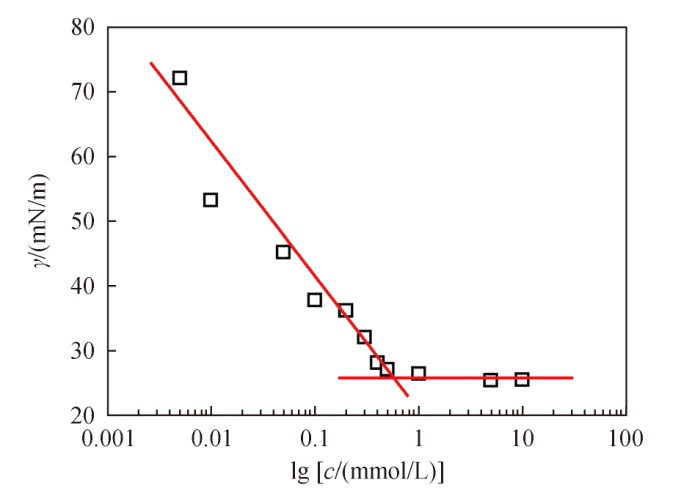
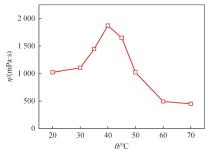
Fig. 5
Viscosity of 3% CTAN solution at different temperatures"
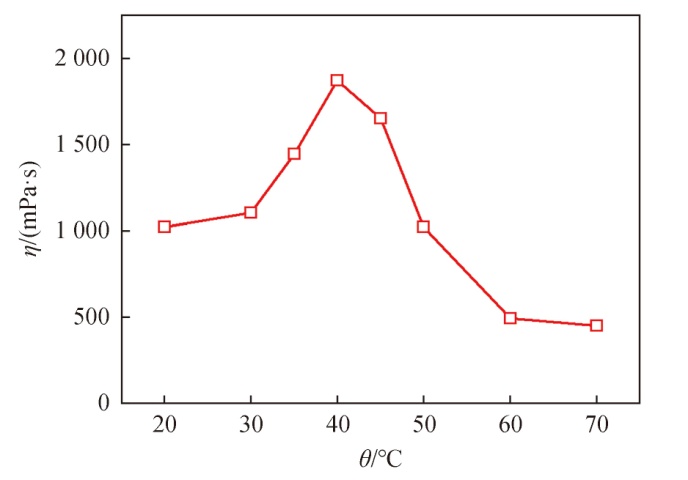
Fig. 6
Variation of the viscosity of CTAN solution with mass fraction"
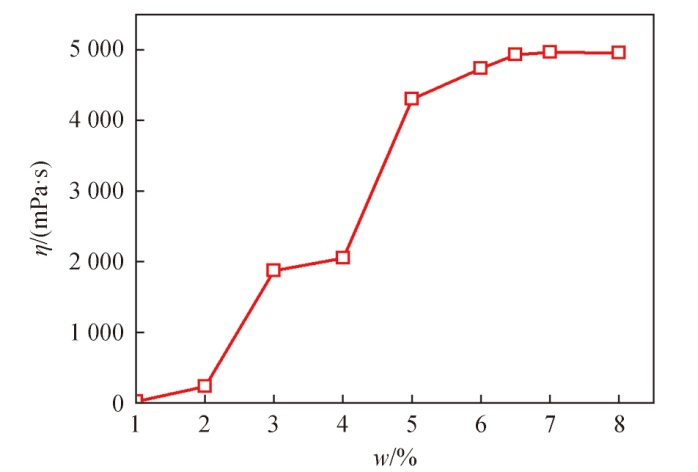
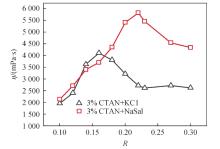
Fig. 7
Effects of the mass fractions of NaSal and KCl on the viscosity of 3% CTAN solution"
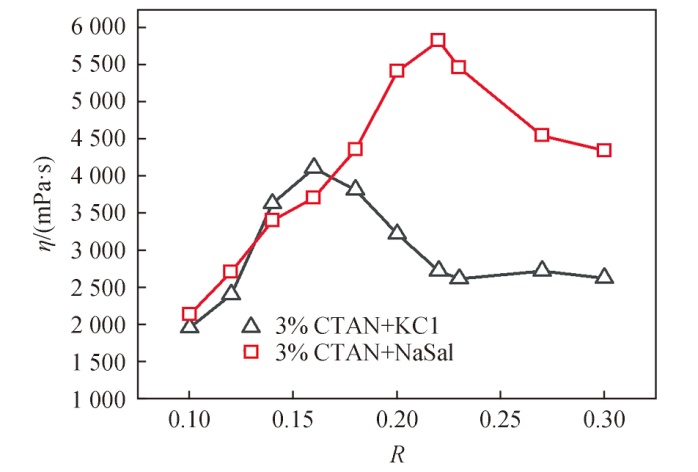
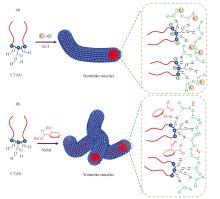
Fig. 8
Promoting effects of KCl (a) and NaSal (b) on the micelle formation process of CTAN"
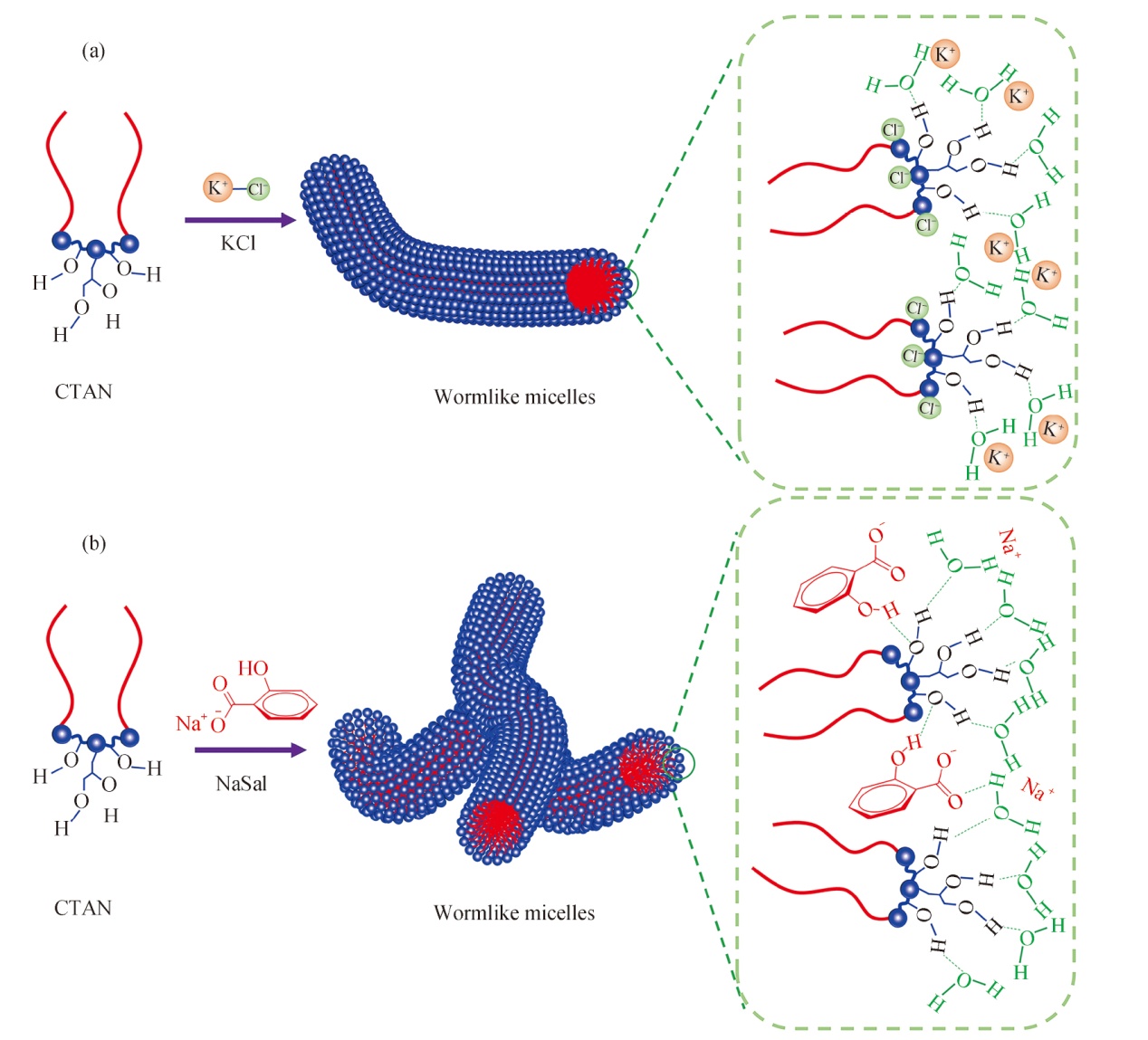
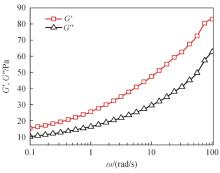
Fig.9
Viscoelasticity test for the mixed solution of CTAN/NaSal"
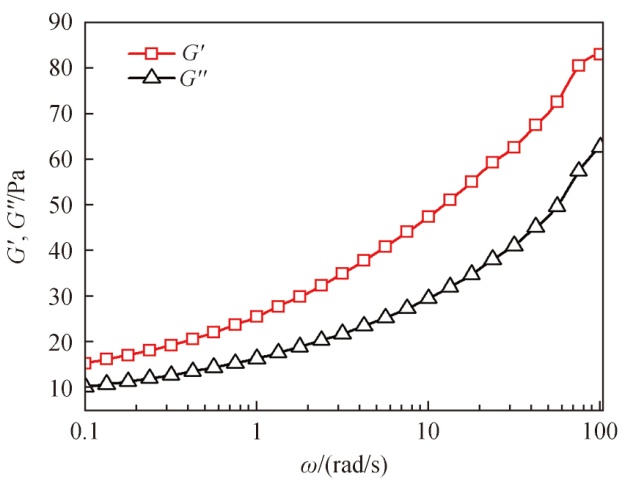
Fig.10
Variation of viscosities with shear rate for the solutions of 3% CTAN and (3% CTAN + 0.66% NaSal)"
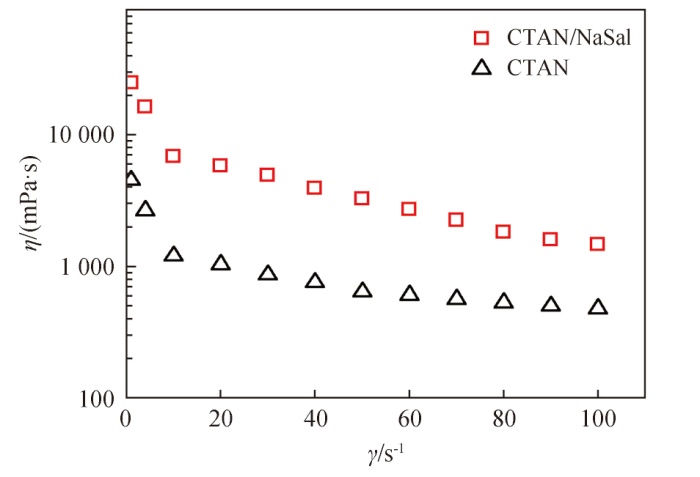
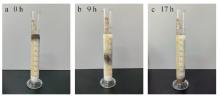
Fig.11
Sand-suspending performance test for the mixed solution of CTAN/NaSal at sand-fluid ratio of 1.5:8.5"
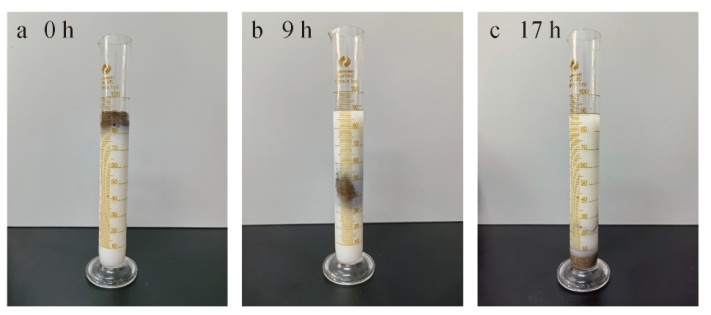
Tab. 2
Results of sand-suspending performance test for the mixed solution of CTAN/NaSal"
| 砂液比 | 沉降速率/ (cm/min) |
|---|---|
| 1.5:8.5 | 0.015 |
| 2:8 | 0.021 |
| 2.5:7.5 | 0.053 |
Fig.12
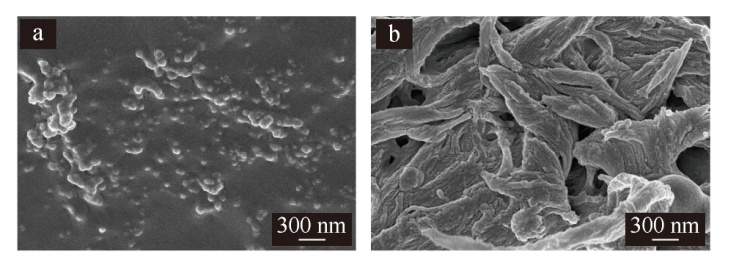
SEM images for the solutions of 3% CTAN (a) and 3% CTAN + 0.66% NaSal (b) after freeze-drying"
| [1] | 艾浩康, 姜亚洁, 王亚魁, 等. 硬脂酸酯双子季铵盐的合成及性能研究[J]. 日用化学工业 (中英文), 2024, 54 (1) : 16-23. |
| [2] |
赵明伟, 戴彩丽, 刘棚, 等. 压驱一体化双子表面活性剂滑溜水特性及高效渗吸排驱机制[J]. 石油学报, 2024, 45 (9) : 1409-1421.
doi: 10.7623/syxb202409008 |
| [3] | 孙亚, 潘华, 韩富, 等. 头基含羟基的季铵盐双子表面活性剂的合成与性能[J]. 日用化学工业, 2019, 49 (3) : 135-140, 149. |
| [4] | 甄剑武, 吴雪鹏, 王立双, 等. 不同连接基Gemini表面活性剂的合成及应用性能研究[J]. 分子科学学报, 2020, 36 (6) : 441-447. |
| [5] |
Wu Xuepeng, Dai Caili, Fang Sisi, et al. The effect of hydroxyl on the solution behavior of a quaternary ammonium gemini surfactant[J]. Physical Chemistry Chemical Physics, 2017, 19 (24) : 16047-16056.
doi: 10.1039/c7cp00131b pmid: 28597883 |
| [6] |
Sun Zenghua, Ji Yahui, Wang Haicheng, et al. Impact of hydroxyethyl headgroup on long-chain quaternary ammonium cationic surfactants: solubility, surface activities, self-assembly behaviors, and rheological properties[J]. Colloids and Surfaces A: Physicochemical and Engineering Aspects, 2024, 700: 134831.
doi: 10.1016/j.colsurfa.2024.134831 |
| [7] | 侯仕达, 王志飞, 王亚魁, 等. 多阳离子位点季铵盐与AEC复配体系的应用性能研究[J]. 日用化学工业 (中英文), 2024, 54 (2) : 131-138. |
| [8] | 宾钰洁, 韩晓阳, 田珍瑞, 等. 黏弹性六聚阳离子表面活性剂胶束压裂液体系流变性[J]. 钻井液与完井液, 2025, 42 (2) : 262-274. |
| [9] | 张思琪, 方波, 李昱蝶, 等. 粘弹性四聚多羟基阳离子表面活性剂/水杨酸钠胶束体系流变性研究[J]. 应用化工, 2025, 54 (5) : 1164-1171. |
| [10] | 陈俊耀, 田雨, 郑皓轩, 等. 阳离子型疏水缔合聚合物的合成与性能评价[J]. 石油化工, 2024, 53 (12) : 1766-1771. |
| [11] |
杨婕, 张世平, 孙伟, 等. 活泼氢的核磁共振氢谱[J]. 大学化学, 2019, 34 (1) : 82-88.
doi: 10.3866/PKU.DXHX201806008 |
| [12] |
Bai Yun, Pu Chunsheng, Huang Feifei, et al. Effect of the hydroxymethyl groups of quaternary ammonium salt cationic surfactants on surface activity and corrosion[J]. Desalination and Water Treatment, 2020, 194: 143-151.
doi: 10.5004/dwt.2020.25666 |
| [13] |
范雅珣, 韩玉淳, 王毅琳. Gemini表面活性剂分子结构对其水溶液中聚集行为的影响[J]. 物理化学学报, 2016, 32 (1) : 214-226.
doi: 10.3866/PKU.WHXB201511022 |
| [14] |
Mozrzymas A. Modelling of the critical micelle concentration of cationic gemini surfactants using molecular connectivity indices[J]. Journal of Solution Chemistry, 2013, 42 (6) : 2187-2199.
doi: 10.1007/s10953-013-0095-6 |
| [15] |
Li Jian, Xu Changcheng, Tian Haifeng, et al. Blend-electrospun poly (vinylidene fluoride) /stearic acid membranes for efficient separation of water-in-oil emulsions[J]. Colloids and Surfaces A: Physicochemical and Engineering Aspects, 2018, 538: 494-499.
doi: 10.1016/j.colsurfa.2017.11.043 |
| [16] | 徐昆誉, 杨晓倩, 牛奇奇, 等. 一体化压裂液体系的构建及性能评价[J]. 应用化工, 2025, 54 (1) : 57-61, 67. |
| [17] |
Uongpitakpan P, Kitsongsermthon J. Investigation of sodium laurylglucosides hydroxypropyl sulfonate through response surface methodology - effects of amphoteric surfactant and electrolyte[J]. The Thai Journal of Pharmaceutical Sciences, 2021, 45 (2) : 113-120.
doi: 10.56808/3027-7922.2480 |
| [18] | 王庆辉, 刘东杰, 魏金佳. 阳离子Gemini表面活性剂/NaSal溶液的粘度[J]. 华东理工大学学报, 2018, 44 (2) : 162-167. |
| [19] | Mao Jincheng, Tian Jizhen, Zhang Wenlong, et al. Effects of a counter-ion salt (potassium chloride) on gemini cationic surfactants with different spacer lengths[J]. Colloids and Surfaces A: Physicochemical and Engineering Aspects, 2019, 578 (164) : 123619. |
| [20] |
王治国, 王树众, 孙晓, 等. OTAC/NaSal虫状胶束流体微观结构与线性黏弹性[J]. 力学学报, 2013, 45 (6) : 854-860.
doi: 10.6052/0459-1879-13-062 |
| [21] | 马云云. 阳离子表面活性剂自组装形貌调控及机理研究[D]. 青岛: 中国石油大学 (华东), 2016. |
| [22] |
Lam C, Do C, Wang Y Y, et al. Structural properties of the evolution of CTAB/NaSal micelles investigated by sans and rheometry[J]. Physical Chemistry Chemical Physics, 2019, 21 (33) : 18346-18351.
doi: 10.1039/c9cp02868d pmid: 31397831 |
| [23] | 杨浩珑, 向祖平, 李龙, 等. CO2泡沫双子表面活性剂清洁压裂液研究与试验[J]. 石油钻探技术, 2018, 46 (2) : 92-97. |
| [24] | 黄志宇, 郑存川. 基于动态共价键的自修复压裂液的制备及其性能[J]. 油田化学, 2020, 37 (4) : 629-634. |
| [25] | 国家能源局. 水基压裂液技术要求: SY/T 7627—2021[S]. 北京: 中国标准出版社, 2021: 1-36. |
| [26] | 于波, 邹坤, 王睿, 等. 季铵盐聚离子液体作为水基润滑添加剂的摩擦学性能研究[J]. 摩擦学学报, 2022, 42 (6) : 1246-1257. |
| [27] | 黄子高. 多羟基阳离子表面活性剂清洁压裂液体系构建及性能研究[D]. 成都: 西南石油大学, 2023. |
| [28] |
Yang Yang, Qi Chen, Chao Zhu, et al. Study on gelation, temperature resistance and micromorphology of modified nano-ZrO2 crosslinked hydroxypropyl guar gum[J]. Journal of Petroleum Exploration and Production Technology, 2022, 12 (2) : 451-459.
doi: 10.1007/s13202-021-01378-w |
| [29] |
Das N C, Cao H, Kaiser H, et al. Shape and size of highly concentrated micelles in CTAB/NaSal solutions by Small Angle Neutron Scattering (SANS)[J]. Langmuir, 2012, 28 (33) : 11962-11968.
doi: 10.1021/la2022598 pmid: 22827161 |
| [30] | 李宏业. 含长饱和烷烃链的双头季铵盐表面活性剂的合成与性能[D]. 无锡: 江南大学, 2024. |
| [31] | 张永康, 刘萌萌, 万智卫, 等. 联结基团对甜菜碱型双子表面活性剂清洁压裂液性能的影响[J]. 日用化学工业 (中英文), 2023, 53 (12) : 1398-1404. |
| [1] | Zonglin Chu, Zhanpeng Jiang, Yujun Feng. Viscoelastic surfactants (VI) Smart wormlike micelles [J]. China Surfactant Detergent & Cosmetics, 2026, 56(6): 695-705. |
| [2] | Yujun Feng. Viscoelastic surfactants (V) Similarity and difference between wormlike micelles and polymers [J]. China Surfactant Detergent & Cosmetics, 2026, 56(5): 557-563. |
| [3] | Yujun Feng. Viscoelastic surfactants (IV) Dynamic rheology [J]. China Surfactant Detergent & Cosmetics, 2026, 56(4): 425-432. |
| [4] | Yujun Feng. Viscoelastic surfactants (III)Steady rheology and shear bandings [J]. China Surfactant Detergent & Cosmetics, 2026, 56(3): 277-283. |
| [5] | Xinyu Peng, Haiyan Liang, Zixian Wen, Meiting Li, Xin Li, Xiaofeng Qiu. Impact of rheology modifiers on Bag-on-valve spray products [J]. China Surfactant Detergent & Cosmetics, 2024, 54(2): 181-187. |
| [6] | Xiaochun Liu, Tingting Luo, Jie Dai, Laicheng Chen, Qiuxing He. Effect of fermented polypeptide of Sacha Inchi (Plukenetia volubilis L.) on the structure of liquid crystal emulsion [J]. China Surfactant Detergent & Cosmetics, 2024, 54(12): 1456-1464. |
| [7] | Wu Junhui,Pan Ting,Pei Xiaomei,Cui Zhenggang. Preparation and properties of a novel surfactant constructed by electrostatic interactions [J]. China Surfactant Detergent & Cosmetics, 2023, 53(8): 865-872. |
| [8] | Wang Huazheng, Zhang Liang, Kang Xin, Kang Wanli, Li Zhe, Yang Hongbin. Effect of CO2 on physical properties of produced oil and water in Changqing and emulsion stabilization mechanism [J]. China Surfactant Detergent & Cosmetics, 2023, 53(6): 617-624. |
| [9] | Ting Pan, Junhui Wu, Xiaomei Pei, Zhenggang Cui. Temperature and pH responsive behavior of wormlike micelles formed by novel pseudo-gemini surfactant [J]. China Surfactant Detergent & Cosmetics, 2023, 53(12): 1361-1368. |
| [10] | Liang Yihuan,Du Jing. “Jelly” phenomenon rheology study and improvement in shampoo system [J]. China Surfactant Detergent & Cosmetics, 2022, 52(9): 920-929. |
| [11] | Mai Jingzhang,Li Lin,He Jinqing,Li Zeyong. Study on the synthesis and application of thickening-fixing hybrid rheology modifier [J]. China Surfactant Detergent & Cosmetics, 2022, 52(9): 960-968. |
| [12] | Dong Leilei,Huang Tianyi,Duan Guolan,Chen Hanjun,Zhang Wanping,Zhang Qianjie. Effects of rheological modifiers on the rheological properties and stability of W/O emulsions [J]. China Surfactant Detergent & Cosmetics, 2022, 52(5): 457-467. |
| [13] | Tang Wenjun,Wang Changyun,Xu Guiyun,Niu Qianxue,Fan Jinshi. Common cosmetic preparation technologies(Ⅵ) Preparation sharing properties of both solids and liquids: Semisolid [J]. China Surfactant Detergent & Cosmetics, 2022, 52(12): 1278-1285. |
| [14] | YANG Di,MEI Qi-xiang,WU Juan,LAI Lu,MEI Ping. Research on surface and interface performance of hydrosilicone oil modified polyether demulsifiers [J]. China Surfactant Detergent & Cosmetics, 2021, 51(3): 171-177. |
| [15] | Li Xilian,Hu Fan,Chen Minghua. Effects of fatty alcohol polyether emulsifiers on the preparation of low-viscosity emulsions [J]. China Surfactant Detergent & Cosmetics, 2021, 51(10): 956-962. |
|
