Loading...
Welcome to China Surfactant Detergent & Cosmetics, Today is

Table of Content

    22 June 2026, Volume 56 Issue 6 Previous Issue    Next Issue
    Lecture of science and technology
    Viscoelastic surfactants (VI) Smart wormlike micelles
    Zonglin Chu, Zhanpeng Jiang, Yujun Feng
    2026, 56 (6):  695-705.  doi: 10.3969/j.issn.2097-2806.2026.06.001
    Abstract ( 73 )   HTML ( 7 )   PDF (4902KB) ( 42 )  

    Smart wormlike micelles (SWLMs) possess reversible stimulus-responsive assembly characteristics, which have become a research hotspot in colloid chemistry, oil and gas production, and biomedical fields. Based on the previous research series on wormlike micelles, this paper focuses on the intelligent design mechanism, construction strategies, classification systems and practical applications of SWLMs. The intelligent response of micelles relies on reversible non-covalent weak interactions and adjustable dynamic equilibrium, and external stimuli can change the critical packing parameter to realize reversible morphology transformation between spherical and wormlike micelles, further achieving sol-gel transition and rheological regulation. There are two mainstream construction approaches: Functional modification of surfactant molecules and regulation by the responsive hydrotropes. This paper systematically summarizes six typical stimulus-responsive systems, including temperature, pH, light, redox, hydrocarbon, and multi-coupled response systems, and clarifies their microstructural evolution and macroscopic rheological response mechanisms. Among them, hydrocarbon-responsive micelles have achieved large-scale commercial application in oilfield clean fracturing fluid, while pH, photo and redox-responsive systems show great potential in drug delivery, microfluidic control and green cleaning fields. At present, single-stimulus systems have limited application scenarios, and multi-stimulus coupled wormlike micelles developed via dynamic covalent bonds are the mainstream research direction. This review paper compares the advantages and limitations of different construction paths, analyzes the existing technical bottlenecks such as poor long-term stability of surfactant-hydrotrope systems and incomplete response reversibility of partial photo-responsive systems, and provides theoretical reference for the targeted molecular design and industrial application of high-performance SWLMs materials.

    Figures and Tables | References | Related Articles | Metrics
    Basic research
    Pickering emulsions stabilized by silica nanoparticles in combination with surfactant for the enhancement of the stability of anthocyanins
    Shu Zhou, Zhiyong Luo, Yiyue Wang, Yuyao Wan, Sa Zeng, Tao Meng
    2026, 56 (6):  706-716.  doi: 10.3969/j.issn.2097-2806.2026.06.002
    Abstract ( 70 )   HTML ( 4 )   PDF (7702KB) ( 44 )  

    To address the practical challenge of activity loss in anthocyanins and other bioactive compounds in application, a Pickering emulsion system co-stabilized by silica nanoparticles (SiO2 NPs) and Span 80 via electrostatic adsorption is developed to enhance anthocyanin stability. The co-stabilized Pickering emulsion achieves an anthocyanin encapsulation efficiency of 98.5%. Under ultraviolet irradiation, the anthocyanin retention rate in the co-stabilized emulsion is 1.4 times, 3.3 times, and 36.9 times higher than that in the SiO2 NP-stabilized Pickering emulsion, Span 80-stabilized emulsion, and free anthocyanin solution, respectively. The co-stabilized Pickering emulsion also demonstrates excellent storage stability, with a minimal increase in droplet size of only 38.2 μm after 21 days of storage at 37 ℃, significantly lower than the increases of the SiO2 NP-stabilized Pickering emulsion (94.6 μm) and the Span 80-stabilized emulsion (263.3 μm). These results indicate that the synergistic interaction between SiO2 NPs and Span 80 not only improves the stability of the Pickering emulsion but also enhances the photostability of anthocyanins. This study provides a promising platform for improving the stability of active ingredients in the daily chemical industry.

    Figures and Tables | References | Related Articles | Metrics
    Enhancing antibacterial efficacy of organic photothermal agents via site regulation of sulfur atom
    Tao Qin, Xin Huang, Xiaoyuan Cui, Fenfang Li, Yien Du, Junsheng Hao
    2026, 56 (6):  717-728.  doi: 10.3969/j.issn.2097-2806.2026.06.003
    Abstract ( 57 )   HTML ( 0 )   PDF (13481KB) ( 30 )  

    To elucidate the effect of precise sulfur-atom positioning on the performance of organic photothermal agents, this work compares two conjugated donor-acceptor (D-A) small molecules, S-1 and S-2, which differ only in the position of a single sulfur atom in the thiophene [3, 4-b] unit. Theoretical calculations revealed that compared to S-1, the altered sulfur atom position in S-2 reduced the dihedral angle, increased molecular planarity, and decreased the HOMO-LUMO gap (1.90 eV for S-2 and 2.10 eV for S-1). Optical characterization showed that S-2 exhibited a maximum absorption peak at 770 nm in tetrahydrofuran, which was red-shifted to 780 nm when it was prepared as nanoparticles (S-2 NPs). Photothermal performance tests demonstrated that S-2 NPs achieved a 52% photothermal conversion efficiency under 808 nm laser irradiation, surpassing the 44% of S-1 NPs. In antibacterial experiments, under laser irradiation, S-2 NPs at 12 μmol/L achieved a 99.1% bacterial killing rate against Staphylococcus aureus (43.8% for S-1 NPs), 15 μmol/L S-2 NPs reached 99.9% against Escherichia coli (43.4% for S-1 NPs), and 20 μmol/L S-2 NPs attained 96.0% against Candida albicans (83.8% for S-1 NPs), effectively eliminating Staphylococcus aureus biofilms (survival rate was only 16% at 40 μmol/L). Cell experiments indicated that S-2 NPs maintained over 80% L929 cell viability at 40 μmol/L. Thus, S-2 NPs are considered a highly promising photothermal agent. The study demonstrates that precise control over individual sulfur atom positions is an effective strategy for enhancing photothermal conversion efficiency and antibacterial performance in organic photothermal agents. With superior photothermal antibacterial properties and excellent biocompatibility, S-2 NPs can be incorporated into cosmetic face creams, lotions, or facial masks to impart photothermal antibacterial functionality, offering a novel strategy for extending product shelf life and improving skin health.

    Figures and Tables | References | Related Articles | Metrics
    Performance of Ag3PO4/BiVO4/long afterglow composite for all-weather photocatalytic degradation of dye wastewater
    Lianshuang Guo, Ling Yang
    2026, 56 (6):  729-738.  doi: 10.3969/j.issn.2097-2806.2026.06.004
    Abstract ( 45 )   HTML ( 1 )   PDF (3306KB) ( 23 )  

    The composites of Ag3PO4/BiVO4/Sr2MgSi2O7: (Eu2+, Dy3+) (ABS) with all-weather photocatalytic activity were prepared by constructing heterojunction using Sr2MgSi2O7: (Eu2+, Dy3+), Ag3PO4 and BiVO4 as raw materials. These ABS composites were systematically characterized by SEM, XPS, UV-vis DRS, PL and EIS. Methylene blue (MB) dye solution was used as the target pollutant. The all-weather photocatalytic activity and stability of ABS composites were evaluated, and a dual Z-scheme charge transfer mechanism of photocatalysis in light and dark environments was proposed. The results showed that the degradation percentage of MB dye solution by ABS composite with the mass ratio of 1∶1∶40 reached 98.8% after 15 min of simulated sunlight irradiation and 15 min of continual reaction in dark environment. The degradation percentage of MB dye solution still reached 98.5% after 5 cycles, indicative of good all-weather photocatalytic activity and stability. Benefiting from the coupling of Ag3PO4, BiVO4 and Sr2MgSi2O7: (Eu2+, Dy3+), the construction of dual Z-scheme heterojunction effectively promoted the separation of photoelectron-hole and effectively retained the high-oxidation-potential valence band of Ag3PO4 and BiVO4. Under light conditions, Sr2MgSi2O7: (Eu2+, Dy3+) accumulated energy by filling the defect energy. The energy released in the dark environment stimulated the charge separation of Ag3PO4 and BiVO4, and the high-oxidation-activity holes in the valence band could oxidize H2O to hydroxyl radicals (·OH). Then efficient degradation of organic dye MB was achieved under the actions of ·OH and holes.

    Figures and Tables | References | Related Articles | Metrics
    Research on a novel supramolecular clean fracturing fluid suitable for deep coalbed methane wells
    Ruirui Guo, Haifeng Liu
    2026, 56 (6):  739-746.  doi: 10.3969/j.issn.2097-2806.2026.06.005
    Abstract ( 53 )   HTML ( 0 )   PDF (1784KB) ( 44 )  

    To improve the development efficiency of deep coalbed methane resources, a novel supramolecular surfactant SST-2 was prepared by using mixed long-chain fatty acids, N, N-dimethyl-1, 3-propanediamine, and chloropropene as raw materials. Then the surfactant was combined with KCl to develop a novel supramolecular clean fracturing fluid system which was suitable for deep coalbed methane wells. The comprehensive performance of the fracturing fluid system was evaluated in laboratory, and it was applied on site in deep coalbed methane wells. The results showed that this supramolecular clean fracturing fluid had strong temperature and salt resistance. When prepared with saline water with mineralization degree of 20×104 mg/L, after shearing at 120 ℃ with a shear rate of 170 s-1 for 120 minutes, the viscosity of the prepared fracturing fluid could be maintained above 50 mPa·s. The fracturing fluid system also had strong sand-carrying capacity, and when the experimental temperature was 90 ℃, the settling rate of ceramic particles was only 0.351 cm/min. This fracturing fluid had good gel breaking performance. When the volume fraction of kerosene was 10% and the gel-breaking temperature was 30 ℃ and 90 ℃, the gel-breaking time of the fracturing fluid could be shortened to within 60 minutes. All the performance parameters of the gel-breaking fluid met industry standards, and the damage of the gel-breaking fluid to the permeability of coal core was less than 10%, indicative of good reservoir protection effect. In addition, this supramolecular clean fracturing fluid had smaller impact on the desorption performance of coalbed methane than other conventional fracturing fluids. The on-site operational effect upon X-1 well using this supramolecular clean fracturing fluid was good. During the post-fracturing drainage stage, gas could be seen quickly. After 400 days of production, the daily gas production was basically stable at around 3 300 m3, and the effects of stable production and increased output were good.

    Figures and Tables | References | Related Articles | Metrics
    Preparation and photocatalytic properties of fly ash/TiO2 composite materials
    Shengnan Wang
    2026, 56 (6):  747-755.  doi: 10.3969/j.issn.2097-2806.2026.06.006
    Abstract ( 43 )   HTML ( 0 )   PDF (2030KB) ( 21 )  

    To address the resource utilization of solid waste fly ash and the pollution of organic dyes, in this work, fly-ash-supported TiO2 (FA/TiO2) composites were prepared by mechanical mixing method using fly ash as carrier and commercially available TiO2 (P25) as active center. The crystal structure, chemical composition, microstructure, elemental composition and spectral response of FA/TiO2 composites were characterized by XRD, FT-IR, SEM, TEM, XPS and UV-vis DRS. The photocatalytic activity and stability of FA/TiO2 composites were evaluated by using new fuchsin (NF) dye as the target pollutant. The active species and degradation mechanism were studied, and the photocatalytic mechanism was proposed. The results showed that TiO2 (P25) was firmly anchored on the surface of spherical FA particles by Si-O-Ti chemical bond, which improved the dispersity of TiO2 (P25) particles, as well as the UV response ability and photocatalytic activity. When the initial mass concentration of NF was 50 mg/L, the dosage of FA/TiO2 composite was 35 mg and the initial pH was 8.0, the degradation percentage of NF by FA/TiO2 composite reached 97.97%, which was significantly higher than that by single material. After 5 cycles, the degradation percentage of NF still reached 97.01%, indicative of excellent photocatalytic activity and stability. In presence of free radicals such as superoxide radicals (·O2-) and hydroxyl radicals (·OH), NF underwent demethylation, hydroxylation and ring opening reactions and was finally degraded into small inorganic molecules.

    Figures and Tables | References | Related Articles | Metrics
    Research on quality control of cosmetics containing olive leaf extract by integrating network pharmacology and HPLC
    Xiaomin Dai, Cen Chen, Qiaoyuan Cheng
    2026, 56 (6):  756-763.  doi: 10.3969/j.issn.2097-2806.2026.06.007
    Abstract ( 76 )   HTML ( 2 )   PDF (8158KB) ( 34 )  

    This study systematically investigated the bioactive components and established a quality control strategy for olive leaf extract in cosmetics by integrating network pharmacology with high-performance liquid chromatography (HPLC) analysis. Through a comprehensive literature review, 23 major chemical components were identified. Using the SwissTargetPrediction and TCMSP databases, 443 potential targets were predicted, while 543 targets related to soothing, redness reduction, and acne elimination efficacies were screened from databases such as Genecards. A Venn diagram analysis reveals 109 overlapping targets. Based on these data, a compound-target network and a protein-protein interaction (PPI) network were constructed, followed by GO functional and KEGG pathway enrichment analyses. Network topology analysis identifies 16 core targets, which are primarily involved in biological processes such as the cellular response to lipopolysaccharide and the TNF signaling pathway. By correlating component concentrations with target activities, five active components with high abundance and significant modulation of core targets were selected as candidate quality control markers: oleuropein, hydroxytyrosol, luteolin-7-O-glucoside, apigenin-7-O-glucoside, and verbascoside. An HPLC method was subsequently developed and applied to analyze commercial cosmetics. The results show that these five components generally exhibit stable co-occurrence characteristics (either all detected or all undetected), indicating their reliability as quality control markers for determining the presence of olive leaf extract in cosmetics. Based on these findings, this study proposes a classification and evaluation standard according to the addition level of olive leaf extract: standard addition products require the detection of all five components, while trace addition products use oleuropein as the single evaluation indicator.

    Figures and Tables | References | Related Articles | Metrics
    Study on the skincare effects and safety evaluation of the Lignosus rhinocerus extract
    Yiwen Chen, Yali Zheng, Xin Li, Jiancong Huang, Rongkang Kuang, Xiaobao Xie
    2026, 56 (6):  764-775.  doi: 10.3969/j.issn.2097-2806.2026.06.008
    Abstract ( 90 )   HTML ( 6 )   PDF (2454KB) ( 50 )  

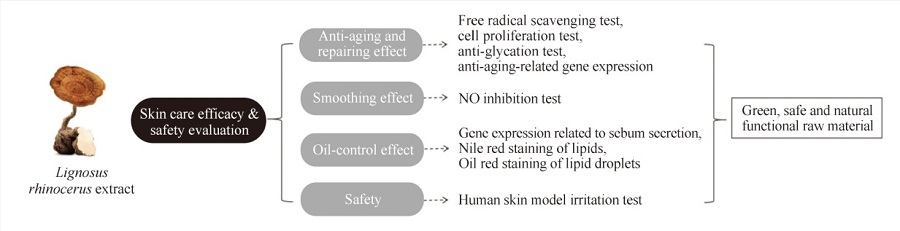
    This study focused on the aqueous extract of Lignosus rhinocerus, investigating its anti-aging, repair, anti-inflammatory, and oil-control effects through antioxidant, anti-glycation, cell proliferation, and related gene expression tests. The anti-inflammatory effect was evaluated by the nitric oxide (NO) inhibition assay, and the oil-control potential was assessed by quantifying the expression of genes related to sebum secretion, as well as intracellular lipids, and lipid droplets. Skin safety was evaluated through skin irritation tests. The results show that the Lignosus rhinocerus extract effectively scavenges DPPH free radicals, significantly reduces the production of glycation products, and promotes the expression of anti-aging-related genes (P<0.05), demonstrating antioxidant, anti-glycation, and anti-wrinkle effects. Furthermore, the extract also promotes keratinocyte proliferation and increases hyaluronic acid synthase gene expression, indicating repair effects. Moreover, it significantly inhibits the production of nitric oxide induced by lipopolysaccharide (P<0.05), showing anti-inflammatory effects. It significantly suppresses the expression of genes related to sebum secretion, and limits linoleic acid-induced sebum synthesis and lipid droplet formation (P<0.05), indicating potential oil-control ability. The results of the human skin model irritation test further confirm the high skin safety of the extract. This study demonstrates that the Lignosus rhinocerus extract has anti-aging, repair, anti-inflammatory, and oil-control activities, combining efficacy with safety, which makes it a highly valuable candidate for cosmetic ingredient development.

    Figures and Tables | References | Related Articles | Metrics
    Development and application
    Preparation of peppermint essential oil nanoemulsion and evaluation of its anti-wrinkle efficacy
    Xiaofeng Song, Yihao Zhang, Xinxin Ren, Zhian Li, Ming Li, Hansong Fang
    2026, 56 (6):  776-782.  doi: 10.3969/j.issn.2097-2806.2026.06.009
    Abstract ( 80 )   HTML ( 3 )   PDF (3104KB) ( 40 )  

    Peppermint essential oil nanoemulsion (PEO-NE), a widely used ingredient in the cosmetics industry, holds significant potential for skincare applications. However, its practical use in aqueous-based formulations is severely limited by its inherent volatility, water insolubility, and low bioavailability. To address these challenges, six surfactants commonly employed in cosmetic emulsions were selected to fabricate PEO-NEs. The anti-wrinkle efficacy of the resulting nanoemulsions was assessed through both biochemical assays-namely the scavenging of DPPH and ABTS free radicals, and the inhibition of elastase activity- and cell-based biological evaluations involving collagen secretion measurements in a human fibroblast model under UVA-induced stress. The findings reveal that employing PEG-40 hydrogenated castor oil as the surfactant enables the successful preparation of a uniformly dispersed, clear, and transparent PEO-NE with an average particle size of 22.5 nm. Biochemical analyses demonstrate that the nanoemulsion exhibits pronounced antioxidant activity, effectively scavenging both DPPH and ABTS free radicals. Specifically, a 4% (V/V) PEO-NE formulation achieves a DPPH scavenging rate of 93.68%, with a corresponding IC50 value of 1.29%. Meanwhile, a 1% (V/V) PEO-NE formulation achieves an ABTS scavenging rate of 84%, with a corresponding IC50 value of 0.31%. Furthermore, the nanoemulsion significantly inhibits elastase activity in vitro, indicating its potential to delay elastin degradation. Cell-based experiments confirmed that the PEO-NE markedly promotes collagen secretion in a UVA-damaged human fibroblast model. In conclusion, the PEO nanoemulsion formulated with PEG-40 hydrogenated castor oil demonstrates compelling anti-wrinkle effects, supporting its suitability as a functional ingredient in cosmetic products aimed at improving skin elasticity and reducing signs of aging.

    Figures and Tables | References | Related Articles | Metrics
    Targeted repair of damaged hair by itaconic acid: covalent thioether bonding mechanism for enhanced mechanical strength
    Xi Li, Yuwen Wu, Haonan Cheng, Xiaowei Chang
    2026, 56 (6):  783-789.  doi: 10.3969/j.issn.2097-2806.2026.06.010
    Abstract ( 78 )   HTML ( 4 )   PDF (3542KB) ( 30 )  

    This study aims to address the deterioration of mechanical properties in chemically treated hair. Conventional organic acid reparatives target weak molecular interactions (e.g., hydrogen bonds), but exhibit limited efficacy in repairing free sulfhydryl groups generated by disulfide bond cleavage. Herein, we propose leveraging the α, β-unsaturated carbonyl structure of itaconic acid to initiate a Michael addition reaction with free sulfhydryl groups, thereby forming covalent thioether cross-linked networks to enhance the mechanical performance of hair. The reparative mechanism of itaconic acid on reductively damaged hair was systematically evaluated through single-fiber tensile testing (MTT690), free sulfhydryl quantification (Ellman’s assay), and cuticle microscopy (HIROX). The results demonstrate that itaconic acid (w=2%, pH=3.9) maximally restores damaged hair integrity, significantly increasing the breaking load by 21% (P<0.05) compared to the damaged hair. Meanwhile, after multiple itaconic acid treatments, the elastic gradient and breaking load increase by 16.67% and 28.50%, respectively, compared with the damaged hair. These improvements surpass those achieved by succinic acid (4.47%/13.85%) and citric acid (6.08%/15.85%), underscoring the critical role of covalent cross-linking. Microscopy further reveals that itaconic acid treatment effectively restores cuticle integrity by mitigating lifting and exfoliation, while protecting against transverse fractures induced by cyclic fatigue stress. Overall, these findings elucidate the targeted repair mechanism of itaconic acid on damaged hair, providing a novel strategy for developing high-performance hair reparatives.

    Figures and Tables | References | Related Articles | Metrics
    Reviews
    Research progress on the structure-activity relationships and cosmetic applications of carboxymethyl chitosan
    Yumei Zeng, Feifei Wu, Ziyuan Fang, Shunli Wu, Meiqin Zhu, Qianqian Jia
    2026, 56 (6):  790-797.  doi: 10.3969/j.issn.2097-2806.2026.06.011
    Abstract ( 79 )   HTML ( 0 )   PDF (1773KB) ( 28 )  

    Carboxymethyl chitosan (CMCS), a water-soluble derivative of chitosan, has garnered significant attention as a multifunctional biomaterial for cosmetic applications, driven by the growing consumer demand for natural and sustainable ingredients. Its performance is governed by structural parameters including substitution position, degree of substitution (DS), molecular weight (Mw), and degree of deacetylation (DD). Research demonstrates the effectiveness of CMCS as an emulsifier and thickener, where its amphiphilic nature stabilizes emulsions and gels, potentially replacing traditional stabilizers like carbomer in oil-in-water systems. For moisturization, CMCS exhibits superior hygroscopicity and water retention compared to chitosan, with a performance rivaling that of hyaluronic acid. Studies confirm its antioxidant capacity through radical scavenging (against DPPH, superoxide, and hydroxyl radicals), which is enhanced further by grafting natural antioxidants. CMCS shows significant antimicrobial activity against various pathogens, which is amplified when combined with metal oxide nanoparticles. As a delivery vehicle, it effectively encapsulates bioactive compounds like vitamin C and niacinamide for sustained release while enhancing skin permeability. In UV protection, CMCS-based high-molecular absorbers and nanocomposites substantially improve performance. Despite these advantages, critical challenges in cosmetic applications remain, such as performance inconsistencies due to uncontrolled synthesis conditions affecting structural parameters, the lack of standardized characterization in commercial products, and limited clinical validation with predominant reliance on in vitro data. Future development requires establishing quantitative structure-property relationships through precision synthesis, developing industry-wide characterization standards, generating robust human efficacy data, and advancing multifunctional CMCS composites. Addressing these gaps is crucial to unlocking the full potential of CMCS as a high-performance cosmetic ingredient.

    Figures and Tables | References | Related Articles | Metrics
    Analytical methods and testing
    Simultaneous determination of 7 atopic dermatitis treatment drugs including delgocitinib in cosmetics by LC-MS/MS
    Ceyi Fu, Yanyan Su, Ying Liang, Wenjia Xu, Qiuping Nong
    2026, 56 (6):  798-803.  doi: 10.3969/j.issn.2097-2806.2026.06.012
    Abstract ( 44 )   HTML ( 0 )   PDF (1047KB) ( 30 )  

    A liquid chromatography-tandem mass spectrometry (LC-MS/MS) method has been established for the simultaneous determination of seven atopic dermatitis treatment drugs in 4 different cosmetic matrices. Following vortex dispersion and ultrasonic extraction with the test sample using 80% methanol, the mixture was filtered through a 0.22 μm PTFE membrane. Chromatographic separation of the filtrate was achieved on a Kinetex® C18 (2.6 μm×2.1 mm×100 mm) column, utilizing a gradient elution system consisting of 0.1% formic acid in water and acetonitrile as the mobile phase. The determination of target compounds was performed using an electrospray ionization source (ESI) in multiple reaction monitoring mode (MRM). The results show that the seven atopic dermatitis treatment drugs exhibit good linear relationships within their respective linear ranges (r>0.997), with limits of detection (LODs) ranging from 0.8 to 171 μg/kg. The recovery rates of the seven drugs in the 4 cosmetics matrices range from 86.5% to 109.7%, with relative standard deviations (RSD) of 0.13% to 5.4%. This method is simple, rapid, and provides reliable qualitative and quantitative analysis, making it highly suitable for the determination of these drugs in cosmetics. Furthermore, it can provide valuable technical support for cosmetic risk monitoring and standard revisions.

    Figures and Tables | References | Related Articles | Metrics
    Rapid quantitative analysis of sodium dodecyl sulfate in toothpaste based on near-infrared spectroscopy
    Lei Zhou, Dongxia Cao, Jingjing He, Jinling Chen, Gang Li, Nafeng Su
    2026, 56 (6):  804-810.  doi: 10.3969/j.issn.2097-2806.2026.06.013
    Abstract ( 57 )   HTML ( 1 )   PDF (6476KB) ( 32 )  

    A rapid quantitative analysis model for sodium dodecyl sulfate in toothpaste was established by combining near-infrared spectroscopy with a partial least squares regression algorithm, using a second derivative combined with standard normal variate transformation as the preprocessing method. To address the difference in transparency, a reflector was introduced to assist in spectral collection, and independent quantitative models for opaque and translucent toothpaste were constructed respectively. The coefficients of determination (R2) for the two models are 0.989 2 and 0.995 4, respectively, with the root mean square errors of cross-validation (RMSECV) of 0.033 8 and 0.031 9, respectively. The relative standard deviations (RSDs, n=6) are both less than 2%. This method is simple, rapid, accurate, non-destructive, and environmentally friendly, making it suitable for rapid quality monitoring of sodium lauryl sulfate in toothpaste.

    Figures and Tables | References | Related Articles | Metrics
    Authenticity identification of cosmetics based on headspace-gas chromatography-ion mobility spectrometry and headspace-gas chromatography-mass spectrometry technologies
    Liqiong Gao, Guofang Shen, Wei Zhang, Xiuxiu Wang, Yue Xu, Xia Wang
    2026, 56 (6):  811-820.  doi: 10.3969/j.issn.2097-2806.2026.06.014
    Abstract ( 55 )   HTML ( 0 )   PDF (8294KB) ( 38 )  

    Focusing on toner, lotion and cream matrices, the fingerprints of volatile organic compounds were constructed to characterize the differences among various cosmetics, and achieve accurate authenticity identification. A combined approach utilizing headspace-gas chromatography-ion mobility spectrometry (HS-GC-IMS) and headspace-gas chromatography-mass spectrometry (HS-GC-MS) technologies was used to detect differences between genuine and counterfeit cosmetics. The HS-GC-IMS spectra were processed using the built-in NIST and IMS databases to reveal 91, 37, and 37 active ingredients, respectively, from which 83, 30, and 23 compounds are identified. The Gallery Plot plugin was used for fingerprint analysis; the similarity results show that the similarities for genuine products are greater than 85%, 93%, and 91%, respectively, while those for the counterfeit products are less than 64%, 31%, and 43%, respectively. Furthermore, HS-GC-IMS data were analyzed using the traditional Chinese medicine chromatographic fingerprint similarity evaluation system based on total ion chromatogram data. The similarity between genuine products ranged from 0.968 to 0.999, while those between counterfeit products range from 0.003 to 0.849. Both methods proved highly effective in distinguishing between genuine and counterfeit cosmetics. Therefore, the combination of HS-GC-MS and HS-GC-IMS technologies can be successfully applied to the comparative analysis of organic volatile components in genuine and counterfeit cosmetics, enabling rapid and accurate authentication, and providing scientific basis for cosmetic authenticity authentication studies.

    Figures and Tables | References | Related Articles | Metrics
    Determination of multiple preservatives in food-grade detergents by high-performance liquid chromatography-diode array method
    Hairong Zhu, Juan Zhang, Shuang Liu, Wendan Sun, Zhaoguang Kang, Jiyuan Xu
    2026, 56 (6):  821-826.  doi: 10.3969/j.issn.2097-2806.2026.06.015
    Abstract ( 51 )   HTML ( 0 )   PDF (1580KB) ( 25 )  

    A high-performance liquid chromatography method was established for the simultaneous determination of nine preservatives in food-grade detergents, including methylisothiazolinone, in food-grade detergents. The preservatives were extracted from the detergent using ethanol, solvent-exchanged to methanol using a parallel concentrator, and then subjected to ultrasonication and filtration. Gradient elution was performed using methanol and 0.05% aqueous formic acid solution as the mobile phase. Chromatographic separation was achieved on a ZORBAX Eclipse XDB-C18 column (250 mm×4.6 mm, 5 µm) with an injection volume of 10 µL and a flow rate of 0.9 mL/min. The detection wavelength was set at 280 nm for methylisothiazolinone, methylchloroisothiazolinone, and phenoxyethanol; 254 nm for 1, 2-benzisothiazol-3-one, methylparaben, ethylparaben, propylparaben, and butylparaben; and 230 nm for sodium benzoate. Method validation demonstrates good linearity for all nine preservatives within the range of 0.5-20.0 µg/mL, with correlation coefficients greater than 0.999. The limits of detection range from 0.12 to 1.0 mg/kg, and the limits of quantification range from 0.40 to 3.0 mg/kg. Spiked recovery tests at low, medium, and high concentration levels yield recoveries between 87.6% and 108.5%, with relative standard deviations ranging from 3.4% to 7.8%. The method is accurate, reliable, and suitable for the quantitative determination of the nine preservatives in food-grade detergents.

    Figures and Tables | References | Related Articles | Metrics
    Characterization of hydrocarbon composition in heavy alkyl benzene using comprehensive two-dimensional gas chromatography
    Yingxue Li, Aizhong Huang, Dong Liu, Lijun Chen, Xiaoyu Dong, Hong Cao
    2026, 56 (6):  827-832.  doi: 10.3969/j.issn.2097-2806.2026.06.016
    Abstract ( 48 )   HTML ( 0 )   PDF (5766KB) ( 27 )  

    To obtain detailed information on the hydrocarbon components in heavy alkyl benzene (HAB), in this study, comprehensive two-dimensional gas chromatography (GC×GC) was utilized for qualitative and quantitative analysis of HAB. An analytical system based on GC×GC technology was established, enabling efficient separation according to categories of alkenes-plus-alkanes, linear alkyl benzenes (LAB), monocyclic aromatics, and bicyclic aromatics in HAB through a single injection. Simultaneously, qualitative identification and quantitative analysis of each component were achieved. The results showed that the hydrocarbon fractions of HAB primarily consisted of alkenes-plus-alkanes, LAB, monocyclic aromatics, and bicyclic aromatics. Using the established method, the content of each category, i.e., alkenes-plus-alkanes, LAB, monocyclic aromatics and bicyclic aromatics, was determined for three HAB samples (designated as HAB-1, HAB-2, and HAB-3). Based on chromatographic peak area: LAB exhibited the highest mass fractions in three samples (94.05% in HAB-1, 84.59% in HAB-2, and 66.43% in HAB-3). Based on carbon number distribution: The peaks of HAB-1 mainly distributed in the range of C17-C28; the peaks of HAB-2 mainly distributed in the range of C19-C33; the peaks of HAB-3 mainly distributed in the range of C27-C50. Compared with traditional one-dimensional gas chromatography (GC), GC×GC demonstrated significant technical advantages and broad application prospects in separating complicated mixtures due to its enhanced peak capacity and superior resolution. This method could provide technical support for in-depth understanding of hydrocarbon composition in HAB.

    Figures and Tables | References | Related Articles | Metrics