Welcome to China Surfactant Detergent & Cosmetics, Today is


China Surfactant Detergent & Cosmetics ›› 2026, Vol. 56 ›› Issue (6): 747-755.doi: 10.3969/j.issn.2097-2806.2026.06.006
• Basic research • Previous Articles Next Articles
Shengnan Wang*( )
)
Received:2025-07-29
Revised:2026-06-12
Online:2026-06-22
Published:2026-07-22
Contact:
*E-mail: snwang1986@163.com
CLC Number:
Shengnan Wang. Preparation and photocatalytic properties of fly ash/TiO2 composite materials[J].China Surfactant Detergent & Cosmetics, 2026, 56(6): 747-755.
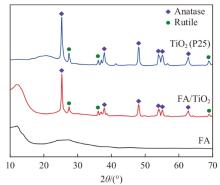
Fig.1
XRD patterns of FA, TiO2 (P25) and FA/TiO2 composite"
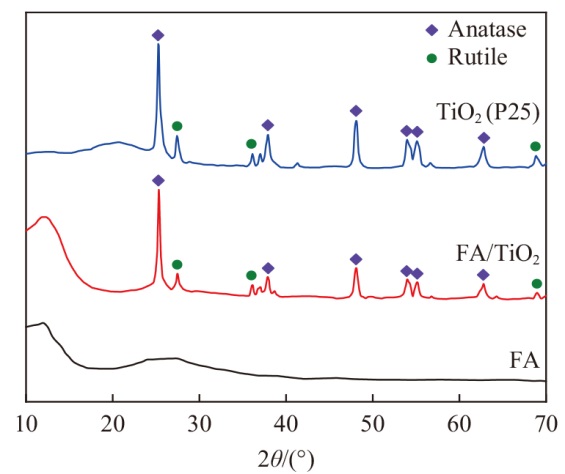
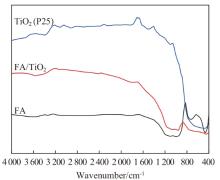
Fig.2
FT-IR spectra of FA, TiO2 (P25) and FA/TiO2 composite"
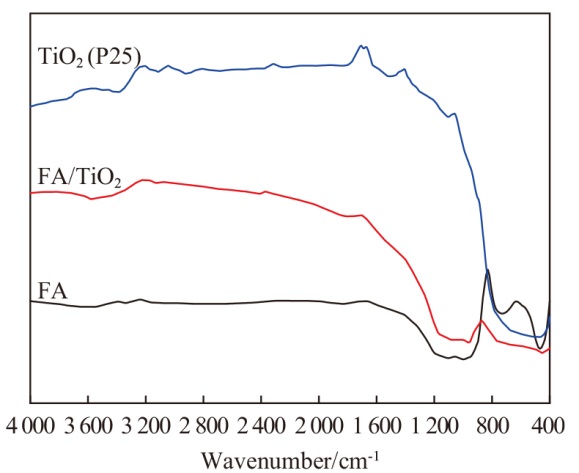
Fig.3
Full spectrum (a) and high-resolution XPS spectra of O 1s (b), Si 2p (c) and Ti 2p (d) for FA and FA/TiO2 composite"
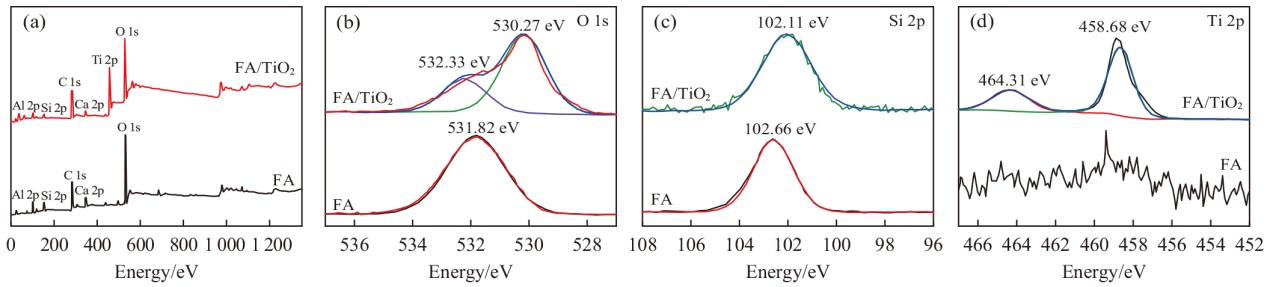
Fig.4
SEM images of FA(a), TiO2(P25)(b)and FA/TiO2(c and d) and TEM(e)and HRTEM(f)images of FA/TiO2"
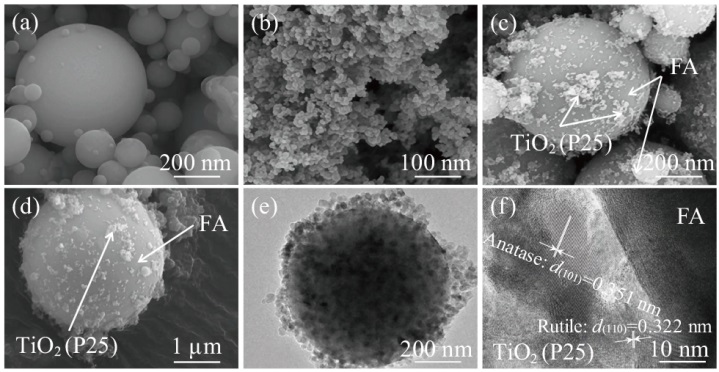
Fig.5
N2 adsorption isotherms (a) and pore size distribution curves (b) of FA, TiO2 (P25) and FA/TiO2 composite"
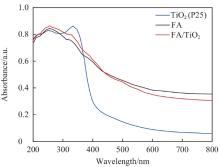
Fig.6
UV-vis DRS spectra of FA, TiO2 (P25) and FA/TiO2 composite"
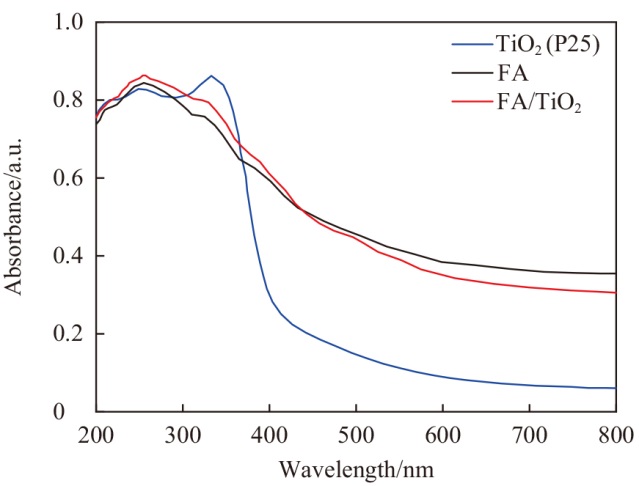
Fig.7
Photocatalytic degradation NF curves (a) and kinetic curves (b) of FA, TiO2 (P25) and FA/TiO2 composite"
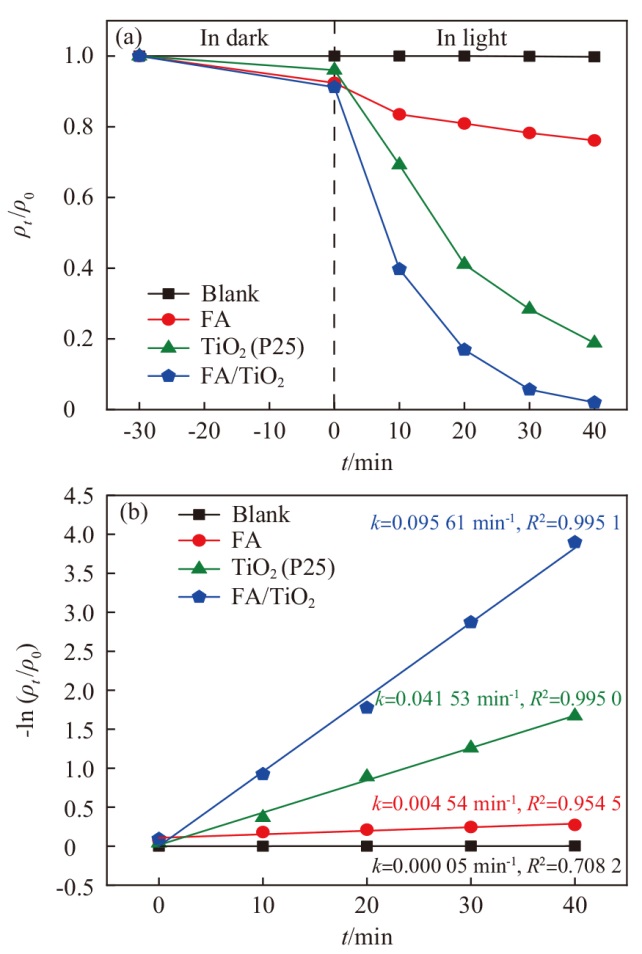
Fig.8
Effects of FA/TiO2 composite dosage (a) and initial pH (b) on photocatalytic degradation of NF"
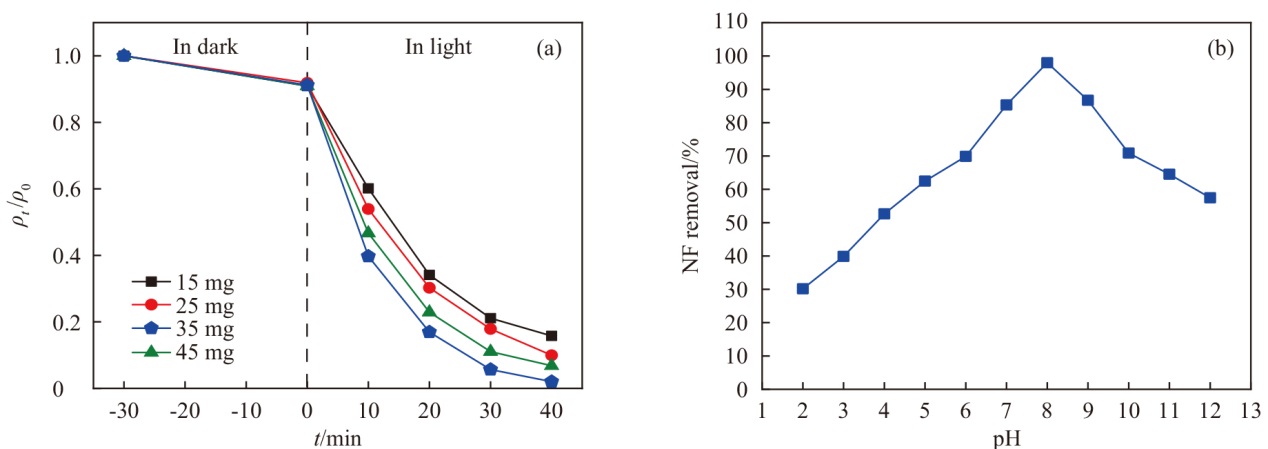
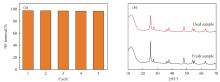
Fig.9
Changes in NF degradation by FA/TiO2 composite after 5 cycles (a) and comparison of XRD patterns before and after 5 cycles (b)"
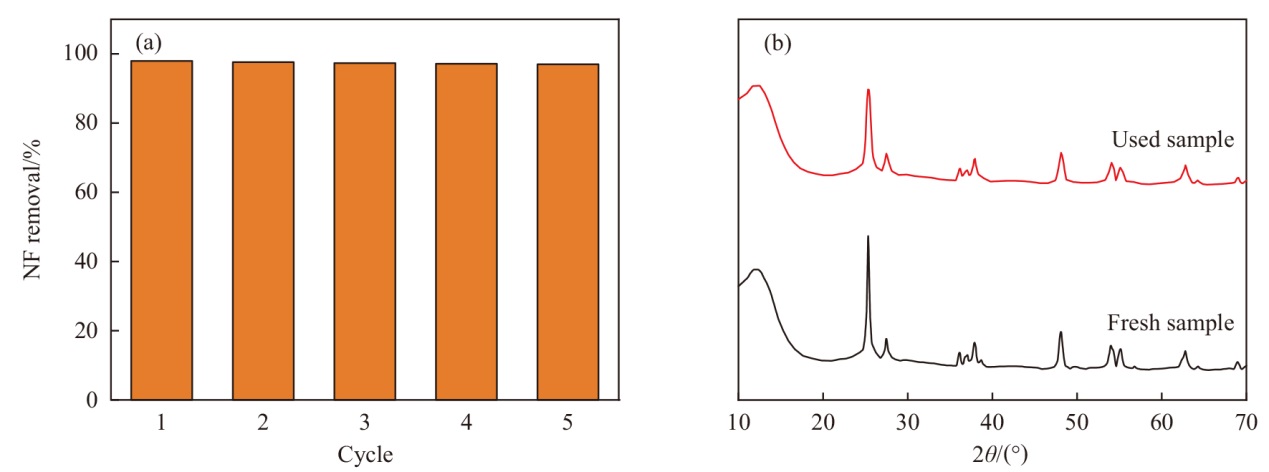
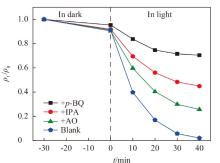
Fig.10
Results of trapping test of active species"
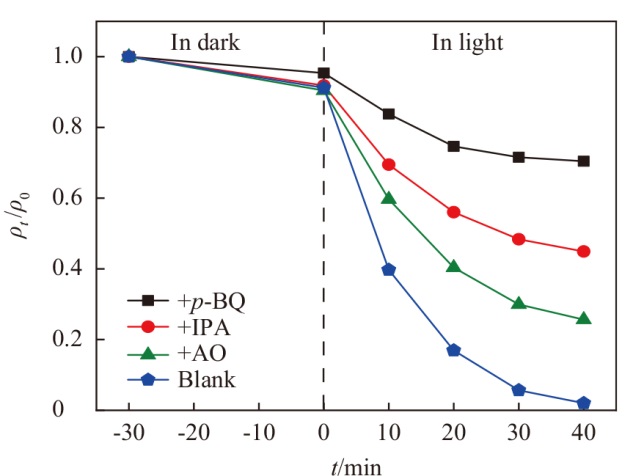
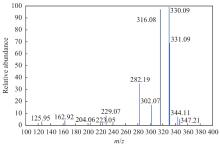
Fig.11
MS spectrum of NF degradation"
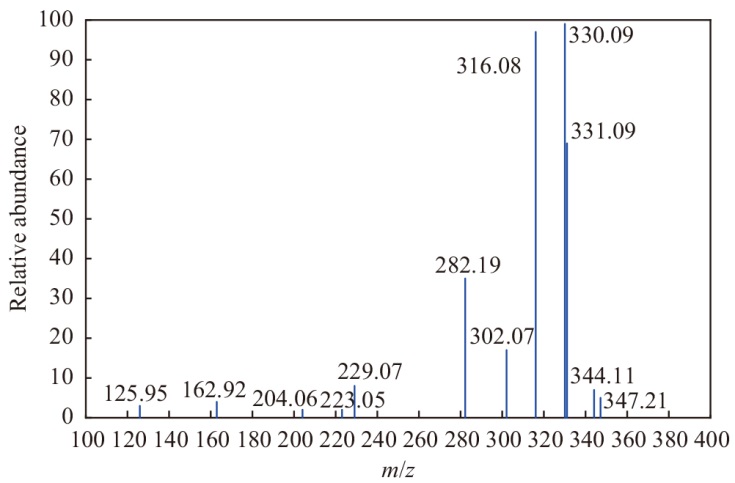
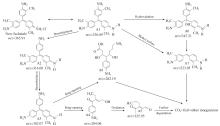
Fig.12
Possible degradation mechanism of NF"
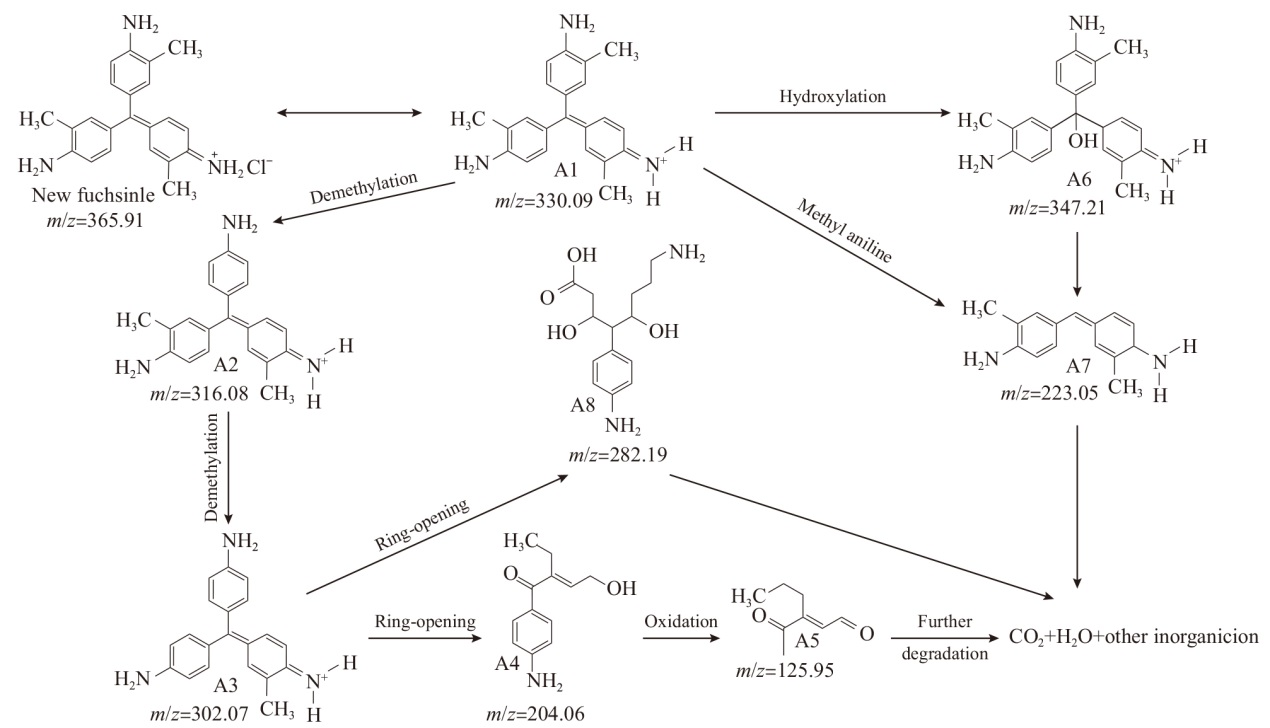
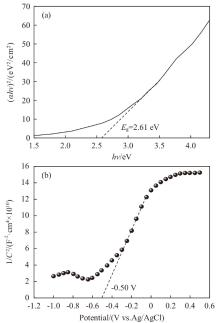
Fig.13
Tauc plot (a) and Mott-Schottky curve (b) of FA/TiO2"
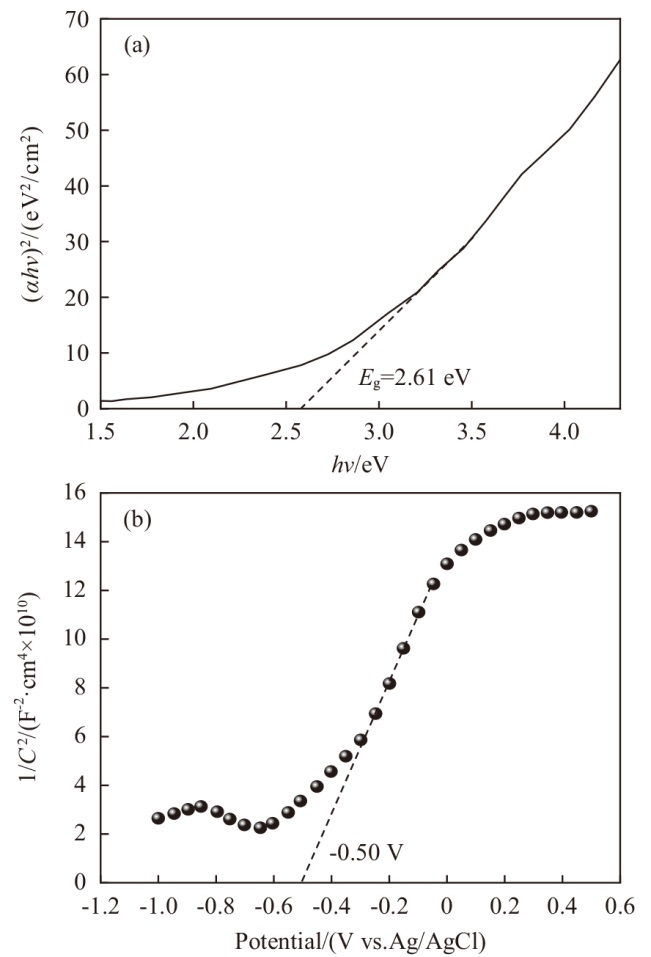
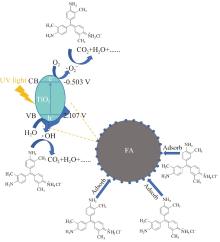
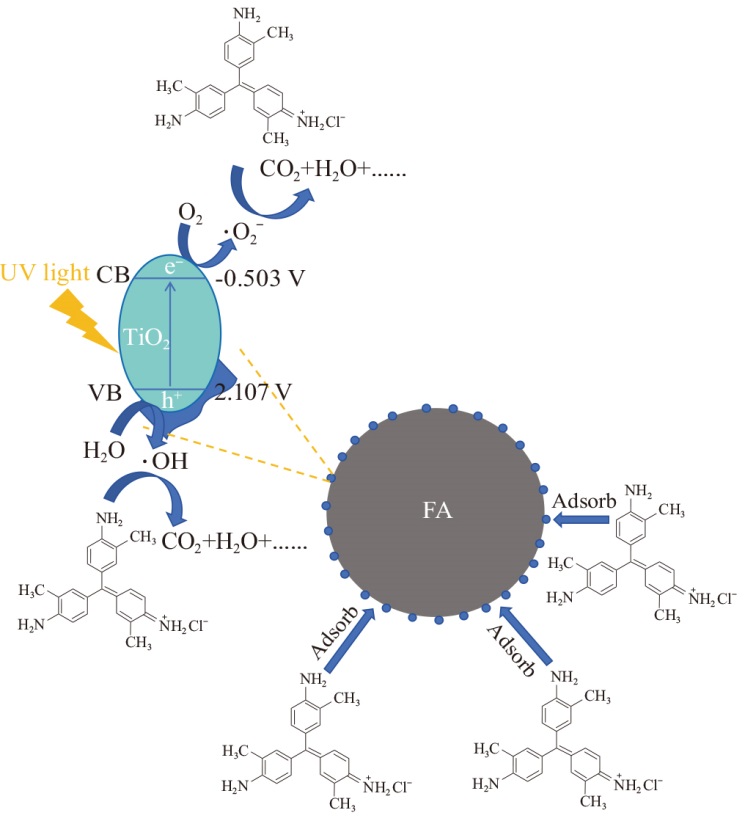
Fig.14
Mechanism of photocatalytic degradation of NF by FA/TiO2"
| [1] |
Mao J E, Chen H Y, Xu X Y, et al. Assessing greenhouse gas emissions from the printing and dyeing wastewater treatment and reuse system: Potential pathways towards carbon neutrality[J]. The Science of the Total Environment, 2024, 927: 172301.
doi: 10.1016/j.scitotenv.2024.172301 |
| [2] |
Xu J H, Ma S Y. High-efficiency photocatalytic degradation of RhB by protonation of g-C3N4 with Ag-loaded TiO2 nanofibers[J]. Journal of Crystal Growth, 2023, 617: 127290.
doi: 10.1016/j.jcrysgro.2023.127290 |
| [3] | 朱砚, 李薇, 邱小燕. CdS/g-C3N4复合材料的制备及对刚果红的光催化降解[J]. 日用化学工业 (中英文), 2025, 55 (5) : 573-580. |
| [4] | Dehingia B, Lahkar R, Kalita H. Efficient removal of both cationic and anionic dyes from water using a single rGO/PSS nanocomposite membrane with superior permeability and high aqueous stability[J]. Journal of Environmental Chemical Engineering, 2024, 12 (2) : 112393. |
| [5] | 朱炳生. AgBr/C3N5复合材料可见光去除无机废水中氨氮[J]. 日用化学工业 (中英文), 2024, 54 (12) : 1473-1480. |
| [6] |
Liu T Y, Huang J S, Huang Z C, et al. Full-spectrum photocatalytic treatment and in situ upcycling of organophosphorus wastewater enabled by biomimetic urchin-like Bi2S3/CdS[J]. Chemical Engineering Journal, 2024, 486: 150209.
doi: 10.1016/j.cej.2024.150209 |
| [7] |
Zhao S Z, Shi R D, Xu J L, et al. Hollow g-C3N4/TiO2 tubes based on waste foam for efficient organics removal and electricity generation in photocatalytic fuel cell[J]. Ceramics International, 2024, 50: 36252-36260.
doi: 10.1016/j.ceramint.2024.07.009 |
| [8] |
Yang Y Q, Ma G S, An Z J, et al. Preparation of recyclable g-C3N4/TiO2 heterojunction/alginate hydrogel microbeads and investigation of their adsorption-photocatalytic properties[J]. Journal of Hazardous Materials Advances, 2025, 18: 100650.
doi: 10.1016/j.hazadv.2025.100650 |
| [9] |
Wang Q, Wang T, Li H, et al. Role of leachate characteristics on carbon dots/TiO2 photocatalytic and bactericidal inactivation mechanism[J]. Journal of Environmental Chemical Engineering, 2025, 13: 116022.
doi: 10.1016/j.jece.2025.116022 |
| [10] |
Pandeya S, Ding R, Ma Y F, et al. Self-standing CdS/TiO2 Janus nanofiberous membrane: COD removal, antibacterial activity and photocatalytic degradation of organic pollutants[J]. Journal of Environmental Chemical Engineering, 2024, 12: 112521.
doi: 10.1016/j.jece.2024.112521 |
| [11] | 杜瑞成, 李燕, 王霆, 等. 纳米TiO2光催化剂改性研究进展[J]. 化学通报, 2023, 86 (10) : 1172-1180. |
| [12] | 徐贺龙, 王俊磊, 王雪芹. TiO2基光催化剂结构调控及改性方法研究进展[J]. 化工新型材料, 2020, 48 (6) : 38-42. |
| [13] | 张祥成, 孟永彪. 浅析中国粉煤灰的综合利用现状[J]. 无机盐工业, 2020, 52 (2) : 1-5. |
| [14] |
张世蕊, 范朕连, 宋慧平, 等. 粉煤灰负载光催化材料的研究进展[J]. 化工进展, 2024, 43 (7) : 4043-4058.
doi: 10.16085/j.issn.1000-6613.2023-0990 |
| [15] |
Bora Leena V, Thakkar Sonal P, Vadaliya Kevin S, et al. Waste fly ash-ZnO as a novel sunlight-responsive photocatalyst for dye discoloration[J]. Water Science and Engineering, 2023, 16: 76-82.
doi: 10.1016/j.wse.2022.11.001 |
| [16] |
Zhang X M, Yuan X R, Yu J, et al. Core@Shell structured coal fly ash Magnetospheres@C/g-C3N4 for degradation of Rh B via photo-Fenton catalysis[J]. Journal of Alloys and Compounds, 2022, 908: 164441.
doi: 10.1016/j.jallcom.2022.164441 |
| [17] |
Vishal Gadore, Soumya Ranjan Mishra, Md Ahmaruzzaman. Visible light-driven photocatalytic biodiesel production using novel SnS2/Fly ash photocatalyst[J]. Fuel, 2025, 382: 133615.
doi: 10.1016/j.fuel.2024.133615 |
| [18] |
Mazumder Nurul Alam, Rano Ruma. Preparation of fly ash-Ag2O nanoaggregates as highly capable photocatalyst for malachite green dye degradation under solar irradiation[J]. Materials Today: Proceedings, 2022, 65: 2889-2893.
doi: 10.1016/j.matpr.2022.06.435 |
| [19] | 陆强, 吴亚昌, 徐明新, 等. 粉煤灰活化及其制备多孔催化材料的研究进展[J]. 洁净煤技术, 2021, 27 (3) : 1-12. |
| [20] |
孙厚祥, 张立中, 张化冰. 复合材料TiO2/MCM-41光催化降解四环素的研究[J]. 工业水处理, 2023, 43 (9) : 119-125.
doi: 10.19965/j.cnki.iwt.2022-1041 |
| [21] |
Deng C X, Li S, Wang J Y, et al. Enhanced visible light photocatalytic degradation of oxytetracycline hydrochloride using heterojunction BiOBr/TiO2 composites[J]. Applied Surface Science, 2025, 710: 163945.
doi: 10.1016/j.apsusc.2025.163945 |
| [22] |
Feng S, Guan S. Influence of nano-SiO2 and nano-TiO2 on early hydration process of cement: Hydration rate, hydration products microstructure, calcium ion solubility, and diffusion ability[J]. Construction and Building Materials, 2025, 491: 142629.
doi: 10.1016/j.conbuildmat.2025.142629 |
| [23] |
Han X Y, Yang B, Chen W Q, et al. Anti-fogging superhydrophilic TiO2-SiO2 coatings for solar-driven interfacial evaporation desalination[J]. Materials Chemistry and Physics, 2025, 345: 131222.
doi: 10.1016/j.matchemphys.2025.131222 |
| [24] |
Xia Z P, Wang N, Shen L, et al. Passive radiative cooling films doped with SiO2-TiO2 of different particle sizes with excellent solar reflectivity and high infrared emissivity[J]. Solar Energy Materials and Solar Cells, 2025, 292: 113812.
doi: 10.1016/j.solmat.2025.113812 |
| [25] |
Tang J T, Wang X L, Huang Y S, et al. Hydroxylated SiO2-modified {001}-TiO2 nanosheets as a surface multifunctional photocatalyst for enhanced degradation of gaseous toluene[J]. Chemical Engineering Journal, 2024, 499: 156055.
doi: 10.1016/j.cej.2024.156055 |
| [26] |
Liu Y, Liu H M, Qian C, et al. Yolk-Shell TiO2-NRs@SiO2 with enhanced photocatalytic hydrogen production[J]. Applied Surface Science, 2025, 681: 161582.
doi: 10.1016/j.apsusc.2024.161582 |
| [27] |
Zou X, Zou X Y, Wu J R, et al. Simulated sunlight-driven photocatalytic activation of peroxydisulfate by core-shell Ag@SiO2/TiO2 nanocomposite for efficient methyl orange degradation[J]. Desalination and Water Treatment, 2024, 320: 100806.
doi: 10.1016/j.dwt.2024.100806 |
| [28] |
Li H, Xiong Y, Wang Y, et al. High piezocatalytic capability in CuS/MoS2 nanocomposites using mechanical energy for degrading pollutants[J]. Journal of Colloid and Interface Science, 2022, 609: 657-666.
doi: 10.1016/j.jcis.2021.11.070 |
| [29] |
刘发强, 夏培蓓, 吴咏梅. S型MoS2/pg-C3N4异质结的构建及其光催化性能研究[J]. 化工新型材料, 2025, 53 (7) : 207-214.
doi: 10.19817/j.cnki.issn1006-3536.2025.07.014 |
| [30] | 岑凤, 李俊. 改性尖晶石催化盐酸四环素降解性能及机理研究[J]. 日用化学工业 (中英文), 2025, 55 (4) : 472-480. |
| [1] | Lianshuang Guo, Ling Yang. Performance of Ag3PO4/BiVO4/long afterglow composite for all-weather photocatalytic degradation of dye wastewater [J]. China Surfactant Detergent & Cosmetics, 2026, 56(6): 729-738. |
| [2] | Cailing Jia, Zhanting Zhang, Fuwei Yan, Fuyue Liu, Yanni Wu, Fen Wang, Haijiao Xie. Synergistic enhancement of visible-light photocatalytic methyl orange degradation via oxygen vacancy TiO2/Sn3O4 composites [J]. China Surfactant Detergent & Cosmetics, 2026, 56(2): 191-200. |
| [3] | Hongdan Hu, Xin Zhao. Preparation of NH2-MIL-125 (Ti)/C3N5 composite and its photothermal catalytic reduction of CO2 performance [J]. China Surfactant Detergent & Cosmetics, 2025, 55(9): 1112-1119. |
| [4] | Benlong Huo, Xin Xie. Study on the photocatalytic degradation of chromium-containing wastewater by cetyltrimethyl ammonium bromide modified Bi2WO6 [J]. China Surfactant Detergent & Cosmetics, 2025, 55(9): 1169-1178. |
| [5] | Huaisheng Hu, Penghui Zhang. S-scheme TiO2/C3N5 heterojunction photocatalyst and its performance in degradation of methylene blue [J]. China Surfactant Detergent & Cosmetics, 2025, 55(8): 980-988. |
| [6] | Liyang Hou, Shengyong Li. Preparation and photocatalytic properties of pitch-derived activated carbon/g-C3N5 composite materials [J]. China Surfactant Detergent & Cosmetics, 2025, 55(8): 989-997. |
| [7] | Yan Zhu, Wei Li, Xiaoyan Qiu. Preparation of a CdS/g-C3N4 composite and its performance in photocatalytic degradation of congo red [J]. China Surfactant Detergent & Cosmetics, 2025, 55(5): 573-580. |
| [8] | Shuo Li, Jing Dai, Qingwu Li, Li Li. Research on screening methods for TiO2 nanoparticles in sunscreen cosmetics [J]. China Surfactant Detergent & Cosmetics, 2025, 55(4): 430-436. |
| [9] | Feng Cen, Jun Li. Study on the catalytic degradation of tetracycline hydrochloride by modified spinel and its mechanism [J]. China Surfactant Detergent & Cosmetics, 2025, 55(4): 472-480. |
| [10] | Huamin Liu, Yue Cai, Junjie Nian, Fengqin Wu, Chao Yao, Haoguan Gui. Preparation of titanium dioxide@aluminum hydroxide-sodium alginate composite nanoparticles and their application in sunscreen lotions [J]. China Surfactant Detergent & Cosmetics, 2025, 55(12): 1575-1581. |
| [11] | Hong Ma, Yan Wang. Sol-gel synthesis and properties of titanium dioxide for cosmetics [J]. China Surfactant Detergent & Cosmetics, 2024, 54(5): 574-580. |
| [12] | Yanna Tang, Zizhen Chen. Degradation of tetracycline hydrochloride by BaTiO3-TiO2 composite photocatalyst and its mechanism [J]. China Surfactant Detergent & Cosmetics, 2024, 54(2): 175-180. |
| [13] | Bao Zhu, Yan Pan. Preparation of Ce-TiO2-RGO catalyst and its application in the treatment of printing and dyeing wastewater [J]. China Surfactant Detergent & Cosmetics, 2024, 54(12): 1465-1472. |
| [14] | Bingsheng Zhu. Removal of ammonia nitrogen from inorganic wastewater by AgBr/C3N5 heterojunction under visible light irradiation [J]. China Surfactant Detergent & Cosmetics, 2024, 54(12): 1473-1480. |
| [15] | Wanping Zhang, Xin Guan, Shilian Zheng, Dongmei Zhang, Zijia Zhang, Qianjie Zhang. Preparation of PMTMS/TiO2 composite material and its performance characterization [J]. China Surfactant Detergent & Cosmetics, 2024, 54(10): 1227-1234. |
|
||
