Loading...
Welcome to China Surfactant Detergent & Cosmetics, Today is

Table of Content

    22 March 2026, Volume 56 Issue 3 Previous Issue    Next Issue
    Lecture of science and technology
    Viscoelastic surfactants (III)Steady rheology and shear bandings
    Yujun Feng
    2026, 56 (3):  277-283.  doi: 10.3969/j.issn.2097-2806.2026.03.001
    Abstract ( 77 )   HTML ( 8 )   PDF (3074KB) ( 64 )  

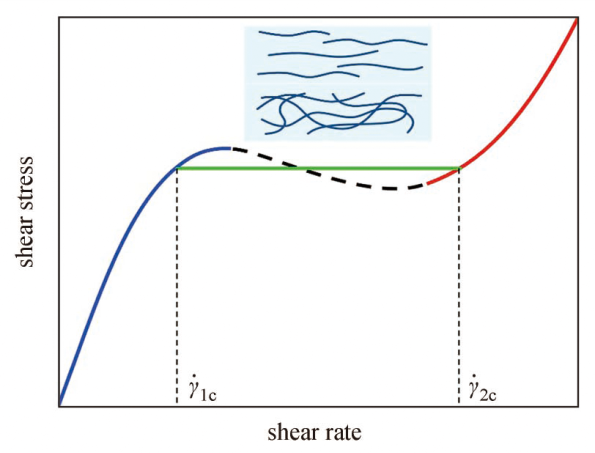
    Wormlike micelles, as quintessential soft matter systems, have garnered substantial interest across industrial and biomedical sectors due to their unique viscoelastic signatures and reversible, dynamic network architectures. This review provides a comprehensive examination of the steady flow behaviors of these self-assembled structures, with a focus on the intricate interplay between microstructural evolution and macroscopic responses under both shear and extensional deformations. Under shear flow, wormlike micellar solutions exhibit a characteristic multi-regime flow curve, encompassing a Newtonian plateau, a shear-thinning region, and, at extreme rates, a second plateau. The zero-shear viscosity scales as a power-law with surfactant concentration, offering critical insights into micellar growth, the onset of entanglement, and the eventual formation of branched networks. In contrast, extensional flow elicits markedly different nonlinear responses, such as strain hardening, tensile failure, and subsequent dynamic recovery. These distinctions underscore the dominant role of chain flexibility and reversible scission in dictating the rheological response under different kinematic conditions. A focal point of this review is the phenomenon of shear banding, an archetypal flow instability arising from a dynamic mismatch between localized network disentanglement and re-entanglement. This symmetry-breaking process, manifesting as coexisting regions of differing shear rates, is intrinsically linked to a non-monotonic constitutive relation and reveals a fundamental structural fragility inherent to “living” polymer assemblies. Finally, we delineate the prevailing challenges in the field and propose future directions. Emphasis is placed on the development of in-situ characterization techniques, the formulation of advanced constitutive models that capture the unique dynamics of these systems, and the exploration of their behavior under complex, application-relevant conditions. Such endeavors are essential for advancing the non-equilibrium physics of soft materials and for guiding the rational design of functional fluids for advanced technologies.

    Figures and Tables | References | Related Articles | Metrics
    Basic research
    Synergism in the mixture of sodium dodecyl block polyether sulfonate and Gemini betaine surfactant for oil displacement
    Zhengyu Li,Degang Xing,Yancheng Zheng,Hongyun Zhao,Fuchang You
    2026, 56 (3):  284-292.  doi: 10.3969/j.issn.2097-2806.2026.03.002
    Abstract ( 77 )   HTML ( 9 )   PDF (3990KB) ( 62 )  

    To solve the problems of poor salt tolerance and insufficient interfacial activity of surfactants in chemical flooding for high-salinity reservoirs, in this work, a novel anionic-nonionic surfactant, C12P6E6PS, was designed and synthesized, and then it was blended with a laboratory-synthesized betaine-type Gemini surfactant (GCS12). The properties of the surfactant mixture, including solubility, interfacial activity, emulsification performance, wettability-altering ability, and oil displacement efficiency, were systematically evaluated. The results showed that the mixed system with n (C12P6E6PS) /n (GCS12) of 2∶1 exhibited significant synergistic effects, achieving ultralow interfacial tension (as low as 0.007 mN/m) within the high-salinity range (150-200 g/L) and maintaining an emulsification rate of 64% even at the salinity of 12% NaCl. This system could effectively reduce the contact angle from 109° to 47.9° on rock surfaces, changing the wettability from oil-wet to water-wet and significantly decreasing the adhesion work between crude oil and rock surface. Core flooding experiments showed that the mixed system could significantly enhance the oil recovery, i.e., after flooding by water (indicative of an oil recovery of approximately 30%), the oil recovery was further increased to 60.83%. This study might provide an efficient technical approach for chemical flooding in high-salinity low-permeability reservoirs.

    Figures and Tables | References | Related Articles | Metrics
    Study on the preparation of Pickering emulsion stabilized with egg yolk plasma-calcium carbonate
    Xiaobei Liu,Zihan Li,Liujun Pei,Jiping Wang,Ning Wang
    2026, 56 (3):  293-301.  doi: 10.3969/j.issn.2097-2806.2026.03.003
    Abstract ( 68 )   HTML ( 7 )   PDF (6859KB) ( 56 )  

    To solve the problems of poor dispersion stability and low bioavailability of nano-calcium carbonate in liquid food, in this work, egg yolk plasma was used as an emulsifier to prepare a Pickering emulsion. Those factors influencing emulsion stability, including the dilution ratio of egg yolk plasma with water, the volume ratio of egg yolk plasma to oil phase, and ultrasonic conditions, were systematically investigated and optimized by orthogonal experiments. The results showed that a highly stable W/O emulsion could be obtained at the dilution ratio of 1∶4 (egg yolk plasma∶water, V/V) and the volume ratio of egg yolk plasma to oil phase of 1∶4 under ultrasonic treatment at 140 W for 10 min. The emulsion added with calcium carbonate remained stable even when the amount of CaCO3 approached 10% of the total mass. This work could provide a novel approach for developing liquid calcium supplements with high bioavailability, indicative of great application value in functional food industry.

    Figures and Tables | References | Related Articles | Metrics
    Study on the inhibition of TNF-α-induced inflammation and aging in human skin fibroblast cells by Cyperus esculentus root oil
    Wanping Zhang,Jiayi Wang,Donghan Jia,Meiling Mo,Ying Liang,Changmei Peng,Yue Wang
    2026, 56 (3):  302-313.  doi: 10.3969/j.issn.2097-2806.2026.03.004
    Abstract ( 83 )   HTML ( 8 )   PDF (3196KB) ( 64 )  

    Cyperus esculentus root oil (CEL) is a plant of significant economic value, rich in unsaturated fatty acids like oleic acid, linoleic acid, and linolenic acid. In this study, human dermal fibroblasts (HSF) were used to create an inflammatory model, and the impact of cold-pressed oil from CEL on the secretion of inflammatory factors was assessed. The results showed that CEL significantly inhibited IL-6 and IL-1β that were secreted by HSF cells induced by tumor necrosis factor-α (TNF-α) (P<0.000 1), with inhibition rates of 50.79% and 20.26%, respectively. Furthermore, CEL markedly enhanced the secretion of the anti-inflammatory factor IL-10 (P<0.01), with an improvement rate of 94.42%. The study further explored the impact of CEL on collagen type I (Col-I) and hyaluronic acid (HA) secretion in the cells. The results demonstrated that CEL effectively increased Col-I secretion by 26.15% (P<0.000 1) and HA by 30.2% (P<0.000 1) when it was administered at a maximum safe mass fraction of 6%, which consequently showed its potential anti-aging and moisturizing properties. Additionally, fluorescence real-time quantitative polymerase chain reaction (PCR) experiments confirmed that CEL significantly inhibited the TNF-α-induced expression of IL-6, IL-1β, and matrix metalloproteinases (MMP-1, 3, 9) in HSF cells, while promoted the mRNA expression levels of IL-10 and hyaluronic acid synthase. This modulation suggested that CEL exerted anti-inflammatory and anti-aging effects. Finally, the oil’s anti-inflammatory, anti-senility, and moisturizing effects were validated through the clinical evaluations. In summary, CEL, as a natural raw material abundant in unsaturated fatty acids, shows promising potential for further development and usage in cosmetics due to its anti-inflammatory, anti-aging, and moisturizing properties in personal care.

    Figures and Tables | References | Related Articles | Metrics
    Experimental study on the performance of CO2 foam channeling plugging system in ultra-low permeability reservoir
    Li Liu,Yongchun Liu
    2026, 56 (3):  314-322.  doi: 10.3969/j.issn.2097-2806.2026.03.005
    Abstract ( 71 )   HTML ( 4 )   PDF (5607KB) ( 72 )  

    To meet the requirements of channeling plugging and enhanced oil recovery, the performance of oil-based foam channeling plugging systems formed by adding different surfactants (SDS, SDBS, Span20, and OP-10) in diesel was systematically evaluated, and their oil displacement mechanisms were discussed. The foam was prepared by high-speed stirring method. Combined with the constant temperature experiment under CO2 protective atmosphere, the foam volume, half-life and foam composite index were analyzed. The research results showed that SDBS performed best at the mass fraction of 0.3%, at which its foam volume in diesel was 215 mL, half-life was 215.4 s, and foam composite index was significantly higher than that of other surfactants. SEM showed that there was lamellar liquid crystal structure in SDBS foam, and the film thickness of foam was 1.5-2.0 μm. Oil-based CO2 foam could achieve profile control by selectively blocking the high-permeability channels through the Jamin effect. The profile control, together with the synergistic effect of extruding-drag-emulsification, significantly improved the oil washing efficiency. The slim tube experiment determined that the minimum miscibility pressure of CO2 was 23.6 MPa. The plugging performance test showed that the gas-phase plugging rate of the SDBS foam system reached 95.7%, and the injection pressure difference was increased by 23.4 times. In the core displacement experiment, the total recovery rate for the low-permeability core (50×10-3 μm2) was increased to 28.1%, and for the high-permeability core (10×10-3 μm2) a total recovery rate of 61.4% was achieved even under the condition of a water cut of 98.3%. This study might provide theoretical basis and data support for efficient channeling plugging in oil reservoirs and for foam flooding technology.

    Figures and Tables | References | Related Articles | Metrics
    Study on the synthesis process and macro-kinetics of tetramethoxymethylglycoluril
    Weishang Wang,Wenhua Cui,Xiaoxiao Wang,Yongbing Xue,Zhenmin Liu
    2026, 56 (3):  323-332.  doi: 10.3969/j.issn.2097-2806.2026.03.006
    Abstract ( 79 )   HTML ( 3 )   PDF (3228KB) ( 43 )  

    The syntheses of glycoluril and tetramethoxymethylglycoluril (TMMG) in a 500 mL batch reactor were investigated. Orthogonal experimental design method was used for process optimization. The results showed that the optimized conditions for synthesis of glycoluril were as follows: Under the conditions of the molar ratio of urea-to-glyoxal of 2.5∶1, pH of 1.2, reaction temperature of 60 ℃, and holding time of 3 h, the yield was 91.79% and the purity of product was 99% as confirmed by HPLC. For synthesis of TMMG, the optimized parameters were as follows: The molar ratio of methanol-to-precursor was 12∶1, the reaction temperature was 50 ℃, and the reaction time was 2 h, producing a yield of 86.54% and the purity of 99.92% as confirmed by HPLC. Macrokinetic analysis demonstrated that the reaction orders were 0.425 for urea and 1.637 for glyoxal in synthesis of glycoluril, indicative of an overall reaction order of 2.06 and activation energy of 87.446 kJ/mol. The synthesis of TMMG followed pseudo-first-order kinetics under methanol-excess conditions with an activation energy of 87.345 kJ/mol. The products were characterized by using 1H NMR, FT-IR, melting point analysis and HPLC, which confirmed that the products met industrial specifications. This study could provide theoretical support for applications in daily chemicals and photoresist materials.

    Figures and Tables | References | Related Articles | Metrics
    Dyeing and properties of natural plant dyes on the surface of woolen fabrics
    Dongdong Suo,Yijia Shang
    2026, 56 (3):  333-338.  doi: 10.3969/j.issn.2097-2806.2026.03.007
    Abstract ( 58 )   HTML ( 3 )   PDF (4041KB) ( 58 )  

    People put forward higher requirements for the color diversity and environmental protection performance of wool fabrics. Although chemical dyes are rich in color and mature the in dyeing process, they are often accompanied by environmental pollution and ecological destruction. Therefore, this paper presents the dyeing of natural plant dyes on the surface of wool fabrics and its performance research. The absorbency, fixation rate, breaking capacity and dyeing rate of wool fabric were measured, and the dyeing performance of wool fabric was analyzed. The dyeing process of natural plant dyes was studied by preparing dyes, adjusting the color tone and perfecting the dyeing process. The results show that dyeing wool fabric with natural plant dyes can make the fabric reach the same chromaticity level in a short time, and the color difference are not more than 1 px at a time. The spectral characteristics of the dyed fabric do not change obviously. After long-term soaking treatment, the breaking capacity of the fabric fiber does not change obviously, and the chromaticity level remains unchanged. It indicates that the dyeing performance of natural plant dyes is relatively stable, and the dyeing rate is relatively fast, with the longest time not exceeding 0.4 h.

    Figures and Tables | References | Related Articles | Metrics
    Research on the impact of environmental temperature and humidity on sensory evaluation and moisturizing efficacy of cosmetics
    Congrui Zeng,Qi Liu,Sisi Chang,Hua Zhao
    2026, 56 (3):  339-346.  doi: 10.3969/j.issn.2097-2806.2026.03.008
    Abstract ( 74 )   HTML ( 6 )   PDF (1974KB) ( 62 )  

    The sensory experience and efficacy of cosmetics during use are prone to the influence of ambient temperature and humidity. This study focuses on emollient creams and lotions, examining changes in their sensory attributes and moisturizing efficacy under conditions of -5 ℃ with 40% relative humidity and 35 ℃ with 80% relative humidity. It delves into how different environments impact cosmetic sensory indicators. Results indicate that temperature and humidity variations significantly alter sensory properties such as gloss and firmness. In low temperature and low humidity settings, products exhibit greater firmness and peak height but show reduced spreadability and absorption. Conversely, in high temperature and high humidity conditions, products become softer in texture, with enhanced spreadability but increased heaviness. The study further probes into the impact of temperature and humidity on the moisturizing efficacy of creams and lotions. Through measurements of skin moisture content and transepidermal water loss, it is found that the product demonstrates significant moisturizing effects in environments at -5 ℃ with 40% relative humidity (p<0.05), but no notable moisturizing function in settings at 35 ℃ with 80% relative humidity (p>0.05). These findings offer a scientific reference for formulation design and selection during the development phase of cream and lotion cosmetics, and it is recommended that consumers adjust their product choices or storage conditions according to environmental differences. Currently, research on the correlation between some cosmetic sensory and efficacy attributes and temperature and humidity parameters remains inadequate. Future studies should center on the disparities in sensory and efficacy experiences of cosmetics used by different consumers in diverse climatic conditions.

    Figures and Tables | References | Related Articles | Metrics
    Rapid determination of DHA in sturgeon caviar extracts and its correlation with bioactive efficacy
    Xiaoling Tan,Jiaxin Kang
    2026, 56 (3):  347-353.  doi: 10.3969/j.issn.2097-2806.2026.03.009
    Abstract ( 48 )   HTML ( 3 )   PDF (2581KB) ( 60 )  

    A reversed-phase high-performance liquid chromatography (HPLC) method was developed for the direct determination of docosahexaenoic acid (DHA) in sturgeon caviar extract. The assay employed n-hexane extraction combined with gradient elution (ZORBAX SB-C18 column), with data collected using a diode array detector. The content was calculated by external standard method and validated against the national standard (GB 5009.168-2016). The study also measured DPPH free radical scavenging capacity and moisture retention rate across different DHA concentration groups. The results demonstrate that the proposed method exhibits excellent linearity (r=0.999 7), with recovery rates ranging from 92.1% to 101.1% and relative standard deviations (RSD) of 2.23% to 3.92%. Compared to the national standard method, the relative deviation was 0.67% to 1.68%. At specific test concentrations, the high-DHA group shows significantly higher moisture retention (100.48%), hygroscopicity (100.85%), and DPPH scavenging efficiency (57.46%) than the low-DHA group (10.33%, 11.76%, and 3.71%). The RP-HPLC method developed in this study simplifies DHA detection procedures with simple reagents and reliable results, making it suitable for rapid qualitative identification and quantitative analysis of target components in caviar extract quality control. The DPPH experiment further reveals the correlation between DHA content and antioxidant efficacy in sturgeon caviar extracts, providing scientific evidence for developing functional cosmetics.

    Figures and Tables | References | Related Articles | Metrics
    Synthesis and performance of alkylamino phosphoronitriles as multifunctional fabric finishing agents
    Liwen Chen,Niannian Wang,Yong Qin
    2026, 56 (3):  354-359.  doi: 10.3969/j.issn.2097-2806.2026.03.010
    Abstract ( 53 )   HTML ( 3 )   PDF (2534KB) ( 45 )  

    Two novel oil-soluble surfactants, namely hexa (dodecylamino) cyclotriphosphonitrile hydrochloride (HDCCP) and hexa (octadecylamino) cyclotriphosphonitrile hydrochloride (HOCCP), were successfully synthesized via an one-step reaction at 50 ℃ using tetrahydrofuran (THF) as the solvent. The synthesis involved the nucleophilic substitution of hexachlorocyclotriphosphonitrile with long-chain aliphatic amines (including dodecylamine and octadecylamine), resulting in yields of 92.34% for HDCCP and 86.13% for HOCCP. The products were characterized by infrared spectroscopy (IR) and nuclear magnetic resonance (NMR). When they were applied as finishing agents for cotton cloth, the cotton cloths treated with HDCCP and HOCCP demonstrated residual carbon rates of 28.89% and 22.46% in vertical burning test, suggesting that these compounds could effectively enhance the flame resistance of the treated textile. Additionally, antibacterial performance tests indicated that HDCCP exhibited excellent broad-spectrum antimicrobial activity against common pathogens, including Staphylococcus aureus, Escherichia coli and Candida albicans, making it a promising candidate for antibacterial agent for textile. Furthermore, the softness of fabrics treated with HDCCP and HOCCP reached a favorable level of 4-5 in the standard softness test, which was comparable to that achieved by a commercial fabric softener. Therefore, these compounds not only provided flame retardancy and antibacterial effects but also maintained fabric comfort. In conclusion, long-chain alkylamino phosphonitrile derivatives exhibited outstanding properties as multifunctional fabric finishing agents, combining flame retardancy, antimicrobial effects and softness enhancement in a single treatment.

    Figures and Tables | References | Related Articles | Metrics
    Development and application
    Study on the acne-relieving and calming effects of heparin sodium
    Xiaoran Wang,Yanwei Zhang,Shuo Liu,Zhongliang Xu
    2026, 56 (3):  360-367.  doi: 10.3969/j.issn.2097-2806.2026.03.011
    Abstract ( 91 )   HTML ( 4 )   PDF (3649KB) ( 50 )  

    With heparin sodium as the study subject, its efficacy in acne treatment and soothing effects was investigated through in vitro antibacterial tests, LPS-stimulated macrophage inflammation assays, and copper sulfate-induced zebrafish neutrophil aggregation tests. The results show that within the mass concentration range of 0.05-2 g/L, heparin sodium does not affect the proliferation of Cutibacterium acnes. However, within the range of 0.05-1 g/L, it significantly inhibits the biofilm formation of C.acnes. When administered in combination with quaternary ammonium salt-73, heparin sodium markedly enhances the antibacterial activity of low-dose quaternary ammonium salt-73. Human tests has confirmed that the combination of heparin sodium and quaternary ammonium salt-73 significantly reduces acne volume and skin redness. At a mass concentration of 0.05 g/L, heparin sodium also significantly suppresses LPS-induced downregulation of IκBα and upregulation of p-p65 in the NF-κB signaling pathway of macrophages, reducing the production levels of inflammatory cytokines TNF-α and IL-6. Additionally, the zebrafish validation model confirms that at 1 g/L, heparin sodium significantly decreases copper sulfate-induced neutrophil aggregation in zebrafish embryos, achieving an inhibition rate of 20.00%, demonstrating its soothing and anti-inflammatory effects. This study indicates that heparin sodium possesses the dual efficacy of inhibiting biofilm formation of C.acnes and exerting soothing effects.

    Figures and Tables | References | Related Articles | Metrics
    Reviews
    Current status of analytical detection of Per- and polyfluoroalkyl substances in cosmetics and research progress on the application of molecular network
    Wanping Yu,Li Li,Haiyan Wang,Jianbo Sun
    2026, 56 (3):  368-375.  doi: 10.3969/j.issn.2097-2806.2026.03.012
    Abstract ( 66 )   HTML ( 2 )   PDF (1332KB) ( 52 )  

    Per- and polyfluoroalkyl substances (PFASs) are a class of synthetic fluorinated organic compounds. Due to their unique chemical stability, hydrophobicity, lipophobicity, and surface activity, they are widely used in cosmetics, such as lipstick, mascara, lotion, foundation and sunscreen. However, the environmental persistence, bioaccumulation, and potential toxicity of PFASs have raised global concerns about their safety. Due to the limitations of traditional detection methods, molecular networking technology provides an innovative solution for the detection of hazardous substances in cosmetics due to its unique advantages. The application of this technology enables high-throughput and high-sensitivity detection of hazardous substances such as perfluorinated compounds in cosmetics. This article systematically reviews the pollution status of PFASs in cosmetics, the challenges of detection technology, the application of molecular networks, health risks, and regulatory countermeasures, in order to provide scientific basis and technical support for industry standard formulation and risk management.

    Figures and Tables | References | Related Articles | Metrics
    The role of neuromodulation in sensitive skin
    Dongping Qi,Fengtong Shen,Junliang Zhang,Sicong Liu,Yue Wu
    2026, 56 (3):  376-385.  doi: 10.3969/j.issn.2097-2806.2026.03.013
    Abstract ( 48 )   HTML ( 3 )   PDF (2635KB) ( 72 )  

    The role of neuromodulation in skin health and disease is increasingly recognized, as it is closely related to skin sensitivity, barrier function, aging, and pigmentation. This review aims to explore the critical role of neuromodulation in sensitive skin, analyzing its impact from three perspectives: neurovascular reactivity, sensory characteristics, and emotional skincare. Additionally, it proposes recommendations for future research directions.

    Figures and Tables | References | Related Articles | Metrics
    Analytical methods and testing
    Research on the detection of volatile organic solvents in detergents by headspace gas chromatography
    Yun Liu,Jun Zhang,Tianzhuang Wang,Xin Tian
    2026, 56 (3):  386-391.  doi: 10.3969/j.issn.2097-2806.2026.03.014
    Abstract ( 67 )   HTML ( 6 )   PDF (1455KB) ( 31 )  

    This study aims to establish a detection method for 15 volatile organic compounds (VOCs) in cleaning agents based on headspace injection - gas chromatography/mass spectrometry (HS-GC-MS). The multi-response surface method was adopted to simultaneously refine three key analytical dimensions: headspace equilibrium thermodynamics, chromatographic elution trajectory, and mass spectrometry acquisition parameters. Developed rapid detection methods covering multiple types of VOCs such as chloroform, benzene series and halogenated hydrocarbons. Innovatively, the simulated matrix labeling method was adopted to eliminate matrix interference, and a dual chromatographic columns (Rxi-5Sil MS and DB-624) cross-verification system was constructed to enhance qualitative reliability. Methodological validation shows that when the linear range is 1-500 μg/mL, the correlation coefficients (R2) of each compound are all better than 0.999. The method detection limit (LOD) ranges from 0.02 to 0.14 μg/mL. The recovery rates of spiked products are 82.8%-116.0%, and the relative standard deviations (RSDs) of intraday precision are all better than 5%. Actual sample testing reveals that the detection rates of trichloromethane and toluene are the highest among commercially available cleaning agents, with the maximum content of trichloromethane reaching 0.53 μg/mL.

    Figures and Tables | References | Related Articles | Metrics
    Determination of 21 characteristic components in Chinese medicine formula toothpaste by UPLC-MS/MS
    Hui Lu,Yiwen Huang,Li Ren,Linling Lu,Bin Zhang
    2026, 56 (3):  392-399.  doi: 10.3969/j.issn.2097-2806.2026.03.015
    Abstract ( 59 )   HTML ( 2 )   PDF (1563KB) ( 44 )  

    An ultra-high performance liquid chromatography-tandem mass spectrometry (UPLC-MS/MS) method was established to simultaneously determine 21 characteristic components derived from 14 traditional Chinese medicines (TCMs) in TCM formula toothpaste. The toothpaste samples were ultrasonically extracted with 80% methanol. Separation was achieved on a BEH C18 column (100 mm×2.1 mm, 1.7 μm), employing a gradient elution with 0.1% formic acid aqueous solution and acetonitrile as mobile phases. The 21 characteristic components from TCM materials were simultaneously identified using multiple reaction monitoring (MRM) with electrospray ionization in both positive and negative modes. Quantification was carried out by the matrix-matching external standard method. The 21 characteristic components exhibit good linearity between peak areas and concentrations, with correlation coefficients all above 0.99. The limits of detection range from 0.2 ng/mL to 4.8 ng/mL. The limits of quantification range from 0.5 ng/mL to 14.5 ng/mL. The average recoveries at three different spiked levels are between 88.3% and 121.0%. The RSDs range from 0.9% to 12.6% (n=6). The established method was applied to the detection of 38 real samples from commercially available TCM formula toothpaste. The developed method is specific, sensitive, accurate, and highly efficient. It is suitable for simultaneous determination of these 21 characteristic components in TCM formula toothpaste. This work provides a technical reference for investigating the material basis and efficacy of TCM extracts in TCM formula toothpaste, and it offers support for the standardization and regulation of the toothpaste market.

    Figures and Tables | References | Related Articles | Metrics
    Simultaneous determination of 5 kinds of sweeteners in oral care toothpaste by HPLC
    Yanfang Zhou,Weihong Huo,Haixin Yang,Xuejing Chen
    2026, 56 (3):  400-406.  doi: 10.3969/j.issn.2097-2806.2026.03.016
    Abstract ( 57 )   HTML ( 3 )   PDF (1517KB) ( 41 )  

    In this study, a high performance liquid chromatography (HPLC) method was established for the simultaneous determination of 5 sweeteners (saccharin sodium, aspartame, acesulfame, sucralose, and stevia) in oral care toothpaste. The mixed solution of water-methanol (volume ratio of 80∶20) was used as the extraction solvent. Ultrasonic parameters were as follows: time 20 min, temperature 40 ℃, and ultrasonic power 360 W. After ultrasonic extraction, solid phase extraction was used. The test was performed using the Thermo Scientific UltiMate 3000 liquid chromatography system with the DAD-3000 RS diode array detector. The chromatography was performed on Capcell Pak MG-Ⅱ C18 column (250 mm×4.6 mm, 5 μm) at 35 ℃. The mobile phase consisted of 20 mmol/L ammonium acetate solution (pH 5.5) and methanol. The detection wavelength was 214 nm. The results of the methodology evaluation show that the precision RSD of the five sweeteners are all less than 5%. In the mass concentration range of 0.1-500 mg/L, the five sweeteners show good linear relationships, the correlation coefficients are distributed in the range of 0.999 4-0.999 8, and the detection limits are 0.05-0.20 mg/L. The recovery rates of the five sweeteners range from 97.08% to 105.53%, and RSD values in batches are all lower than 5%.

    Figures and Tables | References | Related Articles | Metrics