Welcome to China Surfactant Detergent & Cosmetics, Today is


China Surfactant Detergent & Cosmetics ›› 2026, Vol. 56 ›› Issue (3): 376-385.doi: 10.3969/j.issn.2097-2806.2026.03.013
• Reviews • Previous Articles Next Articles
Dongping Qi,Fengtong Shen,Junliang Zhang,Sicong Liu,Yue Wu*( )
)
Received:2025-04-20
Revised:2026-03-11
Online:2026-03-22
Published:2026-05-14
Contact:
Yue Wu
E-mail:wuy@bloomagebiotech.com.
CLC Number:
Dongping Qi,Fengtong Shen,Junliang Zhang,Sicong Liu,Yue Wu. The role of neuromodulation in sensitive skin[J].China Surfactant Detergent & Cosmetics, 2026, 56(3): 376-385.
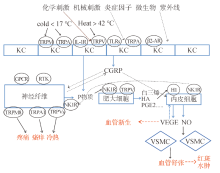
Fig.1
Schematic representation of TRP channel-mediated pruriceptive signaling and neuropeptide (CGRP/SP) -regulated vascular mechanisms in sensitive skin"
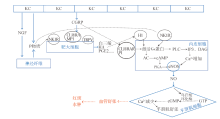
Fig.2
Molecular mechanisms of neuropeptide (NGF/CGRP/SP) - mediated angiogenesis regulation"
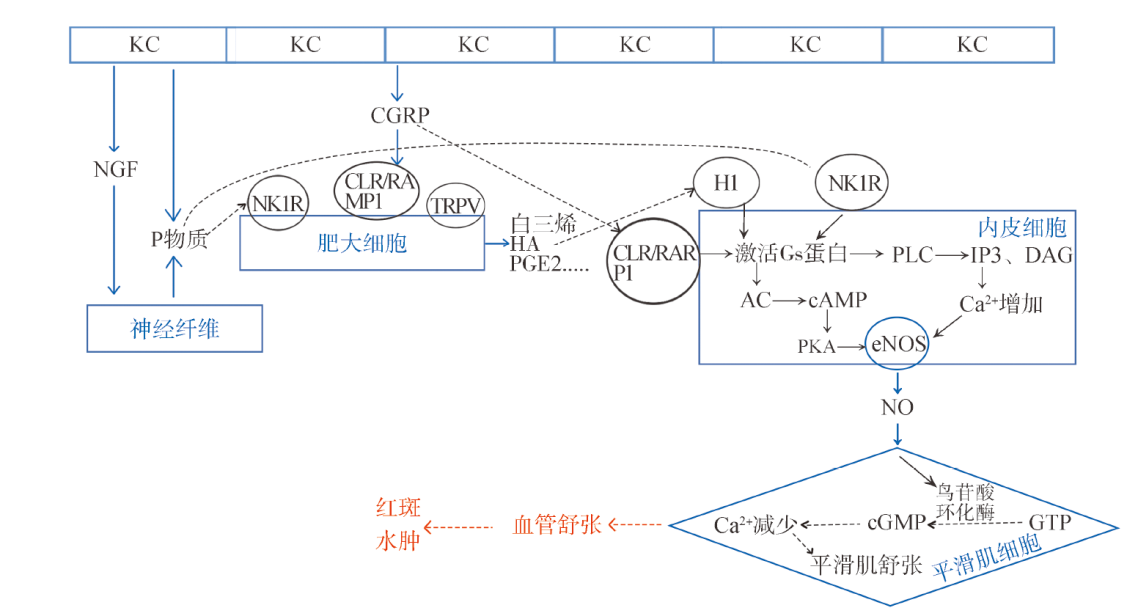
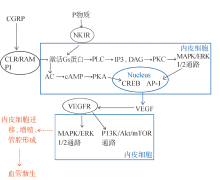
Fig.3
Molecular mechanisms of neuropeptide (CGRP/SP) -mediated angiogenesis regulation"
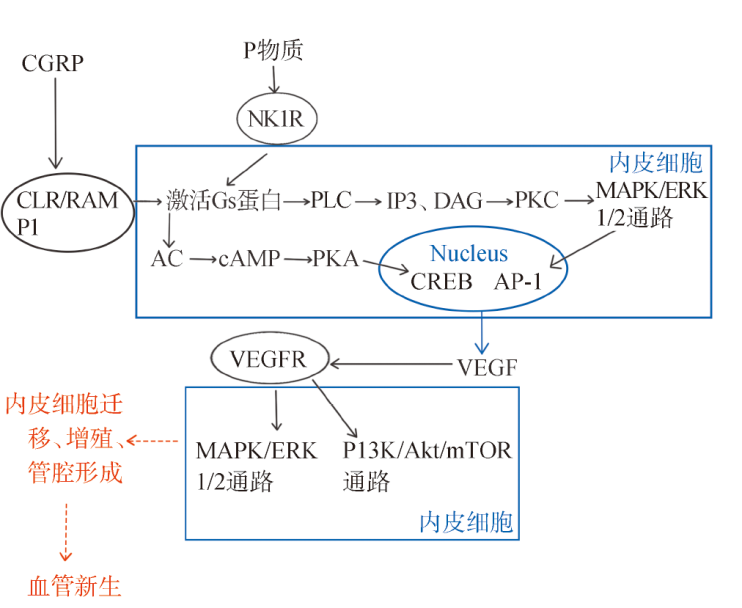
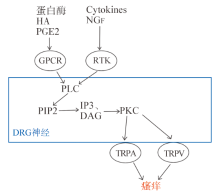
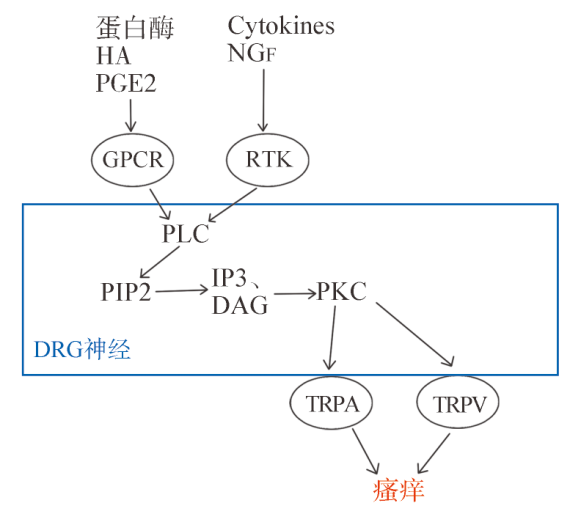
Fig.4
GPCR/RTK-TRPV1/TRPA1 crosstalk in itch signal transduction"
Tab.1
Stimulus taxonomy and corresponding neuronal receptors in cutaneous sensory pathways"
| 刺激类型 | 温度/机制 | 激活受体 |
|---|---|---|
| 热刺激 | >42 ℃ | TRPV1 |
| >53 ℃ | TRPV2 | |
| 25~33 ℃ | TRPV3/TRPV4 | |
| 冷刺激 | <15 ℃ | TRPM8(<10~15 ℃)、TRPA1(<17 ℃) |
| 机械刺激 | 牵张、压缩、剪切力等 | TRPV4、ASIC、Piezo1/Piezo2 |
| 化学刺激 | 1) 微生物;2) 炎症介质:前列腺(PGE2、PGI2)、神经营养因(NGF)、神经肽(SP、CGRP);3)非炎症介质:GABA、阿片肽、大麻素 | TRP家族(如TRPV1、TRPA1)、TOLL受体 |
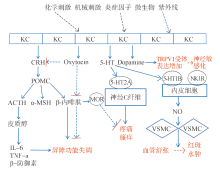
Fig.5
Neuromodulatory mechanisms of emotional skincare in sensitive skin"
| [1] | 吕中茜, 郭义. 反观中医临床提出“皮肤是人的第三大脑”[J]. 江西中医药, 2016, 47 (7) : 11-13. |
| [2] | Granstein R D, Luger T A. Neuroimmunology of the skin[M]. Springer Berlin Heidelberg, 2009. |
| [3] | 龚石, 刘巧. 神经介质与皮肤美容关系的研究进展[J]. 中国美容医学, 2011, 20 (5) : 861-862. |
| [4] | Bove D, Lupoli A, Caccavale S, et al. Dermatological and immunological conditions due to nerve lesions[J]. Functional Neurology, 2013, 28 (2) : 83. |
| [5] | Roosterman D, Goerge T, Schneider S W, et al. Neuronal control of skin function: the skin as a neuroimmunoendocrine organ[J]. Physiological Reviews, 2006, 86 (4) : 1309-1379. |
| [6] | Rizzi V, Gubitosa J, Fini P, et al. Neurocosmetics in skincare-the fascinating world of skin-brain connection: a review to explore ingredients, commercial products for skin aging, and cosmetic regulation[J]. Cosmetics, 2021, 8 (3) : 66. |
| [7] | Schmidt R, Schmelz M, Forster C, et al. Novel classes of responsive and unresponsive C nociceptors in human skin[J]. Journal of Neuroscience, 1995, 15 (1) : 333-341. |
| [8] | Ständer S, Schneider S W, Weishaupt C, et al. Putative neuronal mechanisms of sensitive skin[J]. Experimental Dermatology, 2009, 18 (5) : 417-423. |
| [9] | Misery L. Sensitive skin[J]. Expert Review of Dermatology, 2013, 8(6) : 631-637. |
| [10] | Farage M A, Maibach H I. Sensitive skin: closing in on a physiological cause[J]. Contact Dermatitis, 2010, 62 (3) : 137-149. |
| [11] | Tóth B I, Oláh A, Szöllősi A G, et al. TRP channels in the skin[J]. British Journal of Pharmacology, 2014, 171 (10) : 2568-2581. |
| [12] | Zhang M, Ma Y, Ye X, et al. TRP (transient receptor potential) ion channel family: structures, biological functions and therapeutic interventions for diseases[J]. Signal Transduction and Targeted Therapy, 2023, 8 (1) : 261. |
| [13] | Huet F, Misery L. Sensitive skin is a neuropathic disorder[J]. Experimental Dermatology, 2019, 28 (12) : 1470-1473. |
| [14] | Kumagai M, Nagano M, Suzuki H, et al. Effects of stress memory by fear conditioning on nerve-mast cell circuit in skin[J]. The Journal of Dermatology, 2011, 38 (6) : 553-561. |
| [15] | Yam M F, Loh Y C, Tan C S, et al. General pathways of pain sensation and the major neurotransmitters involved in pain regulation[J]. International Journal of Molecular Sciences, 2018, 19 (8) : 2164. |
| [16] | Buhé V, Vié K, Guéré C, et al. Pathophysiological study of sensitive skin[J]. Acta Dermato-venereologica, 2016, 96 (3) : 314-318. |
| [17] | Huet F, Dion A, Batardière A, et al. Sensitive skin can be small fibre neuropathy: results from a case-control quantitative sensory testing study[J]. British Journal of Dermatology, 2018, 179 (5) : 1157-1162. |
| [18] | Huggenberger R, Detmar M. The cutaneous vascular system in chronic skin inflammation[J]. Journal of Investigative Dermatology Symposium Proceedings, 2011, 15 (1) : 24-32. |
| [19] | Jiang W, Zhang H, Xu Y, et al. Cutaneous vessel features of sensitive skin and its underlying functions[J]. Skin Research and Technology, 2020, 26 (3) : 431-437. |
| [20] | Ойвин И А. 血管通透性的生理学和病理学问题[J]. 周钟鸣, 译. 青岛医学院学报, 1962 (2) : 25. |
| [21] | Ono S, Egawa G, Kabashima K. Regulation of blood vascular permeability in the skin[J]. Inflammation and Regeneration, 2017, 37: 1-8. |
| [22] | Koller A, Huang A. Impaired nitric oxide-mediated flow-induced dilation in arterioles of spontaneously hypertensive rats[J]. Circulation Research, 1994, 74 (3) : 416-421. |
| [23] | Breard M, Sari M A, Frapart Y, et al. The endogenous neurotransmitter, serotonin, modifies neuronal nitric oxide synthase activities[J]. Free Radical Research, 2007, 41 (4) : 413-423. |
| [24] | Murohara T, Horowitz J R, Silver M, et al. Vascular endothelial growth factor/vascular permeability factor enhances vascular permeability via nitric oxide and prostacyclin[J]. Circulation, 1998, 97 (1) : 99-107. |
| [25] | Schwenger N, Dux M, Col R, et al. Interaction of calcitonin gene-related peptide, nitric oxide and histamine release in neurogenic blood flow and afferent activation in the rat cranial dura mater[J]. Cephalalgia, 2007, 27 (6) : 481-491. |
| [26] | Chi Y, Liu X, Chai J. A narrative review of changes in microvascular permeability after burn[J]. Annals of Translational Medicine, 2021, 9 (8). |
| [27] | Mehta D, Malik A B. Signaling mechanisms regulating endothelial permeability[J]. Physiological Reviews, 2006, 86 (1) : 279-367. |
| [28] | Bull H A, Hothersall J, Chowdhury N, et al. Neuropeptides induce release of nitric oxide from human dermal microvascular endothelial cells[J]. Journal of Investigative Dermatology, 1996, 106 (4) : 655-660. |
| [29] | Wilkins B W, Chung L H, Tublitz N J, et al. Mechanisms of vasoactive intestinal peptide-mediated vasodilation in human skin[J]. Journal of Applied Physiology, 2004, 97 (4) : 1291-1298. |
| [30] | Mehta D, Granstein R D. Immunoregulatory effects of neuropeptides on endothelial cells: relevance to dermatological disorders[J]. Dermatology, 2019, 235 (3) : 175-186. |
| [31] | Reich A, Orda A, Wiśnicka B, et al. Plasma concentration of selected neuropeptides in patients suffering from psoriasis[J]. Experimental Dermatology, 2007, 16 (5) : 421-428. |
| [32] | 李卫平. 咪唑斯汀治疗慢性荨麻疹219例临床观察[J]. 临床和实验医学杂志, 2010, 9 (19) : 1500. |
| [33] | Mendes D A G B, da Silva H C D, da Silveira P A, et al. In vivo participation of nitric oxide in hyperproliferative epidermal phenomena in mice[J]. European Journal of Pharmacology, 2012, 687 (1-3) : 1-8. |
| [34] | Van Aanhold C C L, Bus P, Zandbergen M, et al. The vascular endothelial growth factor inhibitor soluble FLT-1 ameliorates atopic dermatitis in APOC1 transgenic mice[J]. The Journal of Investigative Dermatology, 2020, 140 (2) : 491-494. |
| [35] | Kim M, Kim K E, Jung H Y, et al. Recombinant erythroid differentiation regulator 1 inhibits both inflammation and angiogenesis in a mouse model of rosacea[J]. Experimental Dermatology, 2015, 24 (9) : 680-685. |
| [36] | Zhang Y, Matsuo H, Morita E. Increased production of vascular endothelial growth factor in the lesions of atopic dermatitis[J]. Archives of Dermatological Research, 2006, 297: 425-429. |
| [37] | Xie B, Li X Y. Inflammatory mediators causing cutaneous chronic itch in some diseases via transient receptor potential channel subfamily V member 1 and subfamily A member 1[J]. The Journal of Dermatology, 2019, 46 (3) : 177-185. |
| [38] | Nykolaichuk K Y, Torous I M. Comparative characteristics of pathogenic features in rosacea and psoriasis (literature review)[J]. Art of Medicine, 2024: 129-132. |
| [39] | Brain S D, Tippins J R, Morris H R, et al. Potent vasodilator activity of calcitonin gene-related peptide in human skin[J]. Journal of Investigative Dermatology, 1986, 87 (4) : 533-536. |
| [40] | 杨雁, 唐宗湘. 痒觉信号通路与相关受体研究进展[J]. 生物化学与生物物理进展, 2013, 40 (3) : 209-215. |
| [41] | Tsagareli M G, Follansbee T, Iodi Carstens M, et al. Targeting transient receptor potential (TRP) channels, mas-related g-protein-coupled receptors (Mrgprs), and protease-activated Receptors (PARs) to relieve itch[J]. Pharmaceuticals, 2023, 16 (12) : 1707. |
| [42] | Liu T, Ji R R. New insights into the mechanisms of itch: are pain and itch controlled by distinct mechanisms?[J]. Pflügers Archiv-European Journal of Physiology, 2013, 465: 1671-1685. |
| [43] | Basbaum A I, Bautista D M, Scherrer G, et al. Cellular and molecular mechanisms of pain[J]. Cell, 2009, 139 (2) : 267-284. |
| [44] | Dubin A E, Patapoutian A. Nociceptors: the sensors of the pain pathway[J]. The Journal of Clinical Investigation, 2010, 120 (11) : 3760-3772. |
| [45] | Soattin L, Fiore M, Gavazzo P, et al. The biophysics of Piezo1 and Piezo2 mechanosensitive channels[J]. Biophysical Chemistry, 2016, 208: 26-33. |
| [46] | 魏娟, 陈旻, 庞颖, 等. 情绪护肤的生理学基础综述[J]. 日用化学品科学, 2024, 47 (6). |
| [47] | Rosalia Di Gesu. 英敏特2024年美容与个人护理趋势:神形俱美[R]. Mintel Group Ltd., 2024. |
| [48] | Misery L. Skin, immunity and the nervous system[J]. British Journal of Dermatology, 1997, 137 (6) : 843-850. |
| [49] | Misery L. Les nerfsàfleur de peau[J]. International Journal of Cosmetic Science, 2002, 24 (2) : 111-116. |
| [50] | Lugović-Mihić L, Mihatović D, Šitum M. Psychoneuroimmunology and skin diseases[J]. Rad Hrvatske Akademije Znanosti i Umjetnosti. Medicinske Znanosti, 2019 (46-47) : 25-36. |
| [51] | Slominski A. A nervous breakdown in the skin: stress and the epidermal barrier[J]. The Journal of Clinical Investigation, 2007, 117 (11) : 3166-3169. |
| [52] | Slominski A T, Slominski R M, Raman C, et al. Neuroendocrine signaling in the skin with a special focus on the epidermal neuropeptides[J]. American Journal of Physiology-Cell Physiology, 2022, 323 (6) : 1757-1776. |
| [53] | Wölbing F, Fischer J, Köberle M, et al. About the role and underlying mechanisms of cofactors in anaphylaxis[J]. Allergy, 2013, 68 (9) : 1085-1092. |
| [54] | Dfarhud D, Malmir M, Khanahmadi M. Happiness & health: the biological factors-systematic review article[J]. Iranian Journal of Public Health, 2014, 43 (11) : 1468. |
| [55] | Martins A M, Ascenso A, Ribeiro H M, et al. The brain-skin connection and the pathogenesis of psoriasis: a review with a focus on the serotonergic system[J]. Cells, 2020, 9 (4) : 796. |
| [56] | Vaughn A R, Davis M J, Sivamani R K, et al. A concise review of the conflicting roles of dopamine-1 versus dopamine-2 receptors in wound healing[J]. Molecules, 2017, 23 (1) : 50. |
| [57] | Ono K, Viet C T, Ye Y, et al. Cutaneous pigmentation modulates skin sensitivity via tyrosinase-dependent dopaminergic signalling[J]. Scientific Reports, 2017, 7 (1) : 9181. |
| [58] | Labarrade F, Perrin A, Ferreira Y, et al. Modulation of Piezo1 influences human skin architecture and oxytocin expression[J]. International Journal of Cosmetic Science, 2023, 45 (5) : 604-611. |
| [59] | Uvnäs-Moberg K, Handlin L. Self-soothing behaviors with particular reference to oxytocin release induced by non-noxious sensory stimulation[J]. Frontiers in Psychology, 2015, 5: 116675. |
| [1] | Laijiao Wei, Rongrong Deng, Shiqian Zheng, Luoxuan Li, Kezheng Wang, Zhibin Shen. Mechanism of the action of apigenin and proanthocyanidins in alleviating sensitive skin [J]. China Surfactant Detergent & Cosmetics, 2025, 55(5): 601-610. |
| [2] | Rong Qi, Dangdang Cheng. Application of consumer evaluation methods in sensitive skin-friendly facial creams [J]. China Surfactant Detergent & Cosmetics, 2025, 55(4): 464-471. |
| [3] | Hong Jiang,Shanshan Jiang,Chunying Yuan,Suzhen Yang,Tingting Han,Yan Li. Analysis of skin physiological parameters and microbial community characteristics of oily sensitive skin [J]. China Surfactant Detergent & Cosmetics, 2024, 54(8): 966-973. |
| [4] | Wu Bi, Xiaohong Pan, Xiaoqin Tu, Shuai Yin, Hui Sun. Analysis of the mechanism of anti-sensitive skin effect of cosmetic raw material Stephania tetrandra based on network pharmacology [J]. China Surfactant Detergent & Cosmetics, 2024, 54(3): 305-312. |
| [5] | Wan Zongyuan, Tong Wei, Zhou Chun, Hu Ping, Ouyang Sheng, Zhang Hongyang. Differential analysis of sensitive skin surface lipids based on lipidomics [J]. China Surfactant Detergent & Cosmetics, 2023, 53(9): 999-1007. |
| [6] | Feng Faqing, Li Jing. Scientific evaluation methods for soothing cosmetics efficacy [J]. China Surfactant Detergent & Cosmetics, 2023, 53(7): 816-825. |
| [7] | Tan Qidan, Bi Yongxian, Liu Lei, Hu Xueqing, Dai Xiaoyan. Research status of cosmetic soothing efficacy evaluation [J]. China Surfactant Detergent & Cosmetics, 2023, 53(2): 193-201. |
| [8] | Zhao Yunshan,Jiang Yueming,Lu Wenjia,Jia Mingming,Qu Xin. Study on the skin soothing and skin repair effects of Pogostemon cablin leaf extract [J]. China Surfactant Detergent & Cosmetics, 2022, 52(8): 833-836. |
| [9] | Cheng Lin,Ding Meihua,Liu Qi,Zhao Hua. Assessment of sensitive skin condition [J]. China Surfactant Detergent & Cosmetics, 2022, 52(7): 778-784. |
| [10] | Zhou Lidan,Lu Yina,Liu Qing. Mechanism of Citrus reticulata extract in relieving skin sensitivity [J]. China Surfactant Detergent & Cosmetics, 2022, 52(4): 418-424. |
| [11] | Chen Qingsheng,Meng Xiao,Liu Ting,Li Chuzhong,Zhou Zhaofang,Gong Shengzhao. Study on soothing and repair effects of “Franicshield” on sensitive skin [J]. China Surfactant Detergent & Cosmetics, 2021, 51(12): 1221-1227. |
| [12] | ZHAO Xiao-min,QU Xin. Sensitive skin and skin microbiome [J]. China Surfactant Detergent & Cosmetics, 2019, 49(5): 335-340. |
| [13] | WANG Huan, PAN Yao. Efficacy evaluation of cosmetics (Ⅴ) Scientific support for soothing skin efficacy claims [J]. China Surfactant Detergent & Cosmetics, 2018, 48(5): 247-254. |
| [14] | FAN Lin-na, JIA Yan, JIANG Li-gang, BI Yong-xian, DONG Yin-mao, HE Cong-fen. Brief analysis of causes for sensitive skin and progress on evaluation methods for anti-allergic activity of cosmetics [J]. China Surfactant Detergent & Cosmetics, 2015, 45(7): 409-414. |
|
||
