Welcome to China Surfactant Detergent & Cosmetics, Today is


China Surfactant Detergent & Cosmetics ›› 2026, Vol. 56 ›› Issue (2): 252-259.doi: 10.3969/j.issn.2097-2806.2026.02.014
• Reviews • Previous Articles Next Articles
Wenrong Zhang1,2,Lifeng Tang2,Yan Jia1,*( )
)
Received:2025-04-02
Revised:2026-01-30
Online:2026-02-22
Published:2026-03-09
Contact:
E-mail: CLC Number:
Wenrong Zhang, Lifeng Tang, Yan Jia. From cellular self-cleaning to skin health: Mechanisms and applications of autophagy in cosmetics[J].China Surfactant Detergent & Cosmetics, 2026, 56(2): 252-259.
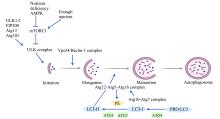
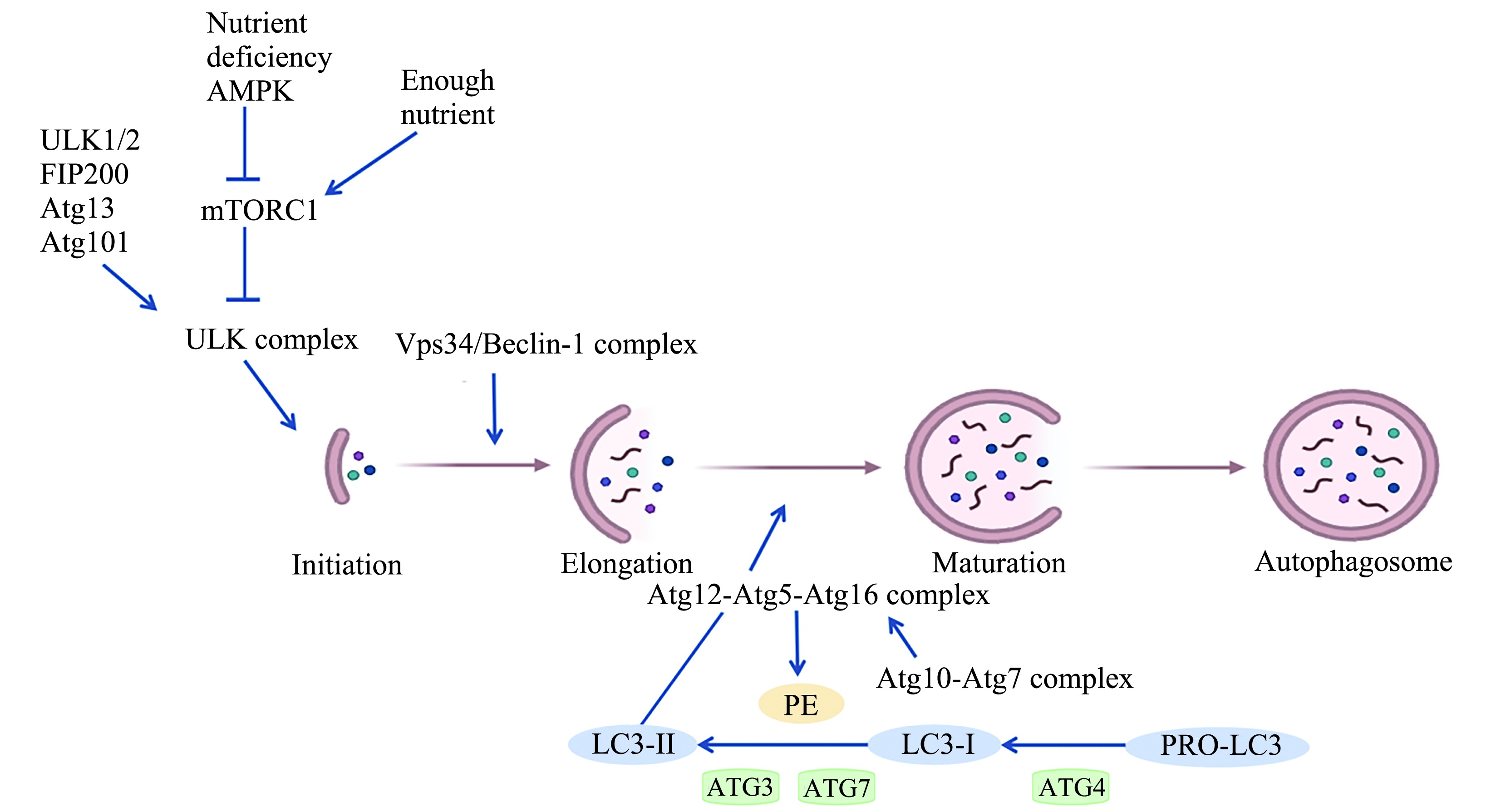
Fig.1
Schematic diagram of the autophagy mechanism"
Tab.1
Research progress of cosmetic ingredients in skin autophagy"
| 原料名称 | 作用机制 | 化妆品应用 |
|---|---|---|
| N-乙酰神经氨酸 | 通过自噬抑制酪氨酸酶活性,抑制黑色素生成[ | 美白、修护 |
| 紫檀芪 | 通过p53蛋白负调控mTOR,启动自噬以修复或清除受损DNA[ | 抗光老化、抗炎、美白 |
| 白藜芦醇 | 通过AMPK信号通路激活自噬作用,从而缓解UVA诱导的光老化[ | 抗氧化、抗糖化、抗光老化、抗炎、美白 |
| 姜黄素、四氢姜黄素 | 通过细胞自噬机制,起到抗感染、抗癌、抗衰老、抗氧化应激和神经保护等作用[ | 修护、抗糖化、抗氧化 |
| 烟酰胺 | 在pH 3.8环境下,烟酰胺显著上调自噬关键基因ATG5的表达,促进自噬体形成,而pH 5.8时效果减弱[ | 美白、抗衰 |
| 传明酸 | 通过激活自噬系统来抑制黑素的生成[ | 美白、抗炎褪红 |
| 熊果酸 | 通过激活自噬,增加黑色素细胞中的黑色素体降解来抑制皮肤色素沉着[ | 美白,修护,抗糖化 |
| [1] | Cao W, Li J, Yang K, et al. An overview of autophagy: Mechanism, regulation and research progress-ScienceDirect[J]. Bulletin du Cancer, 2021. DOI: 10.1016/j.bulcan.2020.11.004. |
| [2] | 马瑜, 严媚. 自噬与自身免疫性疾病[J]. 临床医学进展, 2024, 14(3):1-7. |
| [3] |
Nicol N H. Anatomy and physiology of the skin: erratum[J]. Journal of the Dermatology Nurses' Association, 2011, 3(1): 214-215.
doi: 10.1097/JDN.0b013e31822bdc94 |
| [4] | Yoon S, Lim C, Chung H J, et al. Autophagy activation by crepidiastrum denticulatum extract attenuates environmental pollutant-induced damage in dermal fibroblasts[J]. International Journal of Molecular Sciences, 2019, 20(3). |
| [5] | 顾赢楚, 顾叶, 吴泽睿, 等. 假体周围骨溶解中成骨细胞自噬的信号通路[J]. 中国组织工程研究, 2023, 27(34):5561-5569. |
| [6] |
Jeong D, Qomaladewi N P, Lee J, et al. The role of autophagy in skin fibroblasts, keratinocytes, melanocytes, and epidermal stem cells[J]. Journal of Investigative Dermatology, 2020, 140(9):1691-1697.
doi: S0022-202X(19)33570-5 pmid: 32800183 |
| [7] |
Russell R C, Yuan H X, Guan K L. Autophagy regulation by nutrient signaling[J]. Cell Research, 2014, 24(1):42-57.
doi: 10.1038/cr.2013.166 pmid: 24343578 |
| [8] | 黄昊颖. TFEB在PBDE-47致PC12细胞自噬体与溶酶体融合障碍中的作用[D]. 武汉: 华中科技大学, 2021. |
| [9] | Plaza-Zabala A, Sierra-Torre V, Sierra A. A two-step model of autophagy: autophagosome formation, degradation and net turnover[J]. Cold Spring Harbor Laboratory, 2020. DOI:10.1101/2020.09.29.318386. |
| [10] | Zhang J, Zhang C, Jiang X, et al. Author Correction: Involvement of autophagy in hypoxia-BNIP3 signaling to promote epidermal keratinocyte migration[J]. Cell Death & Disease, 2019, 10(4). |
| [11] | Anonymous. Ultraviolet B radiation down-regulates ULK1 and ATG7 expression and impairs the autophagy response in human keratinocytes[J]. Journal of Photochemistry & Photobiology B: Biology, 2018, 178:152-164. |
| [12] | Choi S, Youn J, Kim K, et al. Apigenin inhibits UVA-induced cytotoxicity invitro and prevents signs of skin aging invivo[J]. International Journal of Molecular Medicine, 2016. DOI:10.3892/ijmm.2016.2626. |
| [13] | 任发亮, 黄丹, 陈旭, 等. 角质形成细胞中的自噬现象[J]. 国际皮肤性病学杂志, 2012, 38(5): 329-332. |
| [14] | 吴艳萍, 王阳, 李雅丽, 等. 氧化应激与自噬[J]. 动物营养学报, 2016, 28(9):8. |
| [15] | Sukseree S. Autophagy-mediated cellular remodeling during terminal differentiation of keratinocytes in the epidermis and skin appendages[J]. Cells, 2024, 13. |
| [16] | Lee H M, Shin D M, Yuk J M, et al. Autophagy negatively regulates keratinocyte inflammatory responses via scaffolding protein p62/SQSTM1[J]. Journal of Immunology, 2011, 186(2):1248-1258. |
| [17] | Bento-Lopes L, Luís C, Charneca J, et al. Melanin’s journey from melanocytes to keratinocytes: Uncovering the molecular mechanisms of melanin transfer and processing[J]. International Journal of Molecular Sciences, 2023, 24(14). |
| [18] |
Murase D, Kusaka-Kikushima A, Hachiya A, et al. Autophagy declines with premature skin aging resulting in dynamic alterations in skin pigmentation and epidermal differentiation[J]. International Journal of Molecular Sciences, 2020, 21(16): 5708.
doi: 10.3390/ijms21165708 |
| [19] |
Lee K W, Kim M, Lee S H, et al. The function of autophagy as a regulator of melanin homeostasis[J]. Cells, 2022, 11(13): 2085.
doi: 10.3390/cells11132085 |
| [20] |
Eyal K, Minoo R, Tooze S A, et al. Ulk1 regulates melanin levels in MNT-1 cells independently of mTORC1[J]. PLoS One, 2013, 8(9): e75313.
doi: 10.1371/journal.pone.0075313 |
| [21] |
Ganesan A K, Ho H, Bodemann B, et al. Genome-wide sirna-based functional genomics of pigmentation identifies novel genes and pathways that impact melanogenesis in human cells[J]. PLoS Genetics, 2008, 4(12): e1000298.
doi: 10.1371/journal.pgen.1000298 |
| [22] | Eckhart L, Tschachler E, Gruber F. Autophagic control of skin aging[J]. Frontiers in Cell and Developmental Biology, 2019, 7. |
| [23] | 曲莹莹, 方嘉琦, 欧阳梦婷, 等. circIGF2BP3调控光老化皮肤成纤维细胞自噬水平的研究[J]. 中华皮肤科杂志, 2022, 55(1):7. |
| [24] |
Lu Y T, Pan G J, Wei Z Y, et al. Role of fibroblast autophagy and proliferation in skin anti-aging[J]. Experimental Gerontology, 2024, 196: 112559.
doi: 10.1016/j.exger.2024.112559 |
| [25] | Hei K, Seo-Yeon P, Seok M, et al. Autophagy in human skin fibroblasts: impact of age[J]. International Journal of Molecular Ences, 2018, 19(8):2254. |
| [26] | 张利, 刘建璟, 孙林春. 晚期糖基化终末产物通过Wnt/β-catenin信号通路调控足细胞自噬和迁移[J]. 临床肾脏病杂志, 2018, 18(12): 6. |
| [27] | Ren H, Zhao F, Zhang Q, et al. Autophagy and skin wound healing[J]. Burns & Trauma, 2022, 10: tkac003. |
| [28] |
Singh R, Kaushik S, Wang Y, et al. Autophagy regulates lipid metabolism[J]. Nature, 2009, 458(7242): 1131-1135.
doi: 10.1038/nature07976 |
| [29] | Rossiter H, Copic D, Direder M, et al. Autophagy protects murine preputial glands against premature aging, and controls their sebum phospholipid and pheromone profile[J]. Autophagy, 2021:1-15. |
| [30] | 中国医师协会皮肤科医师分会. 氨基酮戊酸光动力疗法治疗寻常痤疮的临床应用专家共识(2022)[J]. 中华皮肤科杂志, 2022, 55(12): 1050-1057. |
| [31] | 熊瑛. 雄激素介导的自噬抑制对痤疮皮脂分泌影响的研究[D]. 广州: 南方医科大学, 2022. |
| [32] | 王阳, 郝长来. 自噬检测的研究进展[J]. 国际输血及血液学杂志, 2019, 42(3): 268-272. |
| [33] |
Kawsar M A, Adikari D, Zhang Y. Autophagy in aquatic animals: Mechanisms, implications, and future directions[J]. Frontiers in Immunology, 2025, 16:1612178.
doi: 10.3389/fimmu.2025.1612178 |
| [34] | Mizushima N, Murphy L O. Autophagy assays for biological discovery and therapeutic development[J]. Trends in Biochemical Sciences, 2020, 45(12). |
| [35] | Klionsky D J, Dobrovinskaya O, Maycotte P, et al. Guidelines for the use and interpretation of assays for monitoring autophagy 4th edition[J]. Autophagy, 2021. DOI:10.1080/15548627.2020.1797280. |
| [36] |
Yoshikawa K, Maeda K. N-Acetylneuraminic acid inhibits melanogenesis via induction of autophagy[J]. Cosmetics, 2024, 11(3): 82.
doi: 10.3390/cosmetics11030082 |
| [37] | Chen R J, Lee Y H, Yeh Y L, et al. Autophagy-inducing effect of pterostilbene: Aprospective therapeutic/preventive option for skin diseases[J]. Journal of Food & Drug Analysis, 2017, 25(1):125-133. |
| [38] |
Xia Y M, Zhang H, Wu X Y, et al. Resveratrol activates autophagy and protects from UVA - induced photoaging in human skin fibroblasts and the skin of male mice by regulating the AMPK pathway[J]. Biogerontology, 2024, 25: 649-664.
doi: 10.1007/s10522-024-10099-6 |
| [39] | 屠卓隆, 林才. 姜黄素对糖尿病创面的促愈合作用及其机制研究进展[J]. 中华烧伤杂志, 2021, 37(4): 4. |
| [40] | Oblong J E, DeAngelis Y M, Jarrold B B, et al. Optimized low pH formulation of niacinamide enhances induction of autophagy marker ATG5 gene expression and protein levels in human epidermal keratinocytes[J]. Journal of the European Academy of Dermatology and Venereology, 2020, 34 (S3): 3-11. |
| [41] | Cho Y H, Park J E, Lim D S, et al. Tranexamic acid inhibits melanogenesis by activating the autophagy system in cultured melanoma cells[J]. Journal of Dermatological Science, 2017. DOI: 10.1016/j.jdermsci.2017.05.019. |
| [42] | Park H J, Jo D S, Choi D S, et al. Ursolic acid inhibits pigmentation by increasing melanosomal autophagy in B16F1 cells[J]. Biochemical and Biophysical Research Communications, 2020, 531(2). |
| [1] | Yali Shen, Peilin Liu, Linli Liu, Limin Fan, Huanying Li. Effects of black bean peptide on UVB-induced activity and collagen secretion of human skin fibroblasts [J]. China Surfactant Detergent & Cosmetics, 2025, 55(9): 1179-1186. |
| [2] | Fan Wu, Jiaqi Zhang, Yi Qin, Jun Wang, Zonghan Wu, Yao Pan. Progress of cosmetic active ingredients exerting skincare efficacy through cellular autophagy [J]. China Surfactant Detergent & Cosmetics, 2025, 55(6): 803-810. |
| [3] | Hang Tie, Qi Li, Cuicui Zhu, Minjia Yuan, Liang Xu. Phosphatidylcholine-encapsulated resveratrol augments skin’s antioxidant and anti-wrinkle capabilities [J]. China Surfactant Detergent & Cosmetics, 2025, 55(6): 756-766. |
| [4] | Fan Zhang, Dongqin He, Qianjin Bian, Fan Wu, Yi Qin, Yao Pan. Study on the anti-melanogenesis effect of vitamin C based on cellular autophagy [J]. China Surfactant Detergent & Cosmetics, 2025, 55(1): 83-88. |
| [5] | Jian Wang, Yuhui Fan, Danfeng Li, Ningwen Cheng, Ling Li, Yufeng Yu. Skin care efficacy study of recombinant humanized collagen based on in vitro level [J]. China Surfactant Detergent & Cosmetics, 2024, 54(9): 1030-1038. |
| [6] | Xuelan Gu, Hong Zhang, Xue Xiao, Zhuang Zhou, Jue Qu, Yibing Shi. Skin brightening benefit of 4-hexylresorcinol in vivo and in vitro and its underlying mechanism [J]. China Surfactant Detergent & Cosmetics, 2024, 54(12): 1437-1446. |
| [7] | Shen Yixin, Tang Lirong, Zhang Hui. Percutaneous permeation characteristics of tea polyphenols and its protective effect on human skin fibroblasts under the oxidative damage of ultraviolet A [J]. China Surfactant Detergent & Cosmetics, 2023, 53(9): 1035-1043. |
| [8] | Zhou Lidan, Lu Yina, Yang Jifeng, Shi Xuemei, Xiong Yue, Zhang Lei. The protection mechanism of multi-herb extract CAP against exogenous cutaneous stimulation [J]. China Surfactant Detergent & Cosmetics, 2023, 53(7): 757-764. |
| [9] | Dai Liyun, Wei Yujie, Lu Zhen, Wang Yuling, Yan Huan, Wu Yue. Fermented brown rice filtrate: a substance with anti-aging potential [J]. China Surfactant Detergent & Cosmetics, 2023, 53(3): 292-299. |
| [10] | Yin Qingfei,Chen Tian. Dynamic changes of gene expression induced by long-wave ultraviolet radiation in human dermal fibroblasts [J]. China Surfactant Detergent & Cosmetics, 2021, 51(9): 874-880. |
| [11] | LI Rui,ZHANG Nan,YAO Lei,LI Yu-hong. Study on the hair growth promotion effect of lavender essential oil and Asian mint essential oil [J]. China Surfactant Detergent & Cosmetics, 2020, 50(8): 536-541. |
| [12] | SONG Xiao-jie, SHI Xiao-ting, WU Yue. Protective effect of “space ginseng yeast” on human primary fibroblasts under microgravity condition [J]. China Surfactant Detergent & Cosmetics, 2017, 47(12): 698-702. |
| [13] | LIU Ting-qiang,YAN Ze-min,HOU Dong-mei,ZHOU Hua-feng,DUAN Ming-xing. Effect of low molecular weight peptides extract from Earthworm on cell viability and synthesis of collagen in cultured human skin cells [J]. China Surfactant Detergent & Cosmetics, 2016, 46(3): 168-172. |
|
