欢迎访问《日用化学工业(中英文)》,今天是

日用化学工业(中英文) ›› 2026, Vol. 56 ›› Issue (9): 1158-1168.doi: 10.3969/j.issn.2097-2806.2026.09.004
郭布民1,3,申金伟1,3,赵健1,3,陈玲1,3,徐延涛1,3,王洋2,*( )
收稿日期:2026-01-10
修回日期:2026-08-13
出版日期:2026-09-22
发布日期:2026-09-30
基金资助:
Bumin Guo1,3,Jinwei Shen1,3,Jian Zhao1,3,Ling Chen1,3,Yantao Xu1,3,Yang Wang2,*()
Received:2026-01-10
Revised:2026-08-13
Online:2026-09-22
Published:2026-09-30
Contact:
*E-mail: 摘要:
非常规油气开采需借助高性能压裂液,以实现储层增产优化与储层伤害最小化的双重目标。本文采用宏观实验与分子动力学模拟相结合的方法,选取长链烷基季铵盐基黏弹性表面活性剂压裂液,系统研究了其在砂岩、页岩、煤岩三种典型储层岩石表面的界面吸附行为,并通过岩心吸附与地层伤害实验分析了吸附量变化及地层伤害特性。结果表明,压裂液在岩石表面的吸附主要受温度主导,压力影响较小;模拟中径向分布函数及均方位移等分析与宏观吸附实验结论一致,证实页岩表面因具有丰富极性位点,压裂液在其表面的吸附强度与吸附量均最大,砂岩则最小;地层伤害率与渗透率呈负相关,相同条件下页岩伤害率最高,达到16.2%,砂岩最低,为6.5%,且基于此建立的伤害率与吸附能、润湿性及渗透率经验公式拟合优度R2≥0.99。本研究为阳离子表面活性剂基压裂液在不同储层中的应用提供了理论基础,对于从微观层面揭示压裂液对地层的伤害机理给予了一定的帮助。
中图分类号:
郭布民, 申金伟, 赵健, 陈玲, 徐延涛, 王洋. 长链烷基季铵盐压裂液在不同岩石界面的伤害机理研究:分子动力学模拟与实验验证[J]. 日用化学工业(中英文), 2026, 56(9): 1158-1168.
Bumin Guo, Jinwei Shen, Jian Zhao, Ling Chen, Yantao Xu, Yang Wang. Reservoir damage mechanism of the fracturing fluid based on a long-chain alkyl quaternary ammonium salt at different rock interfaces: Molecular dynamics simulation and experimental verification[J]. China Surfactant Detergent & Cosmetics, 2026, 56(9): 1158-1168.
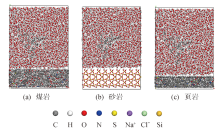
图1
长链烷基季铵盐在不同岩石表面的初始模型"

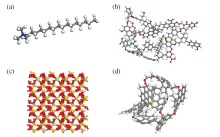
图2
不同岩层的基本分子。(a)长链烷基季铵盐,(b)煤岩,(c)砂岩,(d)页岩"
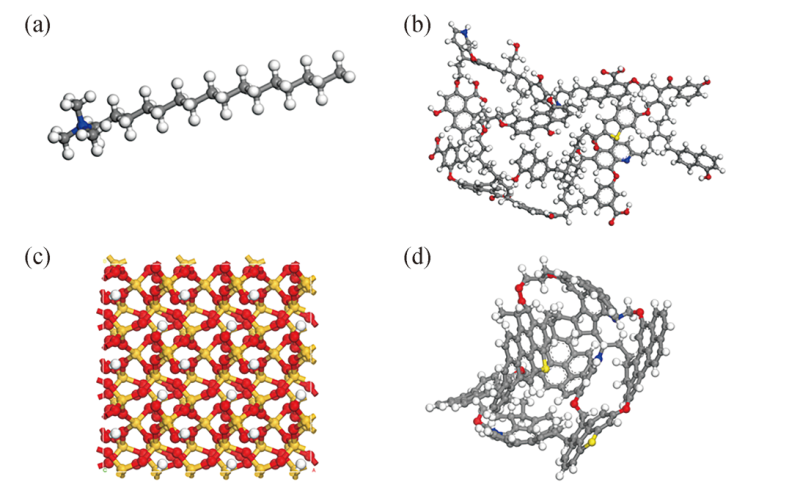
表1
长链烷基季铵盐黏弹性复配体系"
| 序号 | w (长链烷基季铵盐) /% | w (NaSal) /% | w (KCl) /% |
|---|---|---|---|
| 1 | 3.6 | 3 | 1.5 |
| 2 | 3 | 3 | - |
| 3 | 2 | 3 | 1.5 |
| 4 | 1.2 | 3 | 1.5 |
| 5 | 0.9 | 2 | - |
| 6 | 0.9 | 2.8 | 1.5 |
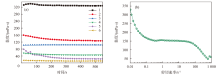
图3
(a)不同复配比例的长链烷基季铵盐/NaSal体系黏度曲线;(b)优选体系表观黏度随剪切速率变化曲线 图中序号1,2,3,4,5,6同表1中"
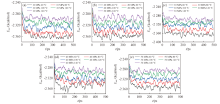
图4
不同温度和压力对长链烷基季铵盐吸附页岩相互作用能的影响"
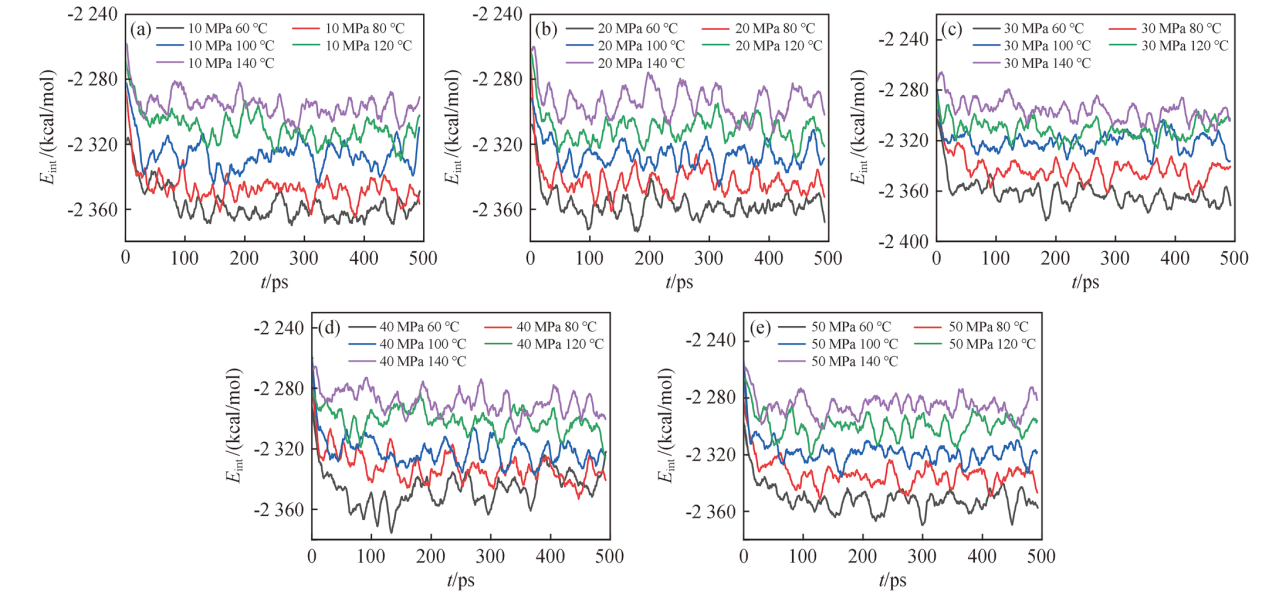
图5
不同温度和压力对长链烷基季铵盐吸附煤岩相互作用能的影响"
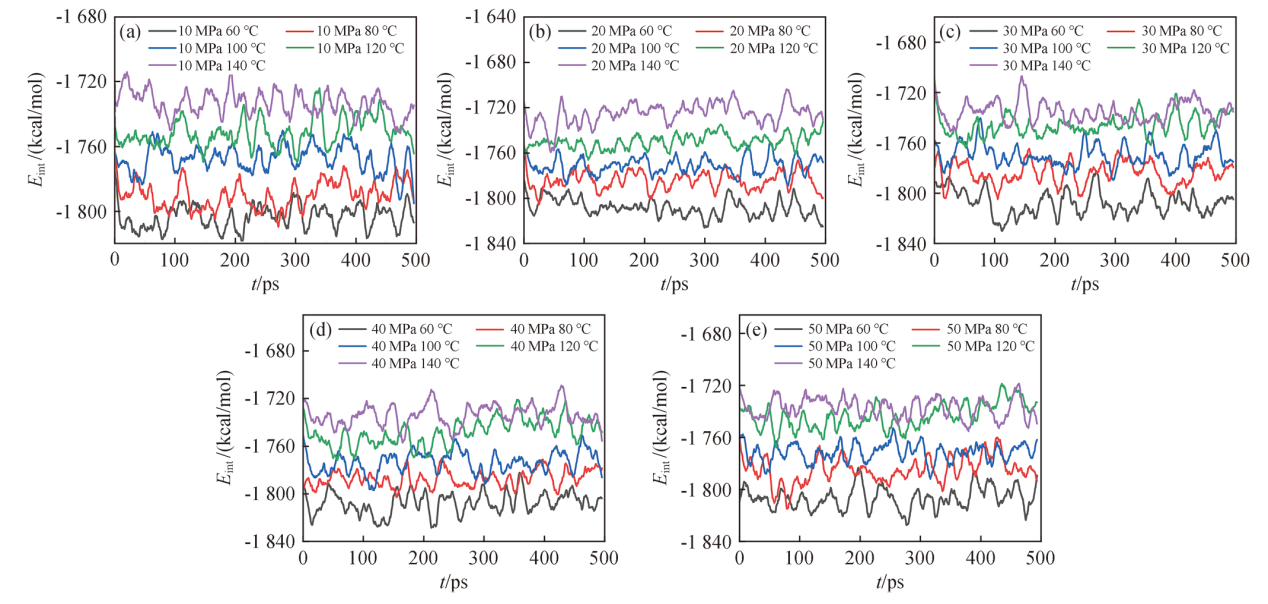
图6
不同温度和压力对长链烷基季铵盐吸附砂岩相互作用能的影响"
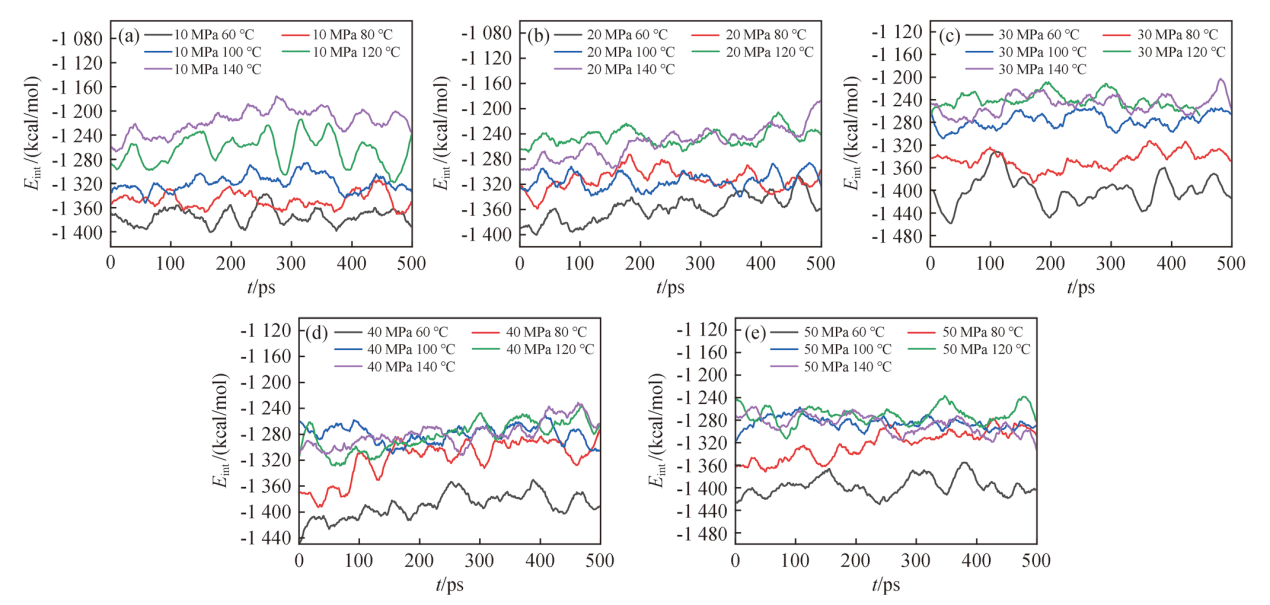

图7
长链烷基季铵盐分子在不同岩石表面的平均相互作用能对比。(a)页岩;(b)煤岩;(c)砂岩"

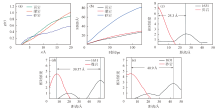
图8
不同岩石表面长链烷基季铵盐吸附的最大吸附强度条件的(a)RDF、(b)MSD和(c)~(e)相对浓度对比"
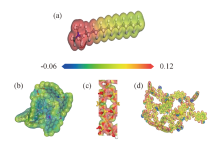
图9
(a)长链烷基季铵盐、(b)页岩、(c)砂岩和(d)煤岩的分子结构和静电势图"
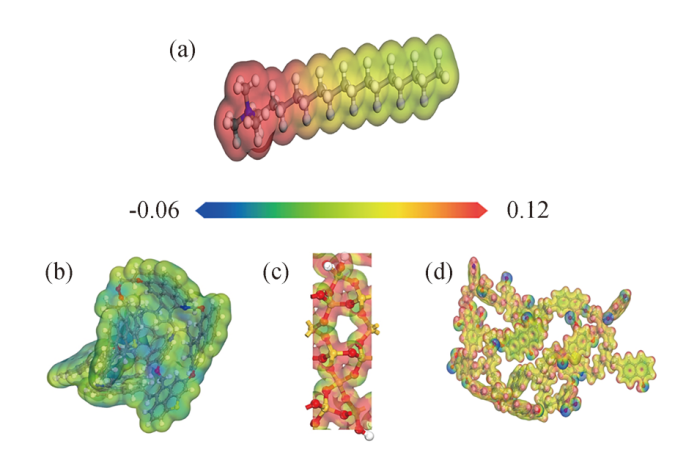
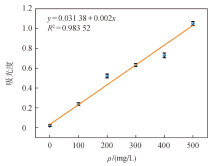
图10
长链烷基季铵盐压裂液标准溶液吸光度与质量浓度拟合曲线"
表2
长链烷基季铵盐压裂液在不同岩心上的吸附量"
| 岩心类型 | 吸光度 | 平衡吸附浓度ρ1 | 吸附量Q | 平均吸附量Q1 |
|---|---|---|---|---|
| 页岩 | 0.374 72 | 178.4 | 8.04 | 8.11 |
| 0.370 21 | 176.2 | 8.10 | ||
| 0.363 24 | 172.8 | 8.18 | ||
| 煤岩 | 0.573 98 | 275.6 | 5.61 | 5.45 |
| 0.581 77 | 279.4 | 5.50 | ||
| 0.605 96 | 291.2 | 5.22 | ||
| 砂岩 | 0.799 48 | 385.6 | 2.86 | 2.75 |
| 0.804 81 | 388.2 | 2.80 | ||
| 0.822 03 | 396.6 | 2.58 |
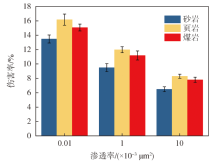
图11
长链烷基季铵盐压裂液在不同岩石不同渗透率的地层伤害对比"
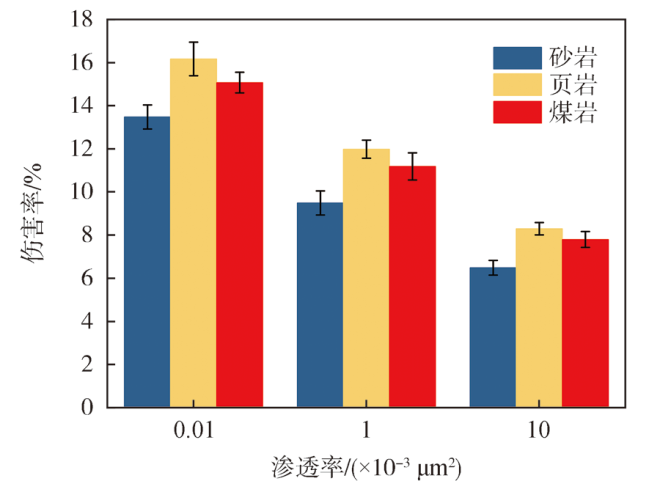
表3
伤害率公式各参数及决定系数"
| 岩心类型 | γ | n | p | m | R2 |
|---|---|---|---|---|---|
| 砂岩 | 15.2 | 0.1 | 0.1 | 0.05 | 0.992 |
| 页岩 | 17.5 | 0.2 | 0.15 | 0.05 | 0.99 |
| 煤岩 | 16.3 | 0.2 | 0.2 | 0.06 | 0.991 |
| [1] |
Tong X, Zhang G, Wang Z, et al. Distribution and potential of global oil and gas resources[J]. Petroleum Exploration and Development, 2018, 45 (4) : 779-789.
doi: 10.1016/S1876-3804(18)30081-8 |
| [2] |
Sun Y, Wang X, Meng Y, et al. Fracture propagation mechanism and application of supercritical CO2 fracturing in shale: A review[J]. Petroleum Science, 2025, 22 (4) : 1625-1652.
doi: 10.1016/j.petsci.2025.01.009 |
| [3] |
Pan Y, Zheng L, Liu Y, et al. A review of the current status of research on convection-heated in situ extraction of unconventional oil and gas resources (oil shale)[J]. Journal of Analytical and Applied Pyrolysis, 2023, 175: 106200.
doi: 10.1016/j.jaap.2023.106200 |
| [4] |
He Y, Jiang G, Dong T, et al. Research progress and development tendency of polymer drilling fluid technology for unconventional gas drilling[J]. Frontiers in Energy Research, 2023, 10: 1058412.
doi: 10.3389/fenrg.2022.1058412 |
| [5] |
Abdulhadi D, Ali J A, Hama S M. Advanced techniques for improving the production of natural resources from unconventional reservoirs: A state-of-the-art review[J]. Energy & Fuels, 2025, 39 (23) : 10853-10876.
doi: 10.1021/acs.energyfuels.5c01259 |
| [6] |
Alfarge D, Aljarah A M, Alali N. Insights from field applications of miscible gases based EOR for unconventional oil reservoirs: A review[J]. Unconventional Resources, 2025, 5: 100132.
doi: 10.1016/j.uncres.2024.100132 |
| [7] |
Jiao F. Re-recognition of “unconventional” in unconventional oil and gas[J]. Petroleum Exploration and Development, 2019, 46 (5) : 847-855.
doi: 10.1016/S1876-3804(19)60244-2 |
| [8] |
Mcfarland E. Unconventional chemistry for unconventional natural gas[J]. Science, 2012, 338 (6105) : 340-342.
doi: 10.1126/science.1226840 |
| [9] | Peng G, Zhao L, Guo X, et al. Hydraulic fracturing optimization method for fractured reservoir based on phase-field modeling[J]. Physics of Fluids, 2025, 37 (3) : 032128. |
| [10] |
Liu J, Liu P, Du J, et al. Review on high-temperature-resistant viscoelastic surfactant fracturing fluids: State-of-the-art and perspectives[J]. Energy & Fuels, 2023, 37 (14) : 9790-9821.
doi: 10.1021/acs.energyfuels.3c00488 |
| [11] |
Chowdhury S, Shrivastava S, Kakati A, et al. Comprehensive review on the role of surfactants in the chemical enhanced oil recovery process[J]. Industrial & Engineering Chemistry Research, 2022, 61 (1) : 21-64.
doi: 10.1021/acs.iecr.1c03301 |
| [12] |
Liu J, Peng B, Gao Y, et al. Recent advances in nanoparticle-enhanced clean VES fracturing fluids: A comprehensive review of performance improvement, synergy, and challenges[J]. Chemical Engineering Science, 2026, 319: 122240.
doi: 10.1016/j.ces.2025.122240 |
| [13] |
Yang Y, Zhang H, Wang H, et al. Pseudo-interpenetrating network viscoelastic surfactant fracturing fluid formed by surface-modified cellulose nanofibril and wormlike micelles[J]. Journal of Petroleum Science and Engineering, 2022, 208: 109608.
doi: 10.1016/j.petrol.2021.109608 |
| [14] |
He D, Zhu X, Fu Y, et al. Effects of sodium oleate surface properties on the characteristics of two-phase foam in froth flotation[J]. Colloids and Surfaces A: Physicochemical and Engineering Aspects, 2024, 694: 134119.
doi: 10.1016/j.colsurfa.2024.134119 |
| [15] |
Wang Q, Gu X, Li W, et al. Preparation of sodium oleate-derived multifunctional surfactants by hydroxymethylation[J]. Russian Journal of Physical Chemistry B, 2023, 17 (2) : 283-292.
doi: 10.1134/S1990793123020136 |
| [16] |
Tsendra O, Scott A M, Gorb L, et al. Adsorption of nitrogen-containing compounds on the (100) α-quartz surface: ab initio cluster approach[J]. The Journal of Physical Chemistry C, 2014, 118 (6) : 3023-3034.
doi: 10.1021/jp406827h |
| [17] |
Liu J, Yang Y, Sun S, et al. Flow behaviors of shale oil in kerogen slit by molecular dynamics simulation[J]. Chemical Engineering Journal, 2022, 434: 134682.
doi: 10.1016/j.cej.2022.134682 |
| [18] |
Chen X, Gao J, Deng C, et al. Characterization of the wetting properties of ionic liquids on lignite surfaces: Molecular dynamics simulations[J]. Journal of Molecular Liquids, 2023, 389: 122886.
doi: 10.1016/j.molliq.2023.122886 |
| [19] | Zhang C, Cao L, Jiang Y, et al. Molecular dynamics simulations on the adsorbed monolayers of n-dodecyl betaine at the air-water interface[J]. Molecules, 2023, 28 (14) : 5580. |
| [20] |
Okunade O A, Yekeen N, Padmanabhan E, et al. Shale core wettability alteration, foam and emulsion stabilization by surfactant: Impact of surfactant concentration, rock surface roughness and nanoparticles[J]. Journal of Petroleum Science and Engineering, 2021, 207: 109139.
doi: 10.1016/j.petrol.2021.109139 |
| [21] |
Du A, Mao J, Wang D, et al. Wettability alteration at a water-wet quartz surface by a novel trimeric surfactant: Experimental and theoretical study[J]. Journal of Molecular Liquids, 2022, 354: 118771.
doi: 10.1016/j.molliq.2022.118771 |
| [22] |
Shi K, Chen J, Pang X, et al. Effect of wettability of shale on CO2 sequestration with enhanced gas recovery in shale reservoir: Implications from molecular dynamics simulation[J]. Journal of Natural Gas Science and Engineering, 2022, 107: 104798.
doi: 10.1016/j.jngse.2022.104798 |
| [23] |
Zhong J, Wang P, Zhang Y, et al. Adsorption mechanism of oil components on water-wet mineral surface: A molecular dynamics simulation study[J]. Energy, 2013, 59: 295-300.
doi: 10.1016/j.energy.2013.07.016 |
| [24] |
Liu B, Shi J, Wang M, et al. Reduction in interfacial tension of water-oil interface by supercritical CO2 in enhanced oil recovery processes studied with molecular dynamics simulation[J]. The Journal of Supercritical Fluids, 2016, 111: 171-178.
doi: 10.1016/j.supflu.2015.11.001 |
| [25] |
Yuan M, Nie W, Zhou W, et al. Determining the effect of the non-ionic surfactant AEO9 on lignite adsorption and wetting via molecular dynamics (MD) simulation and experiment comparisons[J]. Fuel, 2020, 278: 118339.
doi: 10.1016/j.fuel.2020.118339 |
| [26] |
Zhang Q, Zhou G, Hu Y, et al. Microwetting dynamic behavior and mechanism for coal dust based on low field NMR method-A case study[J]. Fuel, 2021, 297: 120702.
doi: 10.1016/j.fuel.2021.120702 |
| [27] |
Xing M, Xu C, Zhou G, et al. Experimental investigation for effect of multicomponent inorganic-organic acid solution on pore structure of lignite[J]. Powder Technology, 2021, 392: 503-513.
doi: 10.1016/j.powtec.2021.07.014 |
| [28] |
Yang Y, Liu J, Yao J, et al. Adsorption behaviors of shale oil in kerogen slit by molecular simulation[J]. Chemical Engineering Journal, 2020, 387: 124054.
doi: 10.1016/j.cej.2020.124054 |
| [29] |
Goharshadi E K. A review on the radial distribution function: Insights into molecular structure, intermolecular interactions, and thermodynamic properties[J]. Journal of Molecular Liquids, 2025, 433: 127900.
doi: 10.1016/j.molliq.2025.127900 |
| [30] |
Wang L, Zhang Y, Zou R, et al. Applications of molecular dynamics simulation in studying shale oil reservoirs at the nanoscale: Advances, challenges and perspectives[J]. Petroleum Science, 2025, 22 (1) : 234-254.
doi: 10.1016/j.petsci.2024.09.023 |
| [31] |
Yang M, Zhang J, Zhang L, et al. Physicochemical effect on coal pores of hydrocarbon chain length and mixing of viscoelastic surfactants in clean fracturing fluids[J]. ACS Omega, 2024, 9 (17) : 19418-19427.
doi: 10.1021/acsomega.4c00692 pmid: 38708200 |
| [32] |
Zarei A R, Bagheri S H, Abedin S. Selective cloud point extraction for the spectrophotometric determination of cetylpyridinium chloride in pharmaceutical formulations[J]. Iran. J. Pharm. Res., 2013, 12 (4) : 671-677.
pmid: 24523746 |
| [33] |
Almanassra I W, Kochkodan V, Mckay G, et al. Kinetic and thermodynamic investigations of surfactants adsorption from water by carbide-derived carbon[J]. Journal of Environmental Science and Health, Part A, 2021, 56 (11) : 1206-1220.
doi: 10.1080/10934529.2021.1973822 |
| [34] |
Li X, Zhang X, Wang L, et al. Self-assembled viscoelastic surfactant micelles with ph-responsive behavior: a new fracturing-displacement integrated working fluid for unconventional reservoirs[J]. ACS Omega, 2024, 9 (21) : 22691-22702.
doi: 10.1021/acsomega.4c00459 pmid: 38826515 |
| [35] |
Ma K, Cui L, Dong Y, et al. Adsorption of cationic and anionic surfactants on natural and synthetic carbonate materials[J]. Journal of Colloid and Interface Science, 2013, 408: 164-172.
doi: 10.1016/j.jcis.2013.07.006 pmid: 23957928 |
| [1] | 王帅, 马中国, 李俊杰, 王争凡, 高辽辽, 秦芳玲. 低浓度胍胶用协同型有机硼交联剂的制备及性能评价[J]. 日用化学工业(中英文), 2026, 56(9): 1188-1197. |
| [2] | 郭瑞睿, 刘海峰. 适合深层煤层气井的新型超分子清洁压裂液研究[J]. 日用化学工业(中英文), 2026, 56(6): 739-746. |
| [3] | 郭婉黄, 叶志晟, 亓超灵, 周康夫, 王飞飞, 尚亚卓. 苦参碱-脂肪酸型低共熔溶剂的微观形成机制研究[J]. 日用化学工业(中英文), 2026, 56(2): 149-157. |
| [4] | 唐海涌, 霍月青, 李恩泽, 曹圣悌, 高春新, 冀创新, 刘晓臣. 醇醚硫酸盐 (AEnS) 泡排剂的应用与机理探究[J]. 日用化学工业(中英文), 2026, 56(1): 28-40. |
| [5] | 程海兵, 张勇, 孙磊, 李唯佳, 陈志, 唐聪明, 常丽. W-SN交联剂的合成及其交联性能研究[J]. 日用化学工业(中英文), 2025, 55(3): 279-285. |
| [6] | 赵健, 郭布民, 申金伟, 王黎, 许田鹏, 鲍文辉. 耐高温海水基植物胶压裂液交联动力学及其交联机理研究[J]. 日用化学工业(中英文), 2025, 55(12): 1560-1566. |
| [7] | 斤朕, 张春生. 耐温缓交联有机锆冻胶压裂液的制备与性能评价[J]. 日用化学工业(中英文), 2023, 53(3): 279-284. |
| [8] | 张永康, 刘萌萌, 万智卫, 王耀聪, 田咪咪, 秋列维. 联结基团对甜菜碱型双子表面活性剂清洁压裂液性能的影响[J]. 日用化学工业(中英文), 2023, 53(12): 1398-1404. |
| [9] | 钟举, Bauyrzhan Sarsenbekuly, 殷夏, 康万利. 耐高温羧甲基胍胶压裂液性能及应用[J]. 日用化学工业(中英文), 2023, 53(10): 1125-1131. |
| [10] | 郭雨飞,张剑,于文. 洗涤用蛋白酶PB92的分子动力学模拟[J]. 日用化学工业, 2021, 51(4): 299-305. |
| [11] | 崔秀,方波,许海涛. 新型清洁压裂液25-HP-21/NaSal胶束体系流变性研究[J]. 日用化学工业, 2020, 50(10): 653-659. |
| [12] | 康万利,李欣欣,赵一潞,王鹏祥,侯小雨,杨红斌. 芥酸酰胺丙基叔胺和苯甲酸压裂液体系构筑[J]. 日用化学工业, 2019, 49(9): 555-560. |
| [13] | 李居龙,丁凤美,周翔,邢志奇,赵涛. 不同乙氧基链长香兰素基非离子表面活性剂的起泡性[J]. 日用化学工业, 2019, 49(7): 419-425. |
| [14] | 陈雨嘉, 刘嘉希, 朱倩倩, 胡松青, 孙霜青, 王秀民. 水杨酸钠对DTAB/PAM复合体系自组装行为的影响[J]. 日用化学工业, 2018, 48(6): 308-313. |
| [15] | 李侠清, 张弛, 张贵才, 葛际江, 王宗圣. 黏弹性表面活性剂在油田中的应用[J]. 日用化学工业, 2014, 44(9): 521-524. |
|
