Welcome to China Surfactant Detergent & Cosmetics, Today is


China Surfactant Detergent & Cosmetics ›› 2026, Vol. 56 ›› Issue (8): 1111-1117.doi: 10.3969/j.issn.2097-2806.2026.08.015
• Analytical methods and testing • Previous Articles Next Articles
Yuhan Song*( ),Yuchong Xu,Yang Yang,Xueqing Zhang,Zhen Liu,Jingjing Feng
Received:2025-10-11
Revised:2026-07-31
Online:2026-08-22
Published:2026-09-02
Contact:
*E-mail: CLC Number:
Yuhan Song, Yuchong Xu, Yang Yang, Xueqing Zhang, Zhen Liu, Jingjing Feng. Dtermination of ZnO nanoparticles in water-in-oil sunscreen by SP-ICP-MS based on extraction with a surfactant-polymer mixture[J].China Surfactant Detergent & Cosmetics, 2026, 56(8): 1111-1117.
Tab.1
Particle number and particle size of four dispersants"
| 分散剂 | 颗粒数 量/ (颗粒数/L) | 平均颗粒数量/ (颗粒数/L) | 粒径/ nm | 平均粒径/ nm | 加标回 收率/% |
|---|---|---|---|---|---|
| Triton X-100-1 | 1.50×10⁶ | 4.15×10⁶ | 55 | 60 | 103.28±2.6 |
| Triton X-100-2 | 4.40×10⁵ | 55 | |||
| Triton X-100-3 | 1.80×10⁶ | 74 | |||
| Triton X-100-4 | 1.90×10⁷ | 44 | |||
| Triton X-100-5 | 8.80×10⁵ | 84 | |||
| Triton X-100-6 | 1.30×10⁶ | 49 | |||
| SDS-1 | 4.70×10⁶ | 5.82×10⁶ | 44 | 50 | 102.5±3.0 |
| SDS-2 | 5.40×10⁶ | 56 | |||
| SDS-3 | 3.80×10⁶ | 52 | |||
| SDS-4 | 5.40×10⁶ | 47 | |||
| SDS-5 | 9.70×10⁶ | 56 | |||
| SDS-6 | 5.90×10⁶ | 47 | |||
| PEG-PPG-25/30-1 | 7.30×10⁷ | 7.53×10⁷ | 55 | 51 | 108.30±4.1 |
| PEG-PPG-25/30-2 | 7.40×10⁷ | 50 | |||
| PEG-PPG-25/30-3 | 8.20×10⁷ | 52 | |||
| PEG-PPG-25/30-4 | 7.60×10⁷ | 50 | |||
| PEG-PPG-25/30-5 | 7.70×10⁷ | 49 | |||
| PEG-PPG-25/30-6 | 7.00×10⁷ | 48 | |||
| SDS+PEG-PPG- 25/30-1 | 1.70×10⁹ | 1.77×10⁹ | 36 | 35 | 109.7±3.5 |
| SDS+PEG-PPG- 25/30-2 | 1.70×10⁹ | 37 | |||
| SDS+PEG-PPG- 25/30-3 | 1.70×10⁹ | 35 | |||
| SDS+PEG-PPG- 25/30-4 | 1.90×10⁹ | 34 | |||
| SDS+PEG-PPG- 25/30-5 | 1.70×10⁹ | 36 | |||
| SDS+PEG-PPG- 25/30-6 | 1.90×10⁹ | 33 |
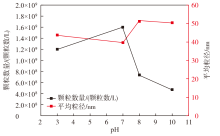
Fig.1
Influence of pH on extraction effect"
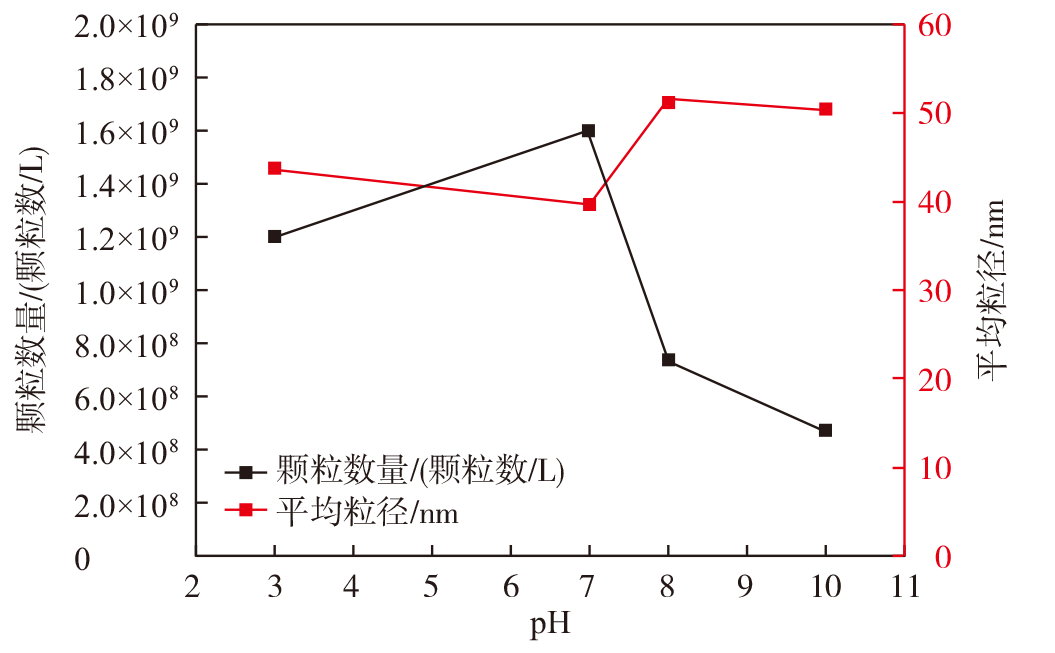
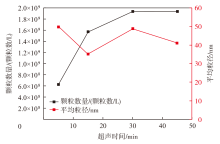
Fig.2
Influence of ultrasonic time on extraction effect"
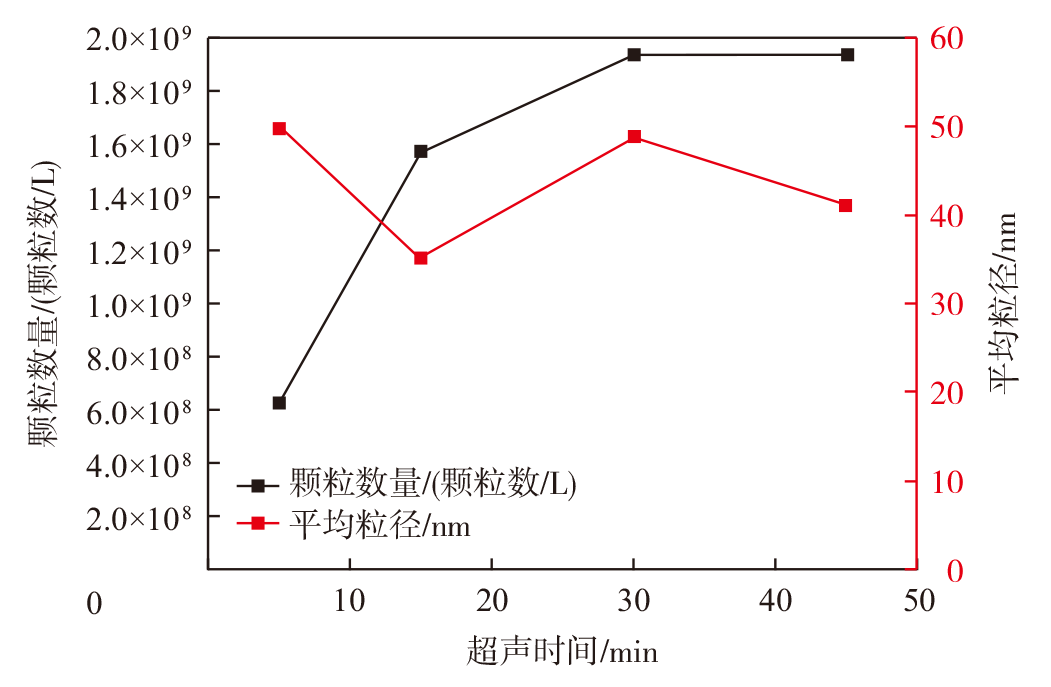
Fig.3
Influence of dilution on extraction effect"
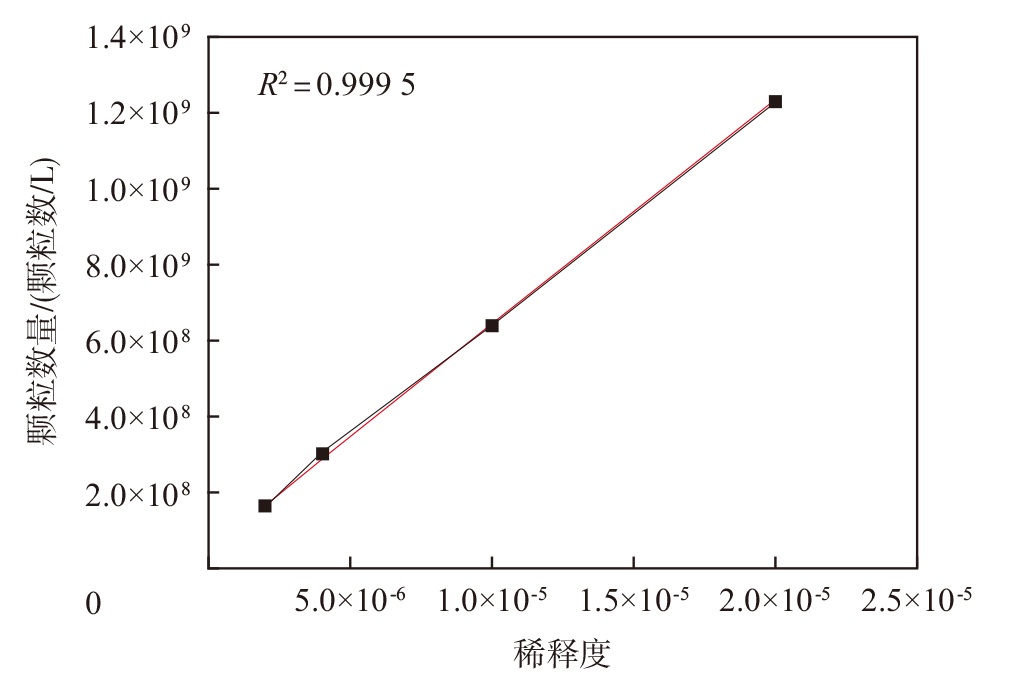
Fig.4
Signal scan diagram of ZnONPs at a dilution of 2×10⁻⁴"
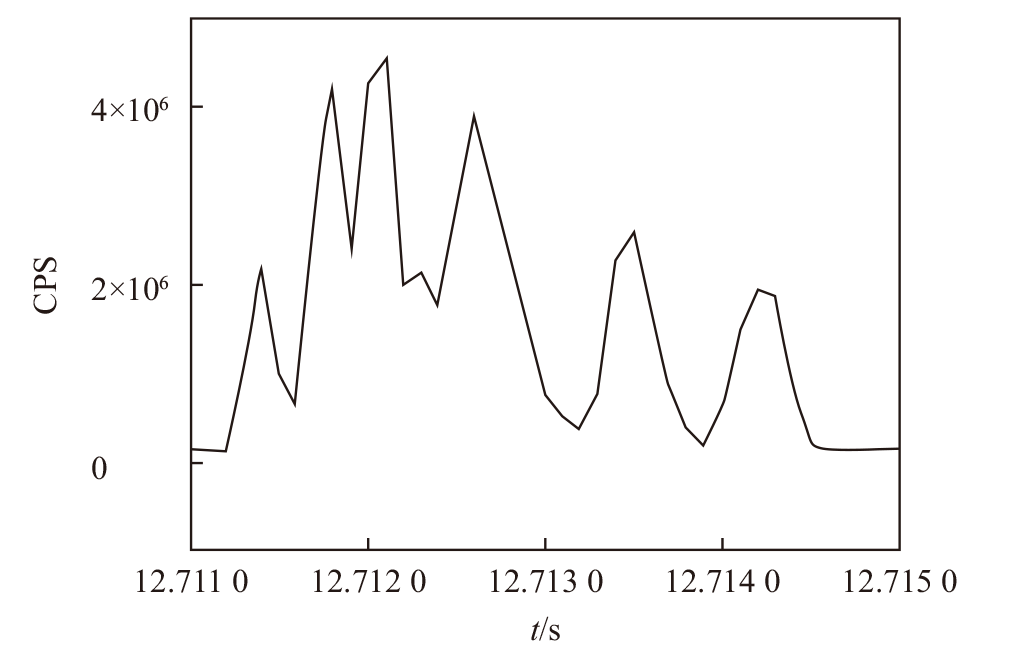
Fig.5
Signal scan diagram of ZnONPs at a dilution of 4×10⁻⁵"
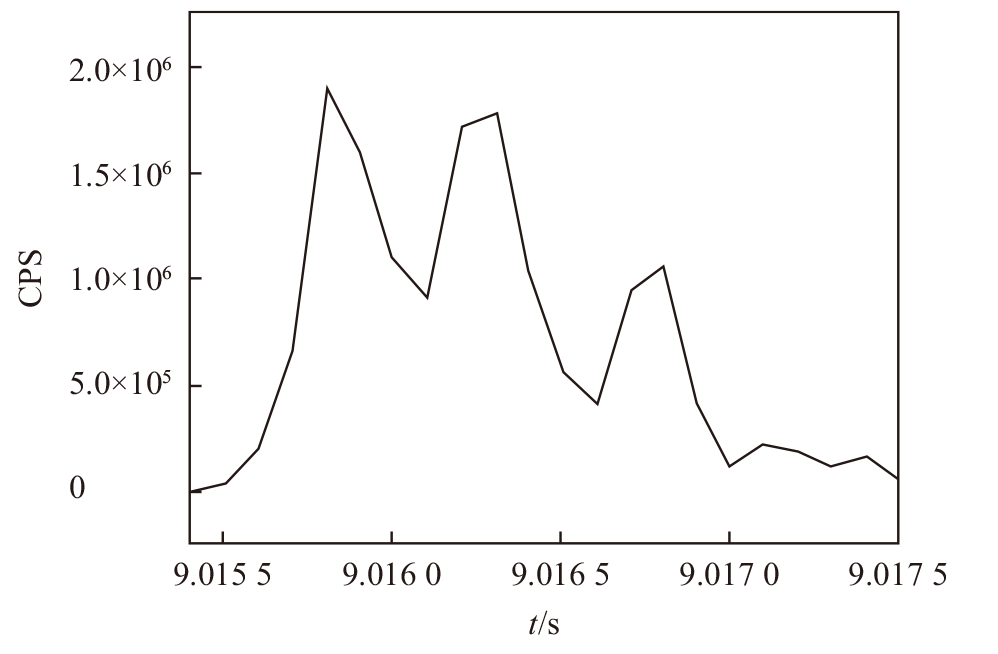
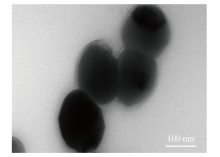
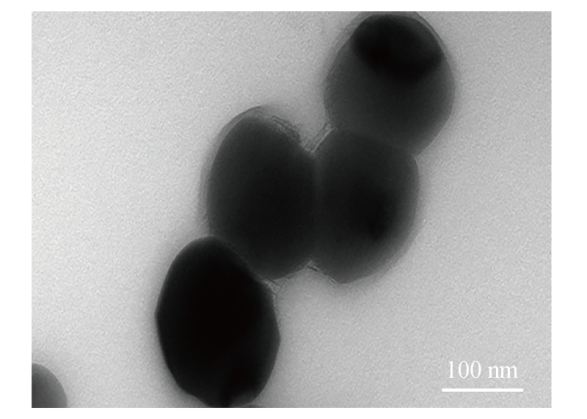
Fig.6
Transmission electron microscopy (TEM) image of ZnONPs"
| [1] |
Smijs T G, Pavel S. Titanium dioxide and zinc oxide nanoparticles in sunscreens: focus on their safety and effectiveness[J]. Nanotechnology, Science and Applications, 2011, 4: 95-112.
doi: 10.2147/NSA.S19419 pmid: 24198489 |
| [2] |
Ulrike B, Lauren B, Qasim C, et al. The SCCS scientific advice on the safety of nanomaterials in cosmetics[J]. Regulatory Toxicology and Pharmacology, 2021, 126: 105046.
doi: 10.1016/j.yrtph.2021.105046 |
| [3] |
Snežana S, Jelica P. Safety of cosmetic products in the light of European legislation: Cosmetic Regulation (EC) No 1223/2009[J]. Arhiv za Farmaciju, 2018, 68(5): 911-933.
doi: 10.5937/ArhFarm1805911S |
| [4] | Chen Q, Zhang Z, Su Z, et al. Correlation of cosmetic nanomaterials attributes and their efficacy[J]. China Surfactant Detergent & Cosmetics, 2024, 54(5): 588-595. |
| [5] | Meng Z W, Zheng L N, Fang H, et al. Single particle inductively coupled plasma time-of-flight mass spectrometry: a powerful tool for the analysis of nanoparticles in the environment[J]. Processes, 2023, 11(4): 1237. |
| [6] |
Francisco L, Javier J, Eduardo B, et al. Selective identification, characterization and determination of dissolved silver (i) and silver nanoparticles based on single particle detection by inductively coupled plasma mass spectrometry[J]. Journal of Analytical Atomic Spectrometry, 2011, 26(7): 1362-1371.
doi: 10.1039/c0ja00098a |
| [7] |
Bengt F, Lucian F, Barry H, et al. Advanced tools for the safety assessment of nanomaterials[J]. Nature Nanotechnology, 2018, 13(7): 537-543.
doi: 10.1038/s41565-018-0185-0 pmid: 29980781 |
| [8] |
Beatrice B, Stefano C, Oreste S, et al. ICP-MS based methods to characterize nanoparticles of TiO2 and ZnO in sunscreens with focus on regulatory and safety issues[J]. Science of the Total Environment, 2018, 630: 922-930.
doi: 10.1016/j.scitotenv.2018.02.166 |
| [9] |
Wang Y F, Hou B F, Cao X L, et al. Interaction between polymer and anionic/nonionic surfactants and its mechanism of enhanced oil recovery[J]. Journal of Dispersion Science and Technology, 2017, 39(8): 1178-1184.
doi: 10.1080/01932691.2017.1386112 |
| [10] |
Zhang X, Servos M R, Liu J. Ultrahigh nanoparticle stability against salt, pH, and solvent with retained surface accessibility via depletion stabilization[J]. Journal of the American Chemical Society, 2012, 134(24): 9910-9913.
doi: 10.1021/ja303787e pmid: 22646098 |
| [11] | Jiang J H, Pi J, Cai J Y, et al. The advancing of zinc oxide nanoparticles for biomedical applications[J]. Bioinorganic Chemistry and Applications, 2018, Article ID 1062562: 1-18. |
| [12] |
Mittal A K, Bhaumik J, Kumar S, et al. Biosynthesis of silver nanoparticles: elucidation of prospective mechanism and therapeutic potential[J]. Journal of Colloid and Interface Science, 2014, 415: 39-47.
doi: 10.1016/j.jcis.2013.10.018 pmid: 24267328 |
| [13] |
Wang X G, Sun T S, Zhu Z, et al. Roles of pH, cation valence, and ionic strength in the stability and aggregation behavior of zinc oxide nanoparticles[J]. Journal of Environmental Management, 2020, 267: 110656.
doi: 10.1016/j.jenvman.2020.110656 |
| [14] | Wang G K, Yang Y X. Infection of different ultra audible frequency and temperature to dispersive property of ZnO nanometre granule[J]. Progress in Textile Science & Technology, 2005 (2): 3. |
| [15] |
Laborda F, Bolea E, Jimenez-Lamana J. Single particle ICPMS: a powerful tool for nano-analysis[J]. Analytical Chemistry, 2013, 86(5): 2270-2278.
doi: 10.1021/ac402980q |
| [1] | Yuanyuan Fang, Qian Zhang, Mengxue Gao, Yubing Wang, Xiaowei Chang. A plant-derived complex attenuates surfactant-induced scalp sensitivity: efficacy and underlying mechanisms [J]. China Surfactant Detergent & Cosmetics, 2026, 56(8): 1027-1037. |
| [2] | Lina Wang, Xiaoxue Cai, Xiaoqin Tang, Guodong Zhang, Chunying Zheng. Construction of pH-responsive pseudo-Gemini surfactants: exploring microscopic mechanisms for enhancing hair conditioner performance [J]. China Surfactant Detergent & Cosmetics, 2026, 56(8): 1019-1026. |
| [3] | Lulu Liu, Qiang Chen, Yujun Feng. Viscoelastic surfactants (VIII) Ultra-long-chain nonionic surfactants [J]. China Surfactant Detergent & Cosmetics, 2026, 56(8): 977-983. |
| [4] | Ting Li, Wenjing Hu, Jiusheng Li. Research progress of surfactant-based lubricant additives [J]. China Surfactant Detergent & Cosmetics, 2026, 56(8): 984-990. |
| [5] | Wenli Zhao, Yuxin Feng, Jiangling Tang, Hongwei Ren, Jing Yang, Yuanyuan Jia, Yanfei Wang. Research progress of the application of surfactants in flotation of soluble potassium salts [J]. China Surfactant Detergent & Cosmetics, 2026, 56(7): 952-959. |
| [6] | Xin Jiang, Kun Liu, Bo Jiang, Yanfeng Liu. Research progress in quantitative detection, high-efficient synthesis, and applications of surfactin [J]. China Surfactant Detergent & Cosmetics, 2026, 56(7): 960-967. |
| [7] | Yujun Feng. Viscoelastic surfactants (VII) CO2-responsive wormlike micelles [J]. China Surfactant Detergent & Cosmetics, 2026, 56(7): 833-840. |
| [8] | Hongyang Wang, Huibin Liang, Chunyu Wang, Ke Zhang, Jingjie Zhou, Tao Geng. Investigating the impact of propylene oxide and 1, 2-butylene oxide on the structure-activity relationship offatty alcohol ethers [J]. China Surfactant Detergent & Cosmetics, 2026, 56(7): 841-852. |
| [9] | Yunian Huang, Qi Wen, Bingqing Yu, Yao Qin, Tingzhi Zhang, Jingru Qian. Innovative application of amino acid surfactants in bath oil systems [J]. China Surfactant Detergent & Cosmetics, 2026, 56(7): 925-934. |
| [10] | Zonglin Chu, Zhanpeng Jiang, Yujun Feng. Viscoelastic surfactants (VI) Smart wormlike micelles [J]. China Surfactant Detergent & Cosmetics, 2026, 56(6): 695-705. |
| [11] | Ruirui Guo, Haifeng Liu. Research on a novel supramolecular clean fracturing fluid suitable for deep coalbed methane wells [J]. China Surfactant Detergent & Cosmetics, 2026, 56(6): 739-746. |
| [12] | Shu Zhou, Zhiyong Luo, Yiyue Wang, Yuyao Wan, Sa Zeng, Tao Meng. Pickering emulsions stabilized by silica nanoparticles in combination with surfactant for the enhancement of the stability of anthocyanins [J]. China Surfactant Detergent & Cosmetics, 2026, 56(6): 706-716. |
| [13] | Jiao Fang, Bo Xing. Study on the preparation of a quaternary ammonium surfactant and its effects on fabric antibacterial and finishing properties [J]. China Surfactant Detergent & Cosmetics, 2026, 56(5): 571-579. |
| [14] | Liming Xue, Jiale Xu, Jingxian Zhou, Yu’e Jin. Advances of surfactants in the development of formulations of pesticide carbendazim [J]. China Surfactant Detergent & Cosmetics, 2026, 56(5): 666-673. |
| [15] | Yunan Wan, Zhen Ren, Yichun Zhang. Study on the modification mechanism and performance of nonionic surfactants in the dispersion process of SiO2 aerogels [J]. China Surfactant Detergent & Cosmetics, 2026, 56(4): 441-448. |
|
