Welcome to China Surfactant Detergent & Cosmetics, Today is


China Surfactant Detergent & Cosmetics ›› 2026, Vol. 56 ›› Issue (8): 977-983.doi: 10.3969/j.issn.2097-2806.2026.08.001
• Lecture of science and technology • Next Articles
Lulu Liu1,Qiang Chen2,Yujun Feng2,*( )
)
Received:2026-08-01
Online:2026-08-22
Published:2026-09-02
Contact:
*E-mail: CLC Number:
Lulu Liu, Qiang Chen, Yujun Feng. Viscoelastic surfactants (VIII) Ultra-long-chain nonionic surfactants[J].China Surfactant Detergent & Cosmetics, 2026, 56(8): 977-983.
Fig.1
The molecular structures of plant-based ultralong-chain fatty acids"
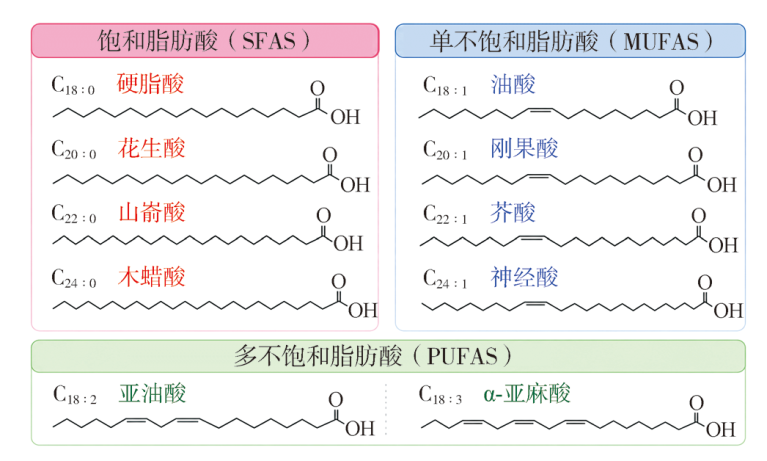
Fig.2
The pathways towards synthesis of ultralong-chain polyoxyethylene ether and glucosamide nonionic surfactants"
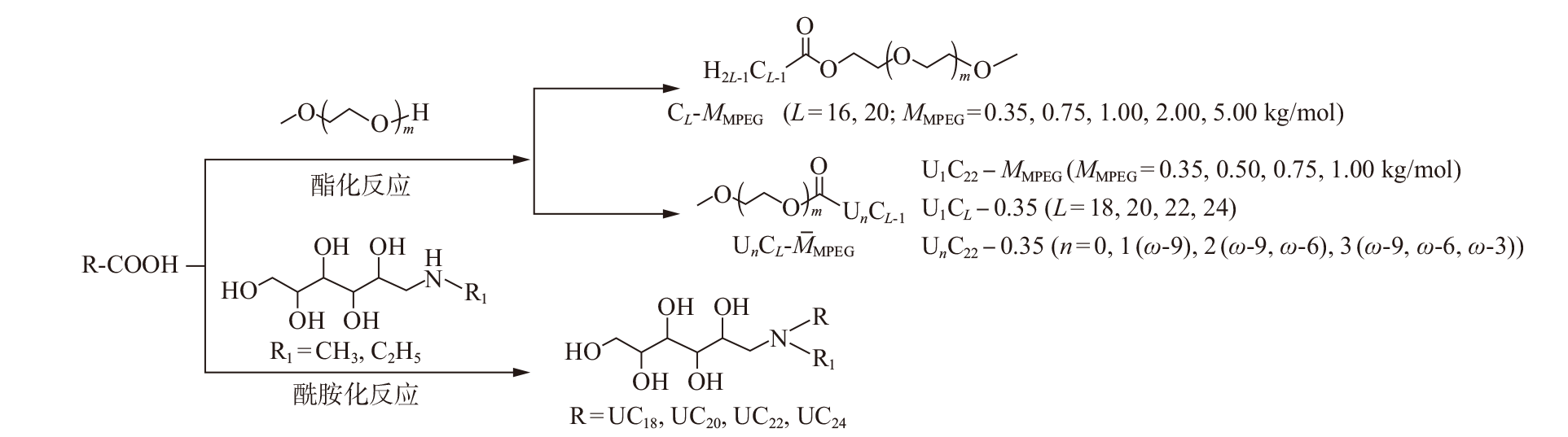
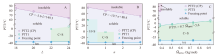
Fig.3
Low-temperature solubility of UnCLMMPEG surfactant in 1, 2-propanediol/water mixed solvent (50:50, v/v). Transmittance-temperature profiles for (A) 0.5% U1CL-0.35 (L = 18, 20, 22, and 24), (B) 0.5% UnC22-0.35 (n = 0, 1, 2, and 3) and (C) 0.5% U1C22-MMPEG(MMPEG = 0.35, 0.50, 0.75 and 1.00 kg/mol)[12]"
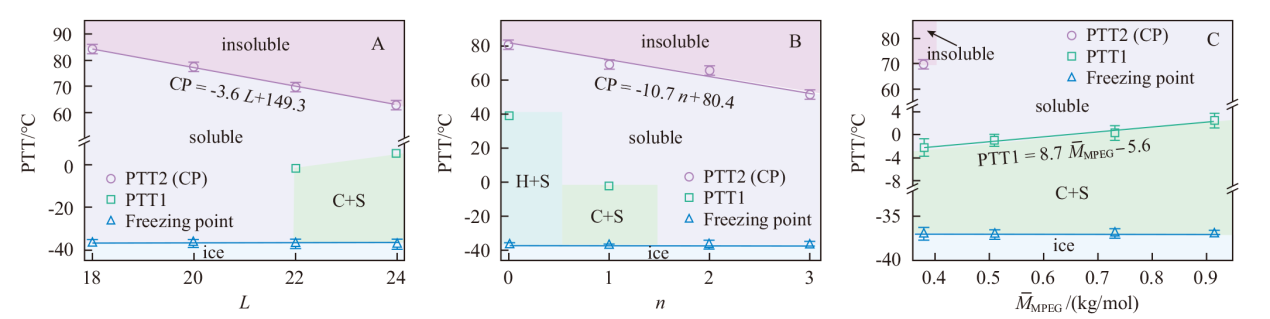
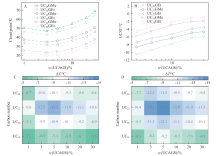
Fig.4
(A) Cloud point (CP) and (B) upper critical solution temperature (UCST) plotted as a function of UCAGS concentration"
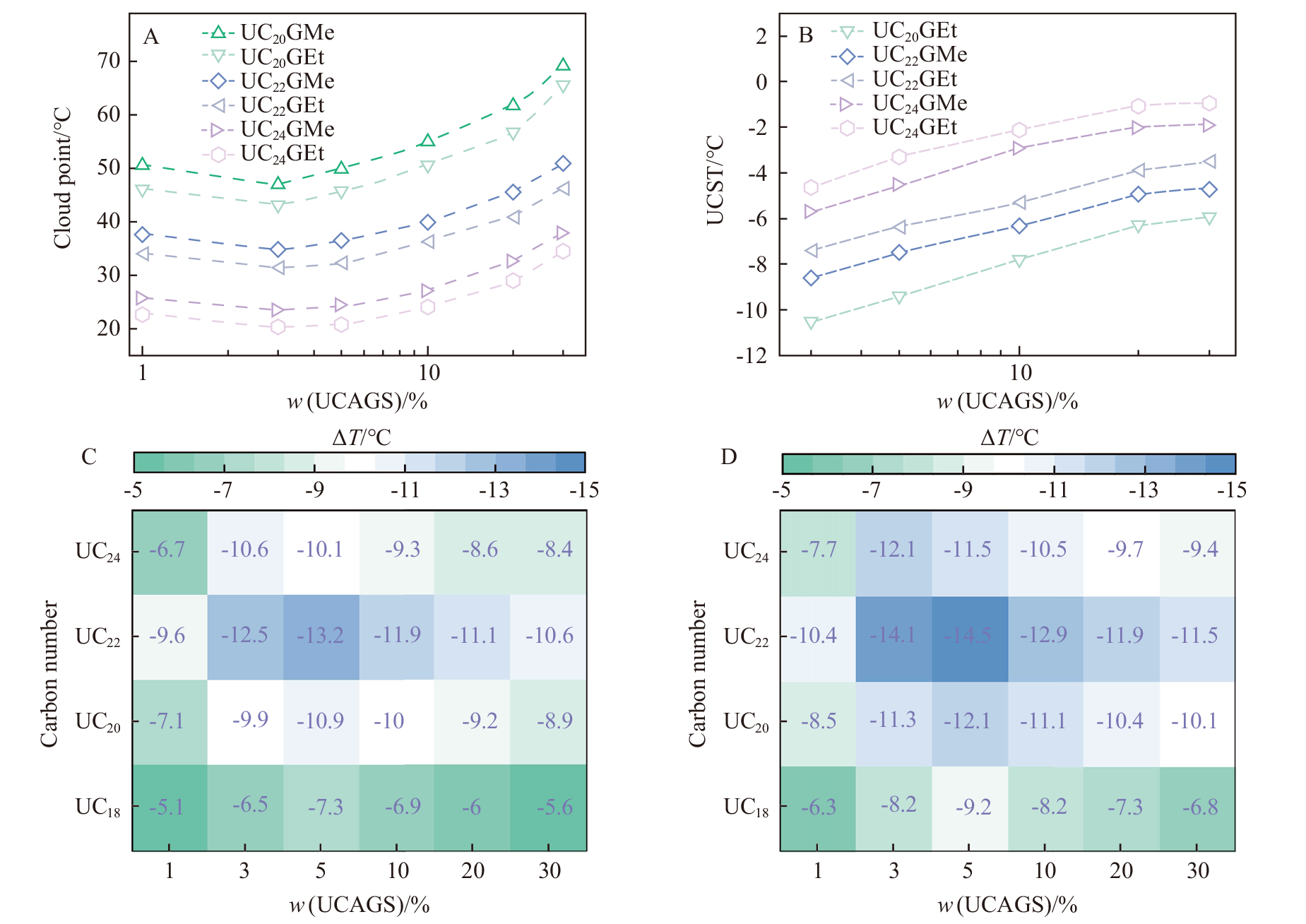
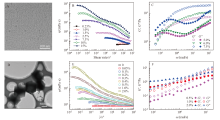
Fig.5
Microstructural morphology and rheological properties of the polyoxyethylene surfactant C22-0.35 at 20 ℃ in pure water:[10](A) Cryo-TEM image, (B) steady-state shear rheological results, and (C) dynamic shear rheological results. Microstructural morphology and rheological properties of U1C22-0.35 in a 1, 2-propanediol/water mixed solvent (50:50, v/v) at -20 ℃:[12](D) Cryo-TEM image, (E) steady-state shear rheological results"

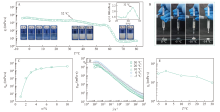
Fig.6
(A) Apparent viscosity-temperature profile UC22GE solution acquired from -5 to 80 ℃ at a shear rate of 1 s-1, the inset indicates a viscosity peak at 32 ℃, corresponding to the phase transition of the CP. (B) Extrusion process under low-temperature conditions indicates that the sample retains fluidity and exhibits viscoelastic behavior at subzero temperatures. (C) Viscosity as a function of mass fraction for UC22GEt in aqueous solution at a shear rate of 0.1 s-1. (D) Steady-shear rheological behavior of 5% UC22GEt aqueous solution across temperatures from -5 to 30 ℃. (E) Evolution of zero-shear viscosity (η0) with temperature at 5%[13]"
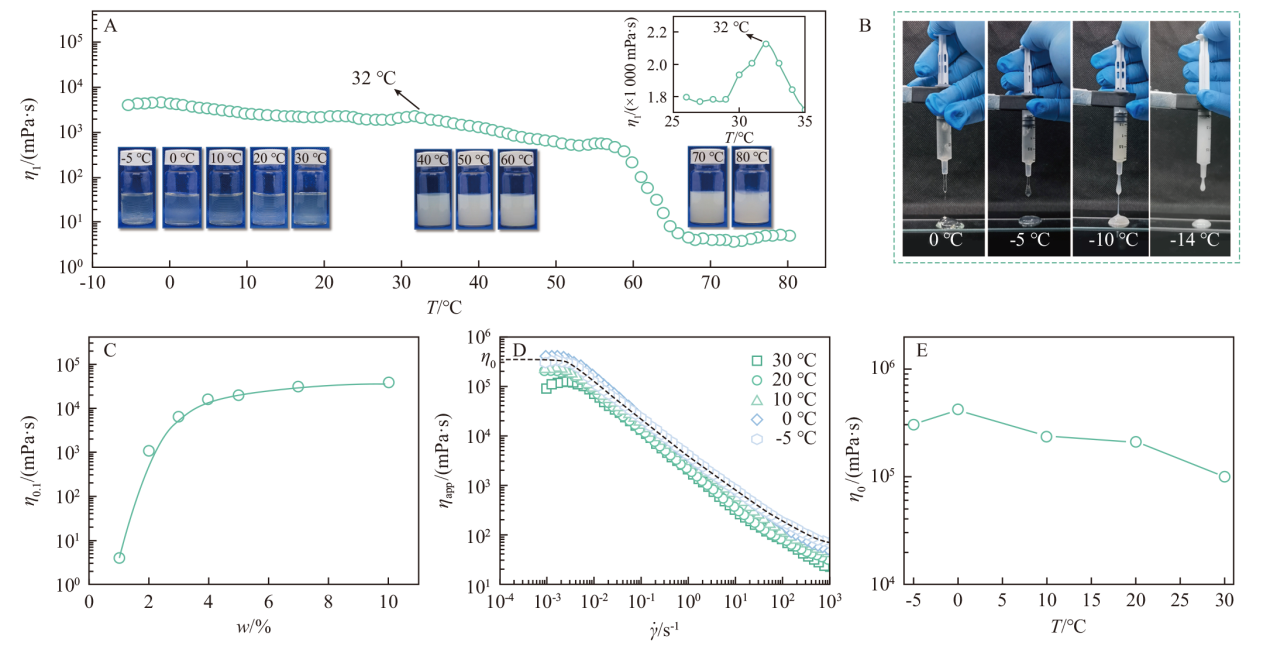
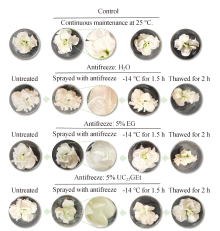
Fig.7
The frost protection performance of UC22GEt on Matthiola incana[13]"

| [1] | Myers D. Surfactant science and technology, 3rd ed.[M]. John Wiley & Sons, Hoboken, 2006. |
| [2] | Tadros T F. Applied surfactants: Principles and applications[M]. Wiley-VCH, Weinheim, 2005. |
| [3] | 冯玉军. 黏弹性表面活性剂(II)--蠕虫状胶束形成机理及体系构成[J]. 日用化学工业(中英文), 2026, 56(2): 137-148. |
| [4] |
Dreiss C A. Wormlike micelles: Where do we stand? Recent developments, linear rheology and scattering techniques[J]. Soft Matter, 2007, 3(8): 956-970.
doi: 10.1039/b705775j pmid: 32900044 |
| [5] |
Raghavan S R, Kaler E W. Highly viscoelastic wormlike micellar solutions formed by cationic surfactants with long unsaturated tails[J]. Langmuir, 2001, 17(2): 300-306.
doi: 10.1021/la0007933 |
| [6] |
Kumar R, Kalur G C, Ziserman L, et al. Wormlike micelles of a C22-tailed zwitterionic betaine surfactant: From viscoelastic solutions to elastic gels[J] . Langmuir 2007, 23(26): 12849-12856.
pmid: 18004899 |
| [7] | Chu Z, Feng Y. A facile route towards the preparation of ultra-long-chain amidosulfobetaine surfactants[J]. Synthelett, 2009 (16): 2655-2658. |
| [8] |
Chu Z, Feng Y, Su X, et al. Wormlike micelles and solution properties of a C22-tailed amidosulfobetaine surfactant[J]. Langmuir, 2010, 26(11): 7783-7791.
doi: 10.1021/la904582w pmid: 20429541 |
| [9] |
Zhang Y, Luo Y, Wang Y, et al. Single-component wormlike micellar system formed by acarboxylbetaine surfactant with C22 saturated tail[J]. Colloids Surf. A, 2013, 436: 71-79.
doi: 10.1016/j.colsurfa.2013.06.016 |
| [10] |
Wang J, Zhang Y, Chu Z, et al. Wormlike micelles formed by ultra-long-chain nonionic surfactant[J]. Colloid Polym. Sci., 2021, 299(8): 1295-1304.
doi: 10.1007/s00396-021-04848-z |
| [11] |
Wang J, Wang J, Wang B, et al. Synthesis and aqueous solution properties of polyoxyethylene surfactants with ultra-long unsaturated hydrophobic chains[J]. J. Dispers. Sci. Technol., 2013, 34(4): 504-510.
doi: 10.1080/01932691.2012.682006 |
| [12] |
Liu L, Wang R, Wang J, et al. Solubility quantification and subzero-temperature phase behavior of ultra-long-chain nonionic surfactants[J]. J. Colloid Interface Sci., 2026, 706: 139550.
doi: 10.1016/j.jcis.2025.139550 |
| [13] |
Chen Q, Liu L, Qian Z, et al. Ultra-long-chain biobased nonionic surfactants with cryo-tolerance and viscoelasticity[J]. ACS Sustainable Chem. Eng., 2026, 14: 8170-8184.
doi: 10.1021/acssuschemeng.5c13949 |
| [14] | 冯玉军, 陈强, 殷鸿尧, 等. 超长链葡萄糖酰胺非离子表面活性剂及其合成方法:ZL202411968674.0[P]. 2026-03-31. |
| [1] | Yujun Feng. Viscoelastic surfactants (VII) CO2-responsive wormlike micelles [J]. China Surfactant Detergent & Cosmetics, 2026, 56(7): 833-840. |
| [2] | Zonglin Chu, Zhanpeng Jiang, Yujun Feng. Viscoelastic surfactants (VI) Smart wormlike micelles [J]. China Surfactant Detergent & Cosmetics, 2026, 56(6): 695-705. |
| [3] | Yujun Feng. Viscoelastic surfactants (V) Similarity and difference between wormlike micelles and polymers [J]. China Surfactant Detergent & Cosmetics, 2026, 56(5): 557-563. |
| [4] | Yujun Feng. Viscoelastic surfactants (III)Steady rheology and shear bandings [J]. China Surfactant Detergent & Cosmetics, 2026, 56(3): 277-283. |
| [5] | Zhengyu Li,Degang Xing,Yancheng Zheng,Hongyun Zhao,Fuchang You. Synergism in the mixture of sodium dodecyl block polyether sulfonate and Gemini betaine surfactant for oil displacement [J]. China Surfactant Detergent & Cosmetics, 2026, 56(3): 284-292. |
| [6] | Yujun Feng. Viscoelastic surfactants(II)Formation mechanisms and system formulations of wormlike micelles [J]. China Surfactant Detergent & Cosmetics, 2026, 56(2): 137-148. |
| [7] | Yujun Feng. Viscoelastic surfactants (I)Evolution of micelles and discovery of wormlike micelles [J]. China Surfactant Detergent & Cosmetics, 2026, 56(1): 8-16. |
| [8] | Lei Dong, Huanjin Zou, Xuefeng Liu. Synthesis of pH-switchable nonionic polyether surfactant and its potential application in removing phenanthrene from soil [J]. China Surfactant Detergent & Cosmetics, 2025, 55(11): 1388-1394. |
| [9] | Xinzhi Liang, Ting Sun, Xinyao Ye, Yukai Wang, Liang Bai, Hongguang Li. Study on the mixed systems of polyether organosilicon surfactant and classic anionic surfactants [J]. China Surfactant Detergent & Cosmetics, 2024, 54(10): 1155-1165. |
| [10] | Liang Yihuan,Du Jing. “Jelly” phenomenon rheology study and improvement in shampoo system [J]. China Surfactant Detergent & Cosmetics, 2022, 52(9): 920-929. |
| [11] | Li Yingxue,Sun Yongqiang,Zhou Jingjie,Sun Jinyuan,Liang Huibin,Liu Yuqi. Synthesis and performance study of C12-14 secondary alcohol ethoxylates [J]. China Surfactant Detergent & Cosmetics, 2022, 52(11): 1155-1161. |
| [12] | REN Cong-lin,MENG Xin-yu,HU Yi-tao,FANG Yun,QIAN Fei,XIA Yong-mei. Study of the properties of nonylcyclohexanol polyoxyethylene ether [J]. China Surfactant Detergent & Cosmetics, 2019, 49(4): 209-213. |
| [13] | ZHANG Wan-qing,JIANG Jian-zhong,CUI Zheng-gang. Interactions between surfactants and nanoparticles and theconstruction of smart systems(IV)Interactions between nanoparticles and nonionic surfactantsConstruction of temperature-responsive Pickering emulsionsvia hydrogen bonding [J]. China Surfactant Detergent & Cosmetics, 2019, 49(10): 633-642. |
| [14] | WANG Ting, ZHANG Ting-ting, CAI Zhao-sheng, SANG Shu-min, HE Jian-ling, WANG Yi-ning. Synthesis and performance of (2-hydroxyl-3-dehydrofiroxy) propyl hydroxyethyl chitosan [J]. China Surfactant Detergent & Cosmetics, 2018, 48(4): 196-200. |
| [15] | DING Xi, ZHANG Chang-hui, YOU Qun-jie, LIU Tao, MA Yan. Study on the synthesis of a novel nonionic surfactant and its effect on deinking of coated paper [J]. China Surfactant Detergent & Cosmetics, 2017, 47(9): 502-507. |
|
