Welcome to China Surfactant Detergent & Cosmetics, Today is

China Surfactant Detergent & Cosmetics ›› 2026, Vol. 56 ›› Issue (9): 1180-1187.doi: 10.3969/j.issn.2097-2806.2026.09.006
• Basic research • Previous Articles Next Articles
Shuyao Feng,Jianing Li,Zijuan Wang,Fei Jiang,Zhenshen Gao,Haijuan Zhang*( )
Received:2026-01-17
Revised:2026-08-18
Online:2026-09-22
Published:2026-09-30
Contact:
*E-mail: CLC Number:
Shuyao Feng, Jianing Li, Zijuan Wang, Fei Jiang, Zhenshen Gao, Haijuan Zhang. Green synthesis, characterization and antibacterial activity of ellagic acid-modified silver nanoparticles[J].China Surfactant Detergent & Cosmetics, 2026, 56(9): 1180-1187.
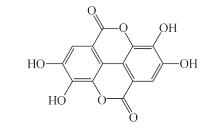
Fig.1
Molecular structure of ellagic acid"
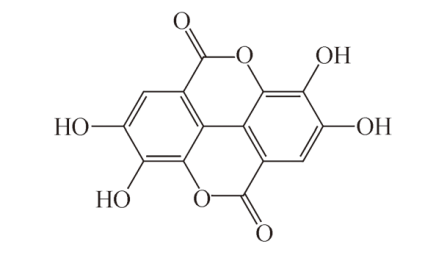
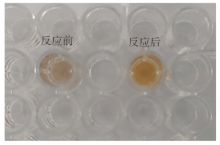
Fig.2
Comparison before and after the reaction for green synthesis of EA-AgNPs"
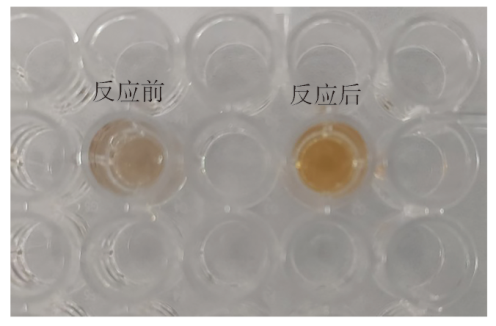
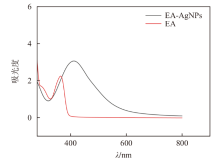
Fig.3
UV-vis spectrum of EA-AgNPs"
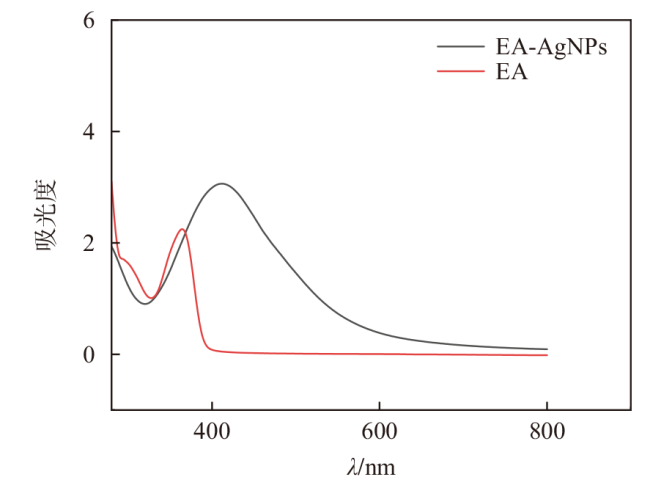
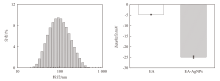
Fig.4
Particle-size distribution and Zeta potential diagram of EA-AgNPs"
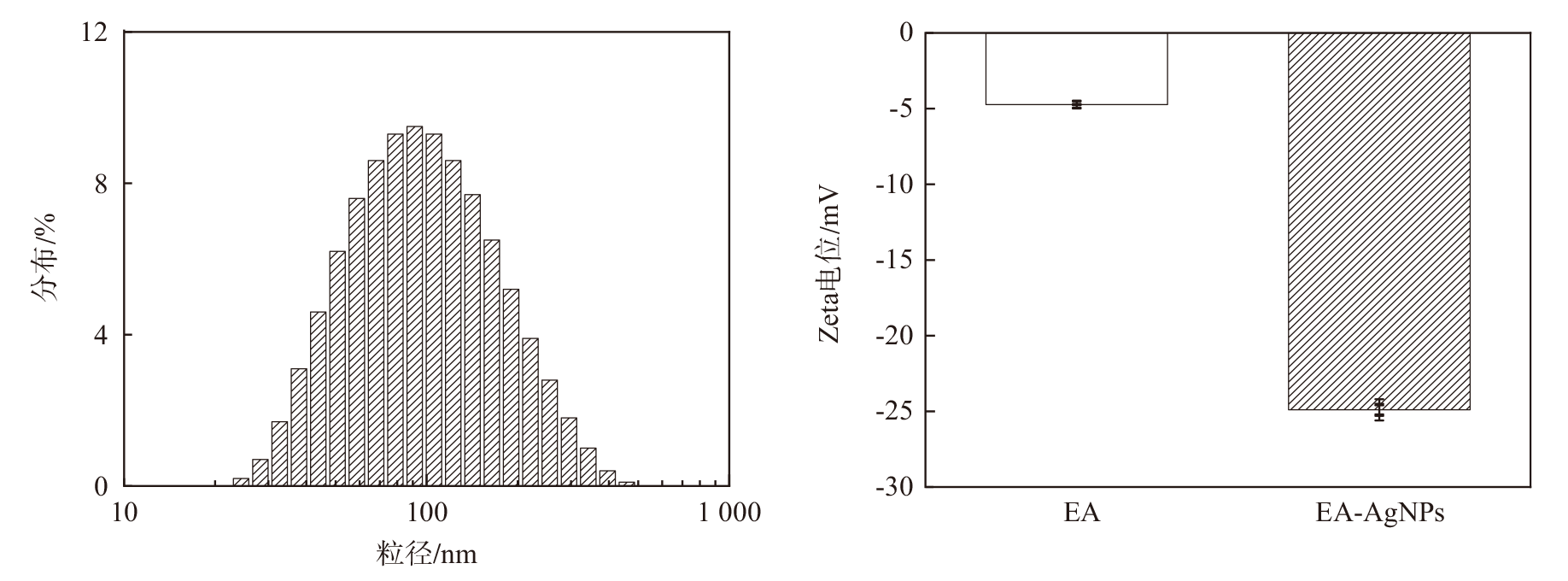
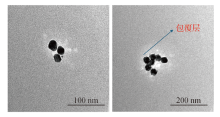
Fig.5
TEM images of EA-AgNPs"
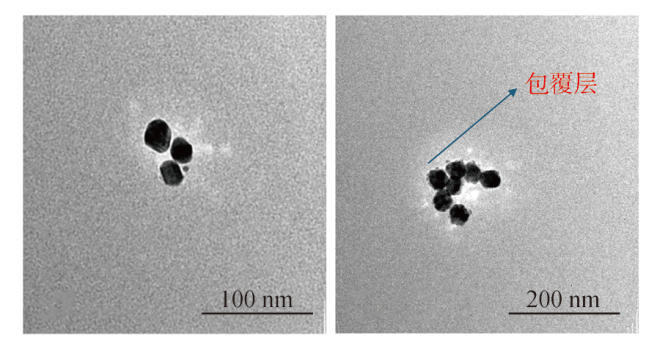
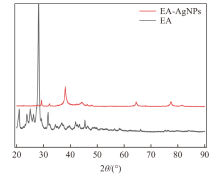
Fig.6
X-ray diffraction patterns of EA and EA-AgNPs"
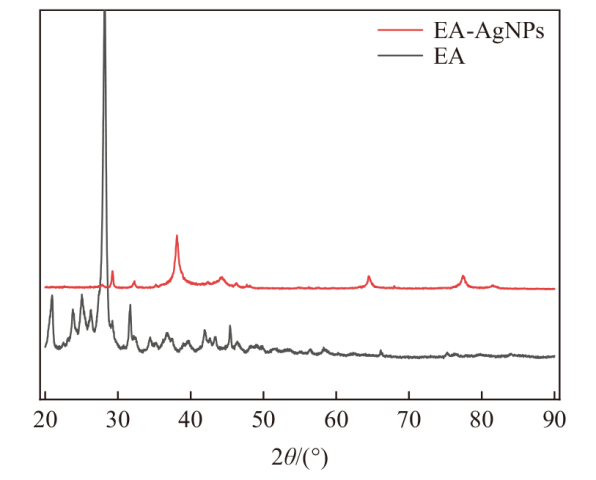
Fig.7
FTIR spectra of EA and EA-AgNPs"
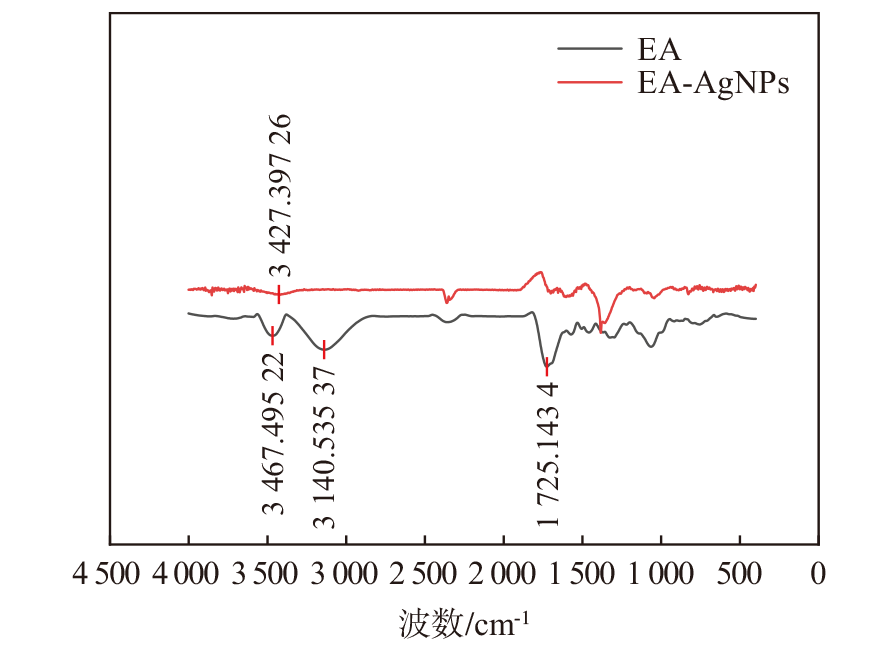
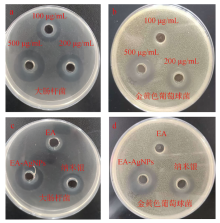
Fig.8
Antibacterial effects of EA-AgNPs, EA and AgNPs. Inhibition zones of different mass concentrations of EA-AgNPs against E. coli (a) and S. aureus (b) ; inhibition zones of EA, EA-AgNPs and AgNPs against E. coli (c) and S. aureus (d)"
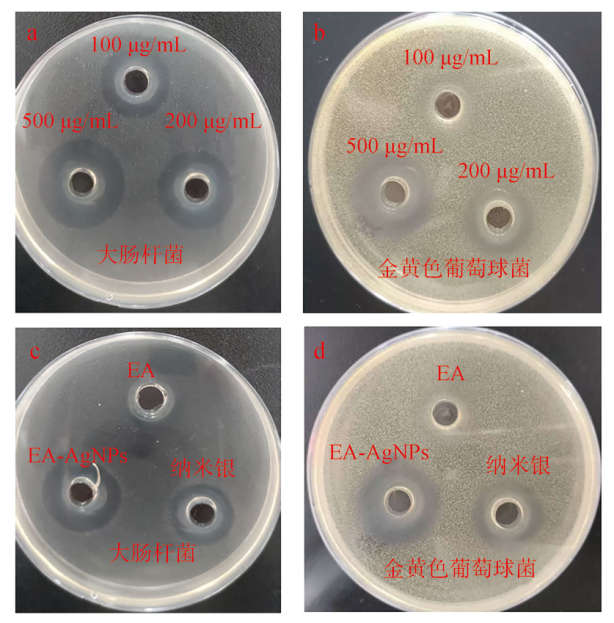
Fig.9
Time-kill curves of E. coli with different mass concentrations of EA-AgNPs"
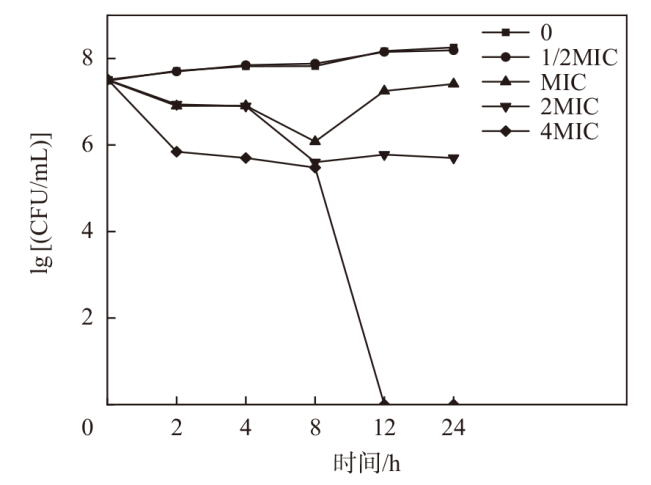
Fig.10
Time-kill curves of S. aureus with different mass concentrations of EA-AgNPs"
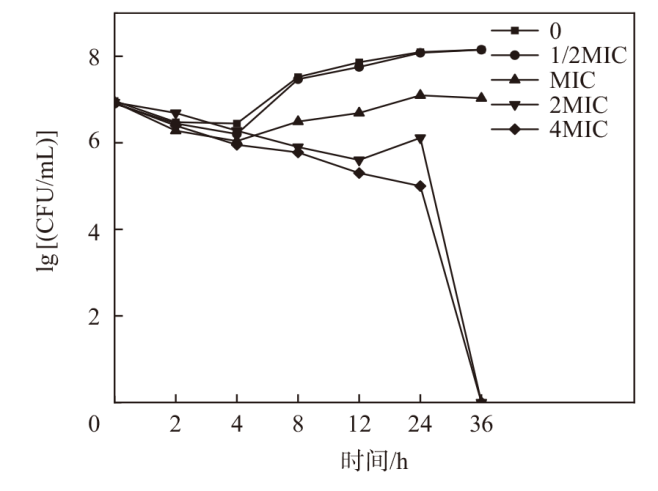
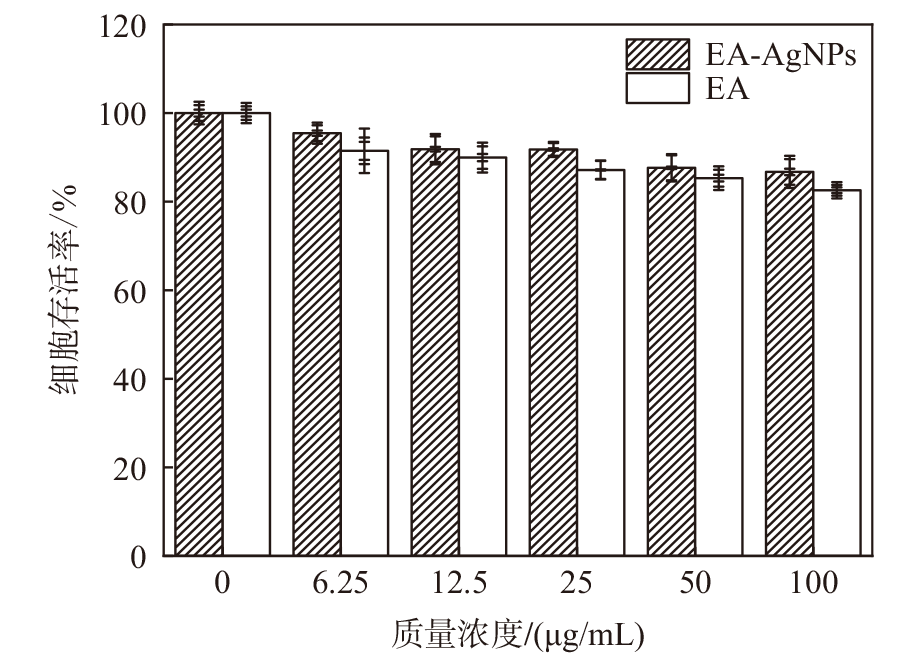
Fig.11
Cell viability at different mass concentrations of EA-AgNPs"
| [1] | Liu Kecheng, Chen Rong. Green synthesis and applications of silver nanoparticles[J]. Guangdong Chemical Industry, 2025, 52 (4) : 81-83. |
| [2] |
Khatoon U T, Velidandi A, Rao G V S N. Sodium borohydride mediated synthesis of nano-sized silver particles: Their characterization, anti-microbial and cytotoxicity studies[J]. Materials Chemistry and Physics, 2023, 294: 126997.
doi: 10.1016/j.matchemphys.2022.126997 |
| [3] | Jiang Xiaying. Preparation of flexible conductive textiles based onnano-silver conductive ink and its application[D]. Hangzhou: Zhejiang Sci-Tech University, 2021. |
| [4] | Wang Yuwei, Feng Xiaoli, Wang Shuang, et al. Research progress on neuroprotective effects of ellagic acid and in treatment of nervous system diseases[J]. Drugs & Clinical, 2025, 40 (8) : 2097-2102. |
| [5] | Shen Xilong, Li Yongxia, Zhang Qunying. Purification of raspberry ellagic acid and study on their biological activity[J]. Shandong Chemical Industry, 2019, 48 (14) : 94-96. |
| [6] | Chen Tingting, Wu Suhui, Li Genlin, et al. Research progress on cut microbiota metabolism process and pharmacological effects of ellagic acid components[J]. Chinese Journal of Modern Applied Pharmacy, 2024, 41 (21) : 2982-2989. |
| [7] | Ratti A, Fassi E M A, Forlani F, et al. Mechanistic insights into the antibiofilm mode of action of ellagic acid[J]. Pharmaceutics, 2023, 15 (6) : 1757. |
| [8] | He Yuhong, Liang Mintong, Liu Luqun, et al. A review of the pharmacological effects of ellagic acid[J]. Chemical Engineering & Equipment, 2022 (3) : 216-217. |
| [9] |
Lu G, Wang X, Cheng M, et al. The multifaceted mechanisms of ellagic acid in the treatment of tumors: State-of-the-art[J]. Biomedicine & Pharmacotherapy, 2023, 165: 115132.
doi: 10.1016/j.biopha.2023.115132 |
| [10] | Illescas-montes R, Rueda-fernández M, González-acedo A, et al. Effect of punicalagin and ellagic acid on human fibroblasts in vitro: A preliminary evaluation of their therapeutic potential[J]. Nutrients, 2023, 16 (1) : 23. |
| [11] |
Ghadimi M, Foroughi F, Hashemipour S, et al. Randomized double‐blind clinical trial examining the ellagic acid effects on glycemic status, insulin resistance, antioxidant, and inflammatory factors in patients with type 2 diabetes[J]. Phytotherapy Research, 2020, 35 (2) : 1023-1032.
doi: 10.1002/ptr.v35.2 |
| [12] | Yang Xiaojing, Chen Chiqing, Miao Kaiyuan, et al. Preparation of oligomeric hyaluronic acid modified ellagic acid-loaded liposomes and study on in vitro transdermal effect and whitening activity[J]. Modernization of Traditional Chinese Medicine and Materia Medica-World Science and Technology, 2023, 25 (12) : 3856-3865. |
| [13] |
Abd-Elghany A A, Mohamad E A. Chitosan-coated niosomes coaded with ellagic acid present antiaging activity in a Skin Cell Line[J]. ACS Omega, 2023, 8 (19) : 16620-16629.
doi: 10.1021/acsomega.2c07254 pmid: 37214686 |
| [14] | Chen Meiling, Gou Ling, Lu Haixiao. The pharmacology research progress of ellagic acid[J]. Modernization of Traditional Chinese Medicine and Materia Medica-World Science and Technology, 2023, 25 (1) : 196-202. |
| [15] | Castellacci R, Bergonzi M C. An insight on ellagic acid formulations for the management of skin diseases[J]. Molecules, 2025, 30 (23) : 4493. |
| [16] | Shi Mengyao, Zhao Wei, Yang Anquan, et al. Preparation and application of phenolic acid compounds as raw materials in cosmetics[J]. Fine Chemicals, 2024, 41 (2) : 245-256. |
| [17] | Zhu J, Zeng Q, Liu Y, et al. Smart nanosilver strikes twice: Precision bacteria killing meets autophagy-boosted healing for infected wounds[J]. Advanced Functional Materials, 2025, 35 (48) : 2507797. |
| [18] | Raju R, Prasad A S, Rajesh K. S. Anti-inflammatory and antioxidant activity of neem and kirata-induced silver nanoparticles against oral biofilm: An in vitro study[J]. Cureus, 2024, 16 (8) : e67708. |
| [19] | Chen Weilin, Ma Hongmei. Application status of nano-silver dressings in wound care[J]. Chinese Nursing Research, 2020, 34 (6) : 1034-1037. |
| [20] | Dube E, Okthe G E. Silver nanoparticle-based antimicrobial coatings: Sustainable strategies for microbial contamination control[J]. Microbiology Research, 2025, 16 (6) : 110. |
| [21] | Ceda-Cejudo N D, Buenrostro-Figueroa J J, Sepúlveda L, et al. Recovery of ellagic acid from mexican rambutan peel by solid-state fermentation-assisted extraction[J]. Food and Bioproducts Processing, 2022 (134) : 86-94. |
| [22] | Zhang Ke. Study on separation ellagic acid from the leaves and fruits of liquidambar formosana and preparation of controlled-release micropowder[D]. Harbin: Northeast Forestry University, 2025. |
| [23] | Li Xu, Wang Zhiqiang, Liu Ting. Optimization of extraction process of ellagic acid from pomegranate peel by response surface methodology[J]. Modern Food, 2025, (15) : 94-97. |
| [24] | Meng Yuan, Liu Yuqing, Liang Shuoqing, et al. Green synthesis of silver nanoparticles from zanthoxylum bungeanum leaf extracts and their antibacterial activity[J]. Chemistry and Industry of Forest Products, 2025, 45 (5) : 36-42. |
| [25] | Wu Yi, Liu Xinwei, Peng Yuanyuan, et al. Optimization of extraction process of gynostemma pentaphyllum polyphenols by response surface methodology and artificial neural network-particle response surface methodology and artificial neural network-particle swarm optimization, and its application in green synthesis of silver nanoparticles[J]. Food and Fermentation Industries, 2026, 52 (12) : 345-352. |
| [26] | Xiang Chao. Preparation and application of novel AgNP@Tea Polyphenol-PAA hydrogel antibacterial hydrogel material[D]. Changsha: Hunan University, 2022. |
| [27] |
Gu Xin, Gao Tao, Liu Mengya, et al. Optimization of extraction technology, structure analysis and antioxidant activity of polysaccharides from liangping pomelo peel[J]. Food and Fermentation Industries, 2021, 47 (7) : 137-145.
doi: 10.13995/j.cnki.11-1802/ts.025662 |
| [28] | Jiang Yu, Li Fuyan, Liu Chongchong, et al. Biosynthezled silver nanopaticles using hawthorn fruit extract and their antibacterial activity against four common aquatic pathogens[J]. Oceanologia et Limnologia Sinica, 2016, 47 (1) : 253-260. |
| [29] | Cui T, Fan Y, Liu Y, et al. Antibacterial activity and mechanism of self-assembly spermidine-capped carbon dots against Staphylococcus aureus[J]. Foods, 2023, 13 (1) : 67. |
| [30] | Lin G, Zhao C, Liao W, et al. Eco-Friendly green synthesis of rubropunctatin functionalized silver nanoparticles and evaluation of antibacterial activity[J]. Nanomaterials, 2022, 12 (22) : 4052. |
| [31] | Lü Weiwei, Zhu Zhengyu, Mai Rongyang, et al. Determination of gallic acid and ellagic acid in chebulae fructus immaturus by near infrared spectroscopy based on partial least square method[J]. Quality and Safety of Agro-Products, 2025 (3) : 58-64. |
| [1] | Yongkai Liu, Jihui Lin. Synthesis of a novel fabric antibacterial agent and its antibacterial finishing property on fiber fabric [J]. China Surfactant Detergent & Cosmetics, 2026, 56(9): 1198-1206. |
| [2] | Haiting Chen, Meiyuan Fu. Synthesis and properties of a quaternary ammonium salt as cationic antistatic agent for cotton knitted fabrics [J]. China Surfactant Detergent & Cosmetics, 2026, 56(7): 873-881. |
| [3] | Tao Qin, Xin Huang, Xiaoyuan Cui, Fenfang Li, Yien Du, Junsheng Hao. Enhancing antibacterial efficacy of organic photothermal agents via site regulation of sulfur atom [J]. China Surfactant Detergent & Cosmetics, 2026, 56(6): 717-728. |
| [4] | Jiao Fang, Bo Xing. Study on the preparation of a quaternary ammonium surfactant and its effects on fabric antibacterial and finishing properties [J]. China Surfactant Detergent & Cosmetics, 2026, 56(5): 571-579. |
| [5] | Liwen Chen,Niannian Wang,Yong Qin. Synthesis and performance of alkylamino phosphoronitriles as multifunctional fabric finishing agents [J]. China Surfactant Detergent & Cosmetics, 2026, 56(3): 354-359. |
| [6] | Huang Li, Yuan Wang, Shengmao Liu, Zhennan She, Zhen Chen. Multiple applications of Artemisia scoparia extract in the cosmetic field [J]. China Surfactant Detergent & Cosmetics, 2026, 56(1): 107-113. |
| [7] | Weiqiang Song, Yali Chen, Hongyan Yang, Fan Zhang. Research on the forming process and antibacterial activity of the facial mask combined Scutellaria baicalensis Georgi with Salvia miltiorrhiza Bge. [J]. China Surfactant Detergent & Cosmetics, 2025, 55(3): 333-340. |
| [8] | Ranran Dong,Yanhua Liu. Preparation of Moringa oleifera leaf ethanolic extract and study on its antibacterial and anti-inflammatory activities [J]. China Surfactant Detergent & Cosmetics, 2025, 55(2): 209-215. |
| [9] | Lin Cao, Mingwei Liu. Simultaneous determination of multiple antibacterial components in mouthwash by high performance liquid chromatography [J]. China Surfactant Detergent & Cosmetics, 2025, 55(11): 1493-1500. |
| [10] | Ting Xin, Jiaojiao Li, Zhao Wang. Study on the antibacterial activity of Phaseolus vulgaris Linn peptide and its inhibitory effect on the transcription of chemokines and inflammatory factors [J]. China Surfactant Detergent & Cosmetics, 2025, 55(1): 75-83. |
| [11] | Shiyu Deng, Xu Sun, Jianming Jin, Hua Wu. Botanical cosmetic ingredients (VIII)Research and development of plant antibacterial [J]. China Surfactant Detergent & Cosmetics, 2024, 54(4): 385-392. |
| [12] | Chang Xiangling, Chai Fei. Preparation and performance study of zinc oxide nanocomposite antibacterial materials [J]. China Surfactant Detergent & Cosmetics, 2023, 53(9): 1051-1056. |
| [13] | Xing Huanyu, Jia Lihua, Zhao Zhenlong, Yang Rui, Guo Xiangfeng. Synthesis and properties of novel surfactants containing naphthalimide and alkyl segments [J]. China Surfactant Detergent & Cosmetics, 2023, 53(7): 742-747. |
| [14] | Kong Qiuchan, Jiang Jiaxin, Xia Gaohui, Gong Shengzhao. Study on antibacterial activity of antibacterial fiber and its application in mask products [J]. China Surfactant Detergent & Cosmetics, 2023, 53(5): 538-543. |
| [15] | Hao Qing, Wu Ermin, Bi Yongxian, Liu Jinjun, Kong Decheng, Cheng Zhiwei. Study on screening extraction process of total flavonoids from Nelumbinis Plumula by polyols and its properties [J]. China Surfactant Detergent & Cosmetics, 2023, 53(4): 398-407. |
|
