Welcome to China Surfactant Detergent & Cosmetics, Today is


China Surfactant Detergent & Cosmetics ›› 2026, Vol. 56 ›› Issue (8): 991-998.doi: 10.3969/j.issn.2097-2806.2026.08.003
• Basic research • Previous Articles Next Articles
Hongyan Li1,2,Xiangying Wu1,Huanyu Zhao1,Chenchen Gao1,Xiaoye Qi1,2,Huabing Zhao1,*( ),Xuan Meng1,*()
Received:2025-11-19
Revised:2026-07-24
Online:2026-08-22
Published:2026-09-02
Contact:
*E-mail: CLC Number:
Hongyan Li, Xiangying Wu, Huanyu Zhao, Chenchen Gao, Xiaoye Qi, Huabing Zhao, Xuan Meng. Construction and characterization of a 3D skin microbiome model based on microencapsulated commensal bacteria[J].China Surfactant Detergent & Cosmetics, 2026, 56(8): 991-998.
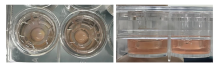
Fig.1
Top-view appearance (left) and side-view appearance (right) of the 3D skin model"
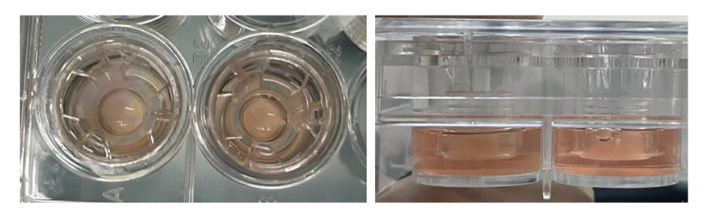
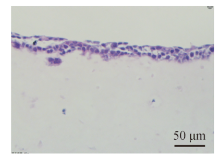
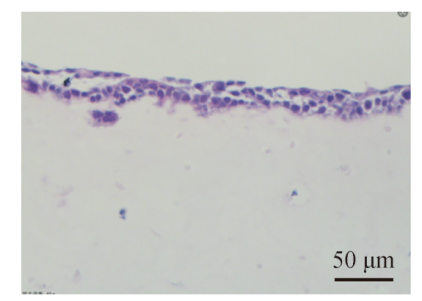
Fig.2
H&E staining of the 3D skin model"
Tab.1
Transepithelial electrical resistance (TEER) measurement of the 3D skin model"
| 实验组别 | 电阻 / Ω |
|---|---|
| 对照组 | 60~70 |
| 实验组(D1) | 180~200 |
| 实验组(D2) | 195~205 |
| 实验组(D3) | 200~210 |
| 实验组(D4) | 200~215 |
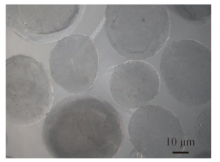
Fig.3
Morphology of bacterial microcapsules"
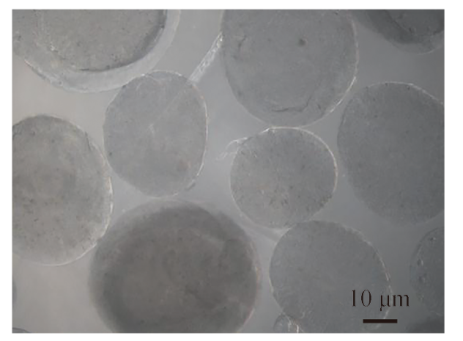
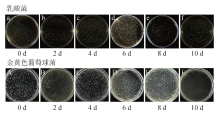
Fig.4
Agar plate spread-plating of encapsulated microcapsules containing LAB (top) and Staphylococcus aureus (bottom)"
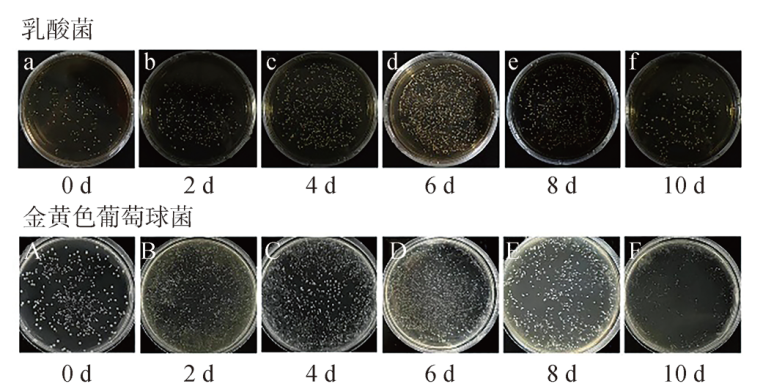
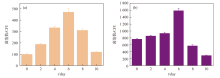
Fig.5
Colony counts (CFU) from agar plate culture of LAB (a) and Staphylococcus aureus (b) over time"
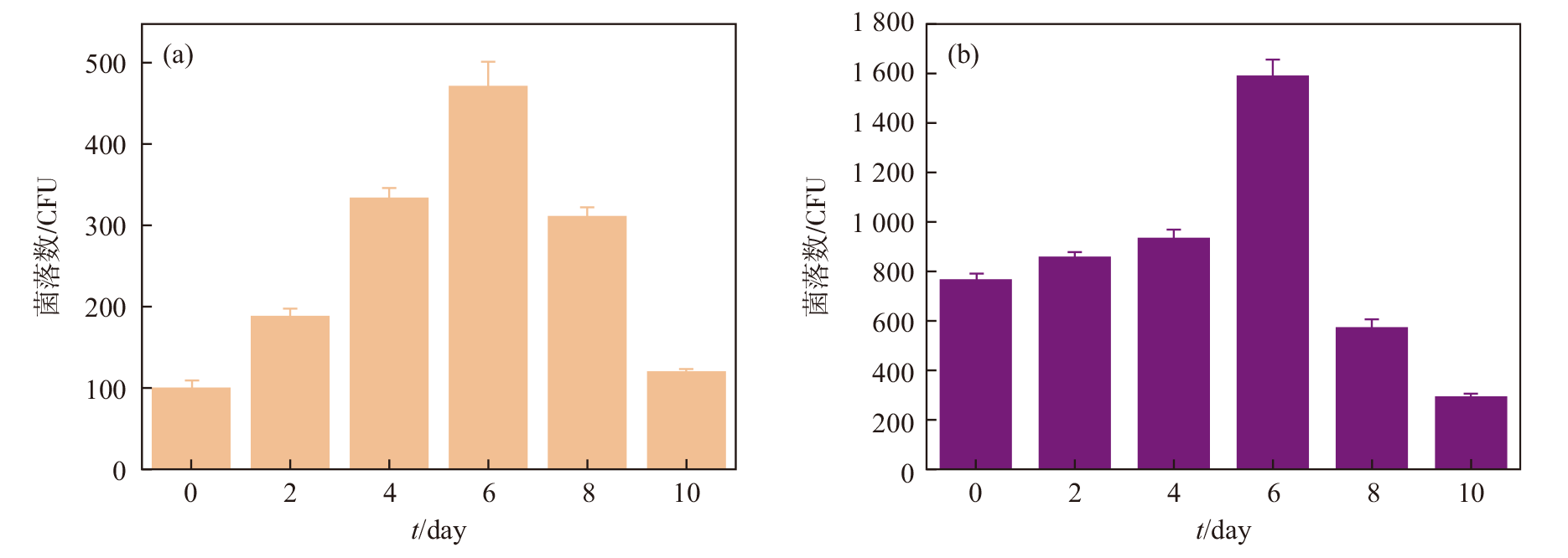
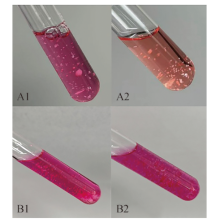
Fig.6
Discoloration of phenol red solution induced by lactic acid secreted by LAB"
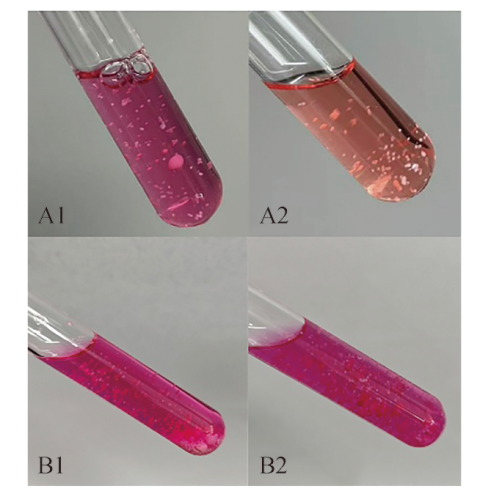
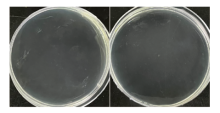
Fig.7
Supernatant agar plate culture in the LAB secretion assay"
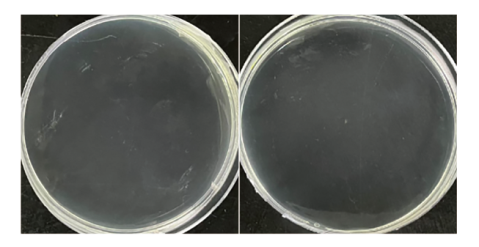
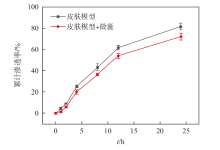
Fig.8
Permeation percentage of nicotinamide in the skin model"
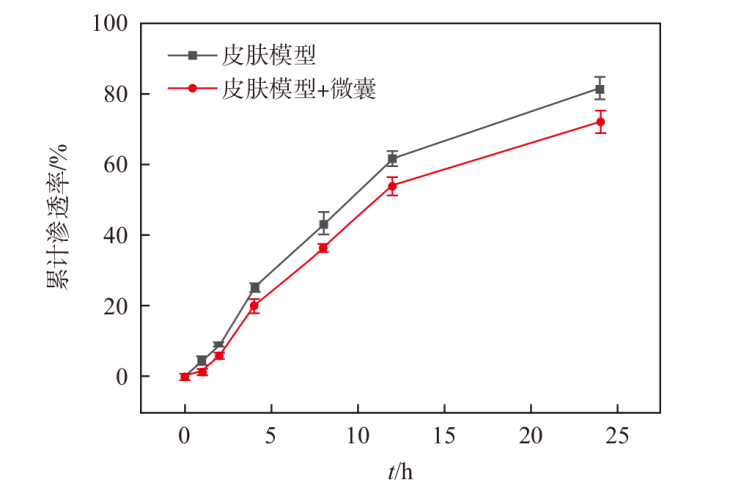
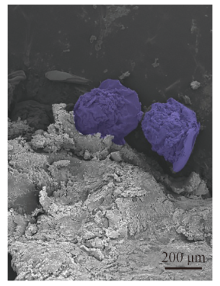
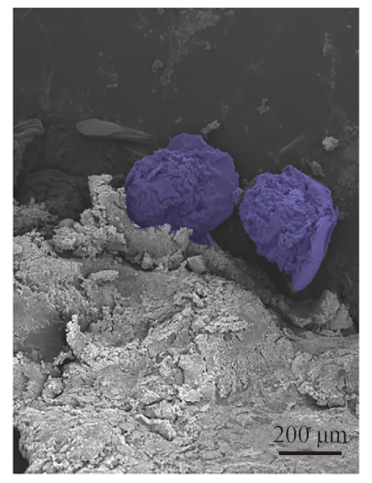
Fig.9
SEM micrograph of microcapsules loaded with bacteria"
| [1] |
Eberlin S, Da Silva M, Facchini G, et al. The ex vivo skin model as an alternative tool for the efficacy and safety evaluation of topical products[J]. Atla-Alternatives to Laboratory Animals, 2020, 48(1): 10-22.
doi: 10.1177/0261192920914193 pmid: 32496151 |
| [2] |
Sanches P, Geaquinto L, Cruz R, et al. Toxicity evaluation of TiO2 nanoparticles on the 3D skin model: a systematic review[J]. Frontiers in Bioengineering and Biotechnology, 2020, 8: 15.
doi: 10.3389/fbioe.2020.00015 |
| [3] |
Carvalho M, Oliveira A, Pedrosa S, et al. Skin microbiota and the cosmetic industry[J]. Microbial Ecology, 2023, 86(1): 86-96.
doi: 10.1007/s00248-022-02070-0 |
| [4] |
Emmert H, Rademacher F, Gläser R, et al. Skin microbiota analysis in human 3D skin models - “Free your mice”[J]. Experimental Dermatology, 2020, 29(11): 1133-1139.
doi: 10.1111/exd.v29.11 |
| [5] | 吴汶丰, 张泽鑫, 王家爵, 等. 特应性皮炎的体外3D皮肤模型[J]. 中国皮肤性病学杂志, 2022, 36(2): 133-138. |
| [6] | Harris-Tryon T, Grice E. Microbiota and maintenance of skin barrier function[J]. Science, 2022, 376(6596): 405-410. |
| [7] |
Kosiewicz M, Zirnheld A, Alard P. Tuning of skin immunity by skin commensal bacteria[J]. Immunotherapy, 2013, 5(1): 23-25.
doi: 10.2217/imt.12.140 pmid: 23256795 |
| [8] | Szymanski L, Jederka K, Cios A, et al. A simple method for the production of human skin equivalent in 3D, multi-cell culture[J]. International Journal of Molecular Sciences, 2020, 21(13): 11. |
| [9] | Han C, Zhang X, Pang G, et al. Hydrogel microcapsules containing engineered bacteria for sustained production and release of protein drugs[J]. Biomaterials, 2022, 287: 14. |
| [10] | Fournière M, Latire T, Souak D, et al. Staphylococcus epidermidis and Cutibacterium acnes: Two major sentinels of skin microbiota and the influence of cosmetics[J]. Microorganisms, 2020, 8(11): 31. |
| [11] |
郭婷婷, 韩湘凝, 黄熙婷, 等. 乳酸菌的合成生物学工具及在合成益肤因子中的应用[J]. 合成生物学, 2025, 6(2): 320-333.
doi: 10.12211/2096-8280.2024-071 |
| [12] | Wang L, Zhang X, Tang C, et al. Engineering consortia by polymeric microbial swarmbots[J]. Nature Communications, 2022, 13(1): 13. |
| [13] |
Jeong J H, Lee C Y, Chung D K. Probiotic lactic acid bacteria and skin health[J]. Critical Reviews in Food Science and Nutrition, 2015, 56(14): 2331-2337.
doi: 10.1080/10408398.2013.834874 |
| [14] | Lee C H, Min M, Jin S S, et al. Skin microbiome shifts in various dermatological conditions[J]. Journal of Clinical Medicine, 2025, 14(17): 20. |
| [15] | Loomis K, Wu S, Ernlund A, et al. A mixed community of skin microbiome representatives influences cutaneous processes more than individual members[J]. Microbiome, 2021, 9(1): 17. |
| [16] | Lemoine L, Bayrambey D, Roloff A, et al. Commensal-related changes in the epidermal barrier function lead to alterations in the benzo a pyrene metabolite profile and its distribution in 3D skin[J]. mBio, 2021, 12(5): 15. |
| [17] | 刘珍, 刘俊平, 许桂凤, 等. 重组人皮肤模型评价化妆品皮肤腐蚀性/刺激性替代方法的建立[J]. 卫生研究, 2009, 38(4): 468-471. |
| [18] | Bissoyi A, Gao Y N, Tomas R M F, et al. Cryopreservation and rapid recovery of differentiated intestinal epithelial barrier cells at complex transwell interfaces is enabled by chemically induced ice nucleation[J]. ACS Applied Materials & Interfaces, 2024, 16(18): 23027-23037. |
| [19] | 解雨馨, 彭慧玲, 先德海, 等. 体外银屑病样三维皮肤模型的构建[J]. 中国皮肤性病学杂志, 2023, 37(3): 284-290. |
| [20] |
Yang K, Han H, An S, et al. Mucoadhesive chitosan microcapsules for controlled gastrointestinal delivery and oral bioavailability enhancement of low molecular weight peptides[J]. Journal of Controlled Release, 2024, 365: 422-434.
doi: 10.1016/j.jconrel.2023.10.021 |
| [21] | Zernov A, Baruch L, Machluf M. Chitosan-collagen hydrogel microparticles as edible cell microcarriers for cultured meat[J]. Food Hydrocolloids, 2022, 129: 8. |
| [22] | 陈静, 姜凡, 章海凤, 等. IBS-D内脏高敏感小鼠模型的建立与评价[J]. 医学研究杂志, 2024, 53(10): 123-128. |
| [23] | 罗飞亚, 冯克然, 张露勇, 等. 两品系大鼠经皮电阻试验结果的比较[J]. 中国比较医学杂志, 2018, 28(10): 61-66. |
| [24] | 张俊. 苯酚红比色法测定血清碳酸氢根[J]. 内蒙古中医药, 2010, 29(5): 17-18. |
| [25] | 李龙泉, 王梓权, 刘思渊, 等. 基于平板计数的类球红细菌测量方法研究[J]. 计量学报, 2023, 44(3): 350-355. |
| [26] | 何欢, 李硕, 李红霞, 等. 化妆品中10种美白活性成分使用现状及分析[J]. 日用化学品科学, 2022, 45(12): 32-35. |
| [27] | 林静, 苏振宏, 宋强, 等. 不同透皮吸收促进剂及组合对烟酰胺凝胶体外透皮吸收的影响[J]. 时珍国医国药, 2024, 35(7): 1636-1639. |
| [28] | Zhang W, Shi X, Zheng S. Study on influencing factors of nicotinamide transdermal absorption in vitro and the establishment of an evaluation method[J]. Processes, 2024, 12(1): 202. |
| [29] | Fereidouni F, Borowsky A, Levenson R. A novel detection technique for collagen (and other macromolecules) on H&E slides without special stains for improved cancer prognostics[J]. Cancer Research, 2020, 80(4): 2. |
| [30] |
Liu J, Zhao W, Qin M, et al. Real-time measurement of the trans-epithelial electrical resistance in an organ-on-a-chip during cell proliferation[J]. Analyst, 2023, 148(3): 516-524.
doi: 10.1039/D2AN01931K |
| [31] | Pasquariello R, Pavlovic R, Chacon M, et al. Development of a rainbow trout (Oncorhynchus mykiss) intestinal in vitro platform for profiling amino acid digestion and absorption of a complete diet[J]. Animals, 2023, 13(14): 20. |
| [32] |
胡义钰, 冯成天, 刘辉, 等. 海藻酸钠/壳聚糖基橡胶树死皮康复营养剂微胶囊的制备工艺优化[J]. 热带作物学报, 2019, 40(7): 1379-1386.
doi: 10.3969/j.issn.1000-2561.2019.07.019 |
| [33] | 杨森, 刘奥, 王金岩, 等. 微生物包埋技术在污水脱氮领域的应用研究进展[J]. 清洗世界, 2024, 40(6): 114-116. |
| [34] | Wang M, Zhang S, Zhao Z, et al. Phenol red hydrogel as pH indicator with protection against nanoceria degradation[J]. Journal of Science-Advanced Materials and Devices, 2023, 8(4): 10. |
| [35] | 郭宇, 龙剑文. 中医药改善特应性皮炎屏障功能的研究进展[J]. 云南中医中药杂志, 2025, 46(11): 98-103. |
| [1] | Bei Su, Yapei Jiao, Qian Wang, Hui Liu, Hui Zhang, Fei Liu. Preparation and performance study of 10-HDA supramolecular microcapsules [J]. China Surfactant Detergent & Cosmetics, 2026, 56(7): 902-909. |
| [2] | Hao Lincong, Xia Xin. Research progress on lavender essential oil microcapsules and application in textiles [J]. China Surfactant Detergent & Cosmetics, 2023, 53(4): 453-458. |
| [3] | Fan Yumei,Tie Hang,Zhao Haiqing,Su Ning,Liao Feng. The effect of donkey oil on the improvement of skin barrier function and its potential mechanism [J]. China Surfactant Detergent & Cosmetics, 2022, 52(6): 626-631. |
| [4] | Tie Hang,Lv Yufeng,Zhang Yang,Xu Liang,Yan Yan. Effect of Staphylococcus epidermidis fermented extract on human skin barrier [J]. China Surfactant Detergent & Cosmetics, 2022, 52(4): 383-389. |
| [5] | ZHANG Hui-na,HE Yi-fan,LI Li. Advances in the applications of microcapsules in cosmetics [J]. China Surfactant Detergent & Cosmetics, 2020, 50(2): 124-128. |
| [6] | SHEN Jing-xuan, XIAO Wei-yi, XU Lan-lan, LIU Zhe, SHEN Yan, HUANG Hai-qun. Study on stability of phenethyl alcohol microcapsules and their thermal releasing behavior [J]. China Surfactant Detergent & Cosmetics, 2017, 47(5): 277-280. |
| [7] |
SONG Xiao-jie, ZHOU Chun-xia, WU Yue.
Reconstruction of 3D skin model and its application in evaluation the efficacy of cosmetic raw materials to be used as active ingredients [J]. China Surfactant Detergent & Cosmetics, 2017, 47(11): 633-636. |
| [8] | YU Huan,CHEN Yu,CHENG Shu-jun,QIN Yao. Study of anti-irritation effect of hyaluronic acid using 3D skin model [J]. China Surfactant Detergent & Cosmetics, 2016, 46(6): 339-343. |
| [9] | XIAO Wei-yi,SHEN Yan,YAO Zhen-yu,LIU Zhe,HUANG Hai-qun. Study on the technology for preparation of β-damascone microcapsules with complex coacervation method [J]. China Surfactant Detergent & Cosmetics, 2016, 46(11): 643-653. |
|
