Welcome to China Surfactant Detergent & Cosmetics, Today is


China Surfactant Detergent & Cosmetics ›› 2026, Vol. 56 ›› Issue (2): 176-184.doi: 10.3969/j.issn.2097-2806.2026.02.005
• Basic research • Previous Articles Next Articles
Yang Zhao1,2,3,Yan Wang1,2,3,*( ),Wenjie Tang1,Shuohan Ren4,Guihong Zhang4,Jianggai Li1
Received:2025-04-03
Revised:2026-01-27
Online:2026-02-22
Published:2026-03-09
Contact:
E-mail: CLC Number:
Yang Zhao, Yan Wang, Wenjie Tang, Shuohan Ren, Guihong Zhang, Jianggai Li. Preparation and evaluation of O/W microemulsions containing salicylic acid[J].China Surfactant Detergent & Cosmetics, 2026, 56(2): 176-184.
Tab.1
Grading evaluation of microemulsions"
| 微乳等级划分 | 乳化时间/min | 微乳外观 |
|---|---|---|
| A | <1 | 微蓝色乳光澄清 |
| B | <1 | 稍浑浊,泛蓝色乳光 |
| C | 1~3 | 浑浊,蓝白色液体 |
| D | 3~5 | 呈灰白色,略带油状液体 |
| E | >5 | 乳化失败,油相分层明显 |
Tab.2
Ingredient list of the samples for tyrosinase inhibition experiment"
| 试剂 | 加入量/μL | |||
|---|---|---|---|---|
| A | B | C | D | |
| 左旋多巴 | 40 | 40 | 40 | 40 |
| PBS | 120 | 160 | 80 | 120 |
| 酪氨酸酶 | 40 | 0 | 40 | 0 |
| 样品溶液 | 0 | 0 | 40 | 40 |
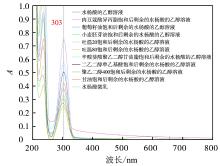
Fig.1
Ultraviolet absorption spectra of different systems containing salicylic acid"
Tab.3
Results of spike recovery experiment"
| 序号 | 样品加入量/mg | 标品加入量/mg | 测得总和/mg | 理论总和/mg | 回收率/% | 平均回收率/% | RSD/% |
|---|---|---|---|---|---|---|---|
| 1 | 25.050 | 20.040 | 46.270 | 45.090 | 102.616 | 102.17 | 0.38 |
| 2 | 25.050 | 20.040 | 45.963 | 45.090 | 101.936 | ||
| 3 | 25.050 | 20.040 | 45.978 | 45.090 | 101.969 | ||
| 4 | 25.050 | 25.050 | 49.269 | 50.100 | 98.342 | 98.50 | 0.14 |
| 5 | 25.050 | 25.050 | 49.409 | 50.100 | 98.621 | ||
| 6 | 25.050 | 25.050 | 49.363 | 50.100 | 98.529 | ||
| 7 | 25.050 | 30.060 | 53.683 | 55.110 | 97.410 | 97.33 | 0.14 |
| 8 | 25.050 | 30.060 | 53.552 | 55.110 | 97.172 | ||
| 9 | 25.050 | 30.060 | 53.684 | 55.110 | 97.412 |
Tab.4
Solubilities of salicylic acid for different oil phases, surfactants and cosurfactants at (25 ± 1) ℃ (n = 3)"
| 分类 | 溶媒 | 溶解度/(mg/mL) |
|---|---|---|
| 油相 | 肉豆蔻酸异丙酯 | 44.610 ± 0.003 |
| 葡萄籽油 | 28.644 ± 0.039 | |
| 小麦胚芽油 | 17.697 ± 0.083 | |
| 表面活性剂 | 吐温20 | 26.974 ± 0.224 |
| 吐温80 | 32.010 ± 0.006 | |
| 辛酸癸酸聚乙二醇甘油酯 | 38.028 ± 0.085 | |
| 助表面活性剂 | 二乙二醇单乙基醚 | 466.699 ± 1.855 |
| 聚乙二醇400 | 73.094 ± 0.022 | |
| 甘油 | 19.496 ± 0.041 |
Tab.5
Microemulsion formation for each formula"
| 油相/表面活性剂/助表面活性剂 | 乳化情况评价 | 微乳稳定性 |
|---|---|---|
| 肉豆蔻酸异丙酯/辛酸癸酸聚乙二醇甘油酯/二乙二醇单乙基醚 | C | 分层 |
| 葡萄籽油/辛酸癸酸聚乙二醇甘油酯/二乙二醇单乙基醚 | D | 分层 |
| 肉豆蔻酸异丙酯/吐温80/二乙二醇单乙基醚 | D | 分层 |
| 葡萄籽油/吐温80/二乙二醇单乙基醚 | D | 分层 |
| 肉豆蔻酸异丙酯/辛酸癸酸聚乙二醇甘油酯/聚乙二醇400 | E | 分层 |
| 葡萄籽油/吐温80/聚乙二醇400 | D | 分层 |
| 肉豆蔻酸异丙酯/吐温80/聚乙二醇400 | B | 不分层 |
| 葡萄籽油/辛酸癸酸聚乙二醇甘油酯/聚乙二醇400 | E | 分层 |
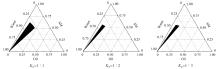
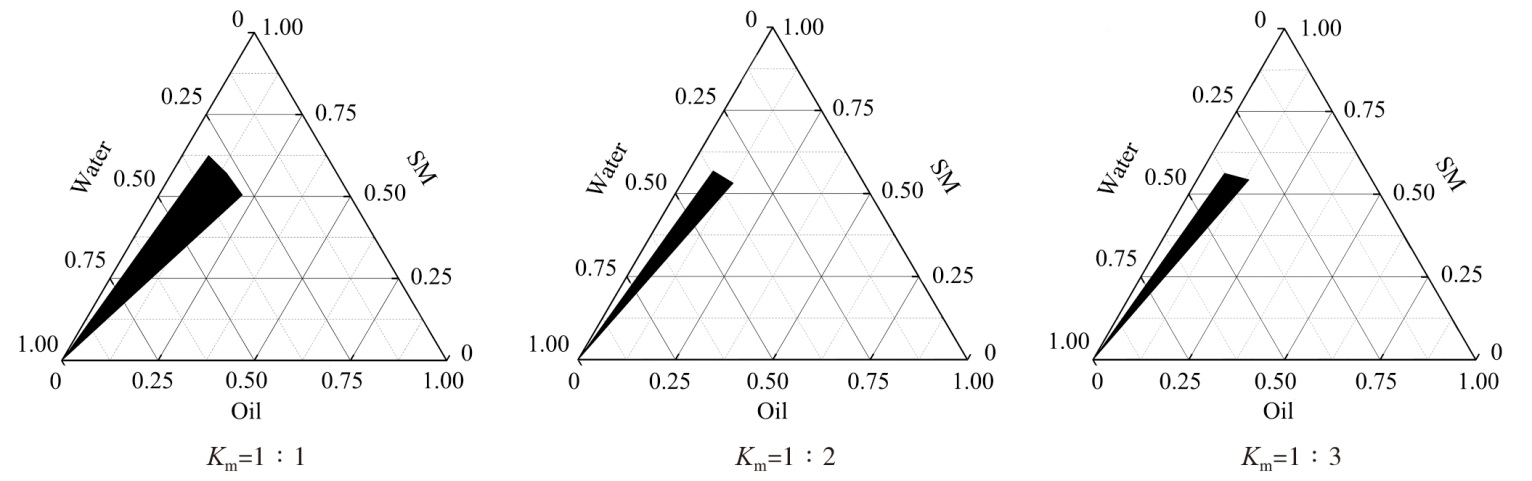
Fig.2
Pseudo-ternary phase diagrams of the microemulsions containing salicylic acid under different Km"
Tab.6
Experimental factors and levels in the CCD"
| 水平 | A | B |
|---|---|---|
| 肉豆蔻酸异丙酯用量/% | SM用量/% | |
| -1 | 5 | 35 |
| 0 | 9 | 39 |
| 1 | 13 | 43 |
Tab.7
Experimental results of different formulations"
| 组别 | 肉豆蔻酸异丙酯用量 | SM用量 | 最大载药量/(mg/g) |
|---|---|---|---|
| 1 | -1 | -1 | 33.851 |
| 2 | 0 | 0 | 40.712 |
| 3 | 0 | 0 | 42.440 |
| 4 | 0 | -1 | 33.615 |
| 5 | -1 | 1 | 48.070 |
| 6 | 1 | 0 | 35.007 |
| 7 | 1 | -1 | 27.094 |
| 8 | 0 | 0 | 39.293 |
| 9 | 1 | 1 | 40.774 |
| 10 | 0 | 0 | 39.656 |
| 11 | 0 | 0 | 40.368 |
| 12 | -1 | 0 | 46.777 |
| 13 | 0 | 1 | 41.225 |
Tab.8
Variance analysis of regression equation"
| 方差来源 | 偏差平方和 | 自由度 | 均方差 | F值 | P值 | 显著性 |
|---|---|---|---|---|---|---|
| 模型 | 353.94 | 5 | 70.79 | 18.36 | 0.000 7 | ** |
| A:油相(肉豆蔻酸异丙酯)用量 | 111.13 | 1 | 111.13 | 28.83 | 0.001 0 | ** |
| B:SM(1∶1)用量 | 210.15 | 1 | 210.15 | 54.51 | 0.000 2 | ** |
| AB | 0.072 5 | 1 | 0.072 5 | 0.018 8 | 0.894 8 | |
| A2 | 0.132 4 | 1 | 0.132 4 | 0.034 4 | 0.858 2 | |
| B2 | 29.23 | 1 | 29.23 | 7.58 | 0.028 4 | * |
| 残差 | 26.99 | 7 | 3.86 | |||
| 失拟项 | 20.99 | 3 | 7.00 | 4.67 | 0.085 4 | |
| 误差项 | 5.99 | 4 | 1.50 | |||
| 总和 | 380.93 | 12 |
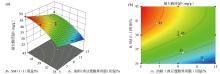
Fig.3
3D response surface (a) and contour plot (b) for optimization of isopropyl myristate dosage and SM dosage"
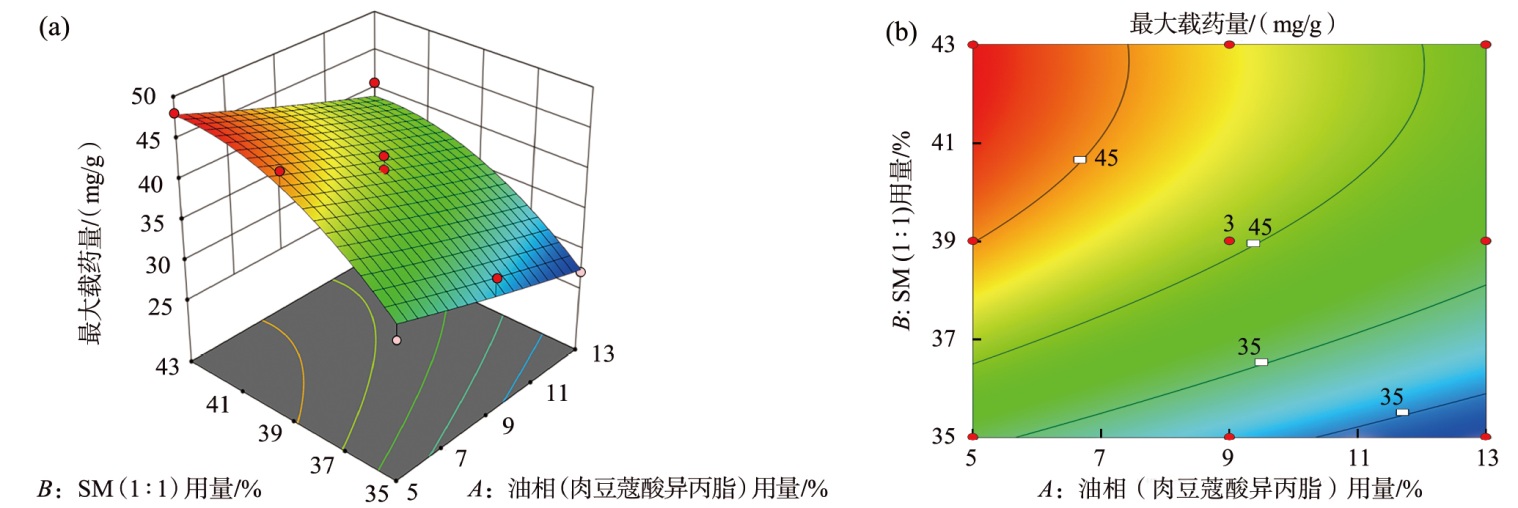
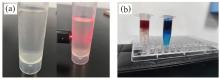
Fig.4
Appearance and Tyndall effect of the microemulsion containing salicylic acid(a); diffusion of Sudan III and methylene blue in the microemulsion containing salicylic acid(b)"
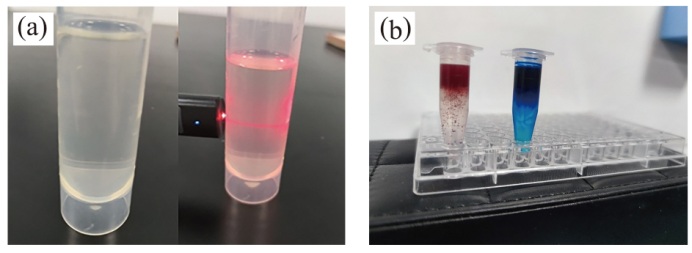
Fig.5
Particle size distribution (a) and TEM image (b) of the microemulsion containing salicylic acid"
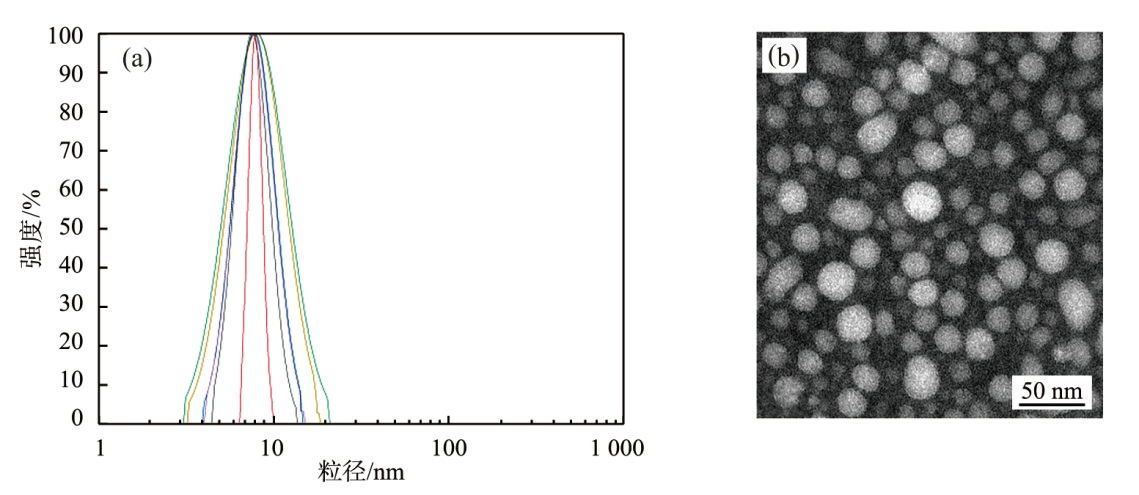
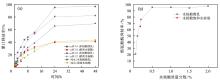
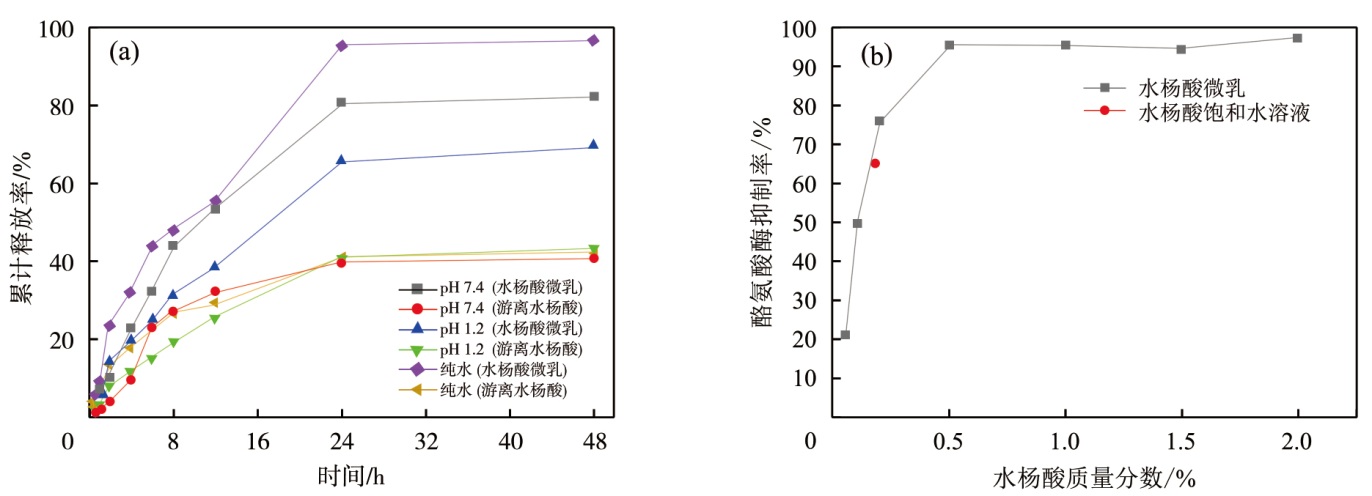
Fig.6
Cumulative release curves of the microemulsion containing salicylic acid and free salicylic acid in different media (a); Effects of the microemulsion containing salicylic acid and the saturated aqueous solution of salicylic acid on tyrosinase inhibition (b)"
| [1] |
Klebeko J, Ossowicz Rupniewska P, Swiatek E, et al. Salicylic acid as ionic liquid formulation may have enhanced potency to treat some chronic skin diseases[J]. Molecules, 2021, 27(1): 216.
doi: 10.3390/molecules27010216 |
| [2] |
Ashara K C, Shah K V. Nuts and bolts of oil and temperature in topical preparations of salicylic acid[J]. Folia Medica, 2017, 59(3): 279-288.
doi: 10.1515/folmed-2017-0034 pmid: 28976900 |
| [3] |
Huang L, Huang X, Yang X, et al. Novel nano-drug delivery system for natural products and their application[J]. Pharmacological Research, 2024, 201: 107100.
doi: 10.1016/j.phrs.2024.107100 |
| [4] |
Kim J S, Din F U, Cho H J, et al. Impact of carrier hydrophilicity on solid self nano-emulsifying drug delivery system and self nano-emulsifying granule system[J]. International Journal of Pharmaceutics, 2023, 648: 123578.
doi: 10.1016/j.ijpharm.2023.123578 |
| [5] |
Zhang X M, Dang M Y, Zhang W Z, et al. Sustained delivery of prilocaine and lidocaine using depot microemulsion system: in vitro, ex vivo and in vivo animal studies[J]. Drug Development and Industrial Pharmacy, 2020, 46(2): 264-271.
doi: 10.1080/03639045.2020.1716377 |
| [6] |
Thakur D, Kaur G, Puri A, et al. Therapeutic potential of essential oil-based microemulsions: reviewing state-of-the-art[J]. Current Drug Delivery, 2021, 18(9): 1218-1233.
doi: 10.2174/1567201818666210217161240 pmid: 33596807 |
| [7] |
Ustundag Okur N, Yavasoglu A, Karasulu H Y. Preparation and evaluation of microemulsion formulations of naproxen for dermal delivery[J]. Chemical and Pharmaceutical Bulletin, 2014, 62(2): 135-143.
doi: 10.1248/cpb.c13-00051 |
| [8] |
Lu I, Fu Y, Chang W, et al. Using microemulsion as carrier for drug transdermal delivery: the effect of surfactants and cosurfactants[J]. Current Pharmaceutical Design, 2019, 25(10): 1052-1058.
doi: 10.2174/1381612825666190527091528 pmid: 31131746 |
| [9] |
Yuan Y, Che X, Zhao M, et al. Development of cyclosporine A microemulsion for parenteral delivery[J]. Journal of Microencapsulation, 2015, 32(3): 273-280.
doi: 10.3109/02652048.2015.1010461 pmid: 25761521 |
| [10] |
Ustundag Okur N, Caglar E S, Arpa M D, et al. Preparation and evaluation of novel microemulsion-based hydrogels for dermal delivery of benzocaine[J]. Pharmaceutical Development and Technology, 2016, 22(4): 500-510.
doi: 10.3109/10837450.2015.1131716 |
| [11] |
Machado M, Dantas I L, Galvao J G, et al. Microemulsion systems to enhance the transdermal permeation of ivermectin in dogs: a preliminary in vitro study[J]. Research in Veterinary Science, 2020, 133: 31-38.
doi: S0034-5288(20)30981-4 pmid: 32920349 |
| [12] | 贾宝通, 常宽. 磷脂基微乳液的制备及其负载白藜芦醇的性能研究[J]. 日用化学工业(中英文), 2024, 54(10): 1191-1200. |
| [13] | 李玉琴, 马娟. 以油酸为油相的空白O/W微乳体系研究[J]. 中国现代应用药学, 2017, 34(4): 549-552. |
| [14] |
韩冰, 郑野, 徐嘉, 等. 微乳体系的制备及其稳定性研究进展[J]. 食品与发酵工业, 2020, 46(24): 284-291.
doi: 10.13995/j.cnki.11-1802/ts.025670 |
| [15] |
Hu C, Zhao X, Li J, et al. Preparation and characterization of β-elemene-loaded microemulsion[J]. Drug Development and Industrial Pharmacy, 2011, 37(7): 765-774.
doi: 10.3109/03639045.2010.541261 |
| [16] | 王冰茜, 陈挺, 魏莉. 穿心莲内酯自微乳给药系统制备[J]. 中成药, 2024, 46(2): 397-403. |
| [17] | 白飞, 刘镔滨, 张玮, 等. 磁性聚合物胶束的制备及其药物释放行为研究[J]. 西南民族大学学报(自然科学版), 2024, 50(5): 508-515. |
| [18] |
Wang Y, Hao M, Sun Y, et al. Synergistic promotion on tyrosinase inhibition by antioxidants[J]. Molecules, 2018, 23(1): 106.
doi: 10.3390/molecules23010106 |
| [19] | 刘俊杰, 史晓璇, 王艳, 等. 美白祛斑精华液体外活性及人体功效评价研究[J]. 中国中西医结合皮肤性病学杂志, 2023, 22(2): 101-106. |
| [20] |
Scomoroscenco C, Teodorescu M, Raducan A, et al. Novel gel microemulsion as topical drug delivery system for curcumin in dermatocosmetics[J]. Pharmaceutics, 2021, 13(4): 505.
doi: 10.3390/pharmaceutics13040505 |
| [1] | Yibo Li, Min Yang, Qinghuan Deng, Shuoshi Wang. Study on the mechanism of in-situ viscosity reduction and wettability control in oil displacement by diluted-microemulsion [J]. China Surfactant Detergent & Cosmetics, 2025, 55(9): 1093-1099. |
| [2] | Xuefeng Wang, Qian Jiang, Zuowang Fan, Xiaoli Xie, Fulai Yu, Dan Wang. Study on the construction, stability and antifungal activity of microemulsion system of Noni essential oil [J]. China Surfactant Detergent & Cosmetics, 2025, 55(9): 1120-1128. |
| [3] | Yaokun Xiong, Si Yang, Shixi Hong, Haolang Zhang, Liangji Li, Yuhuan Chen. Research on the preparation process and pharmacodynamic effect of compound essential oil-lactic acid anti-hair loss microemulsion [J]. China Surfactant Detergent & Cosmetics, 2025, 55(7): 844-852. |
| [4] | Kaiyuan Miao, Zeyao Ouyang, Xinying Zhao, Xiaojing Yang, Xinyan Chen, Zhaohua Shi. Preparation, characterization, and whitening activity research of oxyresveratrol-loaded self-microemulsion [J]. China Surfactant Detergent & Cosmetics, 2025, 55(4): 453-463. |
| [5] | Qiang Wang, Yonglin Xu, Yan Diao. Study of quercetin-loaded microemulsion with high loading capacity based on isopropyl lauroyl sarcosine as oil phase [J]. China Surfactant Detergent & Cosmetics, 2024, 54(7): 821-827. |
| [6] | Chuyuan Wei, Xiaoping Zhang, Jing Pan, Pei Peng, Yajuan Zhang, Chaofeng Mu. Preparation of 4-butylresorcinol-loaded cinnamon oil microemulsion-gel and its whitening and antioxidative effects [J]. China Surfactant Detergent & Cosmetics, 2024, 54(5): 520-526. |
| [7] | Kangfu Zhou, Yixuan Zhi, Feifei Wang, Yazhuo Shang. New emulsion system and its application in cosmetics (VI)Microemulsion [J]. China Surfactant Detergent & Cosmetics, 2024, 54(2): 139-148. |
| [8] | Xiaoli Xie, Xuan Hu, Ying Huang, Kai Wang, Dan Wang, Fulai Yu. Preparation and properties of O/W microemulsion of Alpinia oxyphylla Miq. essential oil [J]. China Surfactant Detergent & Cosmetics, 2024, 54(10): 1201-1210. |
| [9] | Baotong Jia, Kuan Chang. Preparation of phospholipid-based microemulsion and properties of loaded resveratrol [J]. China Surfactant Detergent & Cosmetics, 2024, 54(10): 1191-1200. |
| [10] | Feng Yun,Shi Jing,Bao Jie,Hao Yang,Xu Guiyun,Fan Jinshi. Common cosmetic preparation technologies(Ⅰ)Oil-water mixture: Emulsions [J]. China Surfactant Detergent & Cosmetics, 2022, 52(7): 696-703. |
| [11] | Niu Hongbo,Yan Yongli,Dou Longlong,Jiang Xuanxuan,Zhang Xiao,Zhang Peiliang. Advances in size control of micro and nano silica particles [J]. China Surfactant Detergent & Cosmetics, 2022, 52(7): 770-777. |
| [12] | Liao Jianjun,Li Huabin,Deng Jinpin,He Gang,Guo Chengfei. Study on the influencing factors of phase behavior of SDBS/(C12-4-C12)Br2 microemulsion [J]. China Surfactant Detergent & Cosmetics, 2022, 52(7): 689-695. |
| [13] | Xie Zhihui,Liu Jianzhong,Ning Haoliang,Yu Yuanhao,Chen Yamin,Peng Shuge. Preparation of an O/W microemulsion nano-carrier and its performance in cannabidiol encapsulation [J]. China Surfactant Detergent & Cosmetics, 2022, 52(5): 514-520. |
| [14] | Zhang Zhi,Hu Xuyan,Yuan Hui,Li Yanchuang. Preparation and performance evaluation of the nanoemulsion based on rhamnolipid [J]. China Surfactant Detergent & Cosmetics, 2021, 51(11): 1067-1072. |
| [15] | LUO Ju-wen,JIANG Xin-yuan,XU Jia-min,YANG Jia-hui,WANG Hai-jing,HE Jing-yan,WU You-hui. Study on the stability and protection of ellagic acid [J]. China Surfactant Detergent & Cosmetics, 2020, 50(8): 547-552. |
|
