Welcome to China Surfactant Detergent & Cosmetics, Today is


China Surfactant Detergent & Cosmetics ›› 2026, Vol. 56 ›› Issue (4): 407-424.doi: 10.3969/j.issn.2097-2806.2026.04.001
• Invited paper • Next Articles
Jie Yu1,Aihua Zou1,*( ),Na Li2,*()
Received:2026-03-13
Revised:2026-04-08
Online:2026-04-22
Published:2026-05-27
Contact:
* E-mail: CLC Number:
Jie Yu, Aihua Zou, Na Li. Applications and challenges of synchrotron small-angle scattering in nanostructure characterization of cosmetics[J].China Surfactant Detergent & Cosmetics, 2026, 56(4): 407-424.
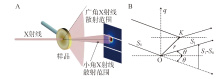
Fig.1
Working principle of SAXS: (A) X-ray after penetrating the sample; (B) schematic diagram of SAXS"
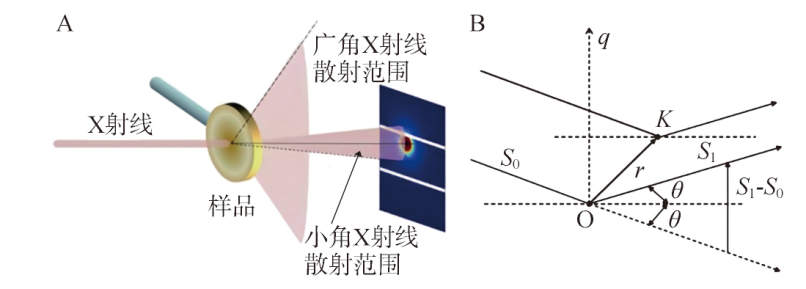
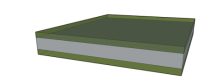
Fig.2
Schematic diagram of the planar 2-centrosymmetric homogeneous model[43]"
Tab.1
Scattering peak position ratios of typical nanostructures[45,47]"
| 结构名称 | 散射峰位置比值 |
|---|---|
| 层状结构(LAM) | 1: 2: 3: 4: 5: 6: 7 |
| 六方密堆积柱状结构(HCPC) | |
| 简单立方结构(PC) | |
| 体心立方结构(BCC) | |
| 面心立方结构(FCC) | |
| 六方密堆积球状结构(HCPS) | |
| 双金刚石结构(DD) | |
| 空间群立方形貌( | |
| 空间群立方形貌( |

Fig.3
Typical SAXS graphs for lamellar and hexagonal mesophases: (A) P84_60/15/25_H2; (B) P123_50/25/15_H2; (C) P123_60/35/5_L; (D) P84_70/ 25/5_L[50]"

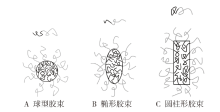
Fig.4
Schematic diagram of micelles with different shapes formed by block copolymers[43]"
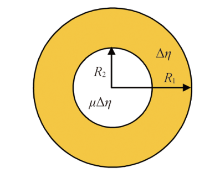
Fig.5
Schematic diagram of the spherical shell model[43]"
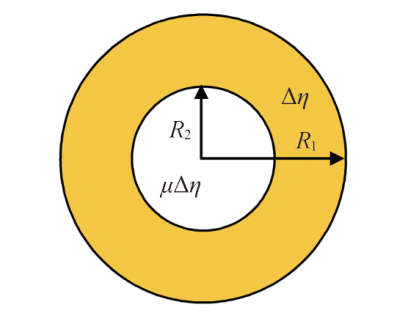
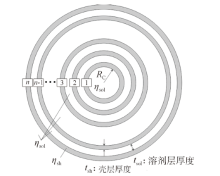
Fig.6
Schematic diagram of multilamellar vesicles[43]"
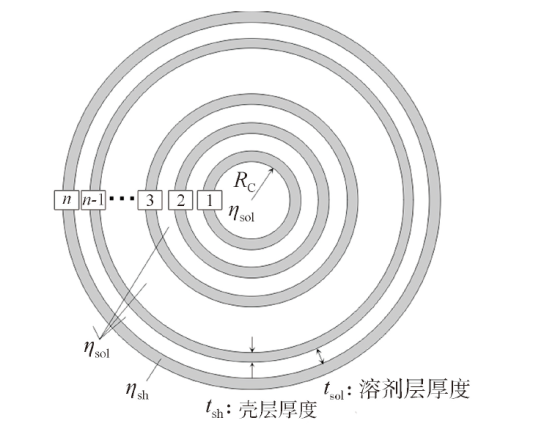
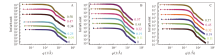
Fig.7
SAXS intensity curves of liposomes under different conditions: (A) SAXS intensity I (q) of liposomal structure of DSPC with different concentrations of PEG; (B) DSPC with 2% of cholesterol at different polymer mass fractions; (C) DSPC with 5% of cholesterol at different polymer mass fractions[58]"
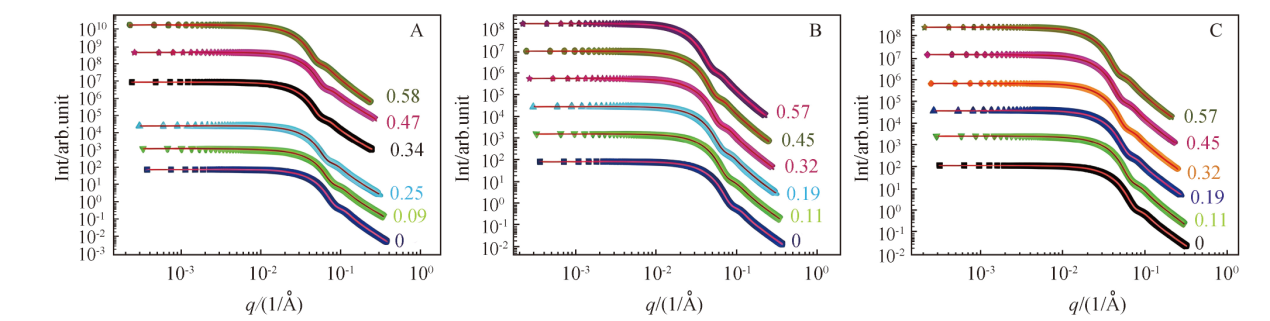
Fig.8
Structure factor curves of liposomes under different conditions: (A) structure factor of liposomal structure of DSPC with different concentrations of PEG; (B) structure factor of DSPC with 5% cholesterol at different polymer mass fractions[58]"
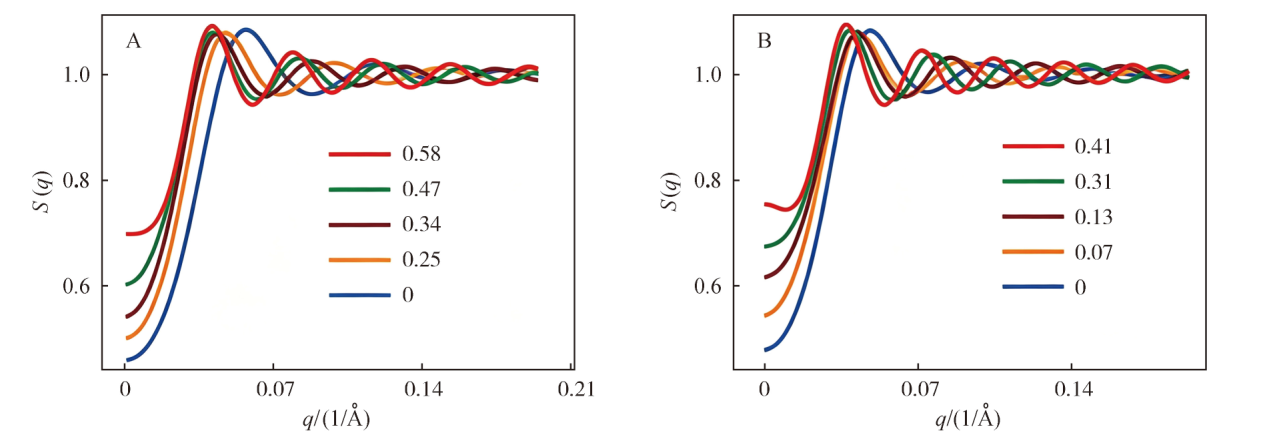
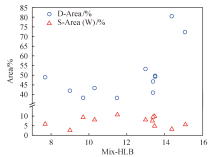
Fig.9
Relationship between HLB values and phase region ratio [61]"
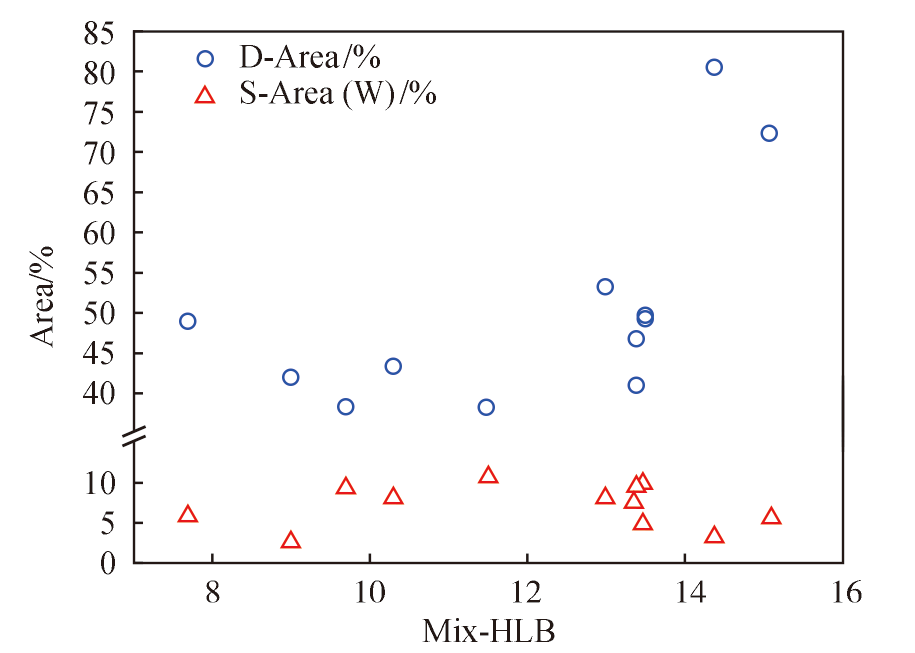
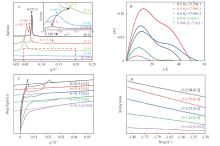
Fig.10
SAXS results of microemulsions with different water content: (A) q vs. I (q), the inset in the upper right corner shows an enlargement of the red dashed box; (B) distance distribution function p (r) obtained from Fourier transform; (C) fitting results according to Porod’s law; (D) fractal dimension obtained from fitting SAXS data[61]"
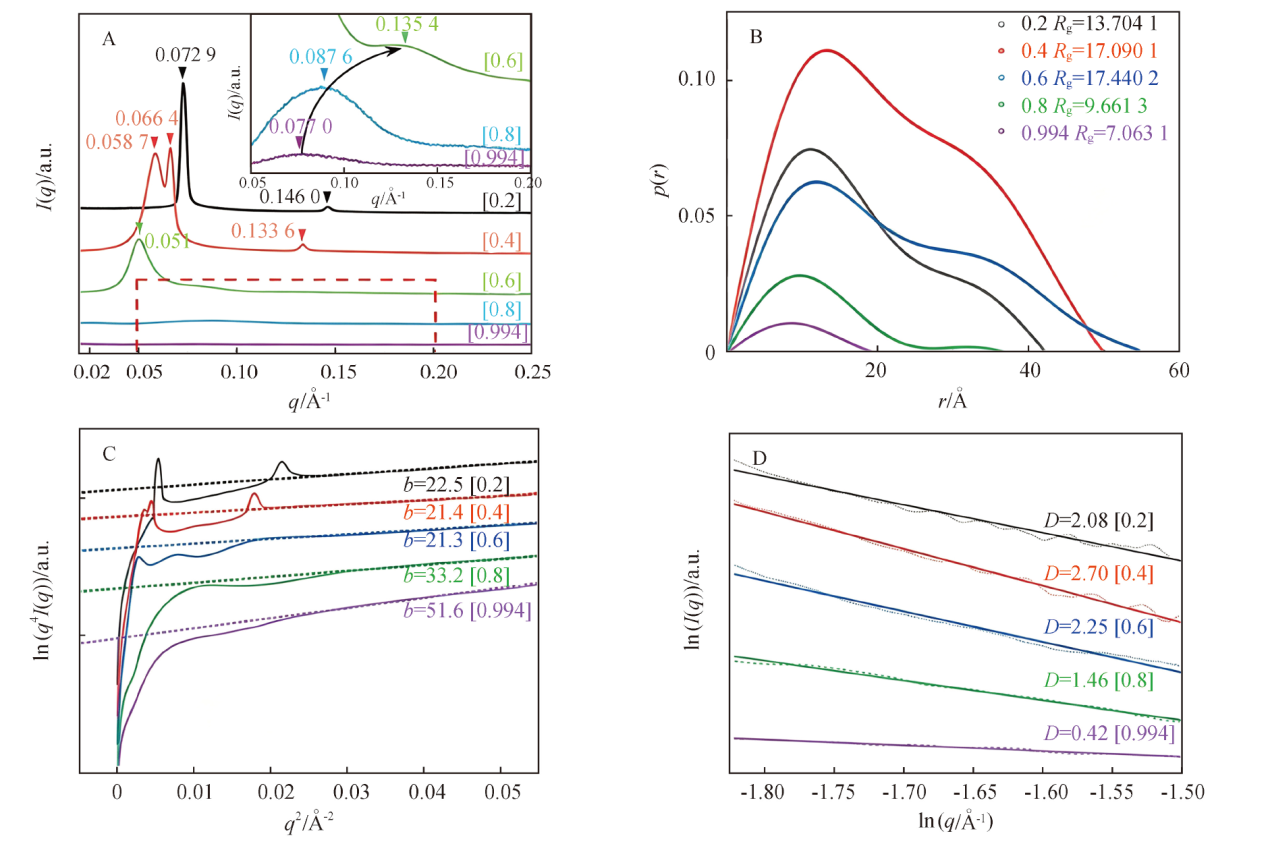
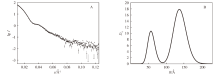
Fig.11
(A) Experimental SAXS data of silicasol nanoparticles in solution (points) and best fit obtained by the program MIXTURE (solid line) ; (B) volume size distributions reconstructed using the program MIXTURE[38]"
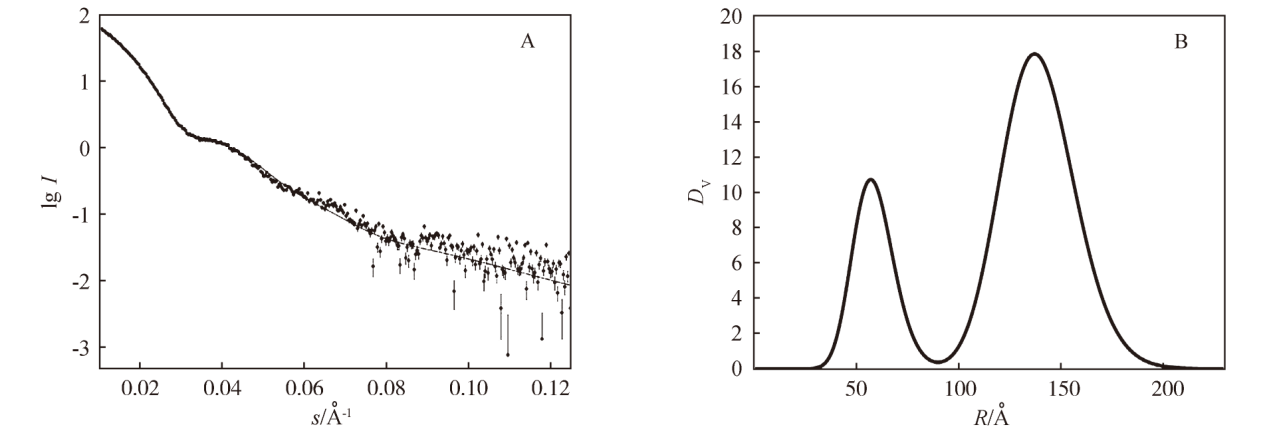
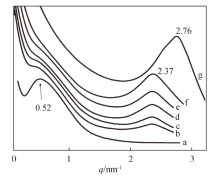
Fig.12
SAXS Patterns of polyamide and its 4C8-MT nanocomposites: (a) pure PA; (b) PA+4C8-MT (1%); (c) PA+4C8-MT (2%); (d) PA+4C8-MT (3%); (e) PA+4C8-MT (5%); (f) PA +4C8-MT (10%) ; (g) pure 4C8-MT[68]"
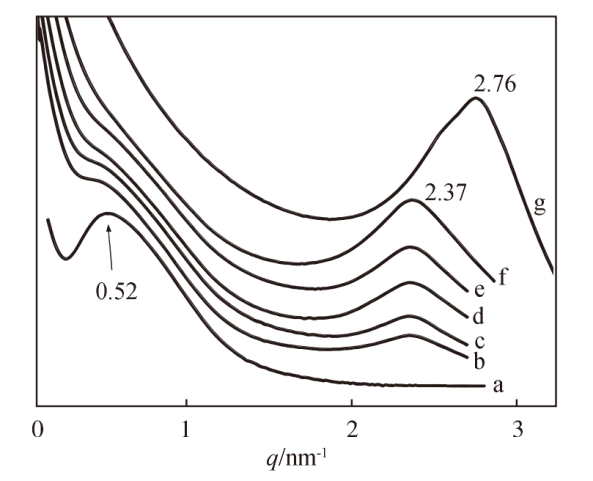
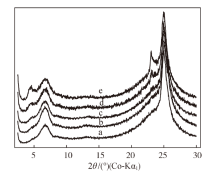
Fig.13
X-ray diffraction patterns of polyamide and PA/4C8-MT nanocomposites with various 4C8-MT content: (a) pure PA; (b) PA+4C8-MT (1%) ; (c) PA+4C8-MT (2%) ; (d) PA+4C8-MT (5%) ; (e) PA+4C8-MT (10%)[68]"
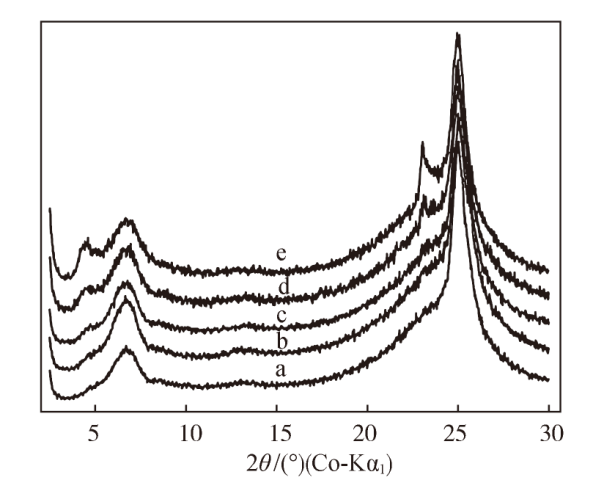
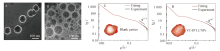
Fig.14
Cryo-TEM images of the blank carrier (A) and VC-IP LCNPs (B). SAXS curves and electron density maps of the blank carrier (C) and VC-IP LCNPs (D)[71]"
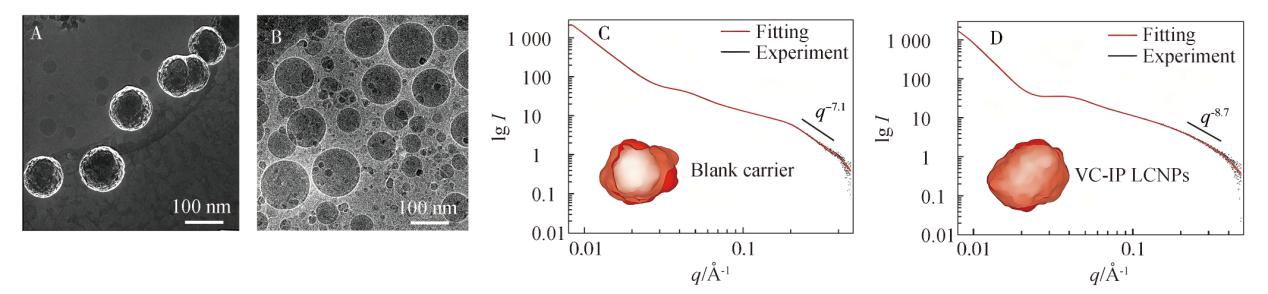
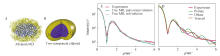
Fig.15
(A) Snapshot of the DDM micelle obtained from all-atom molecular dynamics simulations; (B) Two-component ellipsoid model of the micelle; (C) Comparison of the SAXS curve with the one calculated from unbiased free molecular dynamics simulations; (D) Comparison of the SAXS curve with the best-fitting curves from the two-component model[76]"
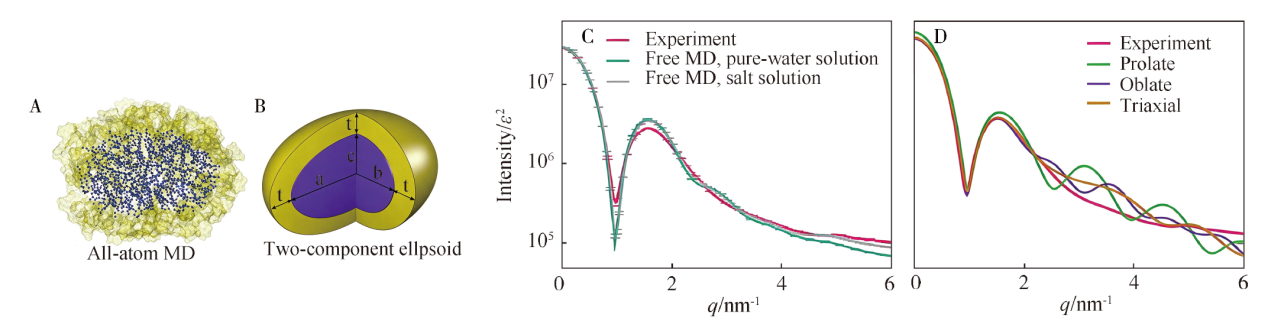
Fig.16
(A) The pair-distance distribution function P (r) calculated from the SAXS curves using the GNOM software; (B) Parts of the P (r) function of the two-component ellipsoid model with shape fluctuations were replaced with the experimentally measured P (r) function[76]"
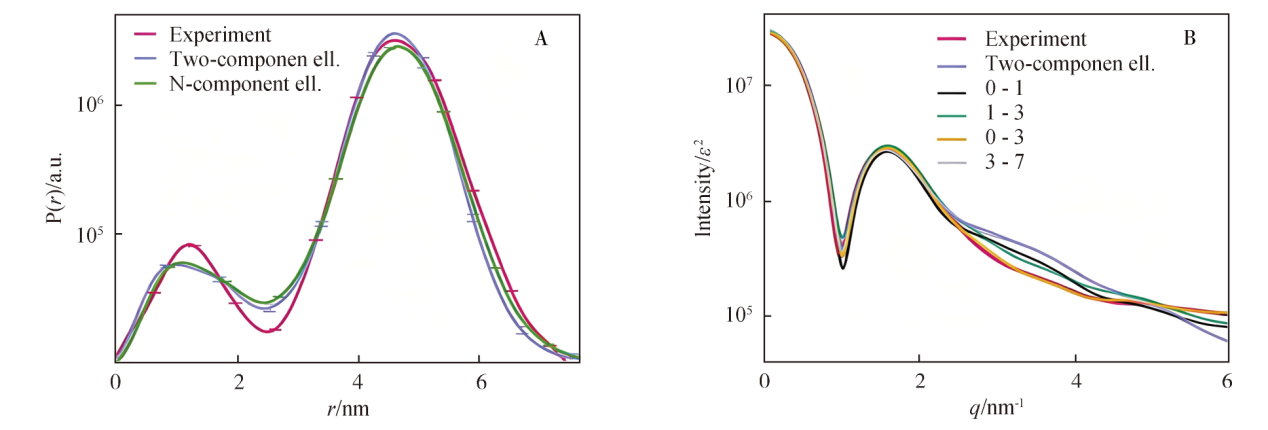
Fig.17
(A) FT-IR spectra of PVP, Pt-PVP, MAD, and Pt-MAD samples. (B) Representative DLS particle size distribution curves of Pt-MAD liposomes and Pt-PVP liposomes. (C) Representative cryo-TEM image of vitrified Pt-MAD liposome suspension measured at room temperature. (D) SAXS intensity curves of the Pt-MAD particles and Pt-MAD liposomes measured in a mixture of water and 1, 3-butanediol at room temperature. The solid black curves correspond to the best fits of the data using the models described in the text. (E) Schematic illustration of the Pt-MAD liposome[77]"
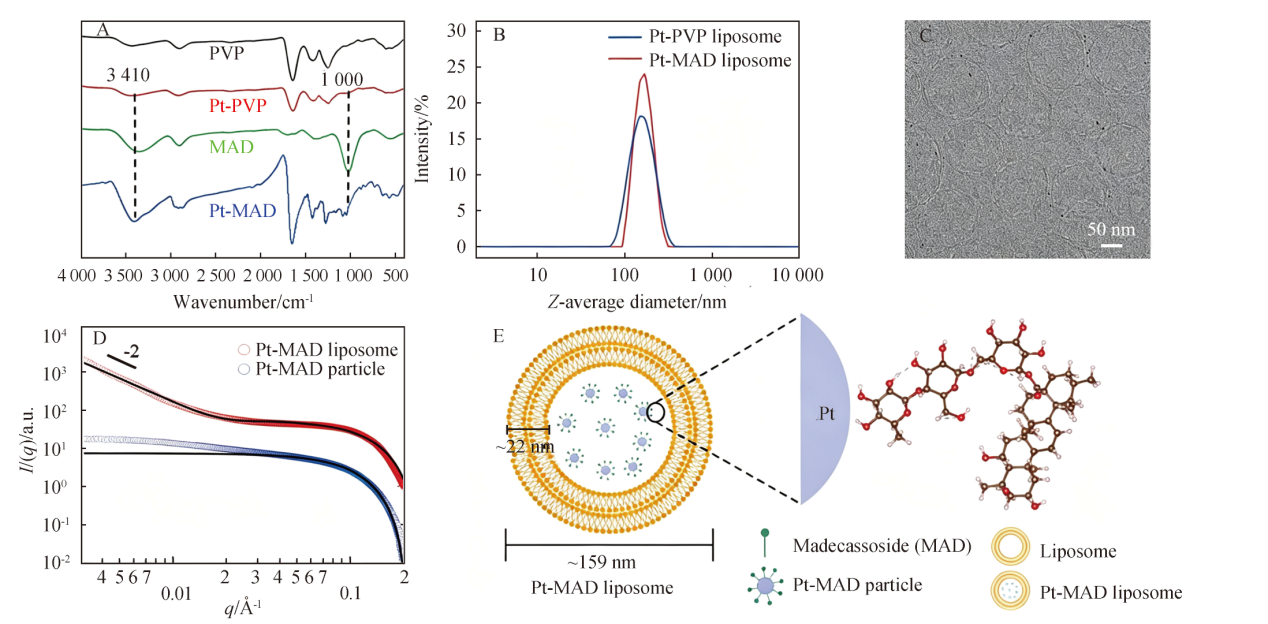
Fig.18
Vacuum auto-injection device for solution samples at BL19U2 beamline for biological small-angle scattering of synchrotron radiation [78-80]"
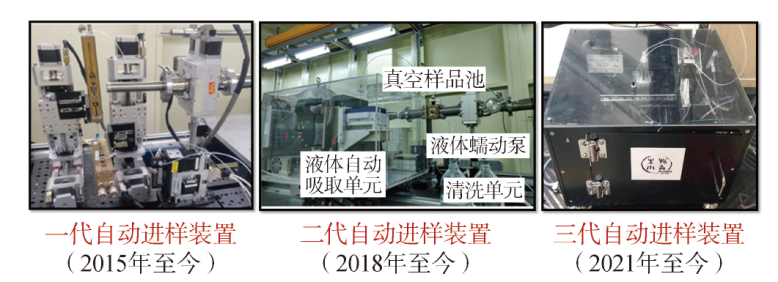
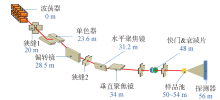
Fig.19
Optical layout of the BL19U2 BioSAXS beamline with the source-to main-element distances[80]"
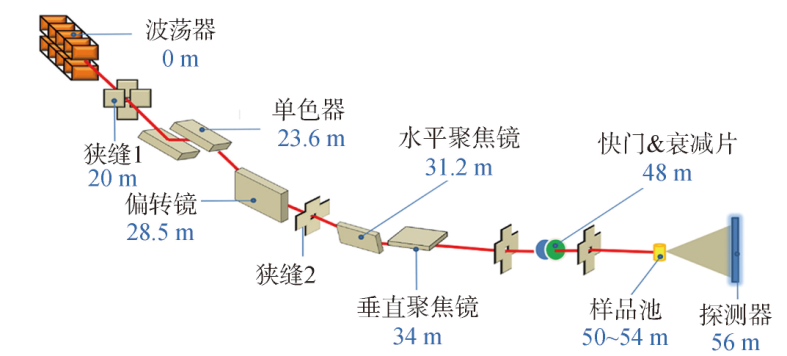
Fig.20
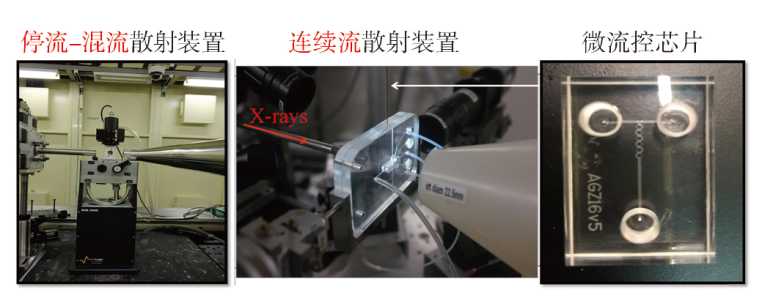
SEC-SAXS scattering experimental setup at BL19U2 beamline for biological small-angle scattering of synchrotron radiation [79,80]"
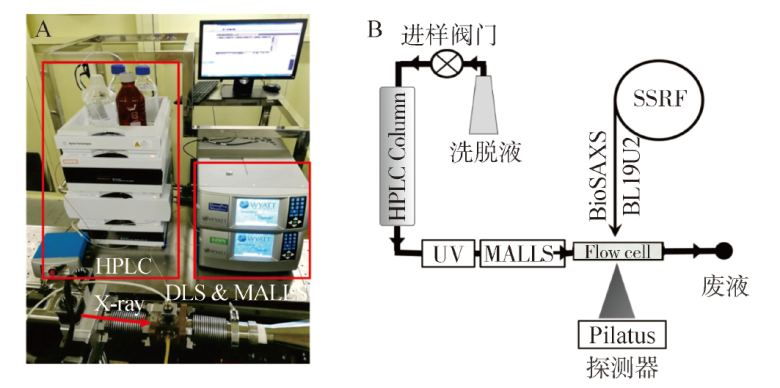
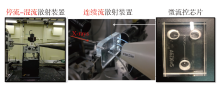
Fig.21
Time-resolved scattering experimental setup at BL19U2 beamline for biological small-angle scattering of synchrotron radiation [96]"
| [1] |
Costa R, Santos L. Delivery systems for cosmetics: from manufacturing to the skin of natural antioxidants[J]. Powder Technology, 2017, 322: 402-416.
doi: 10.1016/j.powtec.2017.07.086 |
| [2] |
Serb A F, Georgescu M, Onulov R, et al. Mass-spectrometry-based research of cosmetic ingredients[J]. Molecules, 2024, 29(6): 1336-1349.
doi: 10.3390/molecules29061336 |
| [3] |
Marto J, Gouveia L F, Gonçalves L, et al. Design of novel starch-based Pickering emulsions as platforms for skin photoprotection[J]. Journal of Photochemistry and Photobiology B: Biology, 2016, 162: 56-64.
doi: 10.1016/j.jphotobiol.2016.06.026 |
| [4] |
Hoffmann S, Kleinstreuer N, Alépée N, et al. Non-animal methods to predict skin sensitization (I) : the cosmetics europe database[J]. Critical Reviews in Toxicology, 2018, 48(5): 344-358.
doi: 10.1080/10408444.2018.1429385 |
| [5] |
Saini K C, Rani A, Gupta S K, et al. Algae a potential source in cosmetics: current status, challenges, and economic implications[J]. Indian Journal of Microbiology, 2024, 64(4): 1445-1460.
doi: 10.1007/s12088-024-01263-0 pmid: 39678953 |
| [6] |
Zuo Tingting, Song Xiping. Applications of small angle X-ray scattering technique in material study[J]. Materials Letters, 2011, 65(12): 1892-1895.
doi: 10.1016/j.matlet.2011.03.072 |
| [7] | Wang K, Luo D, Ma Q, et al. Advanced in situ and operando characterization techniques for zinc-ion batteries[J]. Energy Technology, 2024, 12(9): 2400618-2400630. |
| [8] |
Ramani R, Alam S. A comparative study on the influence of alkyl thiols on the structural transformations in P3HT/PCBM and P3OT/PCBM Blends[J]. Polymer, 2013, 54(25): 6785-6792.
doi: 10.1016/j.polymer.2013.10.023 |
| [9] | 李娜, 刘广峰, 李怡雯, 等. 同步辐射小角散射技术在蛋白质科学研究中的应用与展望[J]. 生命科学, 2025, 37(7): 828-843. |
| [10] | 朱育平. 小角X射线散射——理论、测试、计算及应用[M]. 北京: 化学工业出版社, 2008: 1-218. |
| [11] | 曾艺晗, 丁春香, 林秉群, 等. 小角X射线散射技术在聚合物及其复合材料中的应用研究进展[J]. 复合材料学报, 2023, 40(8): 4355-4373. |
| [12] |
Feng J, Kriechbaum M, Liu L. In situ capabilities of small angle X-ray scattering[J]. Nanotechnology Reviews, 2019, 8(1): 352-369.
doi: 10.1515/ntrev-2019-0032 |
| [13] | Seidlitz A, Thurn-Albrecht T. Small-angle X-ray scattering for morphological analysis of semicrystalline polymers[J]. Polymer Testing, 2016, 52: 151-164. |
| [14] |
Yamamoto K. Principle of small-angle X-ray scattering and application to rubber materials[J]. Nippon Gomu Kyokaishi, 2021, 94(4): 136-141.
doi: 10.2324/gomu.94.136 |
| [15] |
Lipfert J, Doniach S. Small-angle X-ray scattering from rna, proteins, and protein complexes[J]. Annual Review of Biophysics and Biomolecular Structure, 2007, 36(1): 307-327.
doi: 10.1146/biophys.2007.36.issue-1 |
| [16] |
Blanchet C E, Svergun D I. Small-angle X-ray scattering on biological macromolecules and nanocomposites in solution[J]. Annual Review of Physical Chemistry, 2013, 64(1): 37-54.
doi: 10.1146/physchem.2013.64.issue-1 |
| [17] | 秦绪峰, 房春晖, 孙巧花, 等. Rb2SO4水溶液结构的同步辐射反射法初步研究[J]. Journal of Salt Lake Research, 2026, 34(1): 88-93. |
| [18] | Maier J D, Wagner J, Gaus K. Measurable structure factors of dense dispersions containing polydisperse optically inhomogeneous particles[J]. Journal of Applied Crystallography, 2024, 57(5): 1082-1093. |
| [19] | Sun Y, Li X, Chen R, et al. Recent advances in structural characterization of biomacromolecules in foods via small-angle X-ray scattering[J]. Frontiers in Nutrition, 2022, 9: 905617. |
| [20] | McConnell G A, Gast A P. Predicting disorder-order phase transitions in polymeric micelles[J]. Physical Review E: Statistical Physics, Plasmas, Fluids, and Related Interdisciplinary Topics, 1996, 54(5): 5447-5455. |
| [21] |
Castelletto V, Hamley I W. Modelling small-angle scattering data from micelles[J]. Current Opinion in Colloid and Interface Science, 2002, 7(3/4): 167-172.
doi: 10.1016/S1359-0294(02)00043-2 |
| [22] |
Da Vela S, Svergun D I. Methods, development and applications of small-angle X-ray scattering to characterize biological macromolecules in solution[J]. Current Research in Structural Biology, 2020, 2: 164-170.
doi: 10.1016/j.crstbi.2020.08.004 pmid: 34235476 |
| [23] |
Li M, Yin P. Model2SAS: software for small-angle scattering data calculation from custom shapes[J]. Journal of Applied Crystallography, 2022, 55(3): 621-628.
doi: 10.1107/S1600576722002886 |
| [24] | Kronenberger S, Gupta N, Gould B, et al. Random field reconstruction of three-phase polymer structures with anisotropy from 2d-small-angle scattering data[J]. Soft Matter, 2024, 20(42): 7812-7821. |
| [25] | Lattman E E, Grant T D, Snell E H. Shape reconstructions from small angle scattering data[M]. Oxford: Oxford University Press, 2018: 45-129. |
| [26] | Morimoto Y, Inoue K, Shoji T, et al. Computational analysis of protein structure by small-angle X-ray scattering[C] // American Institute of Physics. AIP conference proceedings. Melville: American Institute of Physics, 2013: 630-632. |
| [27] | Kozak M, Granja C, Leroy C, et al. Small angle X-ray scattering in structural investigation of selected biological systems[C] // American Institute of Physics. AIP conference proceedings. Melville: American Institute of Physics, 2007, 958: 178-182. |
| [28] |
Petoukhov M V, Billas I M L, Takacs M, et al. Reconstruction of quaternary structure from X-ray scattering by equilibrium mixtures of biological macromolecules[J]. Biochemistry, 2013, 52(39): 6844-6855.
doi: 10.1021/bi400731u pmid: 24000896 |
| [29] |
Delhommel F, Gabel F, Sattler M. Current approaches for integrating solution NMR spectroscopy and small-angle scattering to study the structure and dynamics of biomolecular complexes[J]. Journal of Molecular Biology, 2020, 432(9): 2890-2912.
doi: S0022-2836(20)30235-7 pmid: 32199983 |
| [30] | Petoukhov M V, Tuukkanen A. Sas-based structural modelling and model validation[M]//Advances in Experimental Medicine and Biology. Singapore: Springer Singapore, 2017: 87-105. |
| [31] |
Walther D, Cohen F E, Doniach S. Reconstruction of low-resolution three-dimensional density maps from one-dimensional small-angle X-ray solution scattering data for biomolecules[J]. Journal of Applied Crystallography, 2000, 33(2): 350-363.
doi: 10.1107/S0021889899015976 |
| [32] |
He H, Liu C, Liu H. Model reconstruction from small-angle X-ray scattering data using deep learning methods[J]. iScience, 2020, 23(3): 100906.
doi: 10.1016/j.isci.2020.100906 |
| [33] |
De Lima C R M, De Morais W A, Silva G T M, et al. Preparation and characterization of dispersions based on chitosan and poly (styrene sulfonate)[J]. Colloid and Polymer Science, 2017, 295(6): 1071-1078.
doi: 10.1007/s00396-017-4099-4 |
| [34] | Zwart P, Liu H. Accelerated macromolecular solution structure recovery[J]. Nature Precedings, 2011: 6521. |
| [35] | Shuai L, Hongyu H. Elucidating the solution structures of multi-domain proteins and complexes by small angle X-ray scattering[J]. Chinese Physics B, 2009, 18(11): 4722-4728. |
| [36] | Petoukhov M V, Rakitina T V, Agapova Yu K, et al. Molecular dynamics and small-angle X-ray scattering: a comparison computational and experimental approaches to studying the structure of biological complexes[J]. Crystallography Reports, 2024, 69(5): 802-810. |
| [37] |
Kojima M, Timchenko A A, Higo J, et al. Structural refinement by restrained molecular-dynamics algorithm with small-angle X-ray scattering constraints for a biomolecule[J]. Journal of Applied Crystallography, 2004, 37(1): 103-109.
doi: 10.1107/S0021889803026165 |
| [38] |
Kryukova A E, Konarev P V, Volkov V V, et al. Restoring silicasol structural parameters using gradient and simulation annealing optimization schemes from small-angle X-ray scattering data[J]. Journal of Molecular Liquids, 2019, 283: 221-224.
doi: 10.1016/j.molliq.2019.03.070 |
| [39] |
De Castro N V, Ferreira G A, Loh W. Processing effects on bilayer structures formation and rheological behavior of softeners using cationic di(hydrogenated tallow) dimethylammonium chloride aqueous dispersions[J]. Journal of Surfactants and Detergents, 2024, 27(6): 927-936.
doi: 10.1002/jsde.v27.6 |
| [40] |
Gonçalves R A, Lam Y M, Lindman B. Double-chain cationic surfactants: swelling, structure, phase transitions and additive effects[J]. Molecules, 2021, 26(13): 3946.
doi: 10.3390/molecules26133946 |
| [41] |
Wang L, Chen X, Sun Z, et al. Dopant-mediated interactions in a lecithin lamellar phase[J]. Journal of Dispersion Science and Technology, 2008, 29(7): 985-990.
doi: 10.1080/01932690701808668 |
| [42] |
Garnweitner G, Smarsly B, Assink R, et al. Characterization of self-assembled lamellar thermoresponsive silica-hydrogel nanocomposite films[J]. Langmuir, 2004, 20(22): 9811-9820.
pmid: 15491219 |
| [43] | Kohlbrecher J. User guide for the sasfit software package[CP]. Villigen: Paul Scherrer Institut, 2024. |
| [44] |
Poulos A S, Nania M, Lapham P, et al. Microfluidic saxs study of lamellar and multilamellar vesicle phases of linear sodium alkylbenzenesulfonate[J]. Langmuir, 2016, 32(23): 5852-5861.
doi: 10.1021/acs.langmuir.6b01240 |
| [45] | 吕冬, 卢影, 门永锋. 小角X射线散射技术在高分子表征中的应用[J]. 高分子学报, 2021 (8): 1023-1038. |
| [46] |
Chu B, Hsiao B S. Small-angle X-ray scattering of polymers[J]. Chemical Reviews, 2001, 101(6): 1727-1761.
pmid: 11709997 |
| [47] | Hsiao B S, Chu B, Burger C. Synchrotron X-ray scattering of polymer nanocomposites[J]. Synchrotron Radiation News, 2002, 15(5): 20-34. |
| [48] |
Xiang M, Lyu D, Qin Y, et al. Microstructure of bottlebrush poly (n-alkyl methacrylate) s beyond side chain packing[J]. Polymer, 2020, 210: 123034.
doi: 10.1016/j.polymer.2020.123034 |
| [49] | Ding S, Fang C, Wang X, et al. Crystallization-driven microstructure changes during microphase separation for environment-friendly thermoplastic triblock copolymer elastomers[J]. Polymer, 2020, 186: 121788. |
| [50] | Qavi S, Foudazi R. Rheological characteristics of mesophases of block copolymer solutions[J]. Rheologica Acta, 2019, 58(11): 829-841. |
| [51] |
Pedersen J S, Gerstenberg M C. Scattering form factor of block copolymer micelles[J]. Macromolecules, 1996, 29(4): 1363-1365.
doi: 10.1021/ma9512115 |
| [52] |
Pedersen J S. Form factors of block copolymer micelles with spherical, ellipsoidal and cylindrical cores[J]. Journal of Applied Crystallography, 2000, 33(2): 637-640.
doi: 10.1107/S0021889899012248 |
| [53] |
Berke G, Pedersen J S, Egelhaaf S U, et al. Static structure factor of polymerlike micelles: overall dimension, flexibility, and local properties of lecithin reverse micelles in deuterated isooctane[J]. Physical Review E, 1997, 56(5): 5772-5788.
doi: 10.1103/PhysRevE.56.5772 |
| [54] |
Baraldi L, Alfarano S R, Sousa F, et al. Beating-wave analysis of small-angle X-ray scattering of unilamellar liposomes loaded with model drug benzocaine[J]. Nanoscale, 2025, 17(43): 25003-25009.
doi: 10.1039/D5NR01468A |
| [55] |
Varga Z, Wacha A, Bóta A. Osmotic shrinkage of sterically stabilized liposomes as revealed by time-resolved small-angle X-ray scattering[J]. Journal of Applied Crystallography, 2014, 47(1): 35-40.
doi: 10.1107/S1600576713030513 |
| [56] |
Baraldi L, Alfarano S R, Sousa F, et al. Beating-wave analysis of small-angle X-ray scattering of unilamellar liposomes loaded with model drug benzocaine[J]. Nanoscale, 2025, 17(43): 25003-25009.
doi: 10.1039/D5NR01468A |
| [57] |
Li Y, Zhang J, Song P, et al. Small-angle X-ray scattering for pegylated liposomal doxorubicin drugs: an analytical model comparison study[J]. Molecular Pharmaceutics, 2023, 20(9): 4654-4663.
doi: 10.1021/acs.molpharmaceut.3c00396 |
| [58] |
Nasrollahi A, Sharifi S, Barahoie D. Liposomal suspension of dspc/cholesterol with polyethylene glycol: a study by light and X-ray scattering[J]. Physics and Chemistry of Liquids, 2014, 53(2): 221-229.
doi: 10.1080/00319104.2014.966907 |
| [59] |
Fanun M. Microstructure of mixed nonionic surfactants microemulsions studied by SAXS and DLS[J]. Journal of Dispersion Science and Technology, 2009, 30(1): 115-123.
doi: 10.1080/01932690802483817 |
| [60] |
Carvalho F C, Silva H R, Luz G M, et al. Rheological, mechanical and adhesive properties of surfactant-containing systems designed as a potential platform for topical drug delivery[J]. Journal of Biomedical Nanotechnology, 2012, 8(2): 280-289.
pmid: 22515079 |
| [61] | Tang M, Ma W, Sheng W, et al. The elucidation of the critical role of HLB value in microemulsions formulation[J]. ChemNanoMat, 2025, 11(5): e202401678. |
| [62] |
Nasu A. Rheological analysis of dispersed fine particles suspensions and their applications for cosmetics[J]. Journal of the Japan Society of Colour Material, 2012, 85(6): 249-253.
doi: 10.4011/shikizai.85.249 |
| [63] | Vijay A, Kaur A, Vaidya S. Synergistic role of model-independent and model-dependent approaches for determining size and shape of au nanostructures using SAXS[J]. Particle & Particle Systems Characterization, 2022, 39(6): 2101325. |
| [64] |
Bolze J, Ballauff M, Kijlstra J, et al. Application of small-angle X-ray scattering as a tool for the structural analysis of industrial polymer dispersions[J]. Macromolecular Materials and Engineering, 2003, 288(6): 495-502.
doi: 10.1002/mame.v288:6 |
| [65] |
Garnweitner G, Smarsly B, Assink R, et al. Characterization of self-assembled lamellar thermoresponsive silica-hydrogel nanocomposite films[J]. Langmuir, 2004, 20(22): 9811-9820.
pmid: 15491219 |
| [66] |
Balmer J A, Mykhaylyk O O, Armes S P, et al. Time-resolved small-angle X-ray scattering studies of polymer-silica nanocomposite particles: initial formation and subsequent silica redistribution[J]. Journal of the American Chemical Society, 2010, 133(4): 826-837.
doi: 10.1021/ja106924t |
| [67] |
Maldonado A, Ober R, Gulik-Krzywicki T, et al. The sponge phase of a mixed surfactant system[J]. Journal of Colloid and Interface Science, 2007, 308(2): 485-490.
pmid: 17266977 |
| [68] |
Jankovič L, Végsö K, Šiffalovič P, et al. XRD, SAXS, and PALS investigations of three different polymers reinforced with tetraoctylammonium exchanged montmorillonite[J]. International Journal of Polymer Analysis and Characterization, 2016, 21(6): 524-536.
doi: 10.1080/1023666X.2016.1176760 |
| [69] | 刘慧民, 马晓原, 赵永红. 液晶乳液制备的影响因素及其在化妆品中的应用[J]. 日用化学工业, 2022, 52(7): 721-726. |
| [70] | 吴晓晴, 桂双英, 陈玉林, 等. 水杨酸甲酯立方液晶的研制[J]. 中国新药杂志, 2015, 24(7): 781-784. |
| [71] |
Han X, Yan Q, Gao N, et al. Biocompatible lyotropic nanocarriers for improved delivery of ascorbyl tetraisopalmitate in skincare[J]. Langmuir, 2025, 41(5): 3278-3290.
doi: 10.1021/acs.langmuir.4c04187 |
| [72] | Yamashita Y, Sakamoto K. Structural analysis of formulations[M] // Cosmetic science and technology. Amsterdam: Elsevier, 2017: 635-655. |
| [73] | Dudhat K, Chotaliya M, Bukya M. Surfactants and polymeric micelles: innovations in transdermal and topical cosmeceutical delivery[C]. E3S Web of Conferences, 2025, 619: 03014. |
| [74] |
Diogo P, Amparo F Faustino M, Palma P J, et al. May carriers at nanoscale improve the endodontic’s future?[J]. Advanced Drug Delivery Reviews, 2023, 195: 114731.
doi: 10.1016/j.addr.2023.114731 |
| [75] |
Sharma R, Chauhan S, Thakur N, et al. Anti-HIV drugs (emtricitabine and lamivudine) mediated micellization behavior of anionic and cationic surfactants: a thermodynamic investigation[J]. Chemical Physics Impact, 2024, 8: 100528.
doi: 10.1016/j.chphi.2024.100528 |
| [76] | Ivanović M T, Hermann M R, Wójcik M, et al. Small-angle X-ray scattering curves of detergent micelles: effects of asymmetry, shape fluctuations, disorder, and atomic details[J]. The Journal of Physical Chemistry Letters, 2020, 11(38): 7864-7871. |
| [77] |
Sun J, Zhang D Y, Wang D, et al. Madecassoside-functionalized platinum-based liposomes for sensitive skin: enhancing rapid soothing and barrier homeostasis[J]. Colloids and Surfaces B: Biointerfaces, 2026, 259: 115299.
doi: 10.1016/j.colsurfb.2025.115299 |
| [78] | Li Y W, Liu G F, Wu H J, et al. BL19U2: small-angle X-ray scattering beamline for biological macromolecules in solution at SSRF[J]. Nuclear Science and Techniques, 2020, 31(12): 1-9. |
| [79] |
Liu G, Li Y, Wu H, et al. Upgraded SSRF BL19U2 beamline for small-angle X-ray scattering of biological macromolecules in solution[J]. Journal of Applied Crystallography, 2018, 51(6): 1633-1640.
doi: 10.1107/S160057671801316X |
| [80] |
Li N, Li X, Wang Y, et al. The new NCPSS BL19U2 beamline at the SSRF for small-angle X-ray scattering from biological macromolecules in solution[J]. Journal of Applied Crystallography, 2016, 49(5): 1428-1432.
doi: 10.1107/S160057671601195X |
| [81] |
Shimizu N. Conformational state estimation of biological macromolecules in solution using BioSAXS[J]. Nihon Kessho Gakkaishi, 2023, 65(1): 42-50.
doi: 10.5940/jcrsj.65.42 |
| [82] | Osaka K, Matsumoto T, Taniguchi Y, et al. High-throughput and automated SAXS/USAXS experiment for industrial use at BL19B2 in SPring-8[C]. Melville: American Institute of Physics, 2016, 1799: 080003. |
| [83] | Brennich M E, Pernot P. High-throughput BioSAXS at ESRF BM29[Z]. 2017. |
| [84] |
Liu S, Li Z, Yu B, et al. Recent advances on protein separation and purification methods[J]. Advances in Colloid and Interface Science, 2020, 284: 102254.
doi: 10.1016/j.cis.2020.102254 |
| [85] |
Su W, Yin J, Wang R, et al. Self-assembled natural biomacromolecular fluorescent hydrogels with tunable red edge effects[J]. Colloids and Surfaces A: Physicochemical and Engineering Aspects, 2021, 612: 125993.
doi: 10.1016/j.colsurfa.2020.125993 |
| [86] |
Morishima K, Inoue R, Nakagawa T, et al. Size-exclusion chromatography-small-angle neutron scattering system optimized for an instrument with medium neutron flux[J]. Journal of Applied Crystallography, 2025, 58(2): 595-602.
doi: 10.1107/S1600576725000779 |
| [87] | Anonymous. Size exclusion chromatography coupled small angle X-ray scattering with tandem multiangle light scattering at the SIBYLS Beamline[M] //Colowick S P, Kaplan N O, Tabor Celia W, et al. Methods in enzymology. Amsterdam: Elsevier, 2022: 191-219. |
| [88] |
Narloch I, Wejnerowska G. An overview of the analytical methods for the determination of organic ultraviolet filters in cosmetic products and human samples[J]. Molecules, 2021, 26(16): 4780.
doi: 10.3390/molecules26164780 |
| [89] |
Akhlaghi S P, Da Silveira Balestrin L B, Brinatti C, et al. Preparation and characterization of stabilizer-free phytantriol-based water-in-oil internally liquid crystalline emulsions[J]. Journal of Pharmaceutical Sciences, 2020, 109(6): 2024-2032.
doi: S0022-3549(20)30131-3 pmid: 32179079 |
| [90] |
Miller R C, Cummings C, Huang Q, et al. Inline small-angle X-ray scattering-coupled chromatography under extreme hydrostatic pressure[J]. Protein Science, 2022, 31(12): e4472.
doi: 10.1002/pro.v31.12 |
| [91] |
Sekhwama M, Mpofu K, Sivarasu S, et al. Applications of microfluidics in biosensing[J]. Discover Applied Sciences, 2024, 6(6): 203.
doi: 10.1007/s42452-024-05869-3 |
| [92] |
Pham N, Radajewski D, Round A, et al. Coupling high throughput microfluidics and small-angle X-ray scattering to study protein crystallization from solution[J]. Analytical Chemistry, 2017, 89(4): 2282-2287.
doi: 10.1021/acs.analchem.6b03492 pmid: 28192906 |
| [93] | Svergun D, Malfois M, Douka M, et al. Small-angle X-ray scattering at high brilliance European synchrotrons for biotechnology and nano-technology[Z]. 2007. |
| [94] |
Tan A, Lam Y Y, Sun X, et al. Monocytic cell-induced phase transformation of circulating lipid-based liquid crystalline nanosystems[J]. Materials, 2020, 13(4): 1013.
doi: 10.3390/ma13041013 |
| [95] |
Feng B, Shang Y, Li C L, et al. Study on the application and performance of liquid crystal emulsion system in sunscreen products[J]. Liquid Crystals, 2024, 51(11): 1835-1846.
doi: 10.1080/02678292.2024.2361285 |
| [96] | 李娜, 宋攀奇, 刘广峰, 等. 一种基于高能光源的微流控液体混合实验装置及其应用: CN202310683279.7[P]. 2026-01-24. |
| [97] |
Tung C H, Chang S Y, Chen H L, et al. Small angle scattering of diblock copolymers profiled by machine learning[J]. The Journal of Chemical Physics, 2022, 156(13): 134901.
doi: 10.1063/5.0086822 |
| [98] |
Wong K, Qi R, Yang Y, et al. Predicting colloidal interaction parameters from small-angle X-ray scattering curves using artificial neural networks and Markov Chain Monte Carlo sampling[J]. JACS Au, 2024, 4(9): 3492-3500.
doi: 10.1021/jacsau.4c00368 pmid: 39328751 |
| [99] | 谷文俊, 张晟恺, 邱晓梦, 等. 基于双模态的小角散射图像结构表征技术研究[J]. 计算机工程与科学, 2023, 45(8): 1443-1452. |
| [1] | Congrui Zeng,Qi Liu,Sisi Chang,Hua Zhao. Research on the impact of environmental temperature and humidity on sensory evaluation and moisturizing efficacy of cosmetics [J]. China Surfactant Detergent & Cosmetics, 2026, 56(3): 339-346. |
| [2] | Wanping Yu,Li Li,Haiyan Wang,Jianbo Sun. Current status of analytical detection of Per- and polyfluoroalkyl substances in cosmetics and research progress on the application of molecular network [J]. China Surfactant Detergent & Cosmetics, 2026, 56(3): 368-375. |
| [3] | Huixiang Liu, Feiyan Diao, Xiaoyun Wu, Junjie Li, Chunlin Liu, Qiyan Li. Determination of 12 whitening ingredients in cosmetics using UPLC-MS/MS [J]. China Surfactant Detergent & Cosmetics, 2026, 56(1): 129-136. |
| [4] | Lingli Wang, Tingting Li, Ting Ren, Zhengrui Niu, Zhenxi Yu. Current status and reflection on change management for special cosmetics in China [J]. China Surfactant Detergent & Cosmetics, 2026, 56(1): 114-121. |
| [5] | Jiayao Dai, Huai Tao, Zuowei Xiao, Yimiao Zhou. Determination of 8 heavy metals in cosmetics by inductively coupled plasma emission spectrometry [J]. China Surfactant Detergent & Cosmetics, 2025, 55(9): 1215-1220. |
| [6] | Zhaohui Yang, Xiang Qiu, Yuqi Li, Huanhuan Zhao, Erming Wu, Zhiwei Cheng. Advancements in the integration and utilization of plant cell engineering technology in cosmetic ingredient development [J]. China Surfactant Detergent & Cosmetics, 2025, 55(8): 1049-1057. |
| [7] | Lu Wang, Dan Ran, Hui Wang, Shaotong He, Lulu Pi, Nan Deng. Detection of pyoluteorin and pyocyanin in cosmetics using UPLC-MS/MS method [J]. China Surfactant Detergent & Cosmetics, 2025, 55(8): 1066-1071. |
| [8] | Deng Hong, Jiang Zhou, Yuan Yan, Fanzhen Shang, Ting Liu, Liangli Wang, Wen Xie. Simultaneous determination of 5 prohibited phenols in cosmetics by high performance liquid chromatography [J]. China Surfactant Detergent & Cosmetics, 2025, 55(8): 1072-1077. |
| [9] | Ruina Liu, Biao Jiang, Yafang Lin, Lizhe Yang, Lei Zhai, Kun Li, Su Yao. Suitability study of amplified ATP bioluminescence assay for microbial detection of cosmetics based on two cultivation systems [J]. China Surfactant Detergent & Cosmetics, 2025, 55(7): 909-919. |
| [10] | Xu Gong, Jing Sun, Youlong Feng. Determination of 7 prostaglandin analogsin eyelash-related cosmetics by UPLC-QTRAP-MS/MS [J]. China Surfactant Detergent & Cosmetics, 2025, 55(6): 811-816. |
| [11] | Yajun Yang, Chang Liu. Research on packaging design and application of women’s daily cosmetics based on emotional perspective [J]. China Surfactant Detergent & Cosmetics, 2025, 55(5): 659-667. |
| [12] | Ting Li, Ziying Ma, Jiquan Liu, Shenghui Cui, Yu Jing, Feirong Bai, Su Yao. Establishment and feasibility study of a dual enrichment system for amplified ATP bioluminescence microbial detection assay in cosmetics [J]. China Surfactant Detergent & Cosmetics, 2025, 55(5): 668-676. |
| [13] | Pinyi Ma, Jingkang Li, Dejiang Gao, Daqian Song. MOFs-Functionalized melamine sponge columns combined with high-performance liquid chromatography for determination of parabens in cosmetics [J]. China Surfactant Detergent & Cosmetics, 2025, 55(5): 548-553. |
| [14] | Weidong Huang. Determination of 10 indicative components from plant materials in whitening cosmetics by UPLC-MS/MS [J]. China Surfactant Detergent & Cosmetics, 2025, 55(4): 531-538. |
| [15] | Keran Feng, Xiaoming Wu, Liangbo Ma, Yu Sun. Determination of 21 nonsteroidal anti-inflammatory drugs in cosmetics by high performance liquid chromatography-tandem mass spectrometry [J]. China Surfactant Detergent & Cosmetics, 2025, 55(3): 399-406. |
|
