Welcome to China Surfactant Detergent & Cosmetics, Today is


China Surfactant Detergent & Cosmetics ›› 2025, Vol. 55 ›› Issue (12): 1609-1615.doi: 10.3969/j.issn.2097-2806.2025.12.014
• Analytical methods and testing • Previous Articles Next Articles
Wenshan Zhuo1,Jianfeng Tang1,Chengyao Lai2,Rihui Cao2,*( )
)
Received:2025-02-06
Revised:2025-12-30
Online:2025-12-22
Published:2026-01-23
Contact:
*E-mail: CLC Number:
Wenshan Zhuo, Jianfeng Tang, Chengyao Lai, Rihui Cao. Determination of hydroxypropyl tetrahydropyrantriol and diastereomer distribution in cosmetics by HPLC-ELSD[J].China Surfactant Detergent & Cosmetics, 2025, 55(12): 1609-1615.
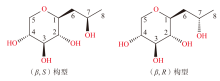
Fig. 1
Structure formula of hydroxypropyl tetrahydropyrantriol"
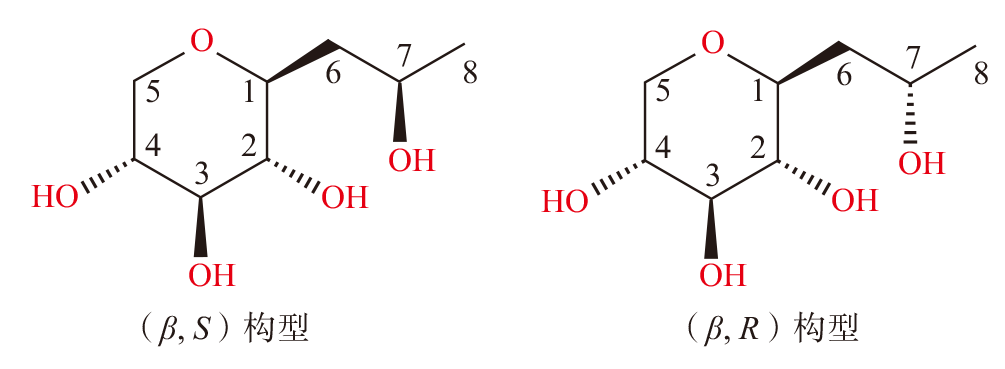
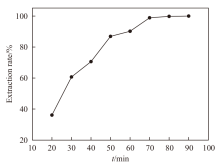
Fig. 2
Effect of ultrasonic time on the extraction rate of HT"
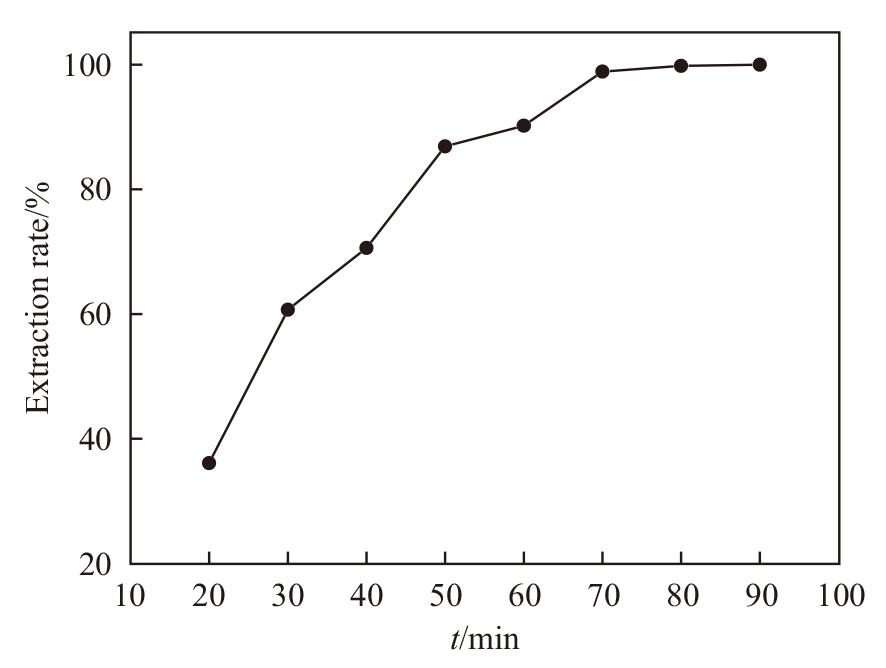
Fig. 3
MS and MS/MS spectrograms of HT: (a) MS spectrogram of (β, S); (b) MS spectrogram of (β, R); (c) MS/MS spectrogram of (β, S); (d) MS/MS spectrogram of (β, R)"
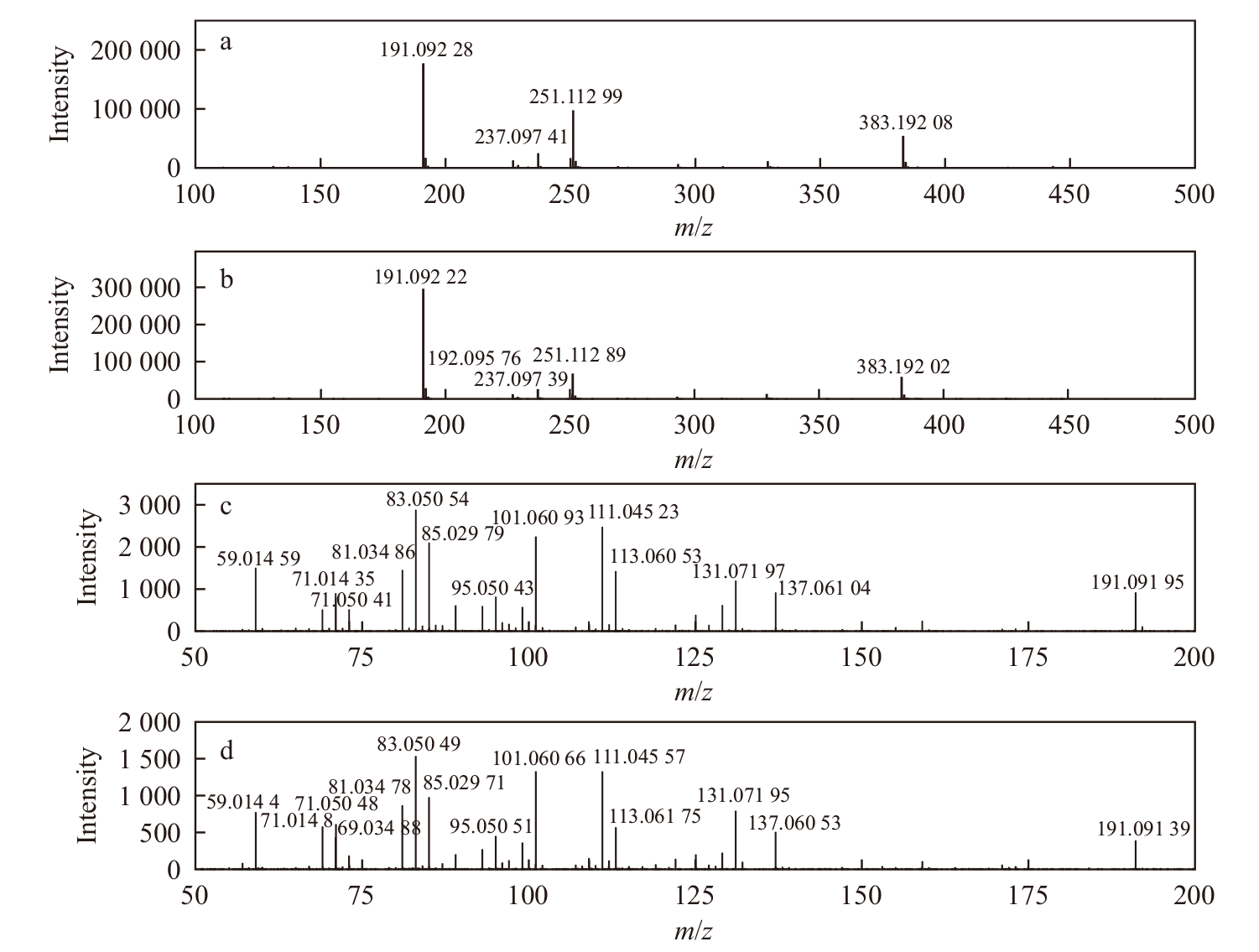
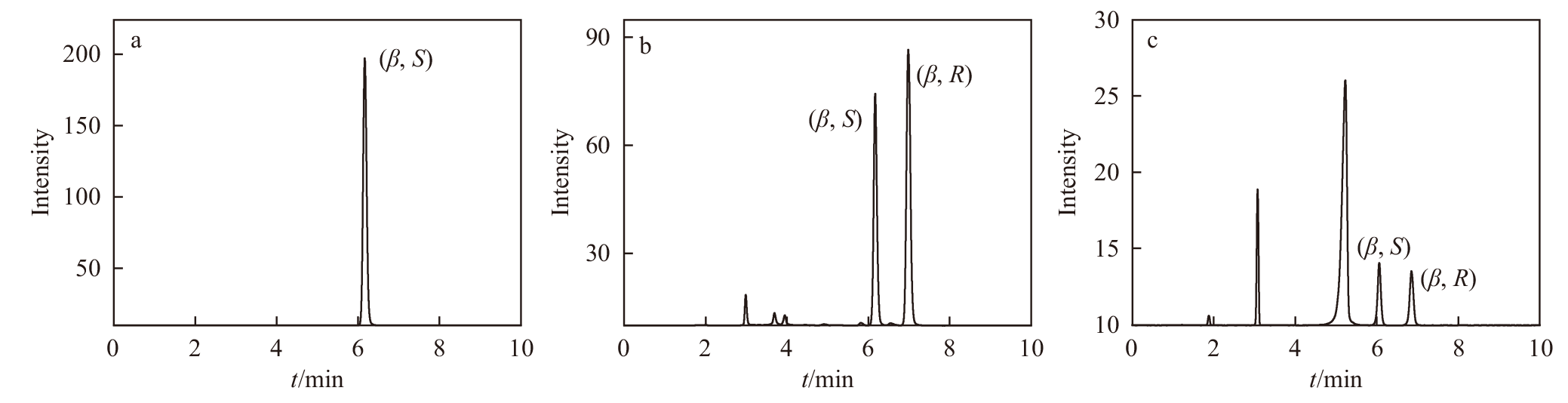
Fig. 4
Chromatograms of standards and cosmetic sample: (a) standard of (β, S); (b) standards of (β, S) and (β, R); (c) cosmetic sample"
Tab. 1
Spiked recoveries of (β, S) isomer in cosmetics"
| Sample type | Spiked level (2.5 mg/g) | Spiked level (5.0 mg/g) | Spiked level (10.0 mg/g) | |||
|---|---|---|---|---|---|---|
| Recoveries/% | RSD/% | Recoveries/% | RSD/% | Recoveries/% | RSD/% | |
| Oil-in-water cosmetic | 94.4 | 3.3 | 98.0 | 2.6 | 99.0 | 1.0 |
| Water-in-oil cosmetic | 94.7 | 0.8 | 98.2 | 2.5 | 98.7 | 0.7 |
| Aqueous cosmetic | 95.8 | 0.9 | 100.1 | 2.4 | 98.3 | 1.7 |
Tab. 2
Determination results of HT and ratio of isomers in cosmetic samples"
| Sample type | Sample | Content of (β, S)/% | Content of HT/% | The ration of (β, S) and (β, R) | National brand |
|---|---|---|---|---|---|
| Oil-in-water cosmetic | 1 | — | — | — | Y |
| 2 | — | — | — | Y | |
| 3 | — | — | — | Y | |
| 4 | — | — | — | Y | |
| 5 | — | — | — | Y | |
| 6 | 10.6 | 10.6 | 100∶— | Y | |
| 7 | 0.4 | 0.8 | 51∶49 | N | |
| 8 | 0.5 | 0.9 | 52∶48 | N | |
| 9 | 5.9 | 11.5 | 51∶49 | N | |
| 10 | 4.6 | 4.6 | 100∶— | Y | |
| Water-in-oil cosmetic | 11 | 9.4 | 9.4 | 100∶— | Y |
| 12 | 4.6 | 8.6 | 53∶47 | N | |
| 13 | 4.8 | 9.3 | 51∶49 | N | |
| 14 | 1.3 | 2.5 | 52∶48 | N | |
| Aqueous cosmetic | 15 | 0.1 | 0.1 | 100∶— | Y |
| 16 | — | — | — | Y | |
| 17 | — | — | — | Y | |
| 18 | — | — | — | Y |
| [1] |
Raab S, Yatskayer M, Lynch S, et al. Clinical evaluation of a multi-modal facial serum that addresses hyaluronic acid levels in skin[J]. J Drugs Dermatol, 2017, 16 (9) : 884-890.
pmid: 28915283 |
| [2] |
Muto J, Naidu N N, Yamasaki K, et al. Exogenous addition of a C-xylopyranoside derivative stimulates keratinocyte dermatan sulfate synthesis and promotes migration[J]. Plos One, 2011, 6 (10) : e25480.
doi: 10.1371/journal.pone.0025480 |
| [3] |
Juliette S, Nathalie P, Maria D. Improvement of the dermal epidermal junction in human reconstructed skin by a new c-xylopyranoside derivative[J]. Eur J Dermatol 2008, 18 (3) : 297-302.
doi: 10.1684/ejd.2008.0392 pmid: 18474459 |
| [4] |
Philippe M, Cavezza A, Pichaud P, et al. C-glycosylation invented by Pr Lubineau’s team: a key-reaction for innovation in cosmetics[J]. Carbohydr Chem, 2014, 40: 1-10.
doi: 10.1080/07328303.2021.1928156 |
| [5] | Betts J R, 苏士纹, 孔佩慧, 等. 局部外用C-木糖苷促进皮肤年轻化的研究进展[J]. 临床皮肤科杂志, 2021, 50 (7) : 444-448. |
| [6] |
Anne B, Elia R, Alain M. A compensating skin care complex containing pro-xylane in menopausal women: results from a multicentre, evaluator-blinded, randomized study[J]. Acta Derm Venereol, 2017, 97 (4) : 541-542.
doi: 10.2340/00015555-2572 |
| [7] |
Lee D H, Oh J H, Chung J H. Glycosaminoglycan and proteoglycan in skin aging[J]. J Dermatol Sci, 2016, 83 (3) : 174-181.
doi: 10.1016/j.jdermsci.2016.05.016 pmid: 27378089 |
| [8] | 王丽丽, 潘继飞, 陈建英. 羟丙基四氢吡喃三醇应用于化妆品的研究进展[J]. 食品与药品, 2022, 24 (6) : 600-603. |
| [9] | 于海英, 乔振云, 李启艳, 等. 高效液相色谱测定化妆品原料羟丙基四氢吡喃三醇的含量及构型比例[J]. 日用化学工业, 2023, 53 (6) : 721-724. |
| [10] | 方电力, 周梅, 张伟. 探索玻色因的立体化学与生物活性[J]. 广东化工, 2021, 48 (4) : 57-59. |
| [11] | 狄磊勤, 虞海, 陈建明, 等. 破译欧莱雅“玻色因”的“黑匣子”[J]. 乐山师范学院学报, 2021, 36 (12) : 18-22. |
| [12] | Pineau N, Bernerd F, Cavezza A, et al. A new C-xylopyranoside derivative induces skin expression of glycosaminoglycans and heparan sulphate proteoglycans[J]. European Journal of Dermatology, 2008, 18 (1) : 36-40. |
| [13] | 李适炜, 陈家享, 徐文枫, 等. 化妆品用原料玻色因的研究[J]. 轻工标准与质量, 2024 (2) : 77-81. |
| [14] | 古凤强, 畅水平, 张淼. 玻色因相关物质研究[J]. 中国化妆品, 2022 (1) : 92-97. |
| [15] | 袁剑辉, 吴一鑫, 岑琳滢, 等. 离子色谱法测定化妆品中不同构型羟丙基四氢吡喃三醇的含量[J]. 香料香精化妆品, 2024 (2) : 147-151. |
| [16] | 乔俊娟, 余奕东. HPLC-MS/MS测定化妆品中羟丙基四氢吡喃三醇的含量及构型比例[J]. 广州化工, 2024, 52 (17) : 76-78, 82. |
| [17] |
Bouloc A, Roo E, Moga A, et al. A compensating skin care complex containing pro-xylane in menopausal women: results from a multicentre, evaluator-blinded, randomized study[J]. Acta Derm Venereol, 2017, 97 (4) : 541-542.
doi: 10.2340/00015555-2572 |
| [18] |
Deloche C, Minondo A M, Bernard B A, et al. Effect of C-xylo side on morphogenesis of the dermal epidermal junction in aged female skin. An ultrastuctural pilot study[J]. Eur J Dermatol, 2011, 21 (2) : 191-196.
doi: 10.1684/ejd.2010.1225 pmid: 21454149 |
| [1] | Jiayao Dai, Huai Tao, Zuowei Xiao, Yimiao Zhou. Determination of 8 heavy metals in cosmetics by inductively coupled plasma emission spectrometry [J]. China Surfactant Detergent & Cosmetics, 2025, 55(9): 1215-1220. |
| [2] | Yifei Zhou, Feiya Luo, Lei Sun, Huiying Yang, Xinrong Pei, Xianfu Wu, Yong Lu. Analysis on the technical guidelines for the application of threshold of toxicological concern (TTC) method [J]. China Surfactant Detergent & Cosmetics, 2025, 55(8): 1042-1048. |
| [3] | Zhaohui Yang, Xiang Qiu, Yuqi Li, Huanhuan Zhao, Erming Wu, Zhiwei Cheng. Advancements in the integration and utilization of plant cell engineering technology in cosmetic ingredient development [J]. China Surfactant Detergent & Cosmetics, 2025, 55(8): 1049-1057. |
| [4] | Lu Wang, Dan Ran, Hui Wang, Shaotong He, Lulu Pi, Nan Deng. Detection of pyoluteorin and pyocyanin in cosmetics using UPLC-MS/MS method [J]. China Surfactant Detergent & Cosmetics, 2025, 55(8): 1066-1071. |
| [5] | Deng Hong, Jiang Zhou, Yuan Yan, Fanzhen Shang, Ting Liu, Liangli Wang, Wen Xie. Simultaneous determination of 5 prohibited phenols in cosmetics by high performance liquid chromatography [J]. China Surfactant Detergent & Cosmetics, 2025, 55(8): 1072-1077. |
| [6] | Cen Chen, Xiaomin Dai, Linqi Yan, Qiaoyuan Cheng. Comparison of high performance liquid chromatography and ion chromatography for the determination of acetic acid and trifluoroacetic acid in cosmetic raw material acetyl hexapeptide-8 [J]. China Surfactant Detergent & Cosmetics, 2025, 55(8): 1078-1084. |
| [7] | Ruina Liu, Biao Jiang, Yafang Lin, Lizhe Yang, Lei Zhai, Kun Li, Su Yao. Suitability study of amplified ATP bioluminescence assay for microbial detection of cosmetics based on two cultivation systems [J]. China Surfactant Detergent & Cosmetics, 2025, 55(7): 909-919. |
| [8] | Limin Fan, Meiling He, Liying Yuan, Yali Shen, Bingbing Xie, Peilin Liu. Simultaneous determination of 10 quaternary ammonium salt bactericides in oral care toothpaste by high performance liquid chromatography [J]. China Surfactant Detergent & Cosmetics, 2025, 55(7): 943-948. |
| [9] | Fan Wu, Jiaqi Zhang, Yi Qin, Jun Wang, Zonghan Wu, Yao Pan. Progress of cosmetic active ingredients exerting skincare efficacy through cellular autophagy [J]. China Surfactant Detergent & Cosmetics, 2025, 55(6): 803-810. |
| [10] | Xu Gong, Jing Sun, Youlong Feng. Determination of 7 prostaglandin analogsin eyelash-related cosmetics by UPLC-QTRAP-MS/MS [J]. China Surfactant Detergent & Cosmetics, 2025, 55(6): 811-816. |
| [11] | Yajun Yang, Chang Liu. Research on packaging design and application of women’s daily cosmetics based on emotional perspective [J]. China Surfactant Detergent & Cosmetics, 2025, 55(5): 659-667. |
| [12] | Ting Li, Ziying Ma, Jiquan Liu, Shenghui Cui, Yu Jing, Feirong Bai, Su Yao. Establishment and feasibility study of a dual enrichment system for amplified ATP bioluminescence microbial detection assay in cosmetics [J]. China Surfactant Detergent & Cosmetics, 2025, 55(5): 668-676. |
| [13] | Pinyi Ma, Jingkang Li, Dejiang Gao, Daqian Song. MOFs-Functionalized melamine sponge columns combined with high-performance liquid chromatography for determination of parabens in cosmetics [J]. China Surfactant Detergent & Cosmetics, 2025, 55(5): 548-553. |
| [14] | Weidong Huang. Determination of 10 indicative components from plant materials in whitening cosmetics by UPLC-MS/MS [J]. China Surfactant Detergent & Cosmetics, 2025, 55(4): 531-538. |
| [15] | Yunping Lan, Zhijie Xie, Chujie Zhao, Xiaochun Liu, Shiqiong Wang, Qiuxing He. The research progress and regulation of cosmetic ingredients produced by synthetic biology at home and abroad [J]. China Surfactant Detergent & Cosmetics, 2025, 55(3): 367-380. |
|
