Welcome to China Surfactant Detergent & Cosmetics, Today is


China Surfactant Detergent & Cosmetics ›› 2026, Vol. 56 ›› Issue (6): 717-728.doi: 10.3969/j.issn.2097-2806.2026.06.003
• Basic research • Previous Articles Next Articles
Tao Qin1,Xin Huang1,Xiaoyuan Cui1,Fenfang Li1,Yien Du1,Junsheng Hao2,*( )
)
Received:2026-02-03
Revised:2026-06-11
Online:2026-06-22
Published:2026-07-22
Contact:
*E-mail: jshao@sxu.edu.cn
CLC Number:
Tao Qin, Xin Huang, Xiaoyuan Cui, Fenfang Li, Yien Du, Junsheng Hao. Enhancing antibacterial efficacy of organic photothermal agents via site regulation of sulfur atom[J].China Surfactant Detergent & Cosmetics, 2026, 56(6): 717-728.
Fig.1
(a) Molecular structures, (b) optimized geometries, (c) HOMO-LUMO distributions and (d) differential charge density diagrams of S-1 and S-2[30]. In (d), red and blue regions represent electron accumulation and depletion, respectively (isovalue=0.000 4 a.u.)"
Fig. 2
Size distribution of (a) S-1 NPs and (b) S-2 NPs (n=3). SEM morphology of (c) S-1 NPs and (d) S-2 NPs. Normalized absorption spectra of (e) S-1 NPs and (f) S-2 NPs"
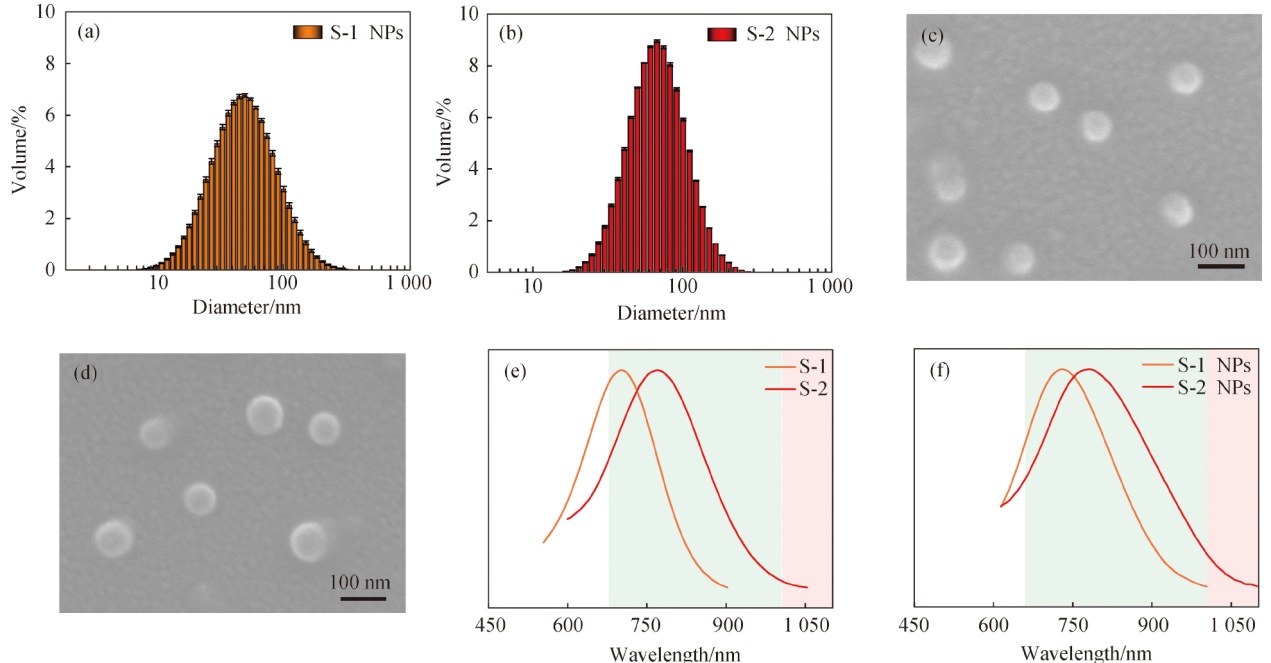
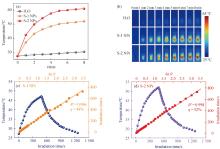
Fig.3
(a) Photothermal heating profiles, (b) thermal images, and PCE analysis of (c) S-1 NPs and (d) S-2 NPs under 808 nm laser irradiation"
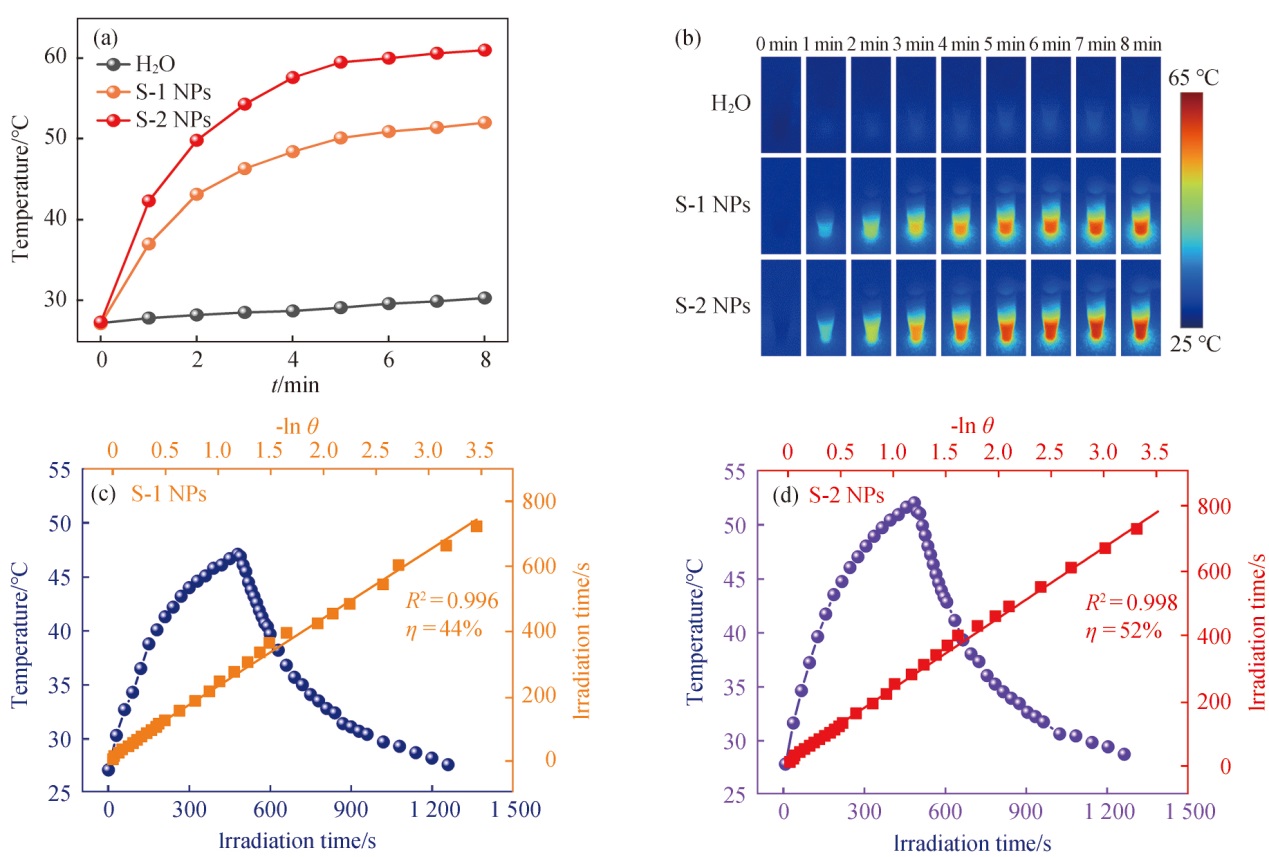
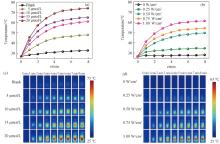
Fig.4
Temperature rise curves (a) and corresponding infrared thermal images (c) of S-2 NPs at different concentrations under 808 nm laser irradiation. Temperature rise curves (b) and the corresponding infrared thermal images (d) of S-2 NPs (10 μmol/L) under 808 nm laser irradiation at different power densities"
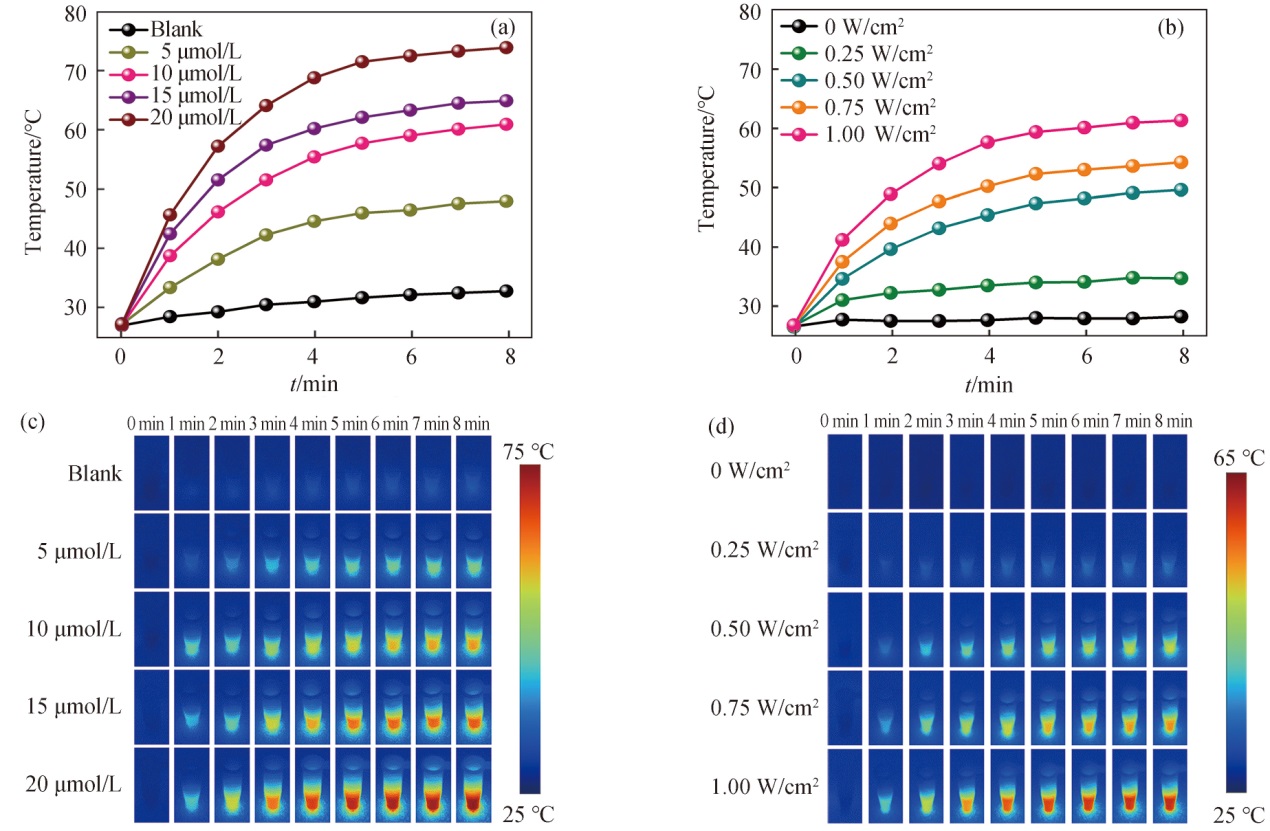
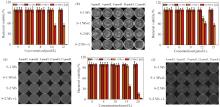
Fig.5
Viability assay and plate counting results against (a, b) S. aureus, (c, d) E. coli, and (e, f) C. albicans (n=3)"
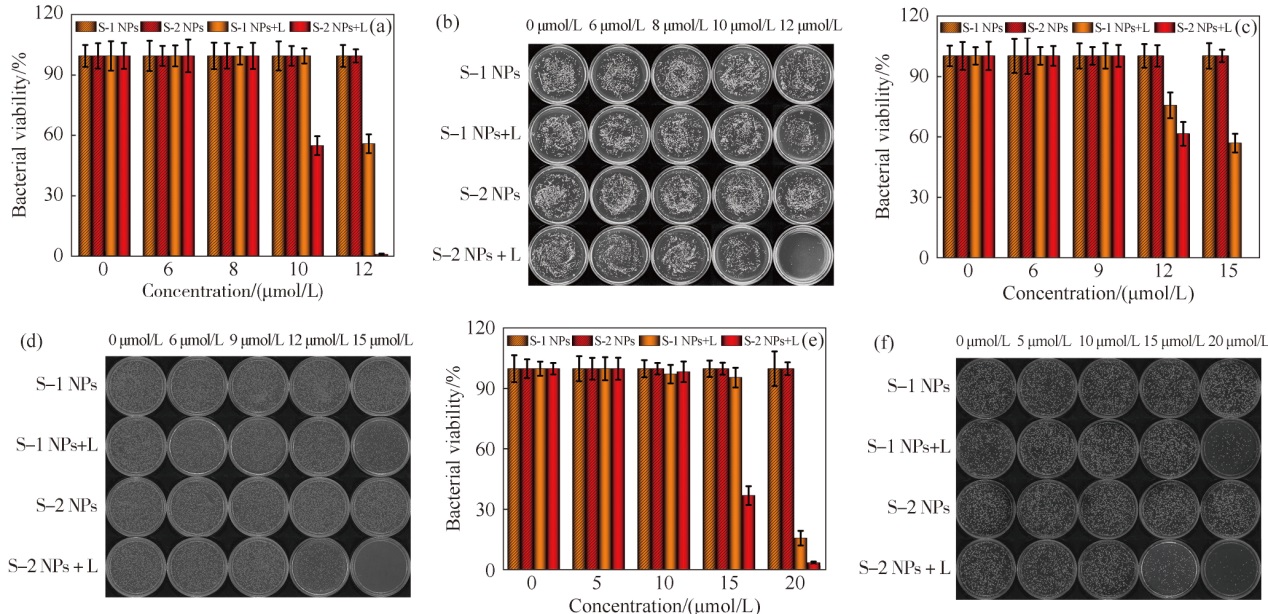
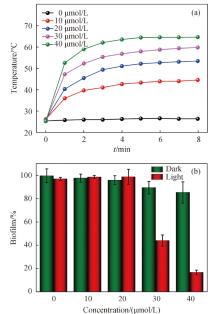
Fig.6
(a) Temperature changes of S. aureus biofilms during treatment with S-2 NPs at different concentrations under 808 nm laser irradiation (1.00 W/cm2, 8 min). (b) Quantitative analysis of the biofilm survival rate under different treatment conditions (n=3)"
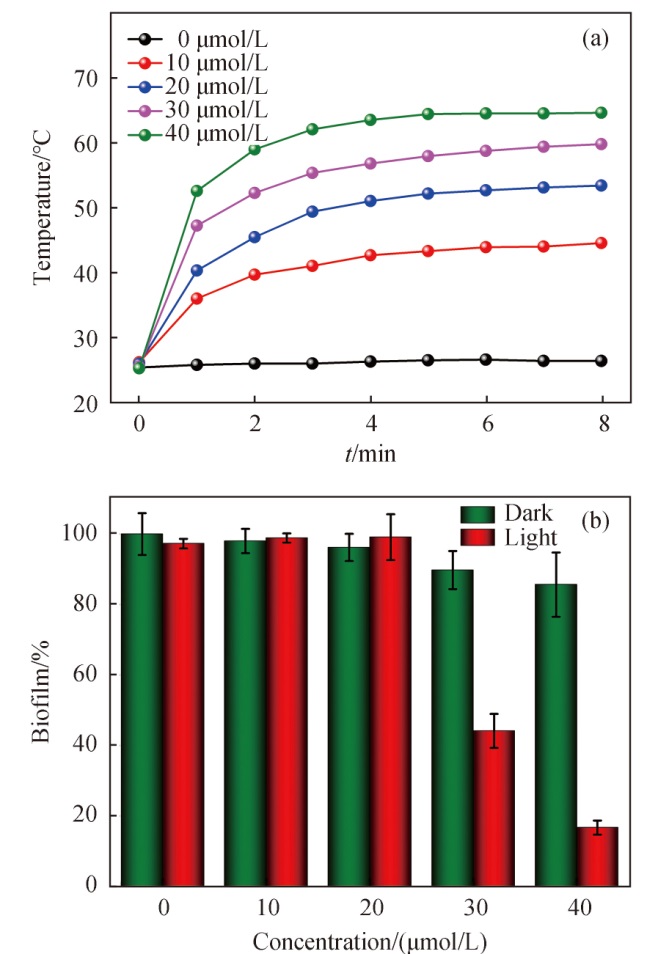
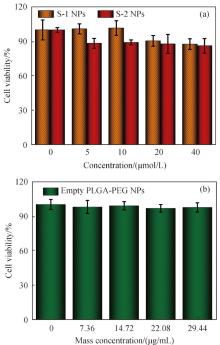
Fig.7
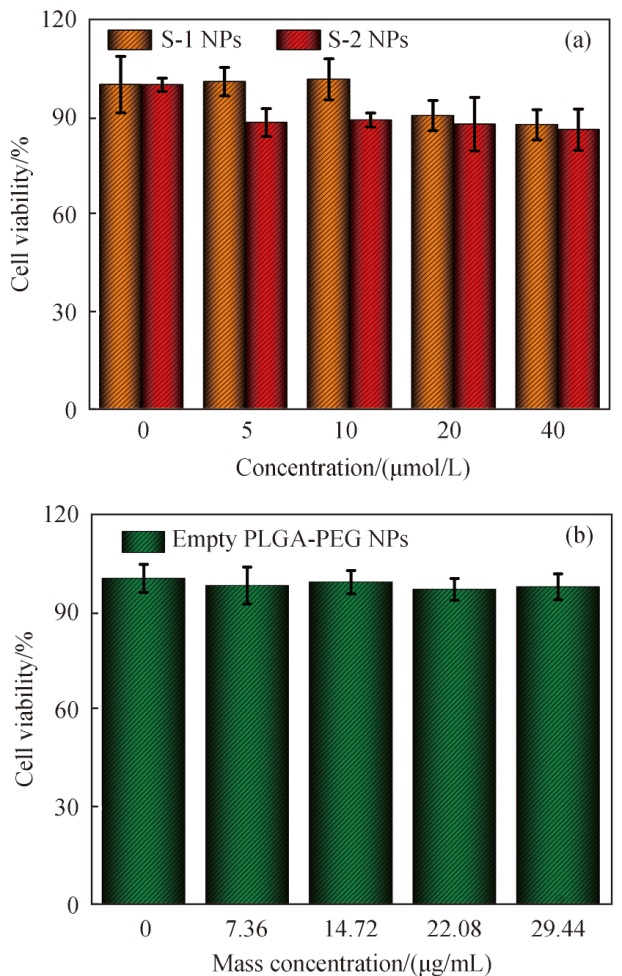
(a) Viability of L929 cells treated with S-1 NPs or S-2 NPs. (b) Viability of L929 cells after treatment with empty PLGA-PEG NPs at various mass concentrations (n=3). The concentrations of PLGA-PEG are equivalent to those present in S-2 NPs at S-2 concentrations of 0, 10, 20, 30, and 40 μmol/L (i.e., 0, 7.36, 14.72, 22.08, and 29.44 μg/mL, respectively)"
| [1] | Wang W Q, Gui H S, Wei X L, et al. Cuproptosis to cuproptosis-like: therapeutic strategies for bacterial infection[J]. Advanced Materials, 2025, 37 (37) : 2506119. |
| [2] | Yang K, Liu J H, Zhao Y, et al. Blades and barriers: oral vaccines for conquering cancers and warding off infectious diseases[J]. Acta Pharmaceutica Sinica B, 2025, 15 (8) : 3925-3950. |
| [3] |
Oluwatosin Q O, Raphael P G. A xanthone-derived antibiotic with a multifaceted mode of action[J]. Nature Microbiology, 2025, 10 (7) : 1558-1559.
doi: 10.1038/s41564-025-02028-1 |
| [4] | Han Z H, Xu Y K, Gu H, et al. Biofilm control by active topography with mucin coating[J]. Advanced Functional Materials, 2025, 35(31) : 2422753. |
| [5] |
Zhang T X, Peng S Y, Zhang S X, et al. Macrocycle-engineered liposomes for combating bacterial biofilm infections[J]. Chemical Engineering Journal, 2025, 518: 164500.
doi: 10.1016/j.cej.2025.164500 |
| [6] |
Nitesh P, Shimayali K, Priyanka G, et al. Advances in photothermal therapy for cancer and bacterial cells ablation using various nanomaterials[J]. Advances in Colloid and Interface Science, 2025, 342: 103541.
doi: 10.1016/j.cis.2025.103541 |
| [7] |
Lou S, Xing C Y, Zhang J R, et al. Efficient organic nanoparticles for photothermal antibacterial activity and immune regulation to promote maxillofacial wound healing and scarless repair[J]. Biomaterials, 2026, 324: 123534.
doi: 10.1016/j.biomaterials.2025.123534 |
| [8] |
Yang X Y, Wang M Y, Zhu J, et al. Burning windjammer: multi-rotor engineered photothermal agent with 87% photothermal conversion for antimicrobial treatment[J]. Biomaterials, 2026, 328: 123799.
doi: 10.1016/j.biomaterials.2025.123799 |
| [9] | Zheng Y, Lou H Q, Gao Z, et al. Progress in the integration of 3D printing technology with photothermal materials for osteosarcoma treatment[J]. Advanced Composites and Hybrid Materials, 2025, 8(4) : 327. |
| [10] | Sun L X, Wu H Y, Zhang Z W, et al. A smart visualized phototherapy switch: from NIR-I imaging-guided photodynamic therapy to NIR-II-guided photothermal therapy for enhanced cascade tumor photoablation[J]. Aggregate, 2025, 6: e70007. |
| [11] |
Zhu H, Peng X H, Liu Y Z, et al. Self-adaptive dynamic hydrogel disrupts iron-clad defense to augment photothermal-catalytic therapy against melanoma recurrence and promote post-surgical wound healing[J]. Advanced Functional Materials, 2025, 35: 2420553.
doi: 10.1002/adfm.v35.34 |
| [12] |
He Z Y, Gao Y T, Huang Z, et al. Tuning the near-infrared J-aggregate of a multicationic photosensitizer through molecular coassembly for symbiotic photothermal therapy and chemotherapy[J]. ACS Nano, 2025, 19 (10) : 10220-10231.
doi: 10.1021/acsnano.4c17582 |
| [13] |
Jiang Z Y, Zhang C L, Wang X Q, et al. A borondifluoride-complex-based photothermal agent with an 80% photothermal conversion efficiency for photothermal therapy in the NIR-II window[J]. Angewandte Chemie International Edition, 2021, 60 (41) : 22376-22384.
doi: 10.1002/anie.v60.41 |
| [14] |
Xie H L, Liu W J, Cheng S B, et al. Harnessing synergistic interplay of twisted and planar structures for the development of NIR-II phototheranostic agents[J]. ACS Nano, 2025, 19 (43) : 37511-37524.
doi: 10.1021/acsnano.5c04254 |
| [15] | Xie H L, Peng Y, Mo R F, et al. Quinoid-engineered small-molecule photothermal agents ignite deep-tissue tumor photothermal-immunotherapy driven by 1 064 nm light[J]. Advanced Functional Materials, 2026, 36 (13) : e201517631. |
| [16] | Ye J S, Wang D Y, Yao H C, et al. Current status and future developments in NIR-II-emitting organic small molecule fluorophores for bioimaging and phototherapy[J]. Small, 2025, 21 (27) : 2409722. |
| [17] |
He L, Li Y, Zhang C H, et al. Development of small-molecule NIR-II photothermal agents for image-guided tumor therapy[J]. Coordination Chemistry Reviews, 2025, 533: 216549.
doi: 10.1016/j.ccr.2025.216549 |
| [18] |
Qi J, Fang Y, Kwok R T K, et al. Highly stable organic small molecular nanoparticles as an advanced and biocompatible phototheranostic agent of tumor in living mice[J]. ACS Nano, 2017, 11 (7) : 7177-7188.
doi: 10.1021/acsnano.7b03062 pmid: 28692799 |
| [19] |
Souza A C, Sipoli C C, Aranha A C R, et al. Applicability of nanoemulsions for the incorporation of bioactive compounds in cosmetics: a review[J]. ACS Omega, 2026, 11 (4) : 4818-4842.
doi: 10.1021/acsomega.5c08224 |
| [20] |
Naveed M, Javed Tariq, Zawar M D, et al. Applications of heavy metal-based nanoparticles in cosmetics: a comprehensive review[J]. Cutaneous and Ocular Toxicology, 2025, 44 (1) : 95-112.
doi: 10.1080/15569527.2025.2472156 pmid: 40071621 |
| [21] | Liu Y Z, Ran X Y, Zhou D H, et al. Novel dibenzofulvene-based NIR-II emission phototheranostic agent with an 82.6% photothermal conversion efficiency for photothermal therapy[J]. Advanced Functional Materials, 2024, 34 (8) : 2311365. |
| [22] | Xia X, Shi C, He S, et al. Heptamethine cya-nine dyes with ultra-efficient excited-state nonradiative decay for synergistic photothermal immunotherapy[J]. Advanced Functional Materials, 2023, 33 (38) : 2300340. |
| [23] | Li H, Li Q, Gu Y, et al. Dimerization extends π-conjugation of electron donor-acceptor structures leading to phototheranostic properties beyond the sum of two monomers[J]. Aggregate, 2024, 5 (3) : e528. |
| [24] | Ma H J, An Y B, Han Y Y, et al. A “3+2” cooperation pattern of amphipathic AIE phototheranostic system for multimodal image-guided synergistic type I/II photodynamic-photothermal therapy[J]. Advanced Science, 2025, 12 (39) : e07956. |
| [25] |
Shao W, Lu F L, Ding X Y, et al. Strategies on boosting photothermal conversion efficiency of organic molecules for photothermal therapy[J]. Bioorganic Chemistry, 2025, 167: 109250.
doi: 10.1016/j.bioorg.2025.109250 |
| [26] |
Chen L P, Wang Y F, Shi T Y, et al. Versatile phototheranostic system: aza-BODIPY-based nanoparticles with B, O-chelated core and diiodine[J]. Dyes and Pigments, 2024, 221: 111786.
doi: 10.1016/j.dyepig.2023.111786 |
| [27] | Fang L P, Dai J N, Wang X, et al. Glutathione-driven disassembly of planar organic phototherapeutic agents to enhance photodynamic-photothermal therapy performance for nasopharyngeal carcinoma[J]. Small, 2025, 21 (6) : 2409196. |
| [28] | Li S L, Deng Q Y, Zhang Y C, et al. Rational design of conjugated small molecules for superior photothermal theranostics in the NIR-II biowindow[J]. Advanced Materials, 2020, 32 (33) : 2001146. |
| [29] | Xi J Q, Wu Q W, Xu Z L, et al. Aloe-emodin/carbon nanoparticle hybrid gels with light-induced and long-term antibacterial activity[J]. ACS Biomaterials Science & Engineering, 2018, 4 (12) : 4391-4400. |
| [30] |
Qin T, Li R P, Jin H Q, et al. Injectable thermosensitive hydrogel to enhance the photothermal ablation and systemic immunotherapy of breast tumors[J]. Biomaterials Science, 2022, 10 (20) : 6003-6012.
doi: 10.1039/d2bm01037b pmid: 36053224 |
| [31] |
Yang Z M, Zhang Z J, Lei Z Q, et al. Precise molecular engineering of small organic phototheranostic agents toward multimodal imaging-guided synergistic therapy[J]. ACS Nano, 2021, 15 (4) : 7328-7339.
doi: 10.1021/acsnano.1c00585 pmid: 33797216 |
| [32] | Wen K K, Tan H, Peng Q, et al. Achieving efficient NIR-II type-I photosensitizers for photodynamic/photothermal therapy upon regulating chalcogen elements[J]. Advanced Materials, 2022, 34(7) : 2108146. |
| [33] |
Chang P, Wang H Q, Zhao B J, et al. Efficient red TADF emitter and diode in high doping concentration via steric hindrance engineering with phosphine oxide[J]. The Journal of Physical Chemistry C, 2024, 128 (26) : 10802-10809.
doi: 10.1021/acs.jpcc.4c02441 |
| [34] |
Yuan L K, Gu J Q, Yuan W T, et al. Organic NIR afterglow with emission wavelengths beyond 800 nm[J]. Science China Materials, 2025, 68: 3557-3565.
doi: 10.1007/s40843-025-3639-7 |
| [35] | Ji W, Zou Y, Guo L, et al. Stable iminium singlet and triplet diradical(oid)s with intense NIR-II absorptions[J]. Angewandte Chemie International Edition, 2025, 64 (39) : e202512663. |
| [36] |
Liu Z Y, Sardar A, Chen S H, et al. Atomically precise metal nanoclusters for near-infrared-II photonics[J]. Accounts of Chemical Research, 2026, 59 (3) : 451-463.
doi: 10.1021/acs.accounts.5c00782 |
| [37] |
Hu L W, Shi L R, Hu T Z, et al. Enhanced photothermal therapy performance of D-A conjugated polymers based on [1, 2, 3] triazolo [4, 5-g] quinoxaline by manipulating molecular motion[J]. Journal of Materials Chemistry B, 2023, 11 (37) : 8985-8993.
doi: 10.1039/D3TB01438J |
| [38] |
Zou M, Jiao J L, Lv M F, et al. Rational design of organic NIR-II fluorophores for advanced photothermal and photodynamic therapy[J]. Coordination Chemistry Reviews, 2026, 556: 217643.
doi: 10.1016/j.ccr.2026.217643 |
| [39] | Tkaczyk R, Grenda A, Jakubczyk, et al. Natural compounds with antimicrobial properties in cosmetics[J]. Pathogens, 2023, 12 (2) : 320. |
| [40] |
Qin T, Guo L X, Diao H P, et al. Facile antibacterial materials with turbine-like structure for P. aeruginosa infected scald wound healing[J]. Biomaterials Science, 2021, 9 (10) : 3830-3837.
doi: 10.1039/D1BM00483B |
| [41] |
Zhong J, Li Y H, Li X T, et al. Near infrared light-triggered small molecule chemical reactions in biocompatible systems[J]. Bioconjugate Chemistry, 2025, 36 (7) : 1362-1376.
doi: 10.1021/acs.bioconjchem.5c00293 |
| [42] | Shao N N, Yao J K, Qi Y X, et al. Design of an anti-scald photothermal hydrogel for rapid bacteria removal and hemostasis[J]. 2023, 476: 146642. |
| [1] | Xiaomin Dai,Cen Chen,Qiaoyuan Cheng. Research on quality control of cosmetics containing olive leaf extract by integrating network pharmacology and HPLC [J]. China Surfactant Detergent & Cosmetics, 2026, 56(6): 756-763. |
| [2] | Yumei Zeng,Feifei Wu,Ziyuan Fang,Shunli Wu,Meiqin Zhu,Qianqian Jia. Research progress on the structure-activity relationships and cosmetic applications of carboxymethyl chitosan [J]. China Surfactant Detergent & Cosmetics, 2026, 56(6): 790-797. |
| [3] | Ceyi Fu,Yanyan Su,Ying Liang,Wenjia Xu,Qiuping Nong. Simultaneous determination of 7 atopic dermatitis treatment drugs including delgocitinib in cosmetics by LC-MS/MS [J]. China Surfactant Detergent & Cosmetics, 2026, 56(6): 798-803. |
| [4] | Liqiong Gao,Guofang Shen,Wei Zhang,Xiuxiu Wang,Yue Xu,Xia Wang. Authenticity identification of cosmetics based on headspace-gas chromatography-ion mobility spectrometry and headspace-gas chromatography-mass spectrometry technologies [J]. China Surfactant Detergent & Cosmetics, 2026, 56(6): 811-820. |
| [5] | Song Qin, Songbin Li. Determination of the contents of six ginsenosides in ginseng cosmetic preparations by high performance liquid chromatography [J]. China Surfactant Detergent & Cosmetics, 2026, 56(5): 687-694. |
| [6] | Jiao Fang, Bo Xing. Study on the preparation of a quaternary ammonium surfactant and its effects on fabric antibacterial and finishing properties [J]. China Surfactant Detergent & Cosmetics, 2026, 56(5): 571-579. |
| [7] | Manru Ning, Yihuai Liang, Feifei Wang. Cosmetovigilance: regulatory trends and corporate practices across countries [J]. China Surfactant Detergent & Cosmetics, 2026, 56(5): 674-680. |
| [8] | Jie Yu, Aihua Zou, Na Li. Applications and challenges of synchrotron small-angle scattering in nanostructure characterization of cosmetics [J]. China Surfactant Detergent & Cosmetics, 2026, 56(4): 407-424. |
| [9] | Congrui Zeng,Qi Liu,Sisi Chang,Hua Zhao. Research on the impact of environmental temperature and humidity on sensory evaluation and moisturizing efficacy of cosmetics [J]. China Surfactant Detergent & Cosmetics, 2026, 56(3): 339-346. |
| [10] | Liwen Chen,Niannian Wang,Yong Qin. Synthesis and performance of alkylamino phosphoronitriles as multifunctional fabric finishing agents [J]. China Surfactant Detergent & Cosmetics, 2026, 56(3): 354-359. |
| [11] | Wanping Yu,Li Li,Haiyan Wang,Jianbo Sun. Current status of analytical detection of Per- and polyfluoroalkyl substances in cosmetics and research progress on the application of molecular network [J]. China Surfactant Detergent & Cosmetics, 2026, 56(3): 368-375. |
| [12] | Huang Li, Yuan Wang, Shengmao Liu, Zhennan She, Zhen Chen. Multiple applications of Artemisia scoparia extract in the cosmetic field [J]. China Surfactant Detergent & Cosmetics, 2026, 56(1): 107-113. |
| [13] | Lingli Wang, Tingting Li, Ting Ren, Zhengrui Niu, Zhenxi Yu. Current status and reflection on change management for special cosmetics in China [J]. China Surfactant Detergent & Cosmetics, 2026, 56(1): 114-121. |
| [14] | Huixiang Liu, Feiyan Diao, Xiaoyun Wu, Junjie Li, Chunlin Liu, Qiyan Li. Determination of 12 whitening ingredients in cosmetics using UPLC-MS/MS [J]. China Surfactant Detergent & Cosmetics, 2026, 56(1): 129-136. |
| [15] | Jiayao Dai, Huai Tao, Zuowei Xiao, Yimiao Zhou. Determination of 8 heavy metals in cosmetics by inductively coupled plasma emission spectrometry [J]. China Surfactant Detergent & Cosmetics, 2025, 55(9): 1215-1220. |
|
||
