Welcome to China Surfactant Detergent & Cosmetics, Today is


China Surfactant Detergent & Cosmetics ›› 2026, Vol. 56 ›› Issue (10): 1371-1379.doi: 10.3969/j.issn.2097-2806.2026.10.010
• Reviews • Previous Articles Next Articles
Yuanyuan Gao1,Hangqing Zhao1,Ye Di2,Guhui Chen2,Ziruo Shen2,Congfen He1,Kun Dong1,*( )
Received:2025-12-11
Revised:2026-09-10
Online:2026-10-22
Published:2026-10-30
Contact:
E-mail: CLC Number:
Yuanyuan Gao, Hangqing Zhao, Ye Di, Guhui Chen, Ziruo Shen, Congfen He, Kun Dong. Research progress on the synthesis, cellular responses, and degradation mechanisms of advanced glycation end products[J].China Surfactant Detergent & Cosmetics, 2026, 56(10): 1371-1379.
Fig.1
Effect of systemic blood glucose concentration on the production of AGEs"
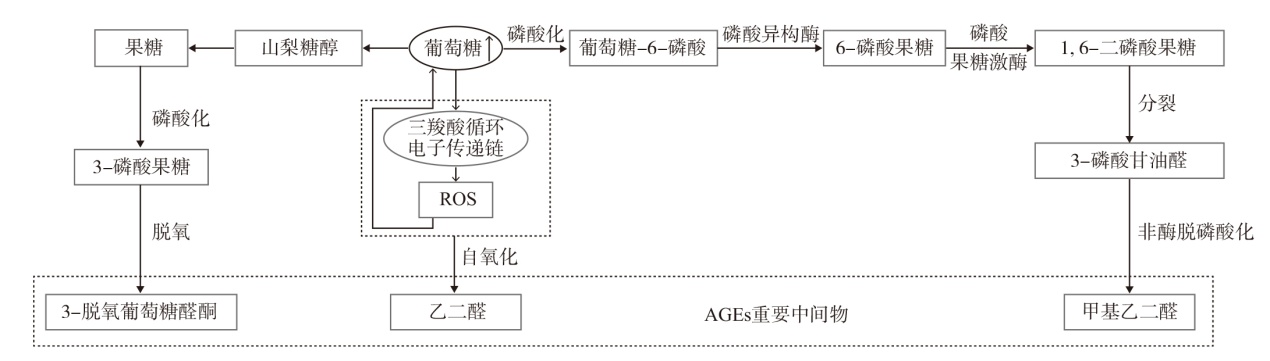
Fig.2
Spontaneous pathways of endogenous AGE formation"
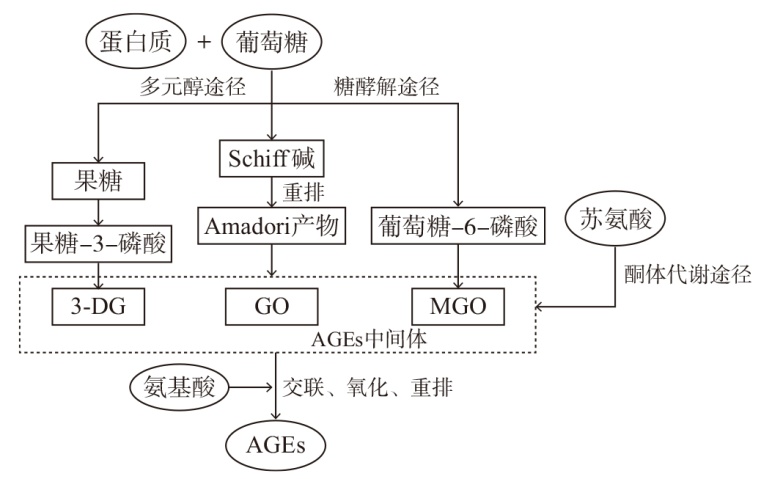
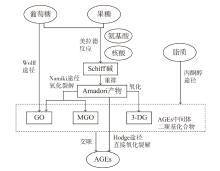
Fig.3
Alternative synthesis mechanisms of AGEs"
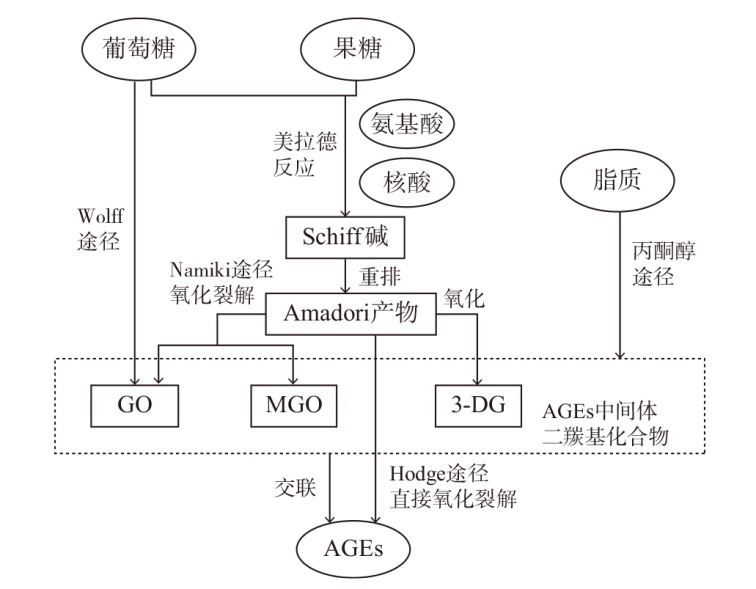
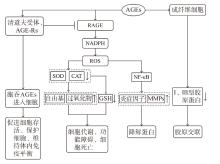
Fig.4
Cellular response mechanisms mediated by AGEs"
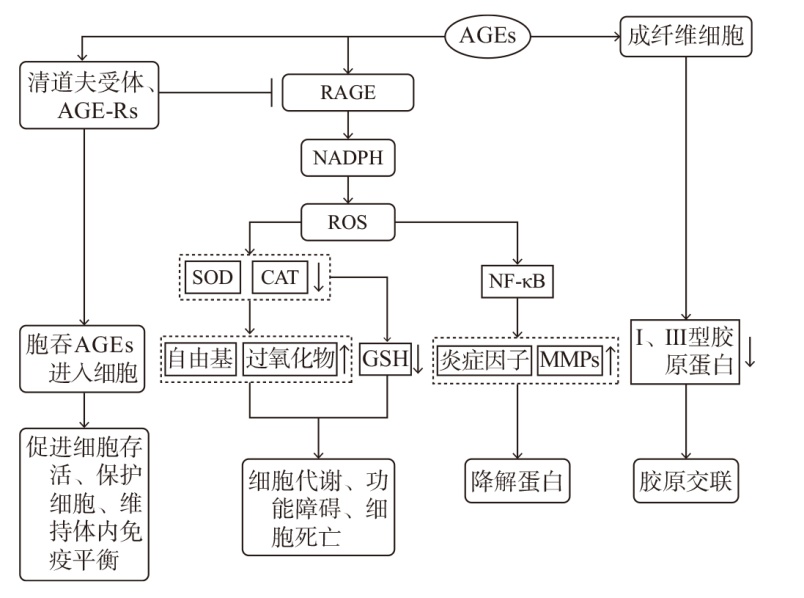
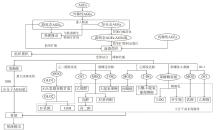
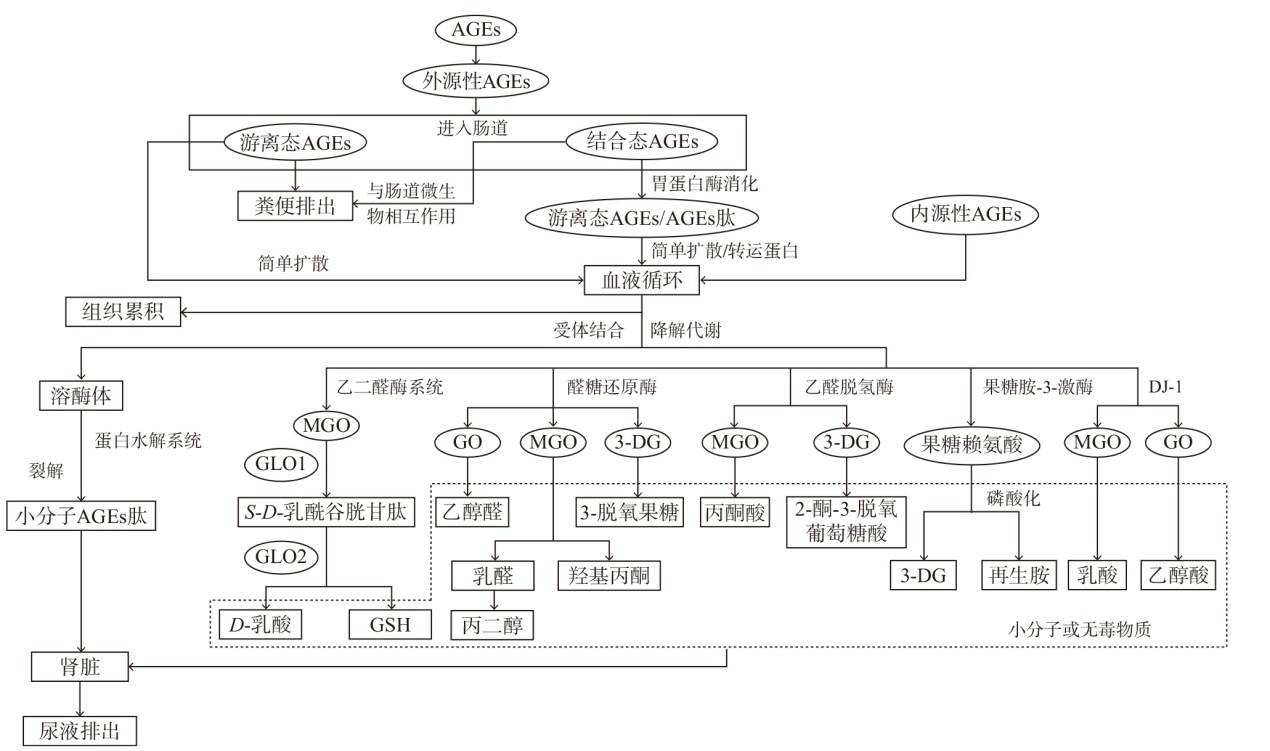
Fig.5
Degradation pathways of intracellular AGEs"
| [1] | Song Q, Liu J, Dong L, et al. Novel advances in inhibiting advanced glycation end product formation using natural compounds[J]. Biomedicine & Pharmacotherapy, 2021, 140 (12) : 111750. |
| [2] |
Xin C, Wang Y, Liu M, et al. Correlation analysis between advanced glycation end products detected noninvasively and skin aging factors[J]. Journal of Cosmetic Dermatology, 2021, 20 (1) : 243-248.
doi: 10.1111/jocd.v20.1 |
| [3] |
Buszka A. The molecular mechanism of glycation. Harmful effects of advanced glycation end products (AGEs) on the skin[J]. Aesthetic Cosmetology and Medicine, 2023, 12 (1) : 23-27.
doi: 10.52336/acm.2023.002 |
| [4] |
Wagner R, Thorand B, Osterhoff M A, et al. Family history of diabetes is associated with higher risk for prediabetes: a multicentre analysis from the German Center for Diabetes Research[J]. Diabetologia, 2013, 56 (10) : 2176-2180.
doi: 10.1007/s00125-013-3002-1 pmid: 23979484 |
| [5] |
Ao S, Xu W, Ding Q, et al. Regulation of glucose homeostasis in Macrobrachium rosenbergii: effects of glucose load on glucose metabolism and hormonal response[J]. Aquaculture, 2023, 577: 739902.
doi: 10.1016/j.aquaculture.2023.739902 |
| [6] |
Ighodaro O M. Molecular pathways associated with oxidative stress in diabetes mellitus[J]. Biomedicine & Pharmacotherapy, 2018, 108: 656-662.
doi: 10.1016/j.biopha.2018.09.058 |
| [7] |
Giacco F, Brownlee M. Oxidative stress and diabetic complications[J]. Circulation Research, 2010, 107 (9) : 1058-1070.
doi: 10.1161/CIRCRESAHA.110.223545 pmid: 21030723 |
| [8] |
Sebastian B, Thomas F, Marc F, et al. Dicarbonyls and advanced glycation end-products in the development of diabetic complications and targets for intervention[J]. International Journal of Molecular Sciences, 2017, 18 (5) : 984-984.
doi: 10.3390/ijms18050984 |
| [9] | Fang B, Li L, Winget J, et al. Identification of yellow advanced glycation end products in human skin[J]. International Journal of Molecular Sciences, 2024, 25 (11) : 5596. |
| [10] |
Du C, Whiddett R O, Buckle I, et al. Advanced glycation end products and inflammation in type 1 diabetes development[J]. Cells, 2022, 11(21) : 3503-3503.
doi: 10.3390/cells11213503 |
| [11] |
Koschinsky T, He C J, Mitsuhashi T, et al. Orally absorbed reactive glycation products (glycotoxins) : An environmental risk factor in diabetic nephropathy[J]. Proceedings of the National Academy of Sciences, 1997, 94 (12) : 6474-6479.
doi: 10.1073/pnas.94.12.6474 |
| [12] |
Ahmed N. Advanced glycation endproducts--role in pathology of diabetic complications[J]. Diabetes Research and Clinical Practice, 2004, 67 (1) : 3-21.
doi: 10.1016/j.diabres.2004.09.004 |
| [13] |
Lai C H, Chou C C, Chuang H C, et al. Receptor for advanced glycation end products in relation to exposure to metal fumes and polycyclic aromatic hydrocarbon in shipyard welders[J]. Ecotoxicology and Environmental Safety, 2020, 202: 110920.
doi: 10.1016/j.ecoenv.2020.110920 |
| [14] | Sies H, Feinendegen L E. Radiation hormesis: the link to nanomolar hydrogen peroxide[J]. Antioxidants & Redox Signaling, 2017, 27(9) : 596-598. |
| [15] | Perrone A, Giovino A, Benny J, et al. Advanced glycation end products (AGEs) : biochemistry, signaling, analytical methods, and epigenetic effects[J]. Oxidative Medicine and Cellular Longevity, 2020 (3) : 1-18. |
| [16] |
Prasad K, Dhar I, Caspar-Bell G. Role of advanced glycation end products and its receptors in the pathogenesis of cigarette smoke-induced cardiovascular disease[J]. International Journal of Angiology, 2014, 24 (2) : 75-80.
doi: 10.1055/s-00000167 |
| [17] |
Adachi K, Nishijo K, Abo T. Those with the habit of going to sleep early show a higher ratio of lymphocytes while those with the habit of staying up late show a higher ratio of granulocytes[J]. Biomedical Research, 2010, 31 (2) : 143-149.
doi: 10.2220/biomedres.31.143 |
| [18] | Morales-Ghinaglia N, He F, Calhoun S L, et al. Circadian misalignment impacts cardiac autonomic modulation in adolescence[J]. Sleep, 2025, 48 (7) : zsaf015. |
| [19] |
Mcdermott J E, Jacobs J M, Merrill N J, et al. Molecular-level dysregulation of insulin pathways and inflammatory processes in peripheral blood mononuclear cells by circadian misalignment[J]. Journal of Proteome Research, 2024, 23 (5) : 1547-1558.
doi: 10.1021/acs.jproteome.3c00418 pmid: 38619923 |
| [20] | Nishikori S, Yasuda J, Murata K, et al. Resistance training rejuvenates aging skin by reducing circulating inflammatory factors and enhancing dermal extracellular matrices[J]. Scientific Reports, 2023, 13 (1) : 10214. |
| [21] | Poulsen M W, Hedegaard R V, Andersen J M, et al. Advanced glycation endproducts in food and their effects on health[J]. Food & Chemical Toxicology, 2013, 60: 10-37. |
| [22] | Qi Y, Wang W, Yang T, et al. Maillard reaction in flour product processing: mechanism, impact on quality, and mitigation strategies of harmful products[J]. Foods, 2025, 14 (15) : 2721. |
| [23] | Uribarri J, Woodruff S, Goodman S, et al. Advanced glycation end products in foods and a practical guide to their reduction in the diet[J]. Journal of the American Dietetic, 2010, 110 (6) : 911-916. |
| [24] |
Luo Y, Zhang J, Ho C T, et al. Management of maillard reaction-derived reactive carbonyl species and advanced glycation end products by tea and tea polyphenols[J]. Food Science and Human Wellness, 2022, 11 (3) : 557-567.
doi: 10.1016/j.fshw.2021.12.012 |
| [25] |
Zhu J L, Cai Y Q, Long S L, et al. The role of advanced glycation end products in human infertility[J]. Life Sciences, 2020, 255: 117830.
doi: 10.1016/j.lfs.2020.117830 |
| [26] | Dănilă A I, Ghenciu L A, Stoicescu E R, et al. Aldose reductase as a key target in the prevention and treatment of diabetic retinopathy: a comprehensive review[J]. Biomedicines, 2024, 12 (4) : 747. |
| [27] |
Jojima T, Inui M. Engineering the glycolytic pathway: a potential approach for improvement of biocatalyst performance[J]. Bioengineered, 2015, 6 (6) : 328-334.
doi: 10.1080/21655979.2015.1111493 pmid: 26513591 |
| [28] |
Thornalley P J. Glutathione-dependent detoxification of alpha-oxoaldehydes by the glyoxalase system: involvement in disease mechanisms and antiproliferative activity of glyoxalase I inhibitors[J]. Chemico-biological Interactions, 1998, 111-112: 137-151.
pmid: 9679550 |
| [29] | Twarda-Clapa A, Olczak A, Białkowska A M, et al. Advanced glycation end-products (AGEs) : formation, chemistry, classification, receptors, and diseases related to AGEs[J]. Cells, 2022, 11 (8) : 1312. |
| [30] |
Montine T J, Neely M D, Quinn J F, et al. Lipid peroxidation in aging brain and alzheimer's disease[J]. Free Radical Biology & Medicine, 2002, 33 (5) : 620-626.
doi: 10.1016/S0891-5849(02)00807-9 |
| [31] |
Dong H, Zhang Y, Huang Y, et al. Pathophysiology of RAGE in inflammatory diseases[J]. Front Immunol, 2022, 13: 931473.
doi: 10.3389/fimmu.2022.931473 |
| [32] | Ashraf J M, Rabbani G, Ahmad S, et al. Glycation of H1 histone by 3-deoxyglucosone: effects on protein structure and generation of different advanced glycation end products[J]. Plos One, 2015, 10(6) : e0130630. |
| [33] |
Piperi C. Dietary advanced glycation end-products: molecular mechanisms and preventive tools[J]. Current Nutrition Reports, 2017, 6 (1) : 1-8.
doi: 10.1007/s13668-017-0188-8 |
| [34] |
Menon R P, Sudhakaran P R. Enhanced adhesion of human mononuclear cells to nonenzymatically glycosylated collagen I[J]. Molecular and Cellular Biochemistry, 1995, 148 (2) : 115-121.
pmid: 8594415 |
| [35] |
Canty E G, Kadler K E. Procollagen trafficking, processing and fibrillogenesis[J]. Journal of Cell Science, 2005, 118 (7) : 1341-1353.
doi: 10.1242/jcs.01731 |
| [36] | Wang L, Jiang Y, Zhao C. The effects of advanced glycation end-products on skin and potential anti-glycation strategies[J]. Experimental Dermatology, 2024, 33 (4) : e15065. |
| [37] |
Avery N C, Bailey A J. The effects of the maillard reaction on the physical properties and cell interactions of collagen[J]. Pathologie Biologie, 2006, 54 (7) : 387-395.
doi: 10.1016/j.patbio.2006.07.005 pmid: 16962252 |
| [38] | Wautier M P, Chappey O, Corda S, et al. Activation of NADPH oxidase by AGE links oxidant stress to altered gene expression via RAGE[J]. American Journal of Physiology-Endocrinology and Metabolism, 2001, 280 (5) : E685. |
| [39] |
Lohwasser C, Neureiter D, Weigle B, et al. The receptor for advanced glycation end products is highly expressed in the skin and upregulated by advanced glycation end products and tumor necrosis factor-alpha[J]. Journal of Investigative Dermatology, 2006, 126 (2) : 291-299.
doi: 10.1038/sj.jid.5700070 pmid: 16374460 |
| [40] |
Han J, Sun Y, Wu T, et al. Echinacoside-zinc nanomaterial inhibits skin glycation by suppressing the transcriptional activation of the receptor for advanced glycation end-products[J]. ACS Nano, 2023, 17 (14) : 14123-14135.
doi: 10.1021/acsnano.3c04726 pmid: 37403876 |
| [41] |
Yang X, Okamura D M, Lu X, et al. CD36 in chronic kidney disease: novel insights and therapeutic opportunities[J]. Nature Reviews Nephrology, 2017, 13 (12) : 769-781.
doi: 10.1038/nrneph.2017.126 pmid: 28919632 |
| [42] |
Kita T, Kume N, Yokode M, et al. Oxidized-LDL and atherosclerosis. Role of LOX-1[J]. Annals of the New York Academy of Sciences, 2010, 902 (1) : 95-102.
doi: 10.1111/nyas.2000.902.issue-1 |
| [43] |
Uribarri J, Cai W, Ramdas M, et al. Restriction of advanced glycation end products improves insulin resistance in human type 2 diabetes[J]. Diabetes Care, 2011, 34 (7) : 1610-1616.
doi: 10.2337/dc11-0091 pmid: 21709297 |
| [44] | Xie F, Liu B, Qiao W, et al. Smooth muscle NF90 deficiency ameliorates diabetic atherosclerotic calcification in male mice via FBXW7-AGER1-AGEs axis[J]. Nature Communications, 2024, 15(1) : 4985. |
| [45] | Gutierrez-Mariscal F M, Lopez-Moreno A, Torres-Peña J D, et al. Modulation of circulating levels of advanced glycation end products and its impact on intima-media thickness of both common carotid arteries: CORDIOPREV randomised controlled trial[J]. Cardiovascular Diabetology, 2024, 23 (1) : 361. |
| [46] |
Cressey R, Han M T T, Khaodee W, et al. Navigating PRKCSH's impact on cancer: from N-linked glycosylation to death pathway and anti-tumor immunity[J]. Front Oncol, 2024, 14: 1378694.
doi: 10.3389/fonc.2024.1378694 |
| [47] |
Shin G C, Lee H M, Kim N, et al. PRKCSH contributes to TNFSF resistance by extending IGF1R half-life and activation in lung cancer[J]. Experimental and Molecular Medicine, 2024, 56 (1) : 192-209.
doi: 10.1038/s12276-023-01147-1 |
| [48] |
Pugliese G, Iacobini C, Pesce C M, et al. Galectin-3: an emerging all-out player in metabolic disorders and their complications[J]. Glycobiology, 2015, 25 (2) : 136-150.
doi: 10.1093/glycob/cwu111 pmid: 25303959 |
| [49] | Iacobini C, Amadio L, Oddi G, et al. Role of galectin-3 in diabetic nephropathy[J]. Journal of the American Society of Nephrology Jasn, 2003, 14 (8S) : 264-270. |
| [50] |
Richarme G, Mihoub M, Dairou J, et al. Parkinsonism-associated protein DJ-1/Park7 is a major protein deglycase that repairs methylglyoxal- and glyoxal-glycated cysteine, arginine, and lysine residues[J]. The Journal of Biological Chemistry, 2015, 290 (3) : 1885-1897.
doi: 10.1074/jbc.M114.597815 |
| [51] |
Ferri S, Kim S, Tsugawa W, et al. Review of fructosyl amino acid oxidase engineering research: a glimpse into the future of hemoglobin A1c biosensing[J]. Journal of Diabetes Science and Technology, 2009, 3 (3) : 585-592.
doi: 10.1177/193229680900300324 pmid: 20144298 |
| [52] | De Decker I, Notebaert M, Speeckaert M M, et al. Enzymatic deglycation of damaged skin by means of combined treatment of fructosamine-3-kinase and fructosyl-amino acid oxidase[J]. International Journal of Molecular Sciences, 2023, 24 (10) : 8981. |
| [53] | Garg A, On K F, Xiao Y, et al. The molecular basis of human FN3K mediated phosphorylation of glycated substrates[J]. Nature Communications, 2025, 16 (1) : 941. |
| [54] | Shimizu K, Ikegami-Kawai M, Takahashi T. Increased oxidized protein hydrolase activity in serum and urine of diabetic rat models[J]. Biological & Pharmaceutical Bulletin, 2009, 32 (9) : 1632-1635. |
| [55] |
Ponce-Mora A, Bejarano E. Targeting autophagy by polyphenols to prevent glycative stress-toxicity in the brain[J]. Neural Regeneration Research, 2024, 19 (5) : 941-942.
doi: 10.4103/1673-5374.385295 pmid: 37862179 |
| [56] |
Kumar A V, Mills J, Lapierre L R. Selective autophagy receptor p62/SQSTM1, a pivotal player in stress and aging[J]. Frontiers in Cell and Developmental Biology, 2022, 10: 793328.
doi: 10.3389/fcell.2022.793328 |
| [57] | Shin K, Kim Y, Kim S, et al. Anti-glycation and anti-aging efficacy of newly synthesized antioxidant with autophagy stimulating activity[J]. Journal of Cosmetic Dermatology, 2025, 24 (5) : e70240. |
| [58] |
Yuan X, Nie C, Liu H, et al. Comparison of metabolic fate, target organs, and microbiota interactions of free and bound dietary advanced glycation end products[J]. Critical Reviews in Food Science and Nutrition, 2023, 63 (19) : 3612-3633.
doi: 10.1080/10408398.2021.1991265 |
| [59] | Rungratanawanich W, Qu Y, Wang X, et al. Advanced glycation end products (AGEs) and other adducts in aging-related diseases and alcohol-mediated tissue injury[J]. Experimental & Molecular Medicine, 2021, 53 (2) : 168-188. |
| [1] | Shuyao Feng, Jianing Li, Zijuan Wang, Fei Jiang, Zhenshen Gao, Haijuan Zhang. Green synthesis, characterization and antibacterial activity of ellagic acid-modified silver nanoparticles [J]. China Surfactant Detergent & Cosmetics, 2026, 56(9): 1180-1187. |
| [2] | Sheng Chen, Shunying Shang. Construction of polyaniline/C3N5 heterojunction and its performance in photocatalytic degradation of rhodamine B [J]. China Surfactant Detergent & Cosmetics, 2026, 56(8): 1009-1018. |
| [3] | Yuying Han, Lijun Chen, Changwei Li, Jiaxuan Han, Yinghui Ren. Preparation and performance study of PBS-TME/PLA composite materials based on molecular dynamics simulation [J]. China Surfactant Detergent & Cosmetics, 2026, 56(7): 853-863. |
| [4] | Xin Jiang, Kun Liu, Bo Jiang, Yanfeng Liu. Research progress in quantitative detection, high-efficient synthesis, and applications of surfactin [J]. China Surfactant Detergent & Cosmetics, 2026, 56(7): 960-967. |
| [5] | Cailing Jia, Zhanting Zhang, Fuwei Yan, Fuyue Liu, Yanni Wu, Fen Wang, Haijiao Xie. Synergistic enhancement of visible-light photocatalytic methyl orange degradation via oxygen vacancy TiO2/Sn3O4 composites [J]. China Surfactant Detergent & Cosmetics, 2026, 56(2): 191-200. |
| [6] | Dengxu Shen, Liusheng Chu. Preparation and photocatalytic degradation performance of polyaniline/ZnFe2O4 composites loaded on fly-ash cenospheres [J]. China Surfactant Detergent & Cosmetics, 2026, 56(10): 1327-1336. |
| [7] | Shujia Mao. Study on the preparation and degradability of PLA biodegradable polyester material [J]. China Surfactant Detergent & Cosmetics, 2026, 56(1): 88-97. |
| [8] | Wei Cheng, Panpan Zhu. Preparation and hydrophobic properties of biodegradable polyester materials [J]. China Surfactant Detergent & Cosmetics, 2025, 55(9): 1145-1152. |
| [9] | Benlong Huo, Xin Xie. Study on the photocatalytic degradation of chromium-containing wastewater by cetyltrimethyl ammonium bromide modified Bi2WO6 [J]. China Surfactant Detergent & Cosmetics, 2025, 55(9): 1169-1178. |
| [10] | Fengling Chen, Yaru Wang, Rongzi Ye, Jiaen Liang, Jiaying Xie, Jianhua Tan. Analysis of the influencing factors and study on the standardized operation of transepidermal water loss measurement [J]. China Surfactant Detergent & Cosmetics, 2025, 55(6): 715-722. |
| [11] | Pengpeng Li, Wuwei Li. Preparation and properties of biodegradable polyester materials for packaging [J]. China Surfactant Detergent & Cosmetics, 2025, 55(5): 625-632. |
| [12] | Xiangji Meng, Jingru Wang, Yunkai Wang, Lifei Zhi, Guoyong Wang, Jiaqian Yang. Synthesis and development of organosilicon quaternary ammonium surfactants [J]. China Surfactant Detergent & Cosmetics, 2025, 55(5): 640-648. |
| [13] | Haibing Cheng, Yong Zhang, Lei Sun, Weijia Li, Zhi Chen, Congming Tang, Li Chang. Synthesis and crosslinking properties of W-SN crosslinking agent [J]. China Surfactant Detergent & Cosmetics, 2025, 55(3): 279-285. |
| [14] | Wei Qian,Bin Yang,Bo Shao,Li Wan,Jun Zhou. Ultrasound-assisted enzymatic degradation to obtain pectin derivatives from Citrus aurantium L. and its antioxidant properties [J]. China Surfactant Detergent & Cosmetics, 2024, 54(8): 947-955. |
| [15] | Haokang Ai, Yajie Jiang, Yakui Wang, Lu Zhang, Tao Geng. Synthesis and properties of Gemini quaternary ammonium surfactant based on stearate [J]. China Surfactant Detergent & Cosmetics, 2024, 54(1): 16-23. |
|
