Welcome to China Surfactant Detergent & Cosmetics, Today is
China Surfactant Detergent & Cosmetics ›› 2026, Vol. 56 ›› Issue (9): 1214-1221.doi: 10.3969/j.issn.2097-2806.2026.09.010
• Development and application • Previous Articles Next Articles
Yuying Jia,Chencan Cao,Lei Liu*( )
Received:2026-01-06
Revised:2026-08-18
Online:2026-09-22
Published:2026-09-30
Contact:
*E-mail: CLC Number:
Yuying Jia, Chencan Cao, Lei Liu. Study on the efficacy of carnosine, chlorogenic acid, and curcumin in an HFF-1 glycation-injured cell model[J].China Surfactant Detergent & Cosmetics, 2026, 56(9): 1214-1221.
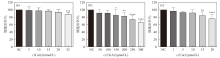
Fig.1
Effects of (a) carnosine, (b) chlorogenic acid, and (c) curcumin on cell viability"
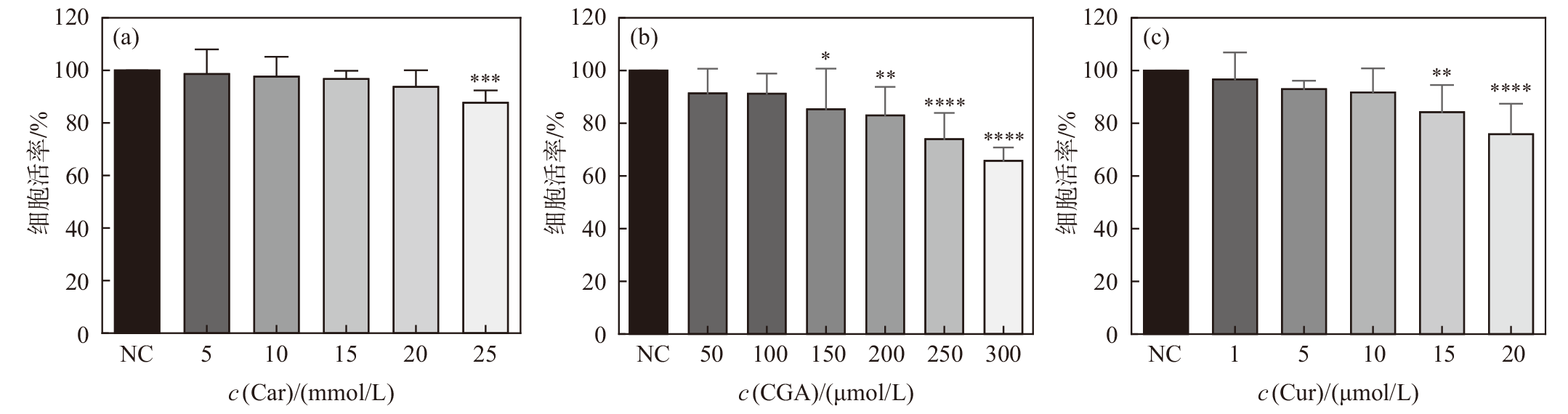
Fig.2
Effects of the raw materials across different stages on intracellular ROS levels. (a) early stage, (b) middle stage, and (c) late stage"
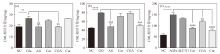
Fig.3
Effects of the raw materials across different stages on intracellular CML levels. (a) early stage, (b) middle stage, and (c) late stage"
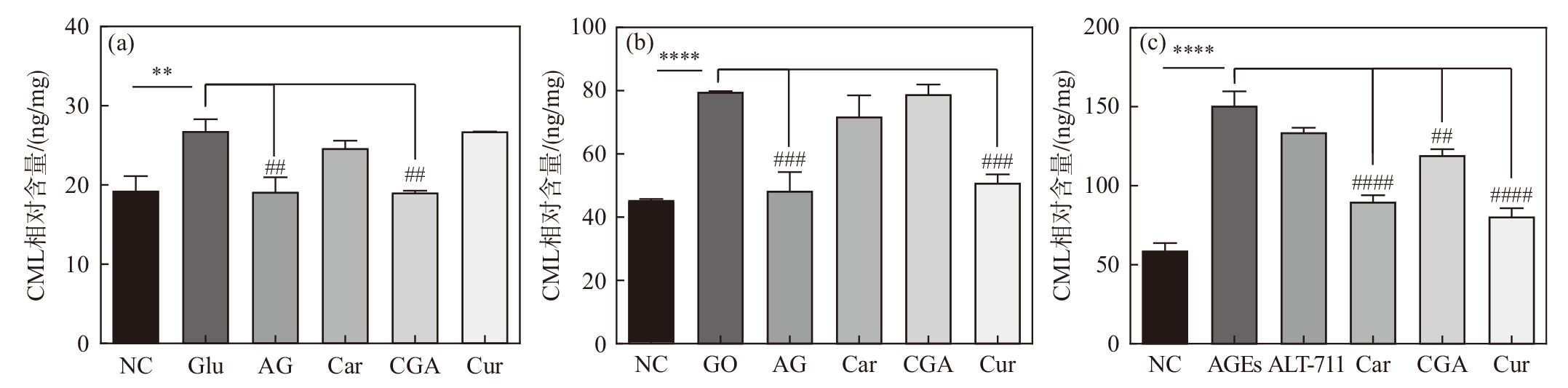
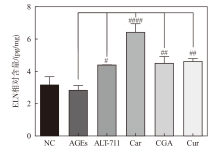
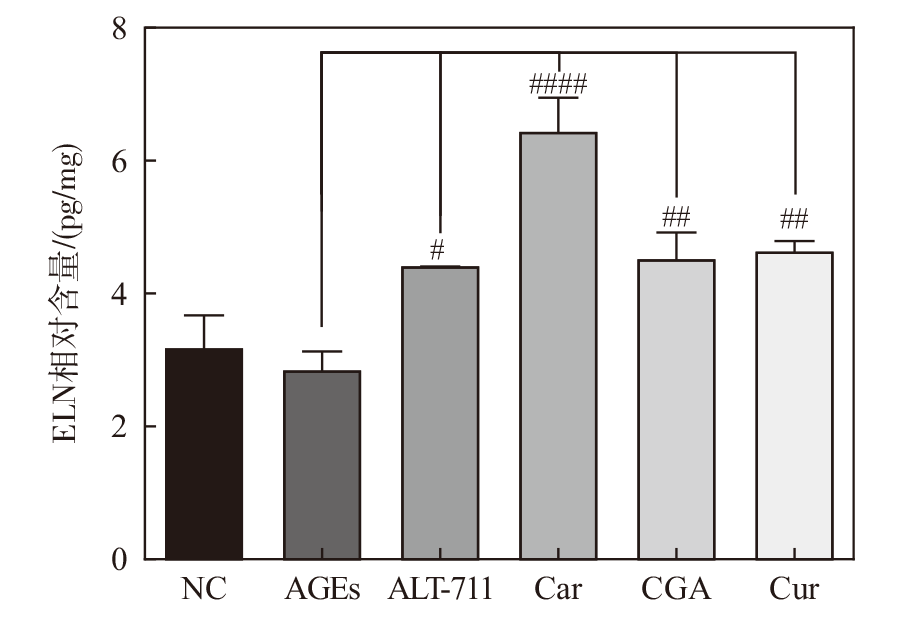
Fig.4
Effects of different raw materials in the late-stage model on ELN levels in the cell culture supernatant"
| [1] | Aragno M, Mastrocola R. Dietary sugars and endogenous formation of advanced glycation endproducts: Emerging mechanisms of disease[J]. Nutrients, 2017, 9 (4) : 385. |
| [2] | Cao C W, Xiao Z C, Wu Y L, et al. Diet and skin aging-from the perspective of food nutrition[J]. Nutrients, 2020, 12 (3) : 870. |
| [3] |
González I, Morales M A, Rojas A. Polyphenols and AGEs/RAGE axis. Trends and challenges[J]. Food Research International, 2020, 129: 108843.
doi: 10.1016/j.foodres.2019.108843 |
| [4] |
Tessier F J. The Maillard reaction in the human body. The main discoveries and factors that affect glycation[J]. Pathologie Biologie, 2010, 58 (3) : 214-219.
doi: 10.1016/j.patbio.2009.09.014 pmid: 19896783 |
| [5] | Byun K, Yoo Y, Son M, et al. Advanced glycation end-products produced systemically and by macrophages: A common contributor to inflammation and degenerative diseases[J]. Pharmacology & Therapeutics, 2017, 177: 44-55. |
| [6] |
Peng H, Gao Y Q, Zeng C Y, et al. Effects of Maillard reaction and its product AGEs on aging and age-related diseases[J]. Food Science and Human Wellness, 2024, 13 (3) : 1118-1134.
doi: 10.26599/FSHW.2022.9250094 |
| [7] | Zhang S R, Xiao Y, Cheng Y F, et al. Associations of sugar intake, high-sugar dietary pattern, and the risk of dementia: A prospective cohort study of 210 832 participants[J]. BMC Medicine, 2024, 22 (1) : 298. |
| [8] |
Gkogkolou P, Bohm M. Advanced glycation end products: Key players in skin aging?[J]. Dermato-endocrinology, 2012, 4 (3) : 259-270.
doi: 10.4161/derm.22028 pmid: 23467327 |
| [9] | Hemmler D, Roullier-Gall C, Marshall J W, et al. Evolution of complex Maillard chemical reactions, resolved in time[J]. Scientific Reports, 2017, 7 (1) : 3227. |
| [10] |
Khan M, Liu H, Wang J, et al. Inhibitory effect of phenolic compounds and plant extracts on the formation of advance glycation end products: A comprehensive review[J]. Food Research International, 2020, 130: 108933.
doi: 10.1016/j.foodres.2019.108933 |
| [11] |
Lund M N, Ray C A. Control of Maillard reactions in foods: Strategies and chemical mechanisms[J]. Journal of Agricultural and Food Chemistry, 2017, 65 (23) : 4537-4552.
doi: 10.1021/acs.jafc.7b00882 pmid: 28535048 |
| [12] |
Yeh W J, Hsia S M, Lee W H, et al. Polyphenols with antiglycation activity and mechanisms of action: A review of recent findings[J]. Journal of Food and Drug Analysis, 2017, 25 (1) : 84-92.
doi: 10.1016/j.jfda.2016.10.017 |
| [13] |
Song Q H, Liu J J, Dong L Y, et al. Novel advances in inhibiting advanced glycation end product formation using natural compounds[J]. Biomedicine & Pharmacotherapy, 2021, 140: 111750.
doi: 10.1016/j.biopha.2021.111750 |
| [14] |
Chen C Y, Zhang J Q, Li L, et al. Advanced glycation end products in the skin: Molecular mechanisms, methods of measurement, and inhibitory pathways[J]. Frontiers in Medicine, 2022, 9: 837222.
doi: 10.3389/fmed.2022.837222 |
| [15] |
Meshkibaf M H, Maleknia M, Noroozi S. Effect of curcumin on gene expression and protein level of methionine sulfoxide reductase A (MSRA), SOD, CAT and GPx in Freund’s adjuvant inflammation-induced male rats[J]. Journal of Inflammation Research, 2019, 12: 241-249.
doi: 10.2147/JIR.S212577 pmid: 31564949 |
| [16] |
Ashrafizadeh M, Ahmadi Z, Mohamamdinejad R, et al. Curcumin activates the Nrf2 pathway and induces cellular protection against oxidative injury[J]. Current Molecular Medicine, 2020, 20 (2) : 116-133.
doi: 10.2174/1566524019666191016150757 pmid: 31622191 |
| [17] | Kancheva V D, Dettori M A, Fabbri D, et al. Natural chain-breaking antioxidants and their synthetic analogs as modulators of oxidative stress[J]. Antioxidants, 2021, 10 (4) : 624. |
| [18] | Kalinowska M, Gryko K, Golebiewska E, et al. Fe (III) and Cu (II) complexes of chlorogenic acid: Spectroscopic, thermal, anti-/pro-oxidant, and cytotoxic studies[J]. Materials, 2022, 15 (19) : 6832. |
| [19] |
Szwergold B S. Carnosine and anserine act as effective transglycating agents in decomposition of aldose-derived Schiff bases[J]. Biochemical and Biophysical Research Communications, 2005, 336 (1) : 36-41.
pmid: 16112643 |
| [20] | Aiello G, Rescigno F, D’Amato A, et al. Oxidative stress modulation by carnosine in scaffold free human dermis spheroids model: A proteomic study[J]. Journal of Investigative Dermatology, 2022, 142 (12). |
| [21] |
Velichkova S, Foubert K, Pieters L. Natural products as a source of inspiration for novel inhibitors of advanced glycation endproducts (AGEs) formation[J]. Planta Medica, 2021, 87 (10/11) : 780-801.
doi: 10.1055/a-1527-7611 |
| [22] |
Elosta A, Ghous T, Ahmed N. Natural products as anti-glycation agents: Possible therapeutic potential for diabetic complications[J]. Current Diabetes Reviews, 2012, 8 (2) : 92-108.
doi: 10.2174/157339912799424528 pmid: 22268395 |
| [23] |
Hipkiss A R, Baye E, de Courten B. Carnosine and the processes of ageing[J]. Maturitas, 2016, 93: 28-33.
doi: S0378-5122(16)30134-7 pmid: 27344459 |
| [24] |
Narda M, Peno-Mazzarino L, Krutmann J, et al. Novel facial cream containing carnosine inhibits formation of advanced glycation end-products in human skin[J]. Skin Pharmacology and Physiology, 2018, 31 (6) : 324-331.
doi: 10.1159/000492276 pmid: 30199874 |
| [25] |
Hipkiss A R, Michaelis J, Syrris P. Non-enzymatic glycosylation of the dipeptide L-carnosine, a potential anti-protein-cross-linking agent[J]. FEBS Letters, 1995, 371 (1) : 81-85.
doi: 10.1016/0014-5793(95)00849-5 pmid: 7664889 |
| [26] |
Freund M A, Chen B C, Decker E A. The inhibition of advanced glycation end products by carnosine and other natural dipeptides to reduce diabetic and age-related complications[J]. Comprehensive Reviews in Food Science and Food Safety, 2018, 17 (5) : 1367-1378.
doi: 10.1111/crf3.2018.17.issue-5 |
| [27] |
Aldini G, Barbora D C, Luca R, et al. Understanding the antioxidant and carbonyl sequestering activity of carnosine: Direct and indirect mechanisms[J]. Free Radical Research, 2021, 55 (4) : 321-330.
doi: 10.1080/10715762.2020.1856830 |
| [28] |
Bhattacherjee A, Datta A. Mechanism of antiglycating properties of syringic and chlorogenic acids in in vitro glycation system[J]. Food Research International, 2015, 77 (Part 3) : 540-548.
doi: 10.1016/j.foodres.2015.08.025 |
| [29] |
Price D L, Rhett P M, Thorpe S R, et al. Chelating activity of advanced glycation end-product inhibitors[J]. Journal of Biological Chemistry, 2001, 276 (52) : 48967-48972.
doi: 10.1074/jbc.M108196200 pmid: 11677237 |
| [30] |
Kim J, Jeong I H, Kim C S, et al. Chlorogenic acid inhibits the formation of advanced glycation end products and associated protein cross-linking[J]. Archives of Pharmacal Research, 2011, 34 (3) : 495-500.
doi: 10.1007/s12272-011-0319-5 pmid: 21547683 |
| [31] | Liang N, Kitts D D. Role of chlorogenic acids in controlling oxidative and inflammatory stress conditions[J]. Nutrients, 2016, 8 (1) : 16. |
| [32] |
Lin J, Tang Y, Kang Q, et al. Curcumin inhibits gene expression of receptor for advanced glycation end-products (RAGE) in hepatic stellate cells in vitro by elevating PPARγ activity and attenuating oxidative stress[J]. British Journal of Pharmacology, 2012, 166 (8) : 2212-2227.
doi: 10.1111/bph.2012.166.issue-8 |
| [33] |
Alizadeh M, Kheirouri S. Curcumin against advanced glycation end products (AGEs) and AGEs-induced detrimental agents[J]. Critical Reviews in Food Science and Nutrition, 2019, 59 (7) : 1169-1177.
doi: 10.1080/10408398.2017.1396200 pmid: 29185795 |
| [34] | Swiader A, Camaré C, Guerby P, et al. 4-hydroxynonenal contributes to fibroblast senescence in skin photoaging evoked by UV-A radiation[J]. Antioxidants, 2021, 10 (3) : 365. |
| [35] |
Larroque-Cardoso P, Camaré C, Nadal-Wollbold F, et al. Elastin modification by 4-hydroxynonenal in hairless mice exposed to UV-A. Role in photoaging and actinic elastosis[J]. Journal of Investigative Dermatology, 2015, 135 (7) : 1873-1881.
doi: S0022-202X(15)37330-9 pmid: 25739050 |
| [36] |
Lee S M, Chiang S H, Wang H Y, et al. Curcumin enhances the production of major structural components of elastic fibers, elastin, and fibrillin-1, in normal human fibroblast cells[J]. Bioscience Biotechnology and Biochemistry, 2015, 79 (2) : 247-252.
doi: 10.1080/09168451.2014.972324 |
| [1] | Mengyao Yan, Huibin Liang, Yongjie Zhao, Jinyuan Sun, Ke Zhang, Jingjie Zhou, Tao Geng. Research and analysis of ethoxylated modified oils for improving skin moisturizing effect [J]. China Surfactant Detergent & Cosmetics, 2026, 56(9): 1144-1157. |
| [2] | Yuqi Li, Puyang Du, Yujia Guo, Huanhuan Zhao, Daopin Ma, Zhiwei Cheng. Plant-derived exosome-like nanovesicles in skincare: Mechanisms and applications [J]. China Surfactant Detergent & Cosmetics, 2026, 56(9): 1242-1250. |
| [3] | Lifen Chen, Mo Chen, Junfang Zhang, Ya Zhao, Ting Zhang. Research progress on evaluation methods for hair loss prevention, hair darkening, and anti-dandruff activities [J]. China Surfactant Detergent & Cosmetics, 2026, 56(9): 1233-1241. |
| [4] | Fei Zhou, Zongyan Liu, Mingying Yu, Lichuan Zhang, Jingyi Guo, Yina Lu. Study on the anti-aging and firming efficacy of Saururus chinensis extract [J]. China Surfactant Detergent & Cosmetics, 2026, 56(8): 1044-1052. |
| [5] | Zhiming He, Jiawen Huang, Yi Zhan, Desong Wu, Yufeng Zha. Comparative study on the soothing efficacy of different extracts of Panax notoginseng [J]. China Surfactant Detergent & Cosmetics, 2026, 56(8): 1053-1061. |
| [6] | Yiwen Chen, Yali Zheng, Xin Li, Jiancong Huang, Rongkang Kuang, Xiaobao Xie. Study on the skincare effects and safety evaluation of the Lignosus rhinocerus extract [J]. China Surfactant Detergent & Cosmetics, 2026, 56(6): 764-775. |
| [7] | Menglin Nie, Guanfeng Wang, Hongling Kan, Qingyuan Xi, Yuchen Zhang, Jiahui Chen. A study on the anti-aging mechanism of Piteguo fermentation filtrate [J]. China Surfactant Detergent & Cosmetics, 2026, 56(5): 644-653. |
| [8] | Congrui Zeng,Qi Liu,Sisi Chang,Hua Zhao. Research on the impact of environmental temperature and humidity on sensory evaluation and moisturizing efficacy of cosmetics [J]. China Surfactant Detergent & Cosmetics, 2026, 56(3): 339-346. |
| [9] | Zhaohui Yang, Xiang Qiu, Yuqi Li, Huanhuan Zhao, Erming Wu, Zhiwei Cheng. Advancements in the integration and utilization of plant cell engineering technology in cosmetic ingredient development [J]. China Surfactant Detergent & Cosmetics, 2025, 55(8): 1049-1057. |
| [10] | Fengling Chen, Yaru Wang, Rongzi Ye, Jiaen Liang, Jiaying Xie, Jianhua Tan. Analysis of the influencing factors and study on the standardized operation of transepidermal water loss measurement [J]. China Surfactant Detergent & Cosmetics, 2025, 55(6): 715-722. |
| [11] | Xiaomin Sun, Shixiang Zuo, Yaoyao Yu, Xin Wu, Yue Cai, Chao Yao. Preparation and properties of effective UV-shielding materials based on flake-shaped ZnO [J]. China Surfactant Detergent & Cosmetics, 2025, 55(1): 55-62. |
| [12] | Xia Wen, Jing Feng, Jingxia Liu, Jian Xu, Xianghai Chen, Xiaobao Xie. Research progress of Staphylococcus epidermidis applied in cosmetics [J]. China Surfactant Detergent & Cosmetics, 2025, 55(1): 89-97. |
| [13] | Jian Wang, Yuhui Fan, Danfeng Li, Ningwen Cheng, Ling Li, Yufeng Yu. Skin care efficacy study of recombinant humanized collagen based on in vitro level [J]. China Surfactant Detergent & Cosmetics, 2024, 54(9): 1030-1038. |
| [14] | Xiaopeng You, Ning Peng, Zhixian Chen. Study on the efficacy of yeast/zinc fermentation products in scalp care [J]. China Surfactant Detergent & Cosmetics, 2024, 54(9): 1099-1105. |
| [15] | Yueming Jiang, Wenjia Lu, Xin Qu. Effect of sandalwood extract on olfactory receptor and its clinical efficacy [J]. China Surfactant Detergent & Cosmetics, 2024, 54(7): 828-835. |
|
