Welcome to China Surfactant Detergent & Cosmetics, Today is


China Surfactant Detergent & Cosmetics ›› 2026, Vol. 56 ›› Issue (6): 790-797.doi: 10.3969/j.issn.2097-2806.2026.06.011
• Reviews • Previous Articles Next Articles
Yumei Zeng*( ),Feifei Wu,Ziyuan Fang,Shunli Wu,Meiqin Zhu,Qianqian Jia
Received:2025-06-30
Revised:2026-05-28
Online:2026-06-22
Published:2026-07-22
Contact:
*E-mail: zym901023@163.com
CLC Number:
Yumei Zeng, Feifei Wu, Ziyuan Fang, Shunli Wu, Meiqin Zhu, Qianqian Jia. Research progress on the structure-activity relationships and cosmetic applications of carboxymethyl chitosan[J].China Surfactant Detergent & Cosmetics, 2026, 56(6): 790-797.
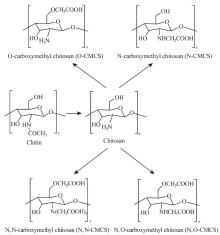
Fig.1
Chemical structures of chitin, chitosan, and carboxymethyl chitosan"
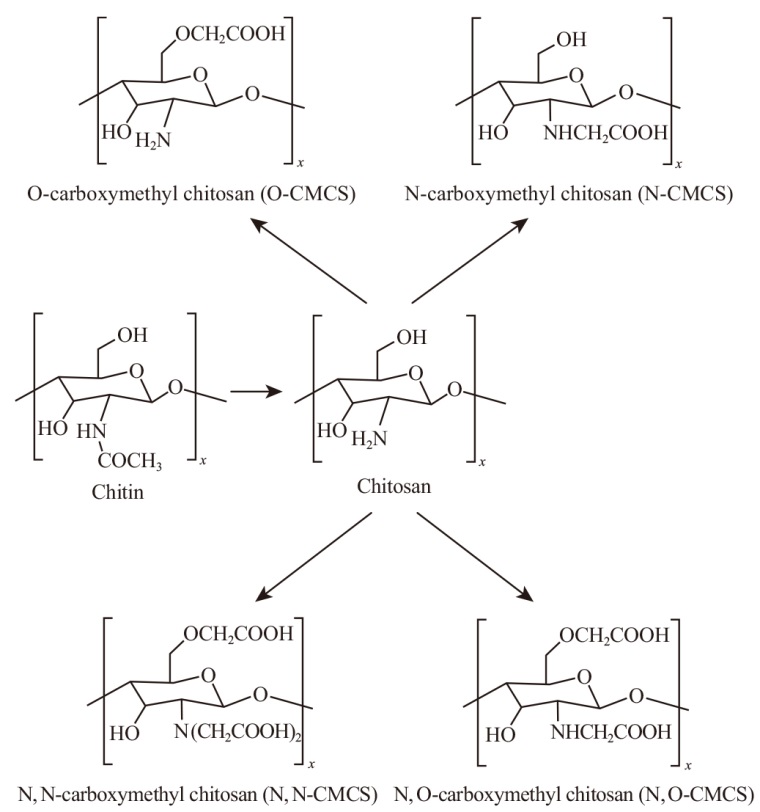
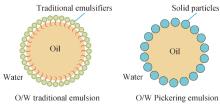
Fig.2
Comparison of a Pickering emulsion and a traditional(surfactant-based) emulsion [28]"
| [1] |
Rischard F, Gore E, Flourat A, et al. The challenges faced by multifunctional ingredients: a critical review from sourcing to cosmetic applications[J]. Advances in Colloid and Interface Science, 2025, 340: 103463.
doi: 10.1016/j.cis.2025.103463 |
| [2] |
Hartl L, Zach S, Seidl-Seiboth V. Fungal chitinases: diversity, mechanistic properties and biotechnological potential[J]. Applied Microbiology and Biotechnology, 2012, 93: 533-543.
doi: 10.1007/s00253-011-3723-3 pmid: 22134638 |
| [3] |
Shariatinia Z, Bagherpour A. Synthesis of zeolite NaY and its nanocomposites with chitosan as adsorbents for lead (II) removal from aqueous solution[J]. Powder Technology, 2018, 338: 744-763.
doi: 10.1016/j.powtec.2018.07.082 |
| [4] |
Fazli Y, Shariatinia Z. Controlled release of cefazolin sodium antibiotic drug from electrospun chitosan-polyethylene oxide nanofibrous mats[J]. Materials Science and Engineering: C, 2017, 71 (1) : 641-652.
doi: 10.1016/j.msec.2016.10.048 |
| [5] |
Aranaz I, Alcántara A R, Civera M C, et al. Chitosan: an overview of its properties and applications[J]. Polymers, 2021, 13: 3256.
doi: 10.3390/polym13193256 |
| [6] | Cohen E, Poverenov E. Hydrophilic chitosan derivatives: synthesis and applications[J]. Chemistry, 2022, 28 (67) : e202202156. |
| [7] | 张宝忠. 水溶性羧甲基壳聚糖的制备、性能及其应用[D]. 武汉: 武汉大学, 2005. |
| [8] |
Wang J L, Zhuang S T. Chitosan-based materials: preparation, modification and application[J]. Journal of Cleaner Production, 2022, 355: 131825.
doi: 10.1016/j.jclepro.2022.131825 |
| [9] | 陈凌云, 杜予民, 肖玲, 等. 羧甲基壳聚糖的取代度及保湿性[J]. 应用化学, 2001, 18 (1) : 5-8. |
| [10] |
Chen L Y, Du Y M, Wu H Q, et al. Relationship between molecular structure and moisture-retention ability of carboxymethyl chitin and chitosan[J]. Journal of Applied Polymer Science, 2002, 83: 1233-1241.
doi: 10.1002/app.v83:6 |
| [11] |
Liu X F, Guan Y L, Yang D Z, et al. Antibacterial action of chitosan and carboxymethylated chitosan[J]. Journal of Applied Polymer Science, 2001, 79 (7) : 1324-1335.
doi: 10.1002/(ISSN)1097-4628 |
| [12] |
Mouryaa V K, Inamdara N N, Tiwarib A. Carboxymethyl chitosan and its applications[J]. Advanced Materials Letters, 2010, 1 (1) : 11-33.
doi: 10.5185/amlett.2010.3108 |
| [13] | 吴迪, 邹清河, 刘辉, 等. 羧甲基壳聚糖体外抗氧化作用[J]. 中国医院药学杂志, 2013, 33 (19) : 1573-1576. |
| [14] |
Chen L Y, Du Y M, Zeng X Q. Relationships between the molecular structure and moisture-absorption and moisture-retention abilities of carboxymethyl chitosan: II. effect of degree of deacetylation and carboxymethylation[J]. Carbohydrate Research, 2003, 338: 333-340.
doi: 10.1016/S0008-6215(02)00462-7 |
| [15] | 孟祥君. 两种水溶性壳聚糖衍生物的制备与抑菌性能研究[D]. 保定: 河北大学, 2012. |
| [16] | Anna Z K, Łukasz B, Andrzej J. Antimicrobial and antioxidant activity of chitosan/hydroxypropyl methylcellulose film-forming hydrosols hydrolyzed by cellulase[J]. International Journal of Molecular Sciences, 2016, 17 (9) : 1436. |
| [17] |
Chaiwong N, Leelapornpisid P, Jantanasakulwong K, et al. Antioxidant and moisturizing properties of carboxymethyl chitosan with different molecular weights[J]. Polymers, 2020, 12: 1445.
doi: 10.3390/polym12071445 |
| [18] |
Elbarbary A M, Mostafa T B. Effect of γ-rays on carboxymethyl chitosan for use as antioxidant and preservative coating for peach fruit[J]. Carbohydrate Polymers, 2014, 104: 109-117.
doi: 10.1016/j.carbpol.2014.01.021 pmid: 24607167 |
| [19] |
Chaiwong N, Phimolsiripol Y, Leelapornpisid P, et al. Synergistics of carboxymethyl chitosan and mangosteen extract as enhancing moisturizing, antioxidant, antibacterial, and deodorizing properties in emulsion cream[J]. Polymers, 2022, 14: 169-178.
doi: 10.3390/polym14010169 |
| [20] | 王征. 不同分子量羧甲基壳聚糖对皮肤创伤修复作用的研究[D]. 青岛: 中国海洋大学, 2005. |
| [21] | Chen L Y, Du Y M, Tian Z G, et al. Effect of the degree of deacetylation and the substitution of carboxymethyl chitosan on its aggregation behavior[J]. Journal of Polymer Science, 2005, 43 (3) : 296-305. |
| [22] | Sun F W, Cheng T F, Ren S H, et al. Soy protein isolate/carboxymethyl cellulose sodium complexes system stabilized high internal phase Pickering emulsions: stabilization mechanism based on noncovalent interaction[J]. International Journal of Biological Macromolecules, 2024, 256 (1) : 128381. |
| [23] |
Zhang B Y, Mai H F, Liang X Q, et al. Carboxymethyl chitosan/oxidized sodium alginate self-healing emulsion gels with enhanced physical stability[J]. Food Hydrocolloids, 2025, 166: 111336.
doi: 10.1016/j.foodhyd.2025.111336 |
| [24] | Tzaneva D, Simitchiev A, Petkova N, et al. Synthesis of carboxymethyl chitosan and its rheological behaviour in pharmaceutical and cosmetic emulsions[J]. Journal of Applied Pharmaceutical Science, 2017, 7(10) : 70-78. |
| [25] | Tzaneva D, Djivoderova M, Petkova N, et al. Rheological properties of the cosmetic gel including carboxymethyl chitosan[J]. Journal of Pharmaceutical Sciences and Research, 2017, 9 (8) : 1383-1387. |
| [26] | Lewandowska K, Lewandowska S. Rheological characteristics of composites based on carboxymethyl chitosan[J]. Engineering of Biomaterials, 2025, 173: 1-6. |
| [27] |
Mo Y H, Wang H, Jin S H, et al. Preparation and properties of a fast curing carboxymethyl chitosan hydrogel for skin care[J]. Polymer Testing, 2022, 113: 107667.
doi: 10.1016/j.polymertesting.2022.107667 |
| [28] | Deng W, Li Y B, Wu L, et al. Pickering emulsions stabilized by polysaccharides particles and their applications: a review[J]. Food Science and Technology, 2022, 42: e24722. |
| [29] |
Gordobil O, Blažević N, Simonič M, et al. Potential of lignin multifunctionality for a sustainable skincare: impact of emulsification process parameters and oil-phase on the characteristics of O/W Pickering emulsions[J]. International Journal of Biological Macromolecules, 2023, 233: 123561.
doi: 10.1016/j.ijbiomac.2023.123561 |
| [30] | Singh B G, Bagora N, Nayak M, et al. The preparation of curcumin-loaded Pickering emulsion using gelatin-chitosan colloidal particles as emulsifier for possible application as a bio-inspired cosmetic formulation[J]. Pharmaceutics, 2024, 16 (3) : 356. |
| [31] |
Seino H, Kawaguchi N, Arai Y, et al. Investigation of partially myristoylated carboxymethyl chitosan, an amphoteric-amphiphilic chitosan derivative, as a new material for cosmetic and dermal application[J]. Journal of Cosmetic Dermatology, 2021, 20 (7) : 2332-2340.
doi: 10.1111/jocd.13833 pmid: 33174289 |
| [32] |
Wang G, Miao F P, Dong F, et al. Synthesis of carboxymethyl polysaccharides and their moisture absorption and retention abilities[J]. Asian Journal of Chemistry, 2014, 26 (16) : 5239-5241.
doi: 10.14233/ajchem |
| [33] | Cohen E, Poverenov E. Hydrophilic chitosan derivatives: synthesis and applications[J]. Chemistry—A European Journal, 2022, 28(67) : e202202156. |
| [34] |
Bakshi P S, Selvakumar D, Kadirvelu K, et al. Chitosan as an environment friendly biomaterial: a review on recent modifications and applications[J]. International Journal of Biological Macromolecules, 2020, 150: 1072-1083.
doi: 10.1016/j.ijbiomac.2019.10.113 |
| [35] |
Muzzarelli R A A. Carboxymethylated chitins and chitosans[J]. Carbohydrate Polymers, 1988, 8 (1) : 1-21.
doi: 10.1016/0144-8617(88)90032-X |
| [36] | 林助凤, 刘紫圆. 一种生物酶共价催化合成O-羧甲基壳聚糖的方法及其应用 : CN117757874A[P]. 2024-03-26. |
| [37] | Wang Z H, Yan Y B, Zhang Z M, et al. Effect of chitosan and its water-soluble derivatives on antioxidant activity[J]. Polymers, 2024, 16 (7) : 867. |
| [38] |
Liu M, Min L, Zhu C, et al. Preparation, characterization and antioxidant activity of silk peptides grafted carboxymethyl chitosan[J]. International Journal of Biological Macromolecules, 2017, 104: 732-738.
doi: S0141-8130(17)31682-3 pmid: 28629858 |
| [39] |
Yu H J, Zhang C, Xie Y, et al. Effect of Melissa officinalis L. essential oil nanoemulsions on structure and properties of carboxymethyl chitosan/locust bean gum composite films[J]. Membranes, 2022, 12: 568.
doi: 10.3390/membranes12060568 |
| [40] |
Chen L B, Xie Y D, Chen X H, et al. O-carboxymethyl chitosan in biomedicine: a review[J]. International Journal of Biological Macromolecules, 2024, 275: 133465.
doi: 10.1016/j.ijbiomac.2024.133465 |
| [41] | 侯小丽, 谢光远. 奥硝唑羧甲基壳聚糖联合透明质酸辅助牙周基础治疗老年慢性牙周炎效果观察[J]. 山东医药, 2017, 57 (34) : 95-96. |
| [42] | 张博文. 干法离心纺PVA/CMCSS/HA复合纤维膜的制备及其性能研究[D]. 武汉: 武汉纺织大学, 2023. |
| [43] |
Zhang B W, Jiang Z, Li X, et al. Facile preparation of biocompatible and antibacterial water-soluble films using polyvinyl alcohol/carboxymethyl chitosan blend fibers via centrifugal spinning[J]. Carbohydrate Polymers, 2023, 317: 121062.
doi: 10.1016/j.carbpol.2023.121062 |
| [44] |
Xu Q T, Su W, Huang C L, et al. Multifunctional polysaccharide self-healing wound dressing: NIR-responsive carboxymethyl chitosan/quercetin hydrogel[J]. Advanced Healthcare Materials, 2025, 14: 2403267.
doi: 10.1002/adhm.v14.3 |
| [45] |
Lasheras-Zubiate M, Navarro-Blasco I, Álvarez J I, et al. Interaction of carboxymethylchitosan and heavy metals in cement media[J]. Journal of Hazardous Materials, 2011, 194: 223-231.
doi: 10.1016/j.jhazmat.2011.07.085 pmid: 21872984 |
| [46] |
Wahid F, Wang H S, Lu Y S, et al. Preparation, characterization and antibacterial applications of carboxymethyl chitosan/CuO nanocomposite hydrogels[J]. International Journal of Biological Macromolecules, 2017, 101: 690-695.
doi: S0141-8130(16)32751-9 pmid: 28356237 |
| [47] |
Wahid F, Yin J J, Xue D D, et al. Synthesis and characterization of antibacterial carboxymethyl chitosan/ZnO nanocomposite hydrogels[J]. International Journal of Biological Macromolecules, 2016, 88: 273-279.
doi: 10.1016/j.ijbiomac.2016.03.044 pmid: 27017980 |
| [48] | Alemi P S, Mohamadali M, Arabahmadi S, et al. Carboxymethyl chitosan and chitosan as a bioactive delivery system: a review[J]. Biotechnology and Applied Biochemistry, 2025, 72 (6) : 1883. |
| [49] | 王婷婷, 曹光群, 董伟. 响应面法优化海藻酸钠微球包封L-抗坏血酸的制备工艺[J]. 日用化学工业, 2014, 44 (8) : 443-447. |
| [50] | 王士祥. 刺激响应型水凝胶及乳液作为化妆品活性成分载体的研究与应用[D]. 济南: 山东大学, 2021. |
| [51] |
Lu B B, Fu Y Y, Liu Y T, et al. Preparation of dual supramolecular EGCG-carboxymethyl chitosan: structure, antioxidant and anti-inflammatory properties[J]. International Journal of Biological Macromolecules, 2025, 294: 139523.
doi: 10.1016/j.ijbiomac.2025.139523 |
| [52] | 于淑娟, 杨芳, 梁春群, 等. 羧甲基壳聚糖基水溶性高分子紫外线吸收剂的合成与表征[J]. 日用化学工业, 2011, 41 (1) : 35-38. |
| [53] | Liu H M, Yan J J, Zhao Z W, et al. Green synthesis of Ag-doped CeO2 nanoparticles with carboxymethyl chitosan: characterization, UV protection, & antioxidant effects[J]. Journal of Materials Science, 2025, 51: 1661-1680. |
| [54] |
Chen K H, Guo B Z, Luo J W. Quaternized carboxymethyl chitosan/organic montmorillonite nanocomposite as a novel cosmetic ingredient against skin aging[J]. Carbohydrate Polymers, 2017, 173: 100-106.
doi: S0144-8617(17)30613-6 pmid: 28732847 |
| [1] | Lin Ni,Luo Feiya,Cao Chunran,Hu Yuchi. Study on the alternative method for assessing eye irritation of chemicals using in vitro and in silico approaches [J]. China Surfactant Detergent & Cosmetics, 2022, 52(9): 1016-1022. |
| [2] | Qi Jiayue,Mao Yi,Chen Linqian,Wang Jing,Yang Cheng,Sun Yajuan. Preparation and characterization of ethyl cellulose-sodium alginate/chitosan microgels [J]. China Surfactant Detergent & Cosmetics, 2022, 52(12): 1259-1268. |
| [3] | Sun Bangping,Zhang Lu,Li Jun,Ju Hongbin,Geng Tao,Jiang Yajie. Study on the effects of pH on the properties of a fatty alcohol ether carboxylate [J]. China Surfactant Detergent & Cosmetics, 2022, 52(12): 1269-1277. |
| [4] | Liang Haiyun,Ma Zemeng,Sun Ruiliang,Song Liya. Research progress on antibacterial activity of bioactive flavonoids [J]. China Surfactant Detergent & Cosmetics, 2021, 51(8): 775-781. |
| [5] | WANG Ting-ting, CAO Guang-qun, DONG Wei. Optimization of the process for preparation of sodium alginate microspheres encapsulating L-ascorbic acid by response surface method [J]. China Surfactant Detergent & Cosmetics, 2014, 44(8): 443-447. |
|
||
