Welcome to China Surfactant Detergent & Cosmetics, Today is


China Surfactant Detergent & Cosmetics ›› 2025, Vol. 55 ›› Issue (10): 1221-1235.doi: 10.3969/j.issn.2097-2806.2025.10.001
• Invited paper • Next Articles
Bao Li,Xinyu Zhao,Lixin Wu*( )
)
Received:2025-10-06
Online:2025-10-22
Published:2025-12-03
Contact:
Lixin Wu
E-mail:wulx@jlu.edu.cn
CLC Number:
Bao Li,Xinyu Zhao,Lixin Wu. Applications of metal-organic framework materials in cosmetics[J].China Surfactant Detergent & Cosmetics, 2025, 55(10): 1221-1235.

Fig. 1
(a) The structures of MIL-68(Al) and PBs. The recovery of PBs under various (b) loadings of MIL-68(Al), (c) pH, (d) elution solvents, and (e) volumes of ACN"
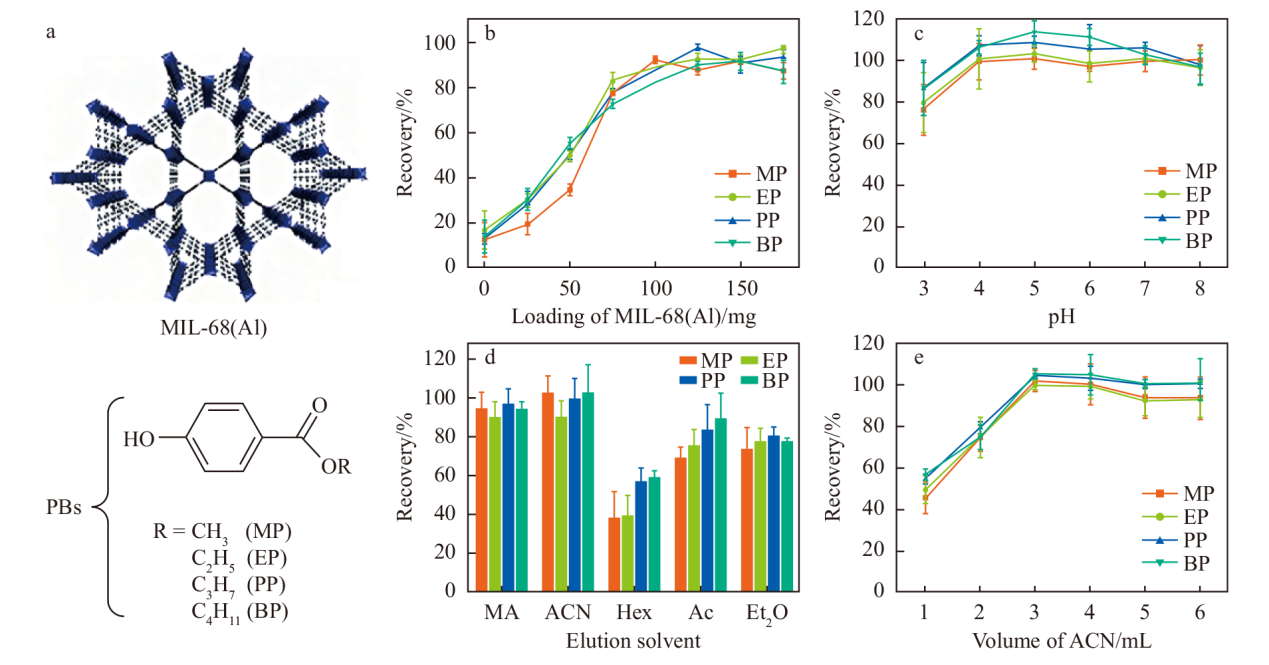
Fig. 2
(a) The preparation route of 3-FSA sensor-Zn. (b) The influence of the 3-FSA sensor amount on the signal response. (c) Calibration plot for the 3-FSA sensor with emission measured with different Zn2+ ion mass concentrations (The excitation wavelength is 380 nm)"
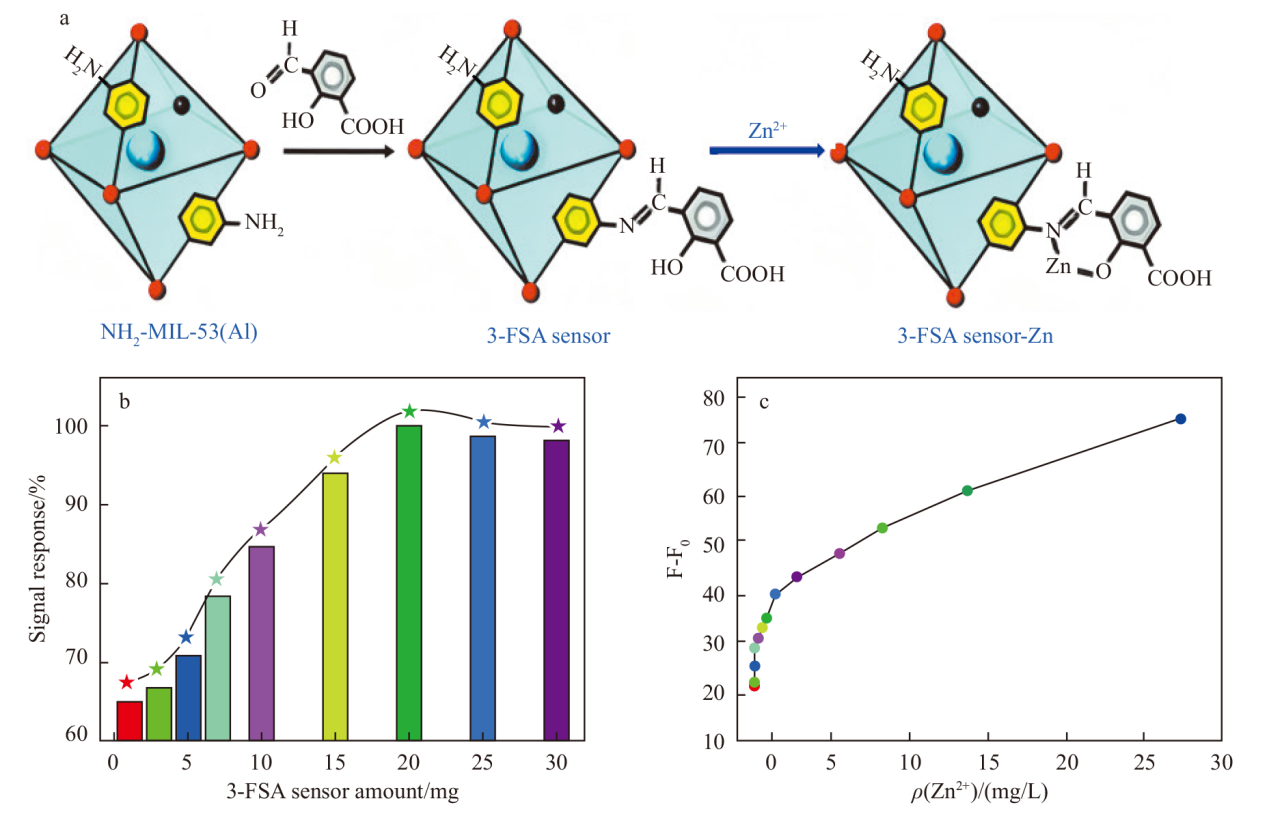

Fig. 3
(a) The schematic structure of UiO-66 displaying a single octahedral cage (green sphere) surrounded by eight smaller tetrahedral cages (yellow spheres). (b) Synthesis of UiO-66 and UiO-66- (OH) 2 by the modulated hydrothermal approach. (c) Release profiles of EtP, BA, and EMB from UiO-66- (OH) 2/flavor, and the release of free EtP at room temperature"
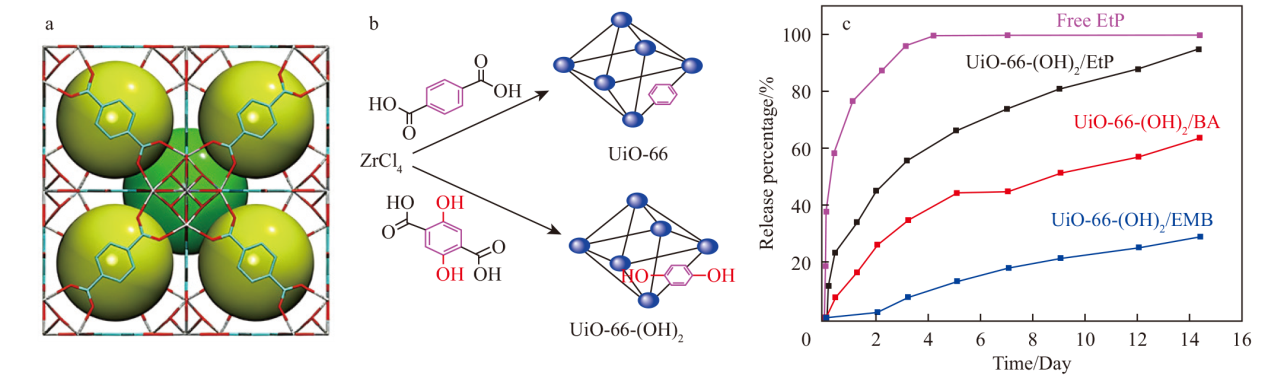
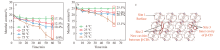
Fig. 4
Menthol retention of (a) menthol/β-CD-IC, and (b) menthol/β-CD-MOF-IC under the temperatures of 4, 25, 50, and 75 ℃ in a dryer for 1 h. (c) Release sites for menthol in menthol/β-CD-MOF-IC"
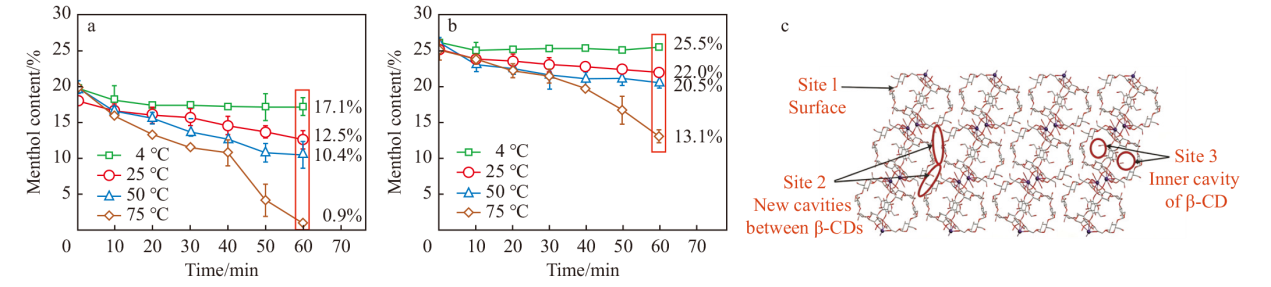
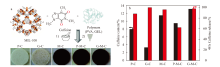
Fig. 5
(a) Schematic illustration of the composite preparation together with images of the obtained products. (b) The caffeine content and 48 h release in the obtained products"
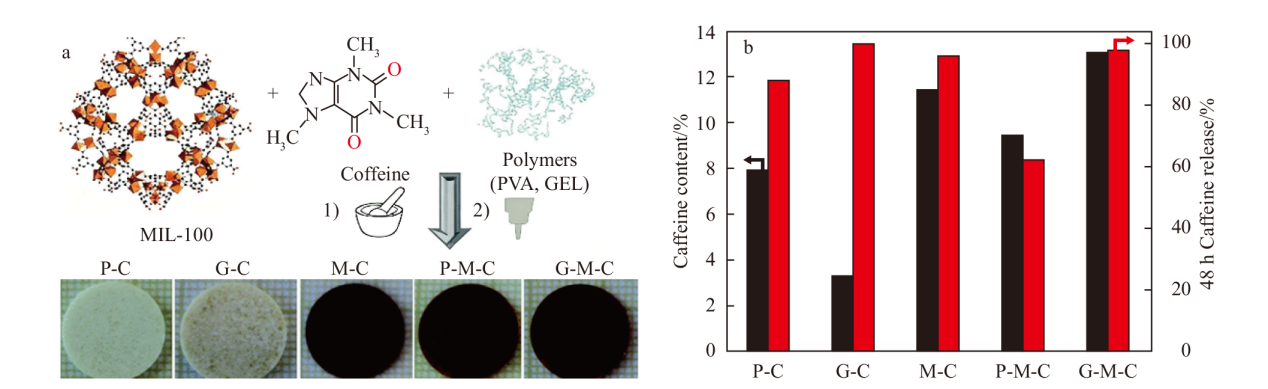
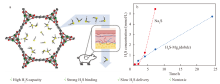
Fig. 6
(a) Structural model of Mg2(dobdc) dosed with 10 mbar of H2S obtained from Rietveld refinement of synchrotron PXRD data, and its transdermal delivery. Gray, white, red, green, and yellow spheres correspond to carbon, hydrogen, oxygen, magnesium, and sulfur, respectively. (b) Transdermal H2S release from Mg2(dobdc)(blue) and Na2S (red) through porcine skin detected via fluorescence spectroscopy over time"
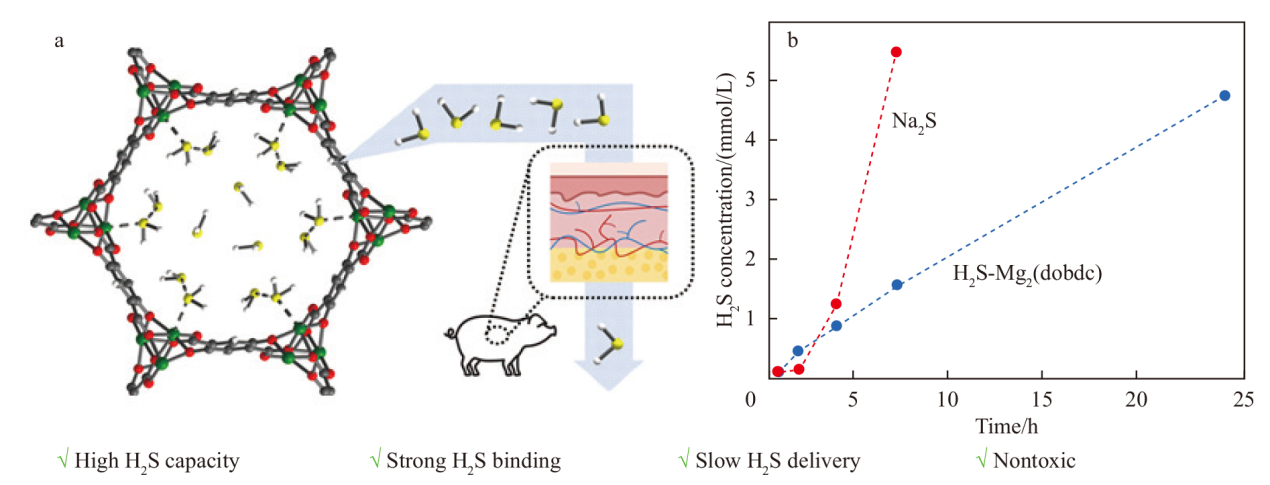
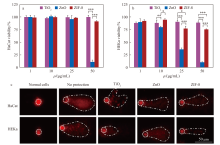
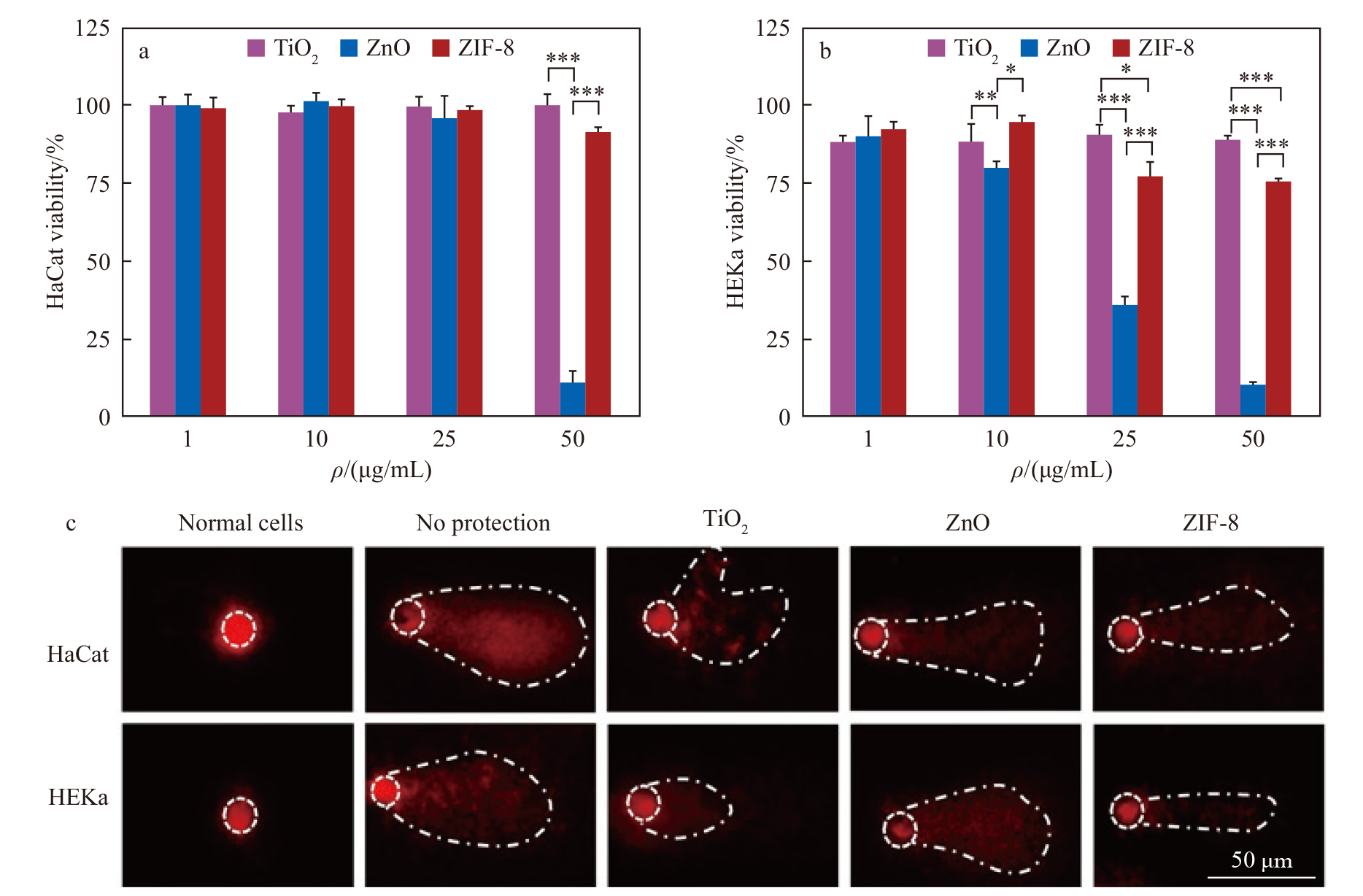
Fig. 7
Cytotoxicity of TiO2, ZnO, and ZIF-8 at various concentrations toward (a) HaCaT, and (b) HEKa. (c) Representative fluorescence images of cells with a DNA tail after pre-protection and subsequent UV exposure"
| [1] |
Yaghi O M, Li H. Hydrothermal synthesis of a metal-organic framework containing large rectangular channels[J]. Journal of the American Chemical Society, 2002, 117: 10401-10402.
doi: 10.1021/ja00146a033 |
| [2] |
Furukawa H, Cordova K E, O’Keeffe M, et al. The chemistry and applications of metal-organic frameworks[J]. Science, 2013, 341: 1230444.
doi: 10.1126/science.1230444 |
| [3] |
Stock N, Biswas S. Synthesis of metal-organic frameworks (MOFs): routes to various MOF topologies, morphologies, and composites[J]. Chemical Reviews, 2012, 112: 933-969.
doi: 10.1021/cr200304e pmid: 22098087 |
| [4] |
Allendorf M D, Bauer C A, Bhakta R K, et al. Luminescent metal-organic frameworks[J]. Chemical Society Reviews, 2009, 38: 1330-1352.
doi: 10.1039/b802352m pmid: 19384441 |
| [5] |
Zhang Y, Liu Y, Wang D, et al. State-of-the-art advances on syntheses, structures and applications of polyoxometalate-based metal-organic frameworks[J]. Polyoxometalates, 2023, 2: 9140017.
doi: 10.26599/POM.2022.9140017 |
| [6] |
Li B, Wu L X. Perspective of polyoxometalate complexes on flexible assembly and integrated potentials[J]. Polyoxometalates, 2023, 2: 9140016.
doi: 10.26599/POM.2022.9140016 |
| [7] |
Li J R, Kuppler R J, Zhou H C. Selective gas adsorption and separation in metal-organic frameworks[J]. Chemical Society Reviews, 2009, 38: 1477-1504.
doi: 10.1039/b802426j |
| [8] | Xu Y, Li S, Liu L, et al. Enhanced electrocatalytic oxidation of sterols using the synergistic effect of NiFe-MOF and aminoxyl radicals[J]. Acta Physico-Chimica Sinica, 2024, 40: 230512. |
| [9] |
Liu J, Chen L, Cui H, et al. Applications of metal-organic frameworks in heterogeneous supramolecular catalysis[J]. Chemical Society Reviews, 2014, 43: 6011-6061.
doi: 10.1039/c4cs00094c pmid: 24871268 |
| [10] |
Hu Z, Deibert B J, Li J. Luminescent metal-organic frameworks for chemical sensing and explosive detection[J]. Chemical Society Reviews, 2014, 43: 5815-5840.
doi: 10.1039/c4cs00010b pmid: 24577142 |
| [11] | Yu H M, Li S H, Tian H W, et al. Enhancement of solubility, stability and permeation of skin-care ingredients by amphiphilic sulfonated calix[8]arene[J]. Chemical Journal of Chinese Universities, 2023, 44: 20230143. |
| [12] |
Rowsell J L C, Yaghi O M. Metal-organic frameworks: A new class of porous materials[J]. Microporous and Mesoporous Materials, 2004, 73: 3-14.
doi: 10.1016/j.micromeso.2004.03.034 |
| [13] |
Wang Z, Cohen S M. Postsynthetic modification of metal-organic frameworks[J]. Chemical Society Reviews, 2009, 38: 1315-1329.
doi: 10.1039/b802258p pmid: 19384440 |
| [14] |
Howarth A J, Liu Y, Li P, et al. Chemical, thermal and mechanical stabilities of metal-organic frameworks[J]. Nature Reviews Materials, 2016, 1: 15018.
doi: 10.1038/natrevmats.2015.18 |
| [15] |
Ding M, Cai X, Jiang H L. Improving MOF stability: Approaches and applications[J]. Chemical Science, 2019, 10: 10209-10230.
doi: 10.1039/c9sc03916c pmid: 32206247 |
| [16] |
Yuan S, Feng L, Wang K, et al. Stable metal-organic frameworks: Design, synthesis, and applications[J]. Advanced Materials, 2018, 30: 1704303.
doi: 10.1002/adma.v30.37 |
| [17] |
Jayaramulu K, Geyer F, Schneemann A, et al. Hydrophobic metal-organic frameworks[J]. Advanced Materials, 2019, 31: 1900820.
doi: 10.1002/adma.v31.32 |
| [18] |
Zhang Y, Yuan S, Day G, et al. Luminescent sensors based on metal-organic frameworks[J]. Coordination Chemistry Reviews, 2018, 354: 28-45.
doi: 10.1016/j.ccr.2017.06.007 |
| [19] |
Hao T, Xu B, Wang X, et al. Circularly polarized luminescence enhancement in rare-earth MOFs due to framework chirality and host-guest energy transfer[J]. Polyoxometalates, 2025, 4: 9140095.
doi: 10.26599/POM.2025.9140095 |
| [20] |
Hong D Y, Hwang Y K, Serre C, et al. Porous chromium terephthalate MIL-101 with coordinatively unsaturated sites: Surface fnctionalization, encapsulation, sorption and catalysis[J]. Advanced Functional Materials, 2009, 19: 1537-1552.
doi: 10.1002/adfm.v19:10 |
| [21] |
Shao B, Dong H, Gong Y, et al. Metal-organic framework-derived nickel nanoparticles for efficient CO2 electroreduction in wide potential windows[J]. Acta Physico-Chimica Sinica, 2024, 40: 2305026.
doi: 10.3866/PKU.WHXB202305026 |
| [22] |
Farrusseng D, Aguado S, Pinel C. Metal-organic frameworks: Opportunities for catalysis[J]. Angewandte Chemie International Edition, 2009, 48: 7502-7513.
doi: 10.1002/anie.v48:41 |
| [23] |
Azhar M R, Vijay P, Tadé M O, et al. Submicron sized water-stable metal organic framework (bio-MOF-11) for catalytic degradation of pharmaceuticals and personal care products[J]. Chemosphere, 2018, 196: 105-114.
doi: S0045-6535(17)32142-2 pmid: 29294423 |
| [24] | Zhang K, Liu X, Deng M, et al. Determination of nine nitrobenzene compounds in cosmetics by ultra performance liquid chromatography quadrupole-time-of-flight mass spectrometry[J]. China Surfactanct Detergent & Cosmetics, 2024, 54 (6) : 744-750. |
| [25] |
Samadifar M, Yamini Y, Khataei M M, et al. Automated and semi-automated packed sorbent solid phase (micro) extraction methods for extraction of organic and inorganic pollutants[J]. Journal of Chromatography A, 2023, 1706: 464227.
doi: 10.1016/j.chroma.2023.464227 |
| [26] |
Zhai Y, Li N, Lei L, et al. Dispersive micro-solid-phase extraction of hormones in liquid cosmetics with metal-organic framework[J]. Analytical Methods, 2014, 6: 9435-9445.
doi: 10.1039/C4AY01763C |
| [27] |
Rocío-Bautista P, Martínez-Benito C, Pino V, et al. The metal-organic framework HKUST-1 as efficient sorbent in a vortex-assisted dispersive micro solid-phase extraction of parabens from environmental waters, cosmetic creams, and human urine[J]. Talanta, 2015, 139: 13-20.
doi: 10.1016/j.talanta.2015.02.032 pmid: 25882402 |
| [28] |
Napolitano-Tabares P I, Gutiérrez-Serpa A, Jiménez-Abizanda A I, et al. Hybrid materials formed with green metal-organic frameworks and polystyrene as sorbents in dispersive micro-solid-phase extraction for determining personal care products in micellar cosmetics[J]. Molecules, 2022, 27: 813.
doi: 10.3390/molecules27030813 |
| [29] |
Miralles P, van Gemert I, Chisvert A, et al. Stir bar sorptive-dispersive microextraction mediated by magnetic nanoparticles-metal organic framework composite: Determination of N-nitrosamines in cosmetic products[J]. Journal of Chromatography A, 2019, 1604: 460465.
doi: 10.1016/j.chroma.2019.460465 |
| [30] | Ma P, Li J, Gao D, et al. MOFs-functionalized melamine sponge columns combined with highperformance liquid chromatography for determination of parabens in cosmetics[J]. China Surfactanct Detergent & Cosmetics, 2025, 55 (5) : 548-553. |
| [31] |
Cheng H, Yi F, Sun J, et al. A naphthalimide-based fluorescent probe with a benzoylthiourea trigger for detection of Hg(Ⅱ) in cosmetics[J]. Dyes and Pigments, 2024, 226: 112135.
doi: 10.1016/j.dyepig.2024.112135 |
| [32] | Zadehahmadi F, Eden N T, Mahdavi H, et al. Removal of metals from water using MOF-based composite adsorbents[J]. Environmental Science: Water Research & Technology, 2023, 9: 1305-1330. |
| [33] | Radwan A, El-Sewify I M, Shahat A, et al. Multiuse Al-MOF chemosensors for visual detection and removal of mercury ions in water and skin-whitening cosmetics[J]. ACS Sustainable Chemistry & Engineering, 2020, 8: 15097-15107. |
| [34] |
Kamel R M, Shahat A, Anwar Z M, et al. A novel sensitive and selective chemosensor for fluorescent detection of Zn2+ in cosmetics creams based on a covalent post functionalized Al-MOF[J]. New Journal of Chemistry, 2021, 45: 8054-8063.
doi: 10.1039/D1NJ00871D |
| [35] |
Lee J W, Trinh C T. Towards renewable flavors, fragrances, and beyond[J]. Current Opinion in Biotechnology, 2020, 61: 168-180.
doi: 10.1016/j.copbio.2019.12.017 |
| [36] |
Ishii R, Imai Y, Wada M, et al. Adsorption and desorption behaviors of flavor molecules into a microporous pillared clay mineral and the application to flavor capsule composites[J]. Applied Clay Science, 2006, 33: 99-108.
doi: 10.1016/j.clay.2006.04.009 |
| [37] |
Feng Y, Chen Q, Jiang M, et al. Tailoring the properties of UiO-66 through defect engineering: A review[J]. Industrial & Engineering Chemistry Research, 2019, 58: 17646-17659.
doi: 10.1021/acs.iecr.9b03188 |
| [38] |
Zou D, Liu D. Understanding the modifications and applications of highly stable porous frameworks via UiO-66[J]. Materials Today Chemistry, 2019, 12: 139-165.
doi: 10.1016/j.mtchem.2018.12.004 |
| [39] |
Liu Y, Wang Y, Huang J, et al. Encapsulation and controlled release of fragrances from functionalized porous metal-organic frameworks[J]. AIChE Journal, 2018, 65: 491-499.
doi: 10.1002/aic.v65.2 |
| [40] |
Mao D, Xie C, Li Z, et al. Adsorption and controlled release of three kinds of flavors on UiO-66[J]. Food Science & Nutrition, 2020, 8: 1914-1922.
doi: 10.1002/fsn3.v8.4 |
| [41] |
Dummert S V, Saini H, Hussain M Z, et al. Cyclodextrin metal-organic frameworks and derivatives: Recent developments and applications[J]. Chemical Society Reviews, 2022, 51: 5175-5213.
doi: 10.1039/d1cs00550b pmid: 35670434 |
| [42] |
Roy I, Stoddart J F. Cyclodextrin metal-organic frameworks and their applications[J]. Accounts of Chemical Research, 2021, 54: 1440-1453.
doi: 10.1021/acs.accounts.0c00695 pmid: 33523626 |
| [43] | Abualhasan M N, Zaid A N, Jaradat N, et al. GC Method validation for the analysis of menthol in suppository pharmaceutical dosage form[J]. International Journal of Analytical Chemistry, 2017: 1-5. |
| [44] |
Phunpee S, Saesoo S, Sramala I, et al. A comparison of eugenol and menthol on encapsulation characteristics with water-soluble quaternized β-cyclodextrin grafted chitosan[J]. International Journal of Biological Macromolecules, 2016, 84: 472-480.
doi: 10.1016/j.ijbiomac.2015.11.006 pmid: 26552020 |
| [45] |
Sakai T, Akagi Y, Suzuki H, et al. Structural characterization of a cyclodextrin/l-menthol inclusion complex in the solid-state by solid-state NMR and vibrational circular dichroism[J]. Analytical Sciences, 2020, 36: 1337-1343.
doi: 10.2116/analsci.20P120 |
| [46] |
Hu Z, Shao M, Zhang B, et al. Enhanced stability and controlled release of menthol using a β-cyclodextrin metal-organic framework[J]. Food Chemistry, 2022, 374: 131760.
doi: 10.1016/j.foodchem.2021.131760 |
| [47] |
Ates K, Yildiz Z I. Encapsulation of carvacrol in β-cyclodextrin metal-organic frameworks: Improved solubility, stability, antioxidant capacity and controlled release of carvacrol[J]. Journal of Food Engineering, 2025, 391: 112445.
doi: 10.1016/j.jfoodeng.2024.112445 |
| [48] |
Zhang C, Zhang L, Zhao M, et al. Enhanced encapsulation of linalyl acetate in cyclodextrin-based metal-organic frameworks for improved stability[J]. Molecules, 2025, 30: 2698.
doi: 10.3390/molecules30132698 |
| [49] |
Zhang T L, Chen G. Photorelease and antioxidant activity of avobenzone-ferulic acid[J]. Chemical Journal of Chinese Universities, 2024, 45: 20240056.
doi: 10.7503/cjcu20240056 |
| [50] |
Lu B, Wang Z, Xu Y, et al. Anti-aging and anti-inflammatory fulfilled through the delivery of supramolecular bakuchiol in ionic liquid[J]. Supramolecular Materials, 2025, 4: 100093.
doi: 10.1016/j.supmat.2025.100093 |
| [51] | Jiang W, Jiang H, Liu W, et al. Pickering emulsion templated proteinaceous microsphere with bio-stimuli responsiveness[J]. Acta Physico-Chimica Sinica, 2023, 39: 2301041. |
| [52] |
Gao Z, Cui X, Cui J. Multicompartment polymer capsules[J]. Supramolecular Materials, 2022, 1: 100015.
doi: 10.1016/j.supmat.2022.100015 |
| [53] |
Cherian P A, Bergfeld W F, Belsito D V, et al. Safety assessment of methylxanthines as used in cosmetics[J]. International Journal of Toxicology, 2024, 43: 42-77.
doi: 10.1177/10915818241260282 |
| [54] |
Elias M L, Israeli A F, Madan R. Caffeine in skincare[J]. Indian Journal of Dermatology, 2023, 68: 546-550.
doi: 10.4103/ijd.ijd_166_22 |
| [55] |
Zhong G, Liu D, Zhang J. Applications of porous metal-organic framework MIL-100(M) (M=Cr, Fe, Sc, Al, V)[J]. Crystal Growth & Design, 2018, 18: 7730-7744.
doi: 10.1021/acs.cgd.8b01353 |
| [56] |
Márquez A G, Hidalgo T, Lana H, et al. Biocompatible polymer-metal-organic framework composite patches for cutaneous administration of cosmetic molecules[J]. Journal of Materials Chemistry B, 2016, 4: 7031-7040.
doi: 10.1039/c6tb01652a pmid: 32263570 |
| [57] | Zornoza B, Rubio C, Piera E, et al. Caffeine encapsulation in metal organic framework MIL-53(Al)at pilot plant ccale for preparation of polyamide textile fibers with cosmetic properties[J]. ACS Applied Materials & Interfaces, 2022, 14: 22476-22488. |
| [58] | Cong W P, Zhou L N. Fluorescent detection of hydrogen sulfide using metal-organic framework CAU-10-NH-DNBA functionalized with 3, 5-dinitrobenzoic acid[J]. Chemical Journal of Chinese Universities, 2024, 45: 20240069. |
| [59] |
Mandel R M, Lotlikar P S, Runčevski T, et al. Transdermal hydrogen sulfide delivery enabled by open-metal-site metal-organic frameworks[J]. Journal of the American Chemical Society, 2024, 146: 18927-18937.
doi: 10.1021/jacs.4c00674 pmid: 38968420 |
| [60] |
Coats J G, Maktabi B, Abou-Dahech M S, et al. Blue light protection, part Ⅱ—Ingredients and performance testing methods[J]. Journal of Cosmetic Dermatology, 2020, 20: 718-723.
doi: 10.1111/jocd.v20.3 |
| [61] |
Xiao J, Li H, Zhao W, et al. Zinc-metal-organic frameworks with tunable UV diffuse-reflectance as sunscreens[J]. Journal of Nanobiotechnology, 2022, 20: 87.
doi: 10.1186/s12951-022-01292-1 pmid: 35183191 |
| [1] | Jiayao Dai, Huai Tao, Zuowei Xiao, Yimiao Zhou. Determination of 8 heavy metals in cosmetics by inductively coupled plasma emission spectrometry [J]. China Surfactant Detergent & Cosmetics, 2025, 55(9): 1215-1220. |
| [2] | Zhaohui Yang, Xiang Qiu, Yuqi Li, Huanhuan Zhao, Erming Wu, Zhiwei Cheng. Advancements in the integration and utilization of plant cell engineering technology in cosmetic ingredient development [J]. China Surfactant Detergent & Cosmetics, 2025, 55(8): 1049-1057. |
| [3] | Lu Wang, Dan Ran, Hui Wang, Shaotong He, Lulu Pi, Nan Deng. Detection of pyoluteorin and pyocyanin in cosmetics using UPLC-MS/MS method [J]. China Surfactant Detergent & Cosmetics, 2025, 55(8): 1066-1071. |
| [4] | Deng Hong, Jiang Zhou, Yuan Yan, Fanzhen Shang, Ting Liu, Liangli Wang, Wen Xie. Simultaneous determination of 5 prohibited phenols in cosmetics by high performance liquid chromatography [J]. China Surfactant Detergent & Cosmetics, 2025, 55(8): 1072-1077. |
| [5] | Ruina Liu, Biao Jiang, Yafang Lin, Lizhe Yang, Lei Zhai, Kun Li, Su Yao. Suitability study of amplified ATP bioluminescence assay for microbial detection of cosmetics based on two cultivation systems [J]. China Surfactant Detergent & Cosmetics, 2025, 55(7): 909-919. |
| [6] | Xu Gong, Jing Sun, Youlong Feng. Determination of 7 prostaglandin analogsin eyelash-related cosmetics by UPLC-QTRAP-MS/MS [J]. China Surfactant Detergent & Cosmetics, 2025, 55(6): 811-816. |
| [7] | Yueling Xu, Xinfeng Dong, Xianyan Zhu, Ge Yang, Ruishuang Xu, Wei Tang, Li Yu. Preparation and properties of O1/W/O2 double emulsion loaded with menthol [J]. China Surfactant Detergent & Cosmetics, 2025, 55(6): 747-755. |
| [8] | Pinyi Ma, Jingkang Li, Dejiang Gao, Daqian Song. MOFs-Functionalized melamine sponge columns combined with high-performance liquid chromatography for determination of parabens in cosmetics [J]. China Surfactant Detergent & Cosmetics, 2025, 55(5): 548-553. |
| [9] | Yajun Yang, Chang Liu. Research on packaging design and application of women’s daily cosmetics based on emotional perspective [J]. China Surfactant Detergent & Cosmetics, 2025, 55(5): 659-667. |
| [10] | Ting Li, Ziying Ma, Jiquan Liu, Shenghui Cui, Yu Jing, Feirong Bai, Su Yao. Establishment and feasibility study of a dual enrichment system for amplified ATP bioluminescence microbial detection assay in cosmetics [J]. China Surfactant Detergent & Cosmetics, 2025, 55(5): 668-676. |
| [11] | Weidong Huang. Determination of 10 indicative components from plant materials in whitening cosmetics by UPLC-MS/MS [J]. China Surfactant Detergent & Cosmetics, 2025, 55(4): 531-538. |
| [12] | Keran Feng, Xiaoming Wu, Liangbo Ma, Yu Sun. Determination of 21 nonsteroidal anti-inflammatory drugs in cosmetics by high performance liquid chromatography-tandem mass spectrometry [J]. China Surfactant Detergent & Cosmetics, 2025, 55(3): 399-406. |
| [13] | Shasha Hong,Peng Wang,Erdong Li,Shang Guo. Construction of an OMMT/HP-MIL-101 adsorbent with high adsorption performance of AFB1 [J]. China Surfactant Detergent & Cosmetics, 2025, 55(10): 1260-1267. |
| [14] | Linrui Fu,Haiyan Wang,Yong Lu. Research status and prospect of new pollutants in cosmetics [J]. China Surfactant Detergent & Cosmetics, 2025, 55(10): 1323-1332. |
| [15] | Xinzheng Wang,Yan Liu. Research on the integration of women’s aesthetic psychology and cosmetics packaging design [J]. China Surfactant Detergent & Cosmetics, 2025, 55(10): 1333-1343. |
|
||
