Welcome to China Surfactant Detergent & Cosmetics, Today is


China Surfactant Detergent & Cosmetics ›› 2025, Vol. 55 ›› Issue (10): 1252-1259.doi: 10.3969/j.issn.2097-2806.2025.10.004
• Basic research • Previous Articles Next Articles
Yushi Sun,Zhao Chen,Zhenggang Cui,Xiaomei Pei*( ),Binglei Song*()
Received:2024-11-13
Revised:2025-10-22
Online:2025-10-22
Published:2025-12-03
Contact:
Xiaomei Pei,Binglei Song
E-mail:pxmxiaomei@163.com;ccfsbl@jiangnan.edu.cn
CLC Number:
Yushi Sun,Zhao Chen,Zhenggang Cui,Xiaomei Pei,Binglei Song. Non-aqueous Pickering emulsions synergistically stabilized by double tailed surfactants and silica nanoparticles[J].China Surfactant Detergent & Cosmetics, 2025, 55(10): 1252-1259.

Fig. 1
The synthetic procedure of Di-C16DAB"

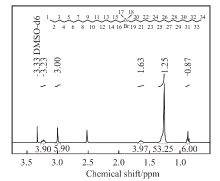
Fig. 2
1H NMR spectrum of Di-C16DAB"
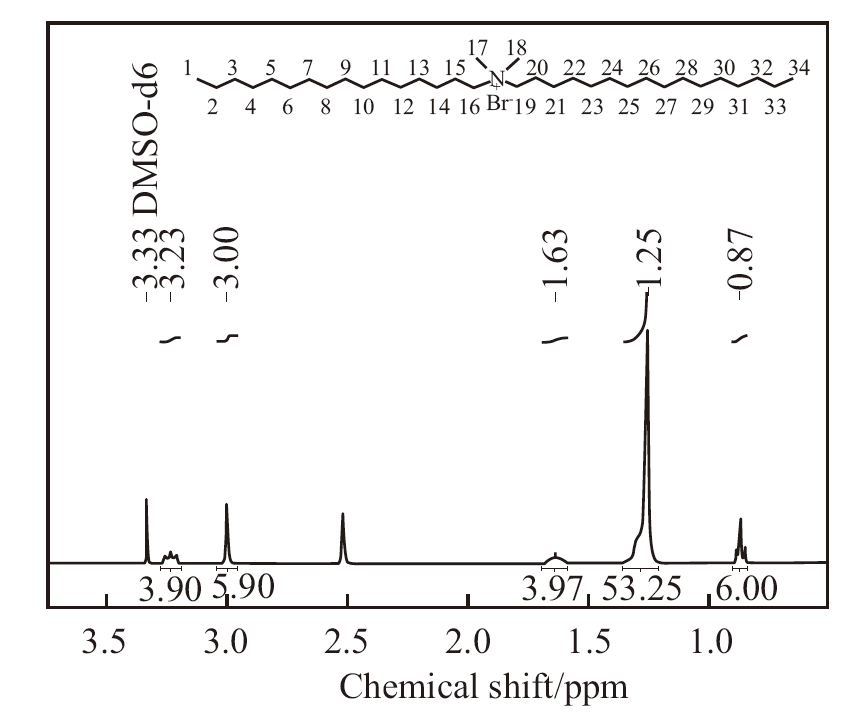
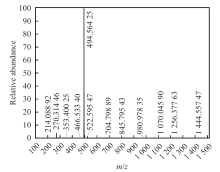
Fig. 3
HRMS spectrum of Di-C16DAB"
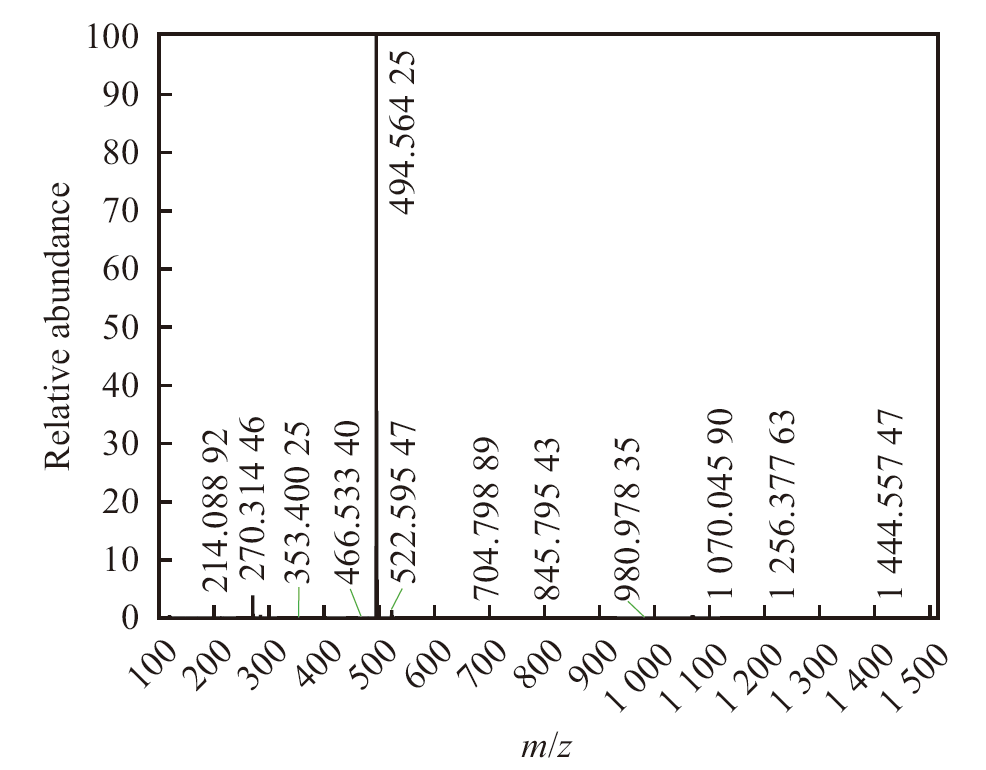
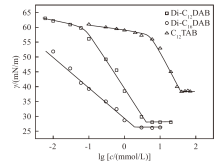
Fig. 4
The surface tensions of different quaternary ammonium surfactants in glycerol at 45 ℃. The error bar is±0.1 mN/m"
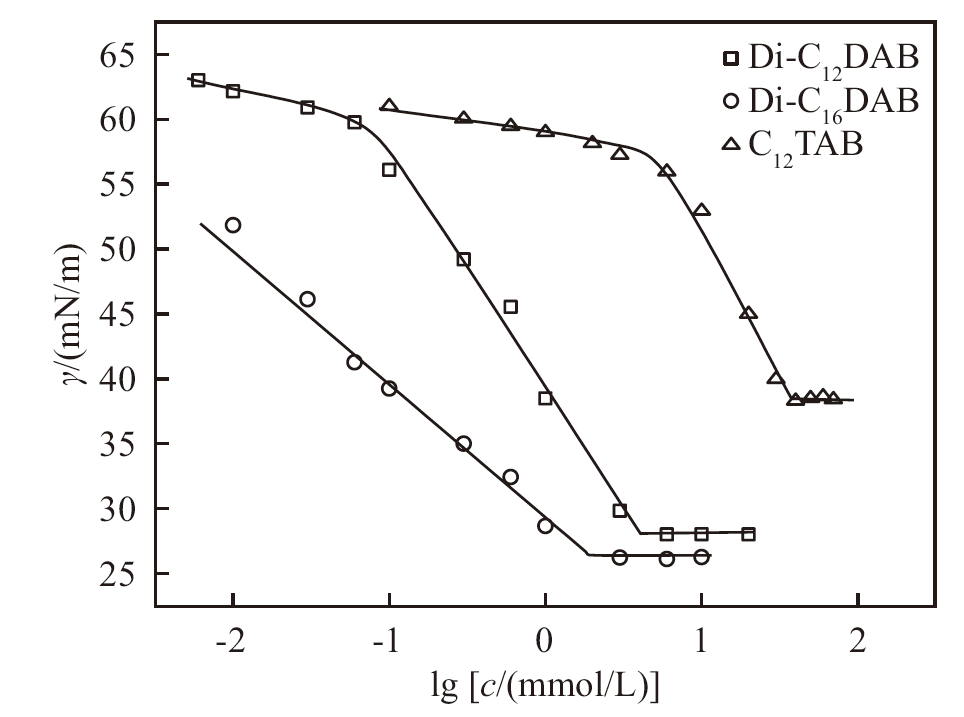
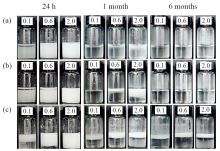
Fig. 5
At 45 ℃, n-decane/glycerol (Vn-decane∶Vglycerol=1∶4) emulsions stabilized by quaternary ammonium surfactants (a) C12TAB, (b) Di-C12DAB, (c) Di-C12DAB together with 0.3% (w/%) SiO2"
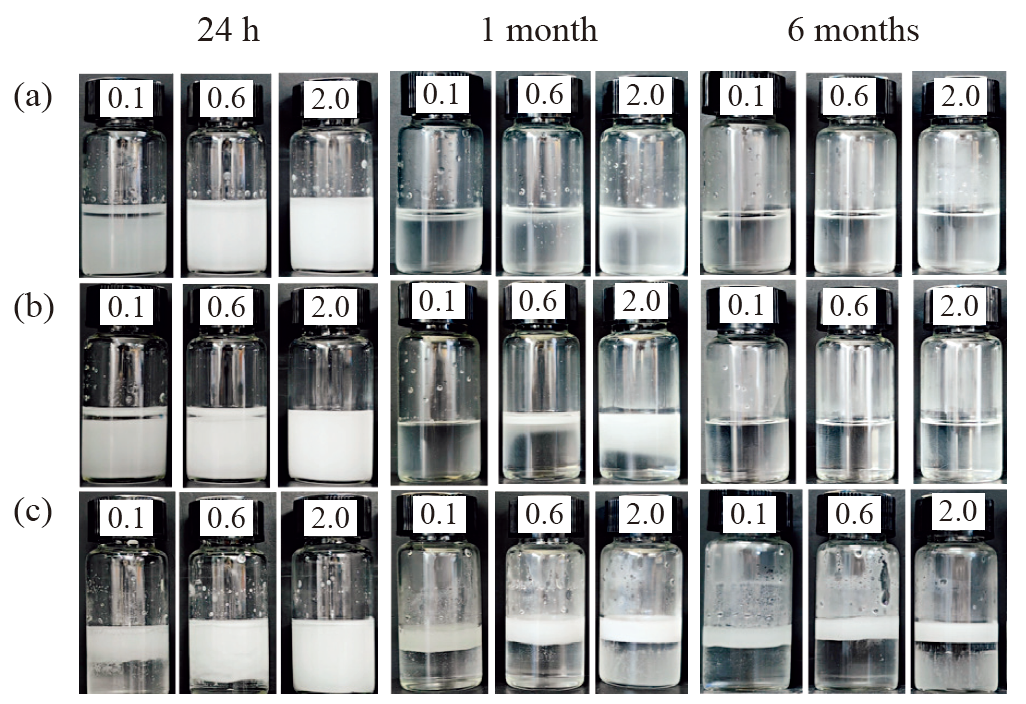
Fig. 6
At 45 ℃, the microscopic images of n-decane/glycerol (Vn-decane∶Vglycerol=1∶4) emulsions co-stabilized with SiO2 and quaternary ammonium surfactants (a) Di-C12DAB, (b) Di-C16DAB, taken after 6 months of stabilization at 45 ℃. The concentrations (mmol/L) were indicated on the images"
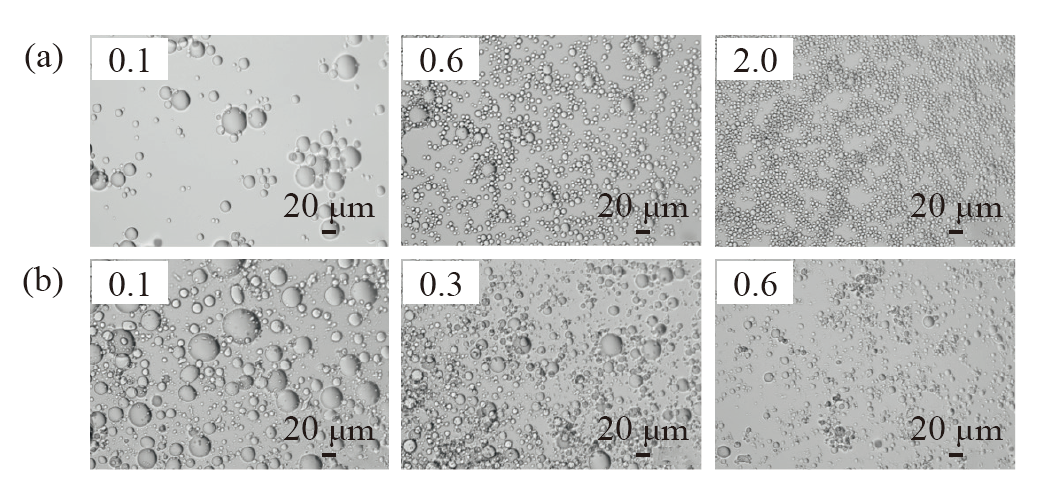
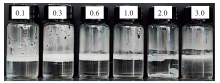
Fig. 7
The images of n-decane/glycerol (Vn-decane∶Vglycerol=1∶4) emulsions stabilized by Di-C16DAB together with 0.3% (w/%) SiO2, taken after 6 months of stabilization at 45 ℃. The concentrations (mmol/L) were indicated on the image"

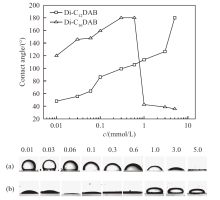
Fig. 8
Contact angles between n-decane and glass sheets soaked in glycerol solution of quaternary ammonium surfactants (a) Di-C12DAB, (b) Di-C16DAB with different concentrations. The concentrations (mmol/L) were indicated on the image. The error bar is±3°"
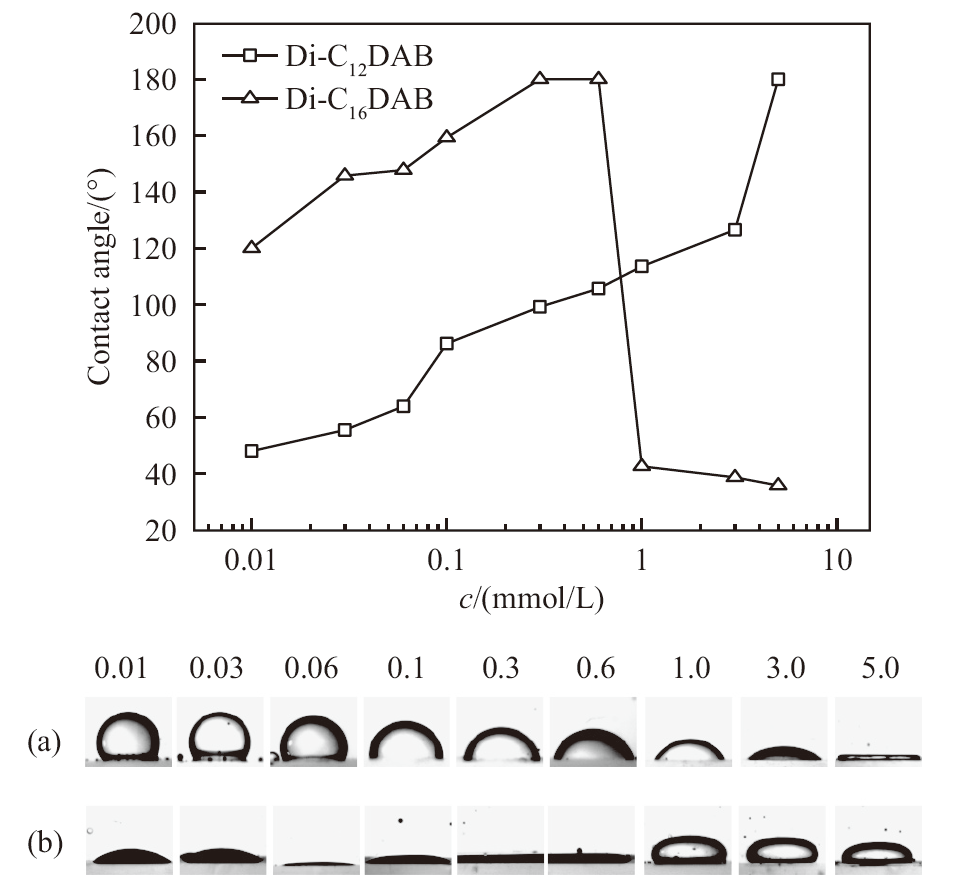
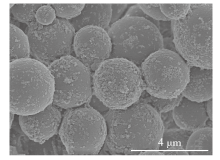
Fig. 9
SEM image of polymer particles templated from non-aqueous emulsions stabilized by 3 mmol/L Di-C12DAB and 0.3% (w/%) SiO2"

| [1] |
Ramsden W. Separation of solids in the surface-layers of solutions and ‘suspensions’ (observations on surface-membranes, bubbles, emulsions, and mechanical coagulation). —Preliminary account[J]. Proceedings of the Royal Society of London, 1903, 72: 156-164.
doi: 10.1098/rspl.1903.0034 |
| [2] |
Pickering S U. CXCVI. —Emulsions[J]. Journal of the Chemical Society, 1907, 91: 2001-2021.
doi: 10.1039/CT9079102001 |
| [3] |
Kralchevsky P A, Nagayama K. Capillary forces between colloidal particles[J]. Langmuir, 1994, 10 (1) : 23-36.
doi: 10.1021/la00013a004 |
| [4] |
Ma H, Dai L L. Particle self-assembly in ionic liquid-in-water Pickering emulsions[J]. Langmuir, 2011, 27 (2) : 508-512.
doi: 10.1021/la103828x pmid: 21166452 |
| [5] |
Midmore B R. Preparation of a novel silica-stabilized oil/water emulsion[J]. Colloids and Surfaces A: Physicochemical and Engineering Aspects, 1998, 132 (2) : 257-265.
doi: 10.1016/S0927-7757(97)00094-0 |
| [6] |
Xu Jingting, He Mingxiang, Wei Cuiping, et al. Konjac glucomannan films with Pickering emulsion stabilized by TEMPO-oxidized chitin nanocrystal for active food packaging[J]. Food Hydrocolloids, 2023, 139: 108539.
doi: 10.1016/j.foodhyd.2023.108539 |
| [7] |
Lu Hao, Tian Yaoqi. Nanostarch: preparation, modification, and application in Pickering emulsions[J]. Journal of Agricultural and Food Chemistry, 2021, 69 (25) : 6929-6942.
doi: 10.1021/acs.jafc.1c01244 pmid: 34142546 |
| [8] | Zia A, Pentzer E, Thickett S, et al. Advances and opportunities of oil-in-oil emulsions[J]. ACS Applied Materials & Interfaces, 2020, 12 (35) : 38845-38861. |
| [9] |
Fan Zhaoyu, Tay A, Pera-Titus M, et al. Pickering interfacial catalysts for solvent-free biomass transformation: physicochemical behavior of non-aqueous emulsions[J]. Journal of Colloid and Interface Science, 2014, 427: 80-90.
doi: 10.1016/j.jcis.2013.11.047 pmid: 24360842 |
| [10] |
Binks B P, Rodrigues J A, Frith W J. Synergistic interaction in emulsions stabilized by a mixture of silica nanoparticles and cationic surfactant[J]. Langmuir, 2007, 23 (7) : 3626-3636.
pmid: 17316038 |
| [11] | Zhu Ya, Huan Siqi, Bai Long, et al. High internal phase oil-in-water Pickering emulsions stabilized by chitin nanofibrils: 3D structuring and solid foam[J]. Acs Applied Materials & Interfaces, 2020, 12 (9) : 11240-11251. |
| [12] |
Guo Ziang, Li Zhihua, Cen Shaoyi, et al. Modulating hydrophilic properties of β-cyclodextrin/carboxymethyl cellulose colloid particles to stabilize Pickering emulsions for food 3D printing[J]. Carbohydrate Polymers, 2023, 313: 120764.
doi: 10.1016/j.carbpol.2023.120764 |
| [13] |
Liu Haifang, Huang Riting, Zhao Xinyu, et al. Ca2+/pH-triggered gelation of Pickering emulsion in vitro digestion: visualization and sustained-release performance[J]. Food Hydrocolloids, 2023, 140: 108583.
doi: 10.1016/j.foodhyd.2023.108583 |
| [14] |
Ruiz M P, Faria J A. Catalysis at the solid-liquid-liquid interface of water-oil Pickering emulsions: a tutorial review[J]. ACS Engineering Au, 2022, 2 (4) : 295-319.
doi: 10.1021/acsengineeringau.2c00010 |
| [15] |
Hu Jing, Du Peiting, Xu Ruoyi, et al. Supersmall dendritic mesoporous silica nanospheres as antioxidant nanocarriers for Pickering emulsifiers[J]. Journal of Agricultural and Food Chemistry, 2021, 69 (49) : 14893-14905.
doi: 10.1021/acs.jafc.1c03016 |
| [16] |
Cao Huaixuan, Wang Yifei, Tan Zeyi, et al. Structured Ti3C2Tz MXene-polymer composites from non-aqueous emulsions[J]. Matter, 2024, 7 (5) : 1766-1784.
doi: 10.1016/j.matt.2024.02.011 |
| [17] |
Chatterjee R, Bararnia H, Anand S. A family of frost-resistant and icephobic coatings[J]. Advanced Materials, 2022, 34: 2109930.
doi: 10.1002/adma.v34.20 |
| [18] |
Ceballos M R, Brailovsky V, Bierbrauer K L, et al. Effect of ethylcellulose on the structure and stability of non-aqueous oil based propylene glycol emulsions[J]. Food Research International, 2014, 62: 416-423.
doi: 10.1016/j.foodres.2014.03.040 |
| [19] |
Cameron N R, Sherrington D C. Non-aqueous high internal phase emulsions. Preparation and stability[J]. Journal of the Chemical Society, Faraday Transactions, 1996, 92 (9) : 1543-1547.
doi: 10.1039/ft9969201543 |
| [20] | Wang Beibei, Zhang Zhao, Feng Weixiao, et al. Stabilizing and structuring oil-oil interfaces by molecular brush surfactants[J]. Aggregate, 2022, 3: e292. |
| [21] |
Gritten Sieben P, Savicki A, Wypych F, et al. Oil-in-oil Pickering emulsions stabilized with kaolinite[J]. Journal of Molecular Liquids, 2023, 385: 122343.
doi: 10.1016/j.molliq.2023.122343 |
| [22] |
Ren Gaihuan, Li Bo, Ren Lulu, et al. Dynamic covalent nanoparticles for acid-responsive nonaqueous Pickering emulsions[J]. Langmuir, 2021, 37 (22) : 6632-6640.
doi: 10.1021/acs.langmuir.1c00097 |
| [23] |
Bielas R, Józefczak A. The effect of particle shell on cooling rates in oil-in-oil magnetic Pickering emulsions[J]. Materials, 2020, 13: 4783.
doi: 10.3390/ma13214783 |
| [24] |
Asano I, So S, Lodge T P. Oil-in-oil emulsions stabilized by asymmetric polymersomes formed by AC+BC block polymer co-assembly[J]. Journal of the American Chemical Society, 2016, 138 (14) : 4714-4717.
doi: 10.1021/jacs.6b01697 |
| [25] |
Rodier B, de Leon A, Hemmingsen C, et al. Controlling oil-in-oil Pickering-type emulsions using 2D materials as surfactant[J]. ACS Macro Letters, 2017, 6 (11) : 1201-1206.
doi: 10.1021/acsmacrolett.7b00648 pmid: 35650795 |
| [26] |
Xue Linyu, Li Hongye, Pei Xiaomei, et al. Pickering emulsions synergistically stabilized by aliphatic primary amines and silica nanoparticles[J]. Langmuir, 2022, 38 (46) : 14109-14117.
doi: 10.1021/acs.langmuir.2c02072 pmid: 36349864 |
| [27] |
Tawfeek A M, Dyab A K F, Al-Lohedan H A. Synergetic effect of reactive surfactants and clay particles on stabilization of nonaqueous oil-in-oil (O/O) emulsions[J]. Journal of Dispersion Science and Technology, 2014, 35 (2) : 265-272.
doi: 10.1080/01932691.2013.769110 |
| [28] |
Binks B P, Tyowua A T. Oil-in-oil emulsions stabilised solely by solid particles[J]. Soft Matter, 2016, 12 (3) : 876-887.
doi: 10.1039/c5sm02438b pmid: 26549699 |
| [1] | Xuefeng Wang, Qian Jiang, Zuowang Fan, Xiaoli Xie, Fulai Yu, Dan Wang. Study on the construction, stability and antifungal activity of microemulsion system of Noni essential oil [J]. China Surfactant Detergent & Cosmetics, 2025, 55(9): 1120-1128. |
| [2] | Xiaoqian Jiang, Liya Zhang, Aixin Song, Xiuping Sun. Preparation and properties of the nanoemulsions and nanoemulsion gels stabilized with rhamnolipid [J]. China Surfactant Detergent & Cosmetics, 2025, 55(6): 677-686. |
| [3] | Yueling Xu, Xinfeng Dong, Xianyan Zhu, Ge Yang, Ruishuang Xu, Wei Tang, Li Yu. Preparation and properties of O1/W/O2 double emulsion loaded with menthol [J]. China Surfactant Detergent & Cosmetics, 2025, 55(6): 747-755. |
| [4] | Jun Li, Han Wu. Study on the preparation and properties of graphene-polyvinyl chloride composites [J]. China Surfactant Detergent & Cosmetics, 2025, 55(5): 611-615. |
| [5] | Pengpeng Li, Wuwei Li. Preparation and properties of biodegradable polyester materials for packaging [J]. China Surfactant Detergent & Cosmetics, 2025, 55(5): 625-632. |
| [6] | Fei Yan, Cheng Ma, Zhicheng Xu, Qingtao Gong, Lei Zhang, Lu Zhang. Study on the foam properties of extended anionic surfactants [J]. China Surfactant Detergent & Cosmetics, 2025, 55(4): 415-421. |
| [7] | Kaiyuan Miao, Zeyao Ouyang, Xinying Zhao, Xiaojing Yang, Xinyan Chen, Zhaohua Shi. Preparation, characterization, and whitening activity research of oxyresveratrol-loaded self-microemulsion [J]. China Surfactant Detergent & Cosmetics, 2025, 55(4): 453-463. |
| [8] | Li He, Huabin Li, Gang He, Lei Luo. Study on the influencing factors for the droplet size and stability of crude oil emulsions [J]. China Surfactant Detergent & Cosmetics, 2025, 55(3): 341-348. |
| [9] | Keke Zhang, Huanjin Zou, Ye Fan, Yongmin Zhang, Xuefeng Liu, Yinjun Fang. Preparation of highly stable O/W Pickering emulsion based on amphiphilic Janus-SiO2 particles [J]. China Surfactant Detergent & Cosmetics, 2025, 55(3): 271-278. |
| [10] | Haibing Cheng, Yong Zhang, Lei Sun, Weijia Li, Zhi Chen, Congming Tang, Li Chang. Synthesis and crosslinking properties of W-SN crosslinking agent [J]. China Surfactant Detergent & Cosmetics, 2025, 55(3): 279-285. |
| [11] | Xiaoyu Li,Jianping Jiang,Lifeng Xiao. Performance analysis of nanostructured lipid carriers for chemical sunscreen agents [J]. China Surfactant Detergent & Cosmetics, 2025, 55(2): 185-193. |
| [12] | Yanfu Zhou, Xuguang Wang, Feifei Wang. Study on the foam properties of common surfactants [J]. China Surfactant Detergent & Cosmetics, 2025, 55(1): 26-33. |
| [13] | Meiling Shi, Juanbo Chen, Hao Li, Yuanqin Huang, Qiqing Zhang, Sa Zeng, Tao Meng. Study on the silicon dioxide encapsulation for the enhancement of vitamin C stability [J]. China Surfactant Detergent & Cosmetics, 2024, 54(9): 1015-1022. |
| [14] | Jian Wang, Yuhui Fan, Danfeng Li, Ningwen Cheng, Ling Li, Yufeng Yu. Skin care efficacy study of recombinant humanized collagen based on in vitro level [J]. China Surfactant Detergent & Cosmetics, 2024, 54(9): 1030-1038. |
| [15] | Juyuan Zhang,Xiumei Tai,Huimin Liu,Xiaoyuan Ma,Xu Gao,Yi Luo. Effects of oil type on the stability and rheological properties of W/O Pickering emulsions [J]. China Surfactant Detergent & Cosmetics, 2024, 54(8): 879-886. |
|
||
