欢迎访问《日用化学工业(中英文)》,今天是


日用化学工业(中英文) ›› 2026, Vol. 56 ›› Issue (1): 55-64.doi: 10.3969/j.issn.2097-2806.2026.01.007

• 基础研究 • 上一篇    下一篇

基于网络药理学和细胞实验探究木芙蓉叶抗炎的物质基础及作用机制

谌文元1,2,陈晓兰1,*(),万静2,邓琴1,高雍1   

  1. 1.贵州中医药大学贵州 贵阳 550025
    2.毕节医学高等专科学校贵州 毕节 551700
  • 收稿日期:2025-02-26 修回日期:2025-12-25 出版日期:2026-01-22 发布日期:2026-02-05
  • 基金资助:
    贵州省高层次创新型人才项目(黔科合平台人才-GCC[2023]037);国家苗药工程技术研究中心能力提升(黔科合中引地[2023]006);贵州省中医药管理局中医药;民族医药科学技术研究课题(QZYY-2025-066);毕节市科技计划项目(毕科合2024)

Exploring the material basis and mechanisms of the action of Hibiscus mutabilis L. for its anti-inflammatory effects based on network pharmacology and cell experiments

Wenyuan Chen1,2,Xiaolan Chen1,*(),Jing Wan2,Qin Deng1,Yong Gao1   

  1. 1. Guizhou University of Traditional Chinese Medicine, Guiyang, Guizhou 550025, China
    2. Bijie Medical College, Bijie, Guizhou 551700, China
  • Received:2025-02-26 Revised:2025-12-25 Online:2026-01-22 Published:2026-02-05
  • Contact: E-mail: chenxiaolan76@126.com.

摘要:

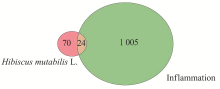
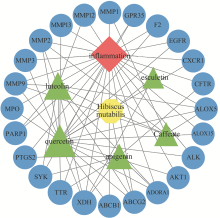
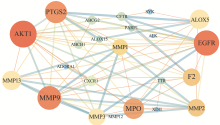
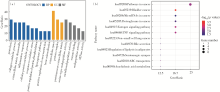
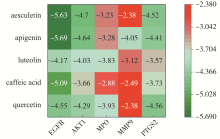
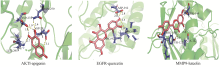
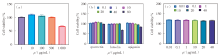
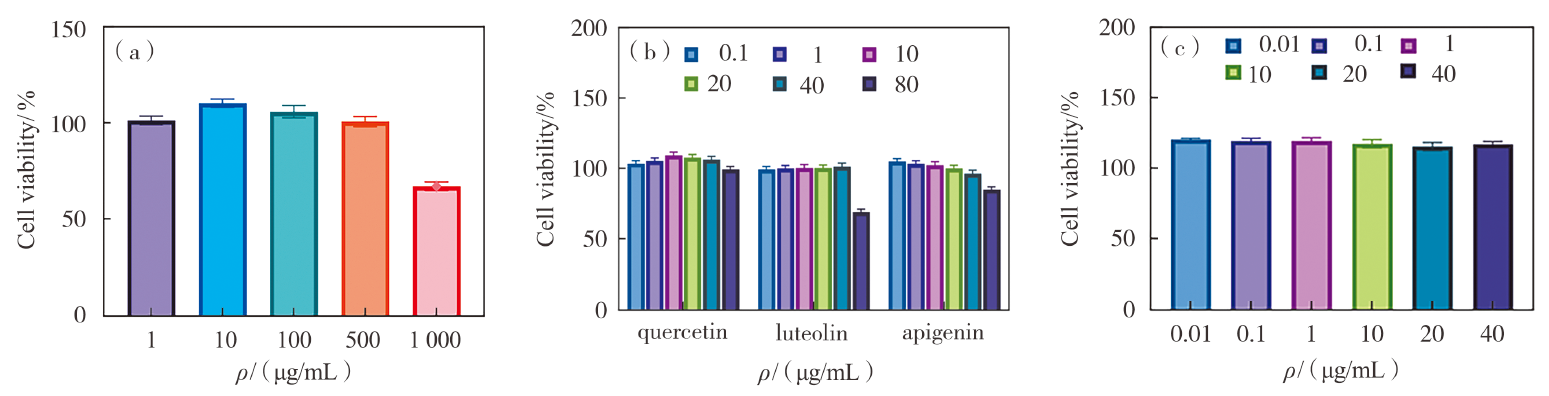
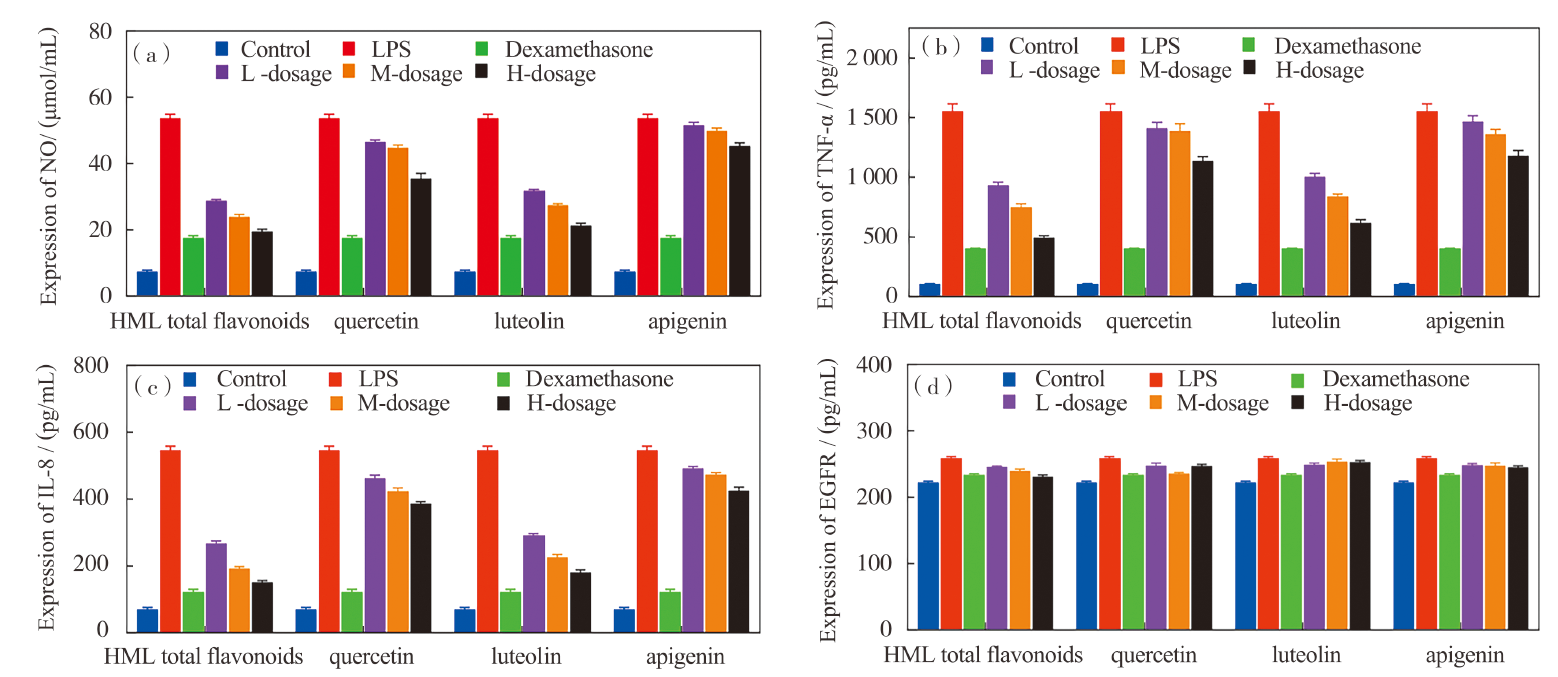
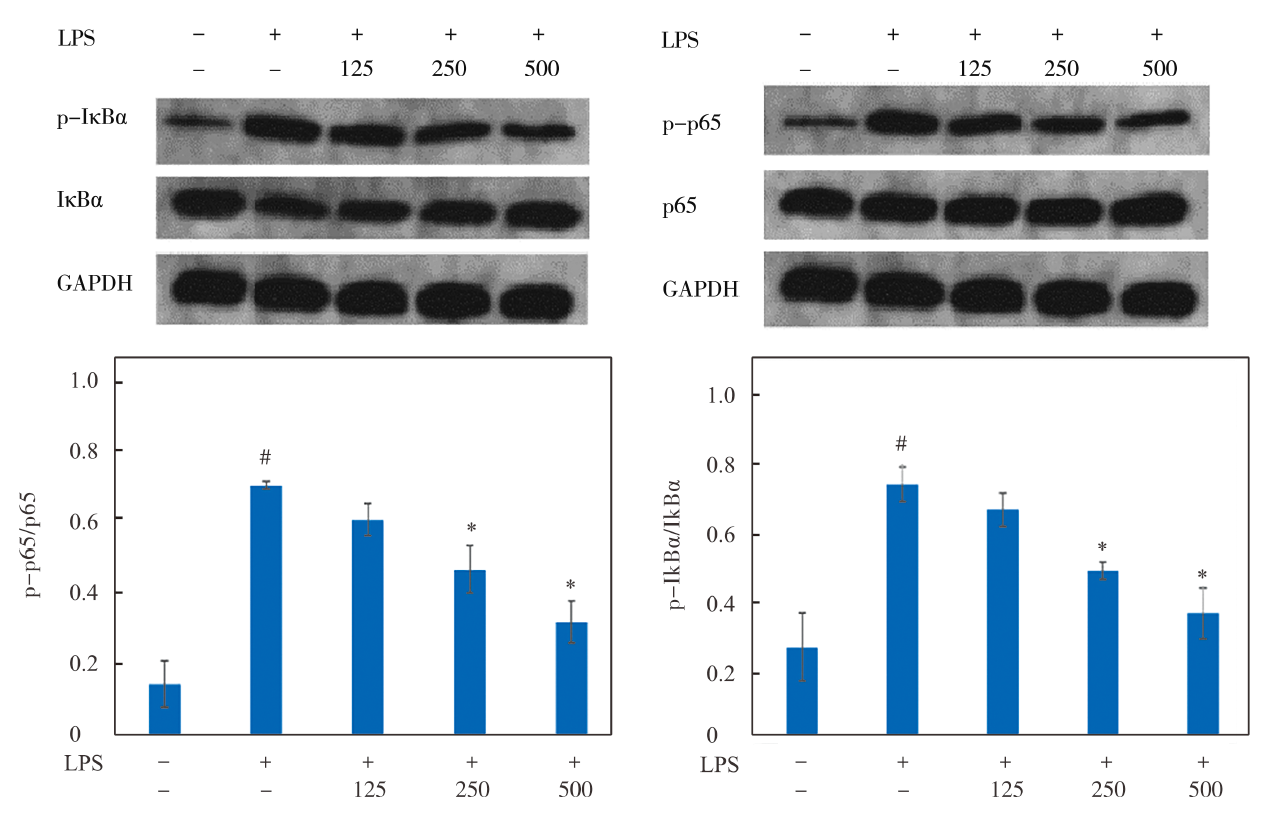
探究木芙蓉叶抗炎作用的物质基础及作用机制。经文献查阅及SwissADME平台获取木芙蓉叶的活性成分与潜在靶点,利用Genecards和OMIM数据库收集炎症相关基因,在STRING、DAVID网站提交交集基因,进行蛋白质相互作用网络(PPI)、基因本体(GO)及通路(KEGG)的分析。运用Cytoscape 3.7.2软件构建“木芙蓉叶-活性成分-靶点-炎症”网络图,AutoDockTools-1.5.6软件进行分子对接验证。通过RAW264.7炎症细胞模型验证木芙蓉叶活性成分的抗炎效果。结果显示,经筛选获得木芙蓉叶11个活性成分及其94个潜在靶点、1 029个炎症靶点和24个交集靶点。木芙蓉叶抗炎的关键活性成分有槲皮素、芹菜素、木犀草素。其作用通路主要与NF-κB、癌症通路、TNF信号通路相关。细胞实验表明木芙蓉叶总黄酮能有效抑制LPS诱导的RAW 264.7炎症细胞中肿瘤坏死因子(TNF-α)、白介素8(IL-8)、表皮生长因子受体(EGFR)的表达量,并且可下调人核因子ĸB抑制蛋白α(IĸBα)和NF-κB p65亚单位蛋白(p65)的磷酸化水平。综上所述,木芙蓉叶的抗炎作用与多种活性成分、多个信号通路及靶点相关,为后续木芙蓉叶的深入开发和应用提供了理论基础。

关键词: 木芙蓉叶, 炎症, 网络药理学, 分子对接, 细胞验证

Abstract:

To explore the material basis and mechanisms of the anti-inflammatory effects of Hibiscus mutabilis L.. The active ingredients and potential targets of Hibiscus mutabilis L. were obtained through the literature review and SwissADME platform. Genes related to the inflammation were collected using Genecards and OMIM databases, and the intersection genes were submitted on STRING and DAVID websites. Then, the protein interaction network(PPI), gene ontology(GO)and pathway(KEGG)were analyzed. Cytoscape 3.7.2 software was used to construct the “Hibiscus mutabilis L. - active ingredient-target-inflammation” network diagram, and AutoDockTools-1.5.6 software was used for the molecular docking verification. The anti-inflammatory effect of Hibiscus mutabilis L. active ingredient was verified by the RAW264.7 inflammatory cell model. The results showed that 11 active components and 94 potential targets, 1 029 inflammatory targets and 24 intersection targets were obtained from Hibiscus mutabilis L.. The key anti-inflammatory active ingredients of Hibiscus mutabilis L. are quercetin, apigenin and luteolin. Its action pathway is mainly related to NF-κB, cancer pathway and TNF signaling pathway. Cell experiments showed that total flavonoids of Hibiscus mutabilis L. could effectively inhibit the expression of tumor necrosis factor (TNF-α), interleukin 8 (IL-8) and epidermal growth factor receptor (EGFR) in LPS-induced RAW 264.7 inflammatory cells. It also down-regulates the phosphorylation of human nuclear factor ĸB inhibitory protein α (IĸBα) and NF-κB p65 subunit protein (p65). Overall, the anti-inflammatory effect of Hibiscus mutabilis L. is related to many active components, many signal pathways and targets, which provides a theoretical basis for its further development and application.

Key words: Hibiscus mutabilis L., inflammation, network pharmacology, molecular docking, cell validation

中图分类号: 

  • TQ658