Welcome to China Surfactant Detergent & Cosmetics, Today is


China Surfactant Detergent & Cosmetics ›› 2025, Vol. 55 ›› Issue (12): 1544-1551.doi: 10.3969/j.issn.2097-2806.2025.12.006
• Basic research • Previous Articles Next Articles
Wenchao Zhou1,2,3,*( ),Jun Sun1,2,3,Yunchuan Fu2,3,Yanping Sun1,2,3
Received:2024-11-27
Revised:2025-12-30
Online:2025-12-22
Published:2026-01-23
Contact:
*E-mail: CLC Number:
Wenchao Zhou, Jun Sun, Yunchuan Fu, Yanping Sun. Preparation and rheological properties of a gel based on tannin extract for steam channeling plugging[J].China Surfactant Detergent & Cosmetics, 2025, 55(12): 1544-1551.
Tab. 1
Composition of simulated formation water"
| 离子种类 | Na+ | K+ | Ca2+ | Mg2+ | SO42- | HCO3- | Cl- | 总矿化度 |
|---|---|---|---|---|---|---|---|---|
| 含量/ (mg/L) | 228 | 3 | 9 | 5 | 175 | 275 | 123 | 921 |
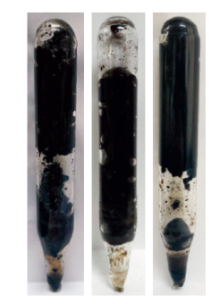
Fig. 1
Photos of the gel samples formed by different types of tannin extracts (from left to right: valonea, myrica and acacia tannin extracts)"
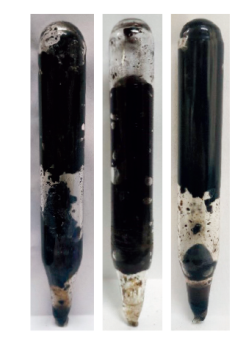
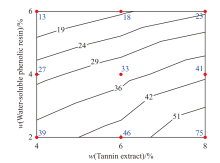
Fig. 2
Influences of tannin extract and crosslinker on gelling time"
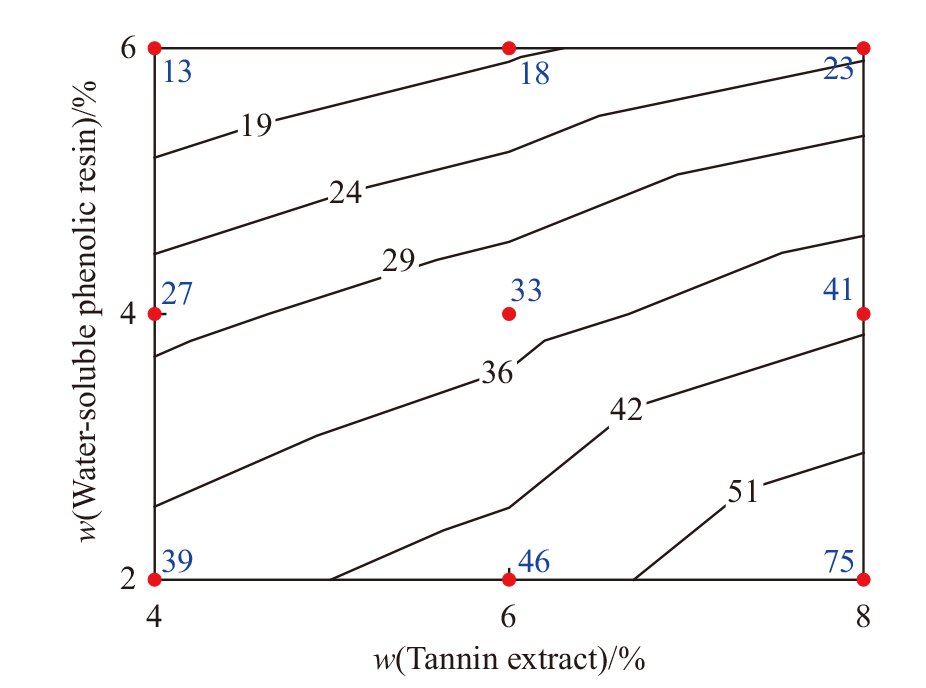
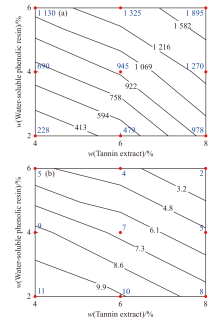
Fig. 3
Influences of tannin extract and crosslinker on gel strength (a) and the degree of dehydration (b)"
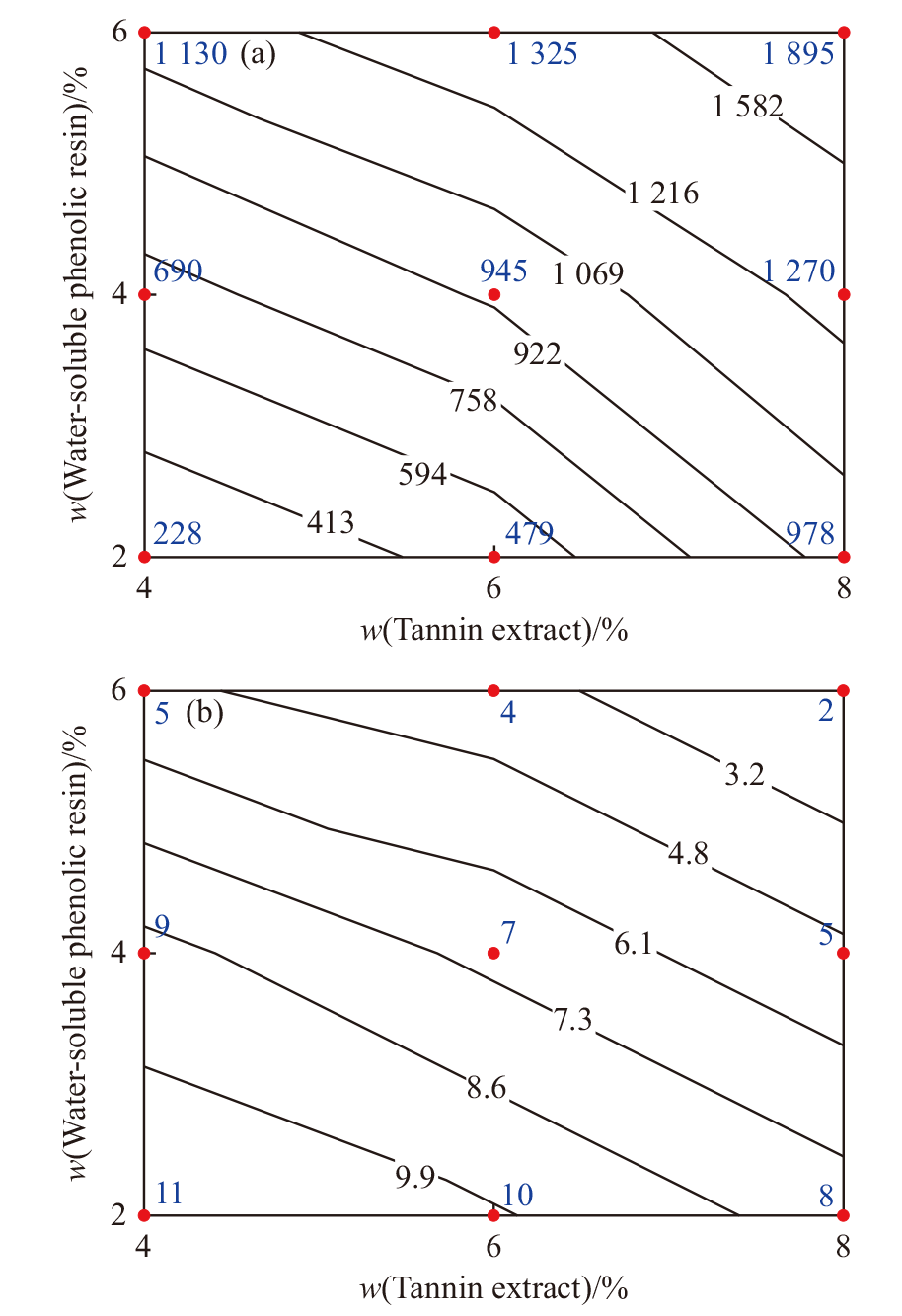
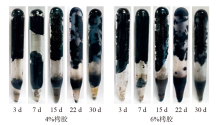
Fig. 4
Change in the degree of dehydration for the gels formed by tannin extract during ageing at 300 ℃"
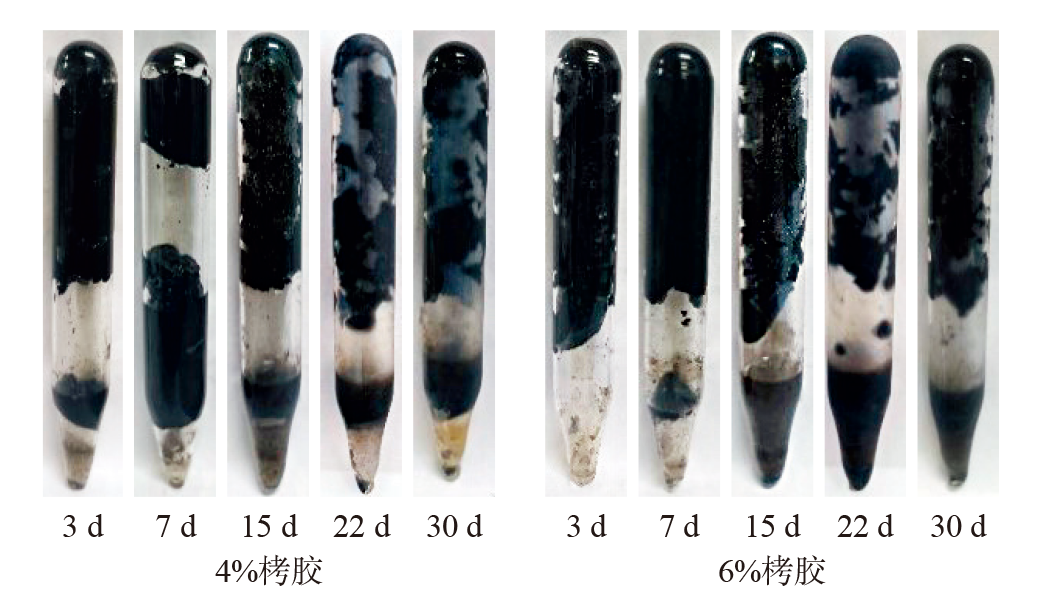
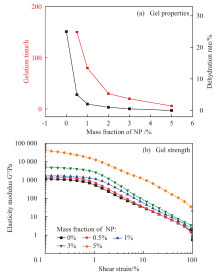
Fig. 5
Effects of nano-SiO2 content on the properties of the gel based on tannin extract"
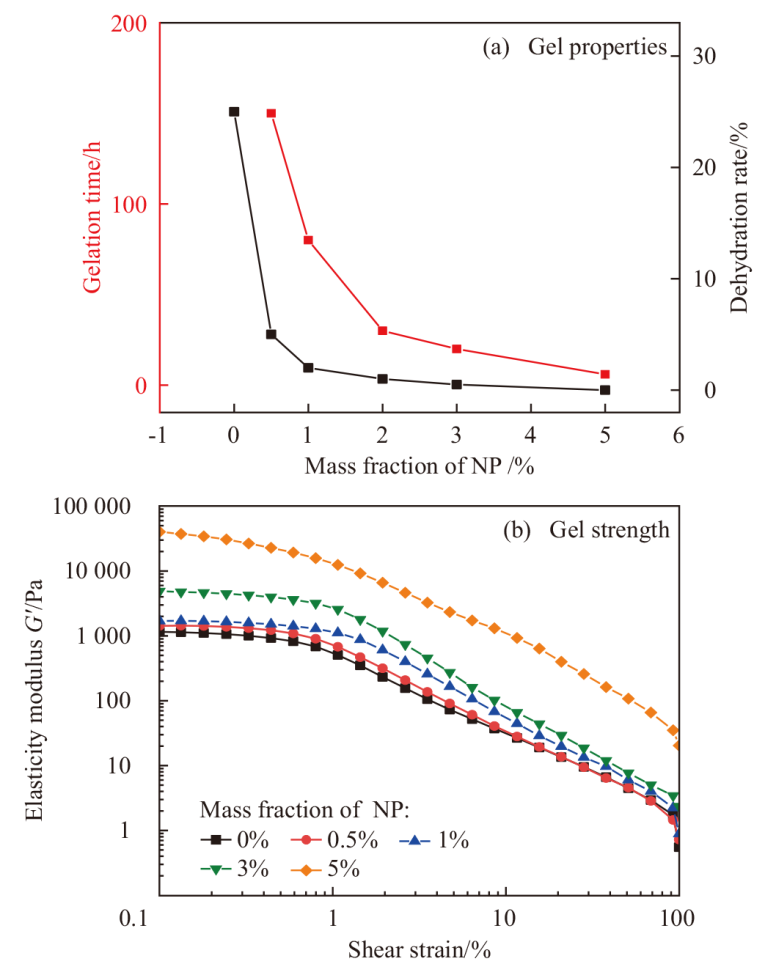
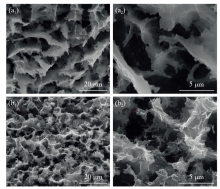
Fig. 6
Cryo-SEM images of gel samples at different magnifications (×4 000 (a1, b1) and×20 000 (a2, b2)) after heat treatment at 250 ℃ for 7 days. For a1 and a2, no nano-SiO2 particles are added, while for b1 and b2, 3% nano-SiO2 particles are added (b2)"
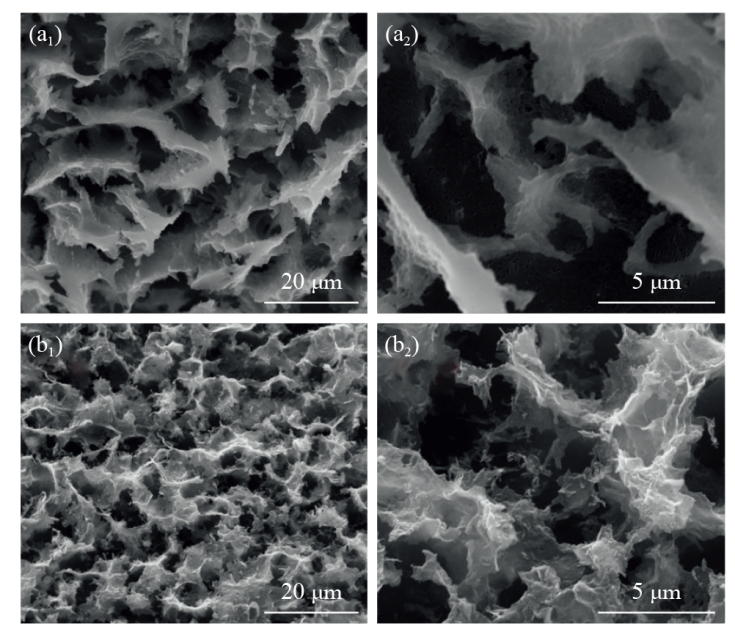
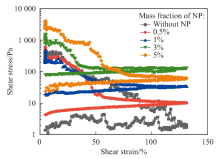
Fig. 7
Thixotropy of the gelling solutions with different content of nano-SiO2 particles"
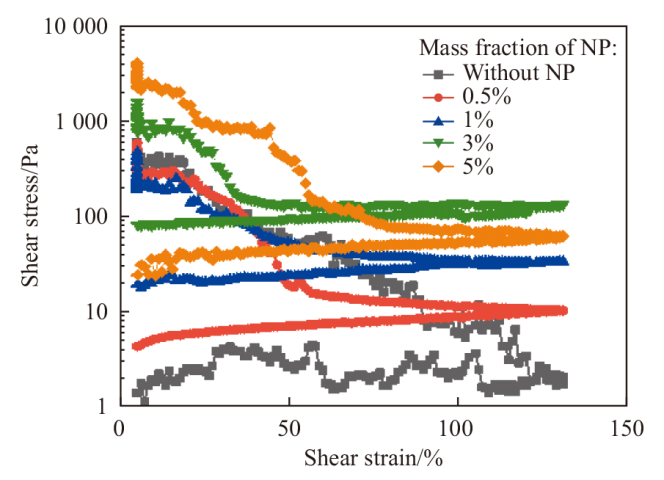
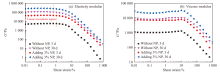
Fig. 8
Effect of the addition of nano-SiO2 particles on the viscoelasticity of the gel based on tannin extract before and after high-temperature thermal"
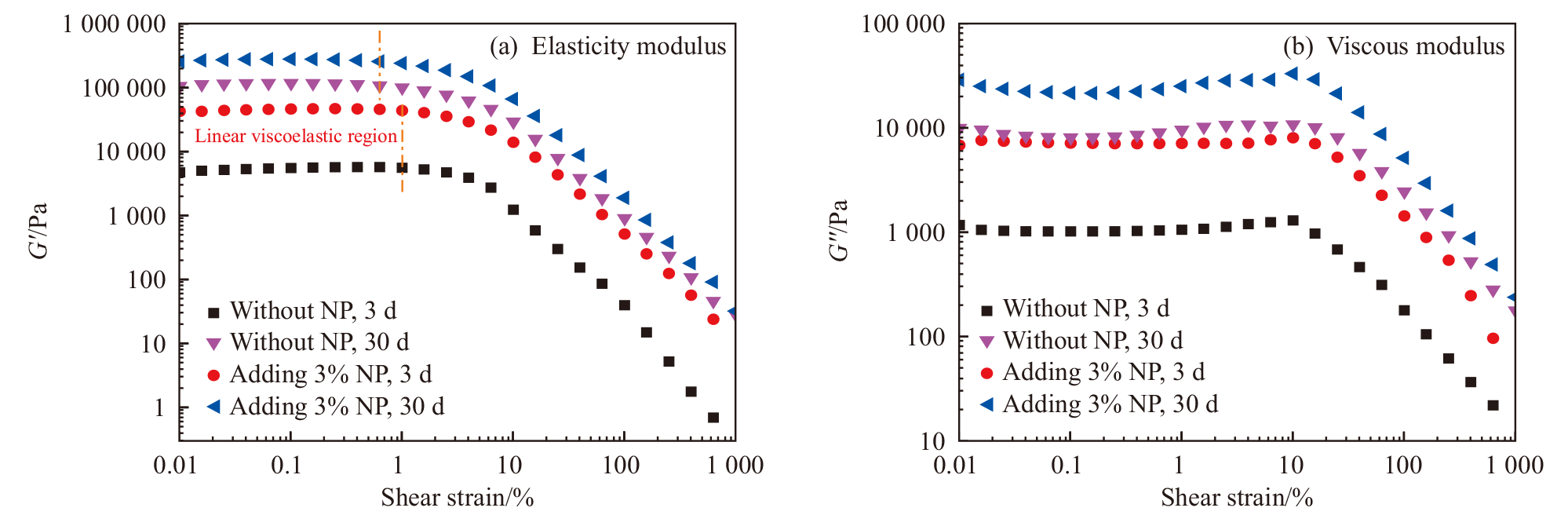
Fig. 9
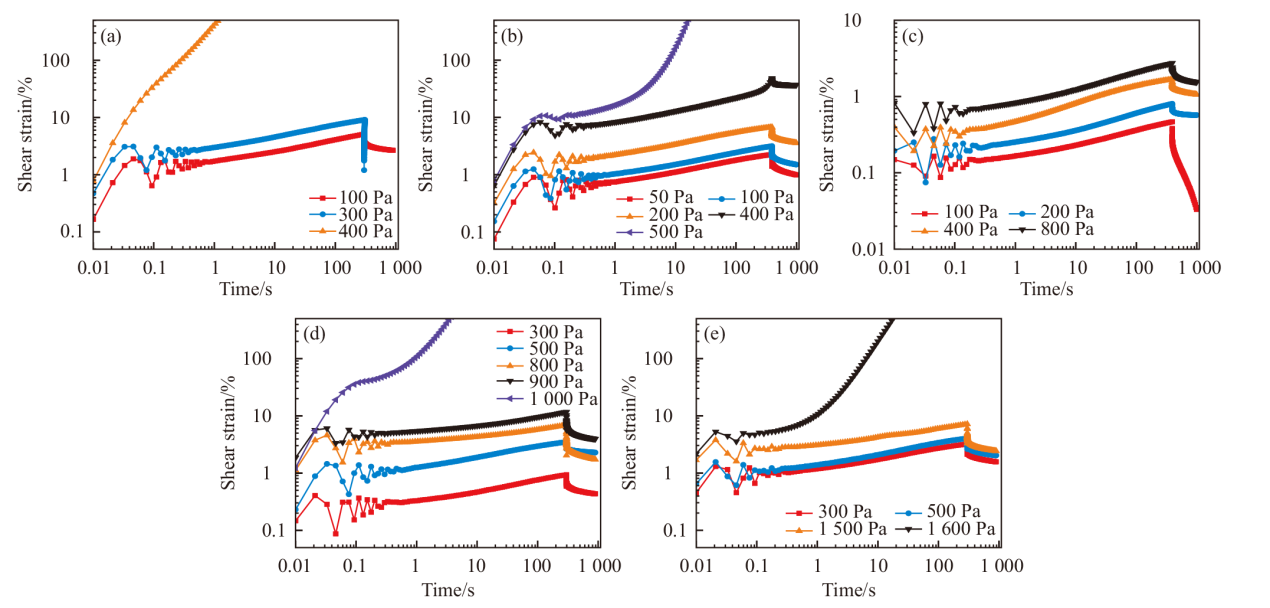
Creep test curves of the gels based on tannin extract added with different content of nano-SiO2 under different shear stresses: (a) without nano-SiO2; (b) 0.5% nano-SiO2; (c) 1% nano-SiO2; (d) 3% nano-SiO2; (e) 5% nano-SiO2"
| [1] |
Heredia J B, Martin J S. Removing heavy metals from polluted surface water with a tannin-based flocculant agent[J]. Journal of Hazardous Materials, 2009, 165 (1-3) : 1215-1218.
doi: 10.1016/j.jhazmat.2008.09.104 pmid: 19008042 |
| [2] |
Bai Baojun, Zhu Daoyi, Hou Jirui. Polymer gel systems for water management in high-temperature petroleum reservoirs: A chemical review[J]. Energy Fuels, 2017, 31 (12) : 13063-13087.
doi: 10.1021/acs.energyfuels.7b02897 |
| [3] | Navrati M, Mitchell M S, Sovak M. Compositions and methods for reducing the permeability of underground strata: EP0175442A1[P]. 1986-09-24. |
| [4] | Navratil M, Batycky J P, Sovak M, et al. Method for reducing the permeability of underground strata during secondary recovery of oil: CA1187404[P]. 1985-05-21. |
| [5] | Wang Jie, Fu Meilong, Xian Ruokun, et al. Study and application of high-temperature channeling clocking system based on multi-group cross linked gel for heavy oil reservoirs[J]. Special Oil & Gas Reservoirs, 2021, 28 (6) : 151-157. |
| [6] |
Wu Qianhui, Ge Jijiang. Experimental investigation of the entanglement network and nonlinear viscoelastic behavior of a nano-SiO2 strengthened polymer gel[J]. Journal of Molecular Liquids, 2021, 339: 117288.
doi: 10.1016/j.molliq.2021.117288 |
| [7] |
Ge Jijiang, Wu Hao, Song Longfei, et al. Preparation and evaluation of soft preformed particle gels for conformance control in carbonate reservoir[J]. Journal of Petroleum Science and Engineering, 2021, 205 (5) : 108774.
doi: 10.1016/j.petrol.2021.108774 |
| [8] |
Wu Qianhui, Ge Jijiang, Ding Lei, et al. Insights into the key aspects influencing the rheological properties of polymer gel for water shutoff in fractured reservoirs[J]. Colloids and Surfaces A: Physicochemical and Engineering Aspects, 2021, 634 (5) : 127963.
doi: 10.1016/j.colsurfa.2021.127963 |
| [9] |
Chen Lifeng, Li Gang, Chen Yanan, et al. Thixotropy research of laponite-hydrogel composites for water shutoff in horizontal wells[J]. Journal of Petroleum Science and Engineering, 2022, 208: 109600.
doi: 10.1016/j.petrol.2021.109600 |
| [10] |
Chen C, Hatano. Study of the molecular-weight of bark extracts and products of their reaction with formaldehyde[J]. Biomass, 1990, 21 (1) : 65-74.
doi: 10.1016/0144-4565(90)90048-O |
| [11] | Sydansk R D. A new conformance-improvement-treatment chromium (Ⅲ) gel technology [G]. Texas, USA: Society of Petroleum Engineers, 1988. |
| [12] | Tondi G, Pizzi A. Tannin-based rigid foams: Characterization and modification[J]. Industrial Crops & Products, 2009, 29 (2/3) : 356-363. |
| [13] |
Yang Qianru, Zhao Mingwei, Gao Mingwei, et al. The experimental study of silica nanoparticles strengthened polymer gel system[J]. Journal of Dispersion Science and Technology, 2021, 42 (2) : 298-305.
doi: 10.1080/01932691.2019.1679642 |
| [14] |
Guo Hongbin, Ge Jijiang, Li Longjie, et al. New insights and experimental investigation of high-temperature gel reinforced by nano-SiO2[J]. Gels, 2022, 8: 362.
doi: 10.3390/gels8060362 |
| [15] |
Wu Qianhui, Ge Jijiang, Ding Lei, et al. Identification and characterization of a proper gel system for large-volume conformance control treatments in a fractured tight reservoir: From lab to field[J]. Journal of Petroleum Science and Engineering, 2021, 198: 108199.
doi: 10.1016/j.petrol.2020.108199 |
| [16] |
Ge Jijiang, Wu Qianhui, Ding Lei, et al. Preparation and rheological evaluation of a thixotropic polymer gel for water shutoff in fractured tight reservoirs[J]. Journal of Petroleum Science and Engineering, 2022, 208: 109542.
doi: 10.1016/j.petrol.2021.109542 |
| [17] |
Guo Hongbin, Ge Jijiang, Zhao Sai, et al. Performance evaluation of high-strength polyethyleneimine gels and syneresis mechanism under high-temperature and high-salinity conditions[J]. SPE Journal, 2022, 27 (6) : 3630-3642.
doi: 10.2118/210593-PA |
| [18] |
Zhang Tianci, Ge Jijiang, Wu Hao, et al. Effect of AMPS (2-acrylamido-2-methylpropane sulfonic acid) content on the properties of polymer gels[J]. Petroleum Science, 2022, 19 (2) : 697-706.
doi: 10.1016/j.petsci.2022.01.006 |
| [19] |
Guo Hongbin, Ge Jijiang, Wu Hao, et al. Enhancing temperature resistance of polymer gels by hybrid with silica nanoparticles[J]. Petroleum Science and Technology, 2022, 40 (24) : 3037-3059.
doi: 10.1080/10916466.2022.2055570 |
| [20] |
Zhang Tianci, Ge Jijiang, Wu Hao, et al. Effect of AMPS (2-acrylamido-2-methylpropane sulfonic acid) content on the properties of polymer gels[J]. Petroleum Science, 2022, 19 (2) : 697-706.
doi: 10.1016/j.petsci.2022.01.006 |
| [1] | Jun Li, Han Wu. Study on the preparation and properties of graphene-polyvinyl chloride composites [J]. China Surfactant Detergent & Cosmetics, 2025, 55(5): 611-615. |
| [2] | Pengpeng Li, Wuwei Li. Preparation and properties of biodegradable polyester materials for packaging [J]. China Surfactant Detergent & Cosmetics, 2025, 55(5): 625-632. |
| [3] | Haibing Cheng, Yong Zhang, Lei Sun, Weijia Li, Zhi Chen, Congming Tang, Li Chang. Synthesis and crosslinking properties of W-SN crosslinking agent [J]. China Surfactant Detergent & Cosmetics, 2025, 55(3): 279-285. |
| [4] | Siqi Yao,Yongli Yan,Suiwang Zhang,Yu Chen,Bingcheng He. Study on the non-aqueous foams stabilized by the modified nano-SiO2 particles [J]. China Surfactant Detergent & Cosmetics, 2024, 54(8): 903-910. |
| [5] | Zhen Enlong, Zhang Wen, Qian Zhen, Du Ruotong, Wang Yang. Construction and plugging performance evaluation of emulsified thermosetting resin system [J]. China Surfactant Detergent & Cosmetics, 2023, 53(6): 649-657. |
| [6] | CAO Sheng-ti,JIAO Ti-liu,HUO Yue-qing,LIU Xiao-chen,NIU Jin-ping. Study of the performance of sodium alkyl diphenyl ether disulfonates [J]. China Surfactant Detergent & Cosmetics, 2020, 50(12): 829-832. |
| [7] | FENG Xiao-jun,ZHANG Peng,LI Rui-rui,LAI Lu. A study on the stability of CO2-triggered Pickering emulsion based on tetradecyldiethylenetriamine [J]. China Surfactant Detergent & Cosmetics, 2020, 50(12): 842-847. |
| [8] | Ji-hong ZHANG,Jian-yi FENG. Evaluation of the performance of weak-gel profile-controlling and flooding system [J]. China Surfactant Detergent & Cosmetics, 2019, 49(2): 87-91. |
| [9] | DING Peng, TAI Xiu-mei, DU Zhi-ping. Preparation of anti-corrosion superhydrophobic/superoleophilic stainless steel mesh and its application in oil/water separation [J]. China Surfactant Detergent & Cosmetics, 2018, 48(5): 272-277. |
| [10] | HUANG Wei-hua, ZOU Hua, LAI Lu, MEI Ping. Studies on the emulsifying performance of nano-SiO2 particles modified with bis-quaternary ammonium salts [J]. China Surfactant Detergent & Cosmetics, 2017, 47(8): 430-434. |
|
